Eastern hemlock
Tsuga canadensis. Family Pinaceae. Tree.
Also called Canadian hemlock.
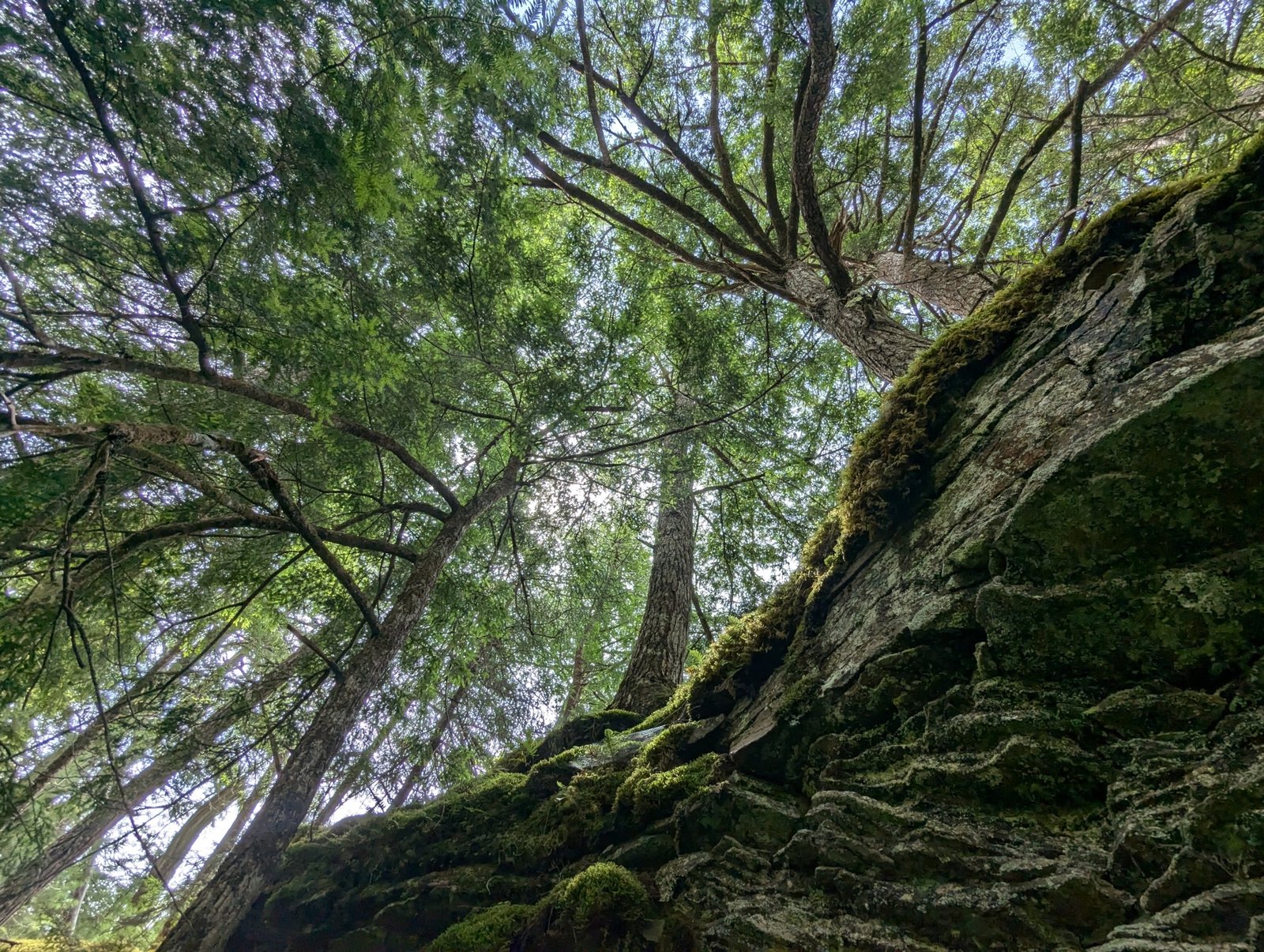
Eastern hemlock is a long-lived evergreen conifer native to eastern North America, grown for its fine-textured foliage, graceful branches and tolerance of shade. It makes a substantial woodland tree or a clipped evergreen screen where summers are reasonably cool and the soil stays moist. Hemlock woolly adelgid is a serious threat in much of its eastern North American range, so check local advice before planting.
At a glance
- Sun
- Partial shade is ideal; tolerates deep shade. Full sun is suitable in cool climates if the roots remain consistently moist.
- Water
- Needs evenly moist soil, especially while establishing; poorly suited to drought, hot dry winds or waterlogged ground.
- Soil
- Cool, humus-rich, well-drained soil, preferably acidic to slightly acidic. Avoid shallow, dry or strongly alkaline ground.
- Height
- 40-70 ft (12-21 m), sometimes taller with age
- Spread
- 25-35 ft (7.6-10.7 m)
- Foliage
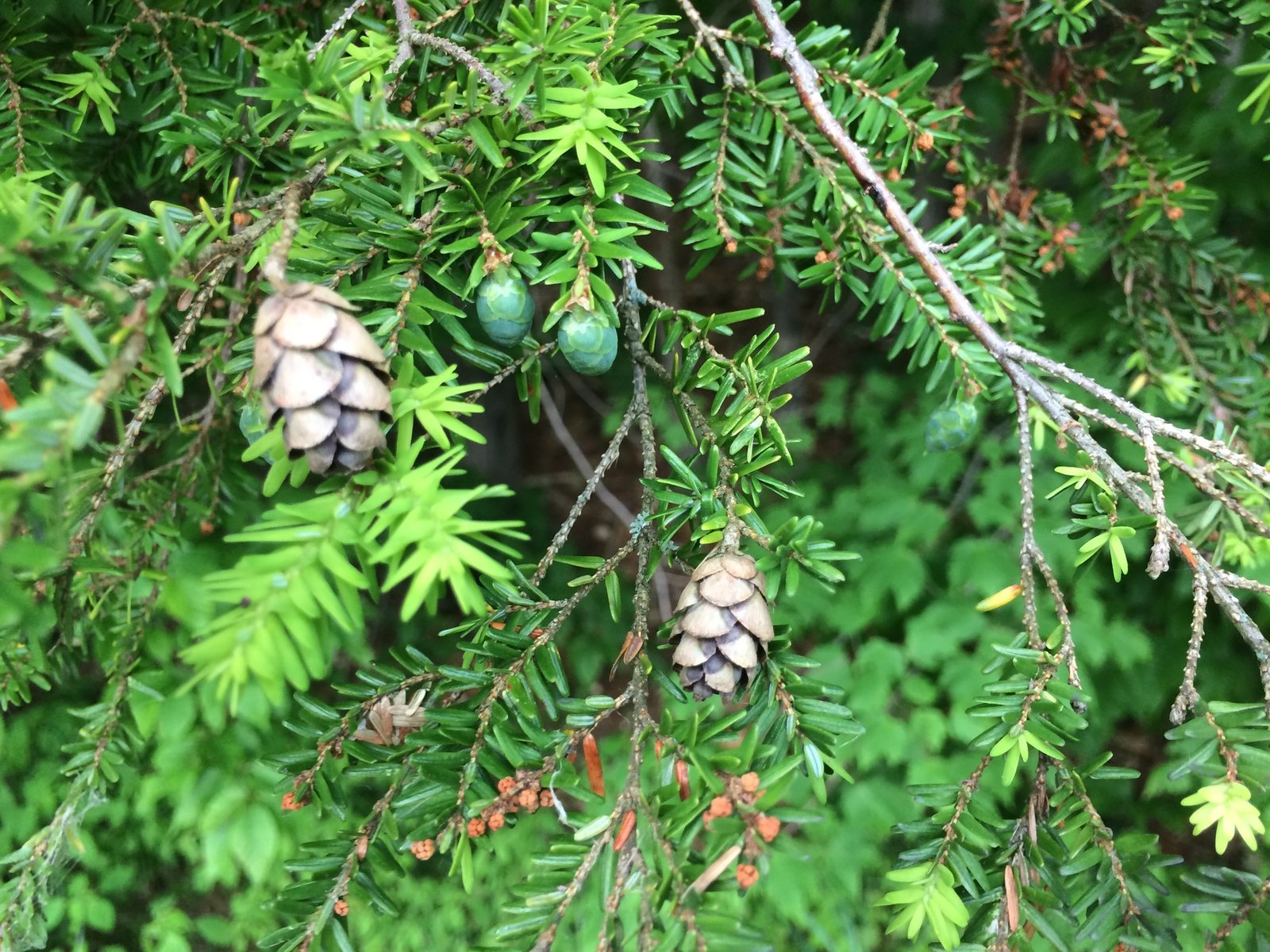
- Evergreen. Short, flat, dark green needles with two pale bands beneath, arranged mostly in flattened sprays. Fine branch tips nod gently; small brown cones hang beneath the branches.
- Growth
- Slow to moderate; growth slows markedly in deep shade or dry soil.
- Care needed
- Medium
The year at a glance
- Cold hardy
- Wildlife
| J | F | M | A | M | J | J | A | S | O | N | D | |
|---|---|---|---|---|---|---|---|---|---|---|---|---|
| Fruit | ||||||||||||
| Plant |
Northern hemisphere months. In Australia, shift them by six.
- Difficulty
- Moderate
- Toughness
- Needs looking after
Will it suit your garden?
Pick your zone, country, light and whether you have pets.
Full sun is 6 or more hours of direct sun a day, part shade 3 to 6 hours, shade under 3.
How it grows
Planting day
7 ft (2 m)
After 1 year
8 ft (2.6 m)
After 2 years
10 ft (3.1 m)
After 3 years
12 ft (3.7 m)
After 5 years
16 ft (4.8 m)
About 26 years to full size.
From a typical nursery size, at an average rate for this kind of plant. A rule of thumb, not a forecast.
Good to know
- Cats and dogs
- Safe
- Native to
- the US and Canada
- Growth rate
- Slow
Care
Jobs through the year
- WaterMar–May, Sep–Nov, every 14 days
- Water established trees deeply when rain is insufficient; young trees need more frequent watering.
- WaterJun–Aug, every 7 days
- Keep established root zones evenly moist during dry weather without saturating the soil.
- MulchMay
- Maintain 5–8 cm of organic mulch over shallow roots, keeping the trunk clear.
- PruneFeb–Mar
- Remove dead, damaged or crossing branches; avoid severe cuts into bare old wood.
- PruneMay–Jun
- If grown as a hedge, lightly trim new growth and keep the base wider than the top.
- ProtectFeb–Mar, May–Aug
- Inspect needle bases and undersides for adelgid or scale; seek local advice promptly if found.
- ProtectJun–Aug
- Shield young trees from drying winds and intense afternoon sun; avoid disturbing shallow roots.
- Water deeply during dry spells, keeping the root zone moist but not saturated.
- Spread 2-3 in (5-8 cm) of organic mulch over the root zone, leaving the trunk clear.
- Protect young trees from drying winds and intense afternoon sun in warmer locations.
- Keep digging, paving and heavy foot traffic away from the shallow roots.
- Feed only if a soil test indicates a deficiency; avoid routine high-nitrogen feeding.
- In affected regions, inspect needle bases and twig undersides regularly for white, woolly adelgid deposits.
Pruning. Prune in late winter or early spring to remove dead, damaged or crossing branches. For hedges, lightly trim new growth in late spring or early summer, keeping the base wider than the top and avoiding severe cuts into bare old wood.
Through the year
- Late winter
- Remove damaged branches and check twig undersides for hemlock woolly adelgid where it occurs.
- Spring
- Plant while the soil is workable and moist, setting the root flare at ground level.
- Late spring
- Refresh mulch and lightly trim hedges after the first flush of growth.
- Summer
- Water during dry periods and check for yellowing needles, premature shedding or pest activity.
- Autumn
- Water thoroughly if conditions are dry before the ground freezes.
In the garden
- Use as a woodland canopy tree above ferns, foamflowers and other shade-tolerant ground plants.
- Plant as a clipped hedge or evergreen screen where there is room for a broad base.
- Place against deciduous trees to provide dark green contrast and winter structure.
- Use as a specimen in a large, sheltered lawn or woodland-edge garden, allowing the lower branches to remain.
Garden styles it suits: Woodland, Traditional, Grand estate, New England, Winter interest and Green on green.
Plant it with: Christmas fern, Foamflower, Wild ginger, Rhododendron, Mountain laurel and Solomon's seal.
Wildlife: Dense branches provide shelter and nesting cover for birds, and the small seeds feed birds and small mammals. Deer may browse young trees, particularly in winter.
Problems to watch for
- Hemlock woolly adelgid: white woolly deposits at needle bases, thinning foliage and branch dieback can lead to death. In affected parts of eastern North America, seek local extension or arborist advice promptly; treatment choice and timing depend on tree size and local regulations.
- Elongate hemlock scale: small pale or brown scale covers beneath needles cause yellowing and decline. Have the pest identified and use a locally approved, correctly timed treatment.
- Drought and heat stress: browning, needle drop and branch dieback develop on hot, dry sites. Water deeply, maintain mulch and avoid planting where summer drought is routine.
- Root rot: persistently saturated soil can cause decline and root death. Improve drainage before planting; do not try to compensate for poor drainage with extra watering.
Safety
Not known to be toxic to cats, dogs, horses or people; the needles, bark and cones are not recognized as poisonous. It is unrelated to highly poisonous poison hemlock and water hemlock. Do not eat unidentified plants.
Easily confused with
Western hemlock (Tsuga heterophylla)
Western hemlock usually has a more strongly drooping leader and needles of conspicuously mixed lengths within each spray; eastern hemlock needles are more uniform in length.
Canada yew (Taxus canadensis)
Canada yew is usually a low, spreading shrub with longer needles and red, fleshy seed coverings rather than hanging woody cones. Unlike eastern hemlock, yew foliage and seeds are highly poisonous.
The name
Tsuga comes from a Japanese name for hemlock, and canadensis means 'of Canada', referring to part of the tree's native range.
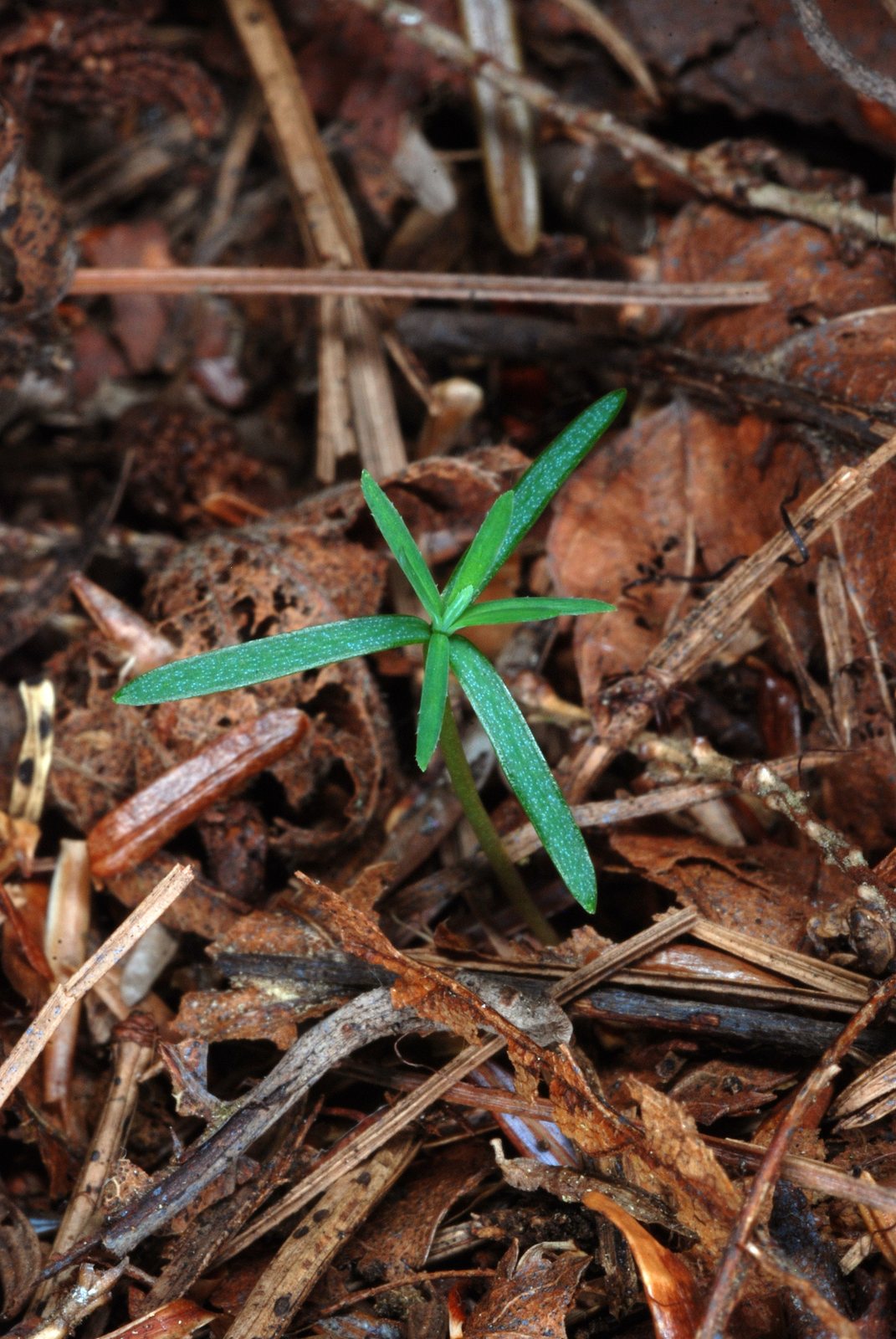
Propagation. Usually grown from seed collected from mature cones and given a period of cold, moist stratification before sowing. Named garden forms are generally propagated by specialist cuttings or grafting to preserve their characteristics.
Checked against open data
- Accepted botanical name
- Tsuga canadensis
- In the US and Canada
- Native in Canada and the lower 48 states.
- Native range
- Alabama, Connecticut, Georgia, Indiana, Kentucky, Maine, Maryland, Masachusettes, Michigan, Minnesota, New Brunswick and New Hampshire.
- Measured
- Soil pH 4.2 to 5.7. Average height 1460 cm.
Sources: GBIF (CC BY 4.0), USDA PLANTS and Trefle (CC BY 4.0). The care and design notes are LandscapeGPT's own.
See it in your own yard.
Upload a photo of your yard and see it redesigned with plants that suit your climate, each checked against your zone.