Eggplant 'Black Beauty'
Solanum melongena 'Black Beauty'. Family Solanaceae. Annual.
Also called Aubergine 'Black Beauty', Solanum melongena 'Black Beauty', Brinjal 'Black Beauty'.
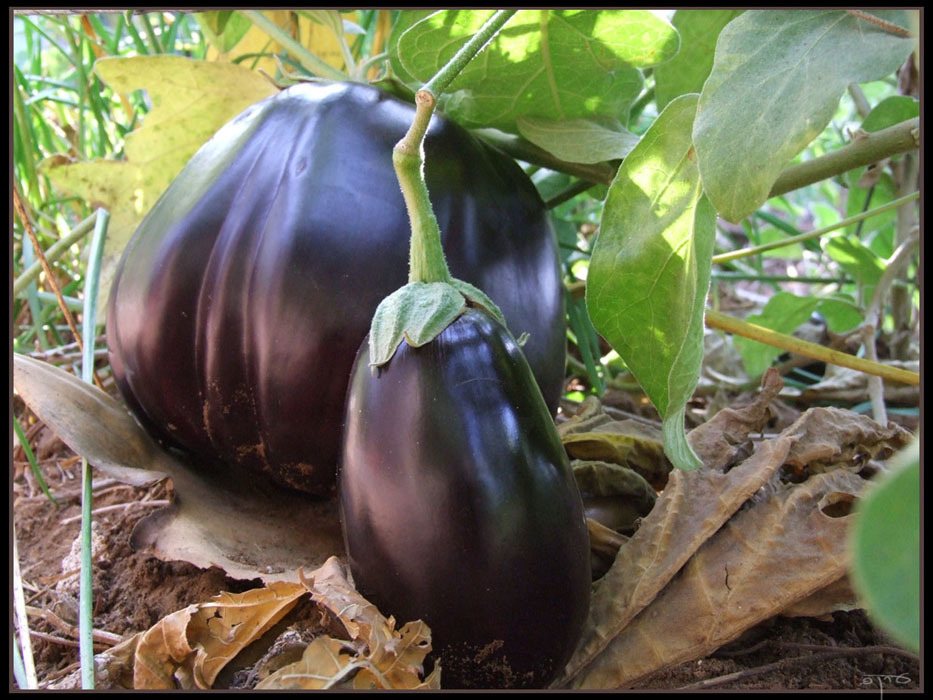
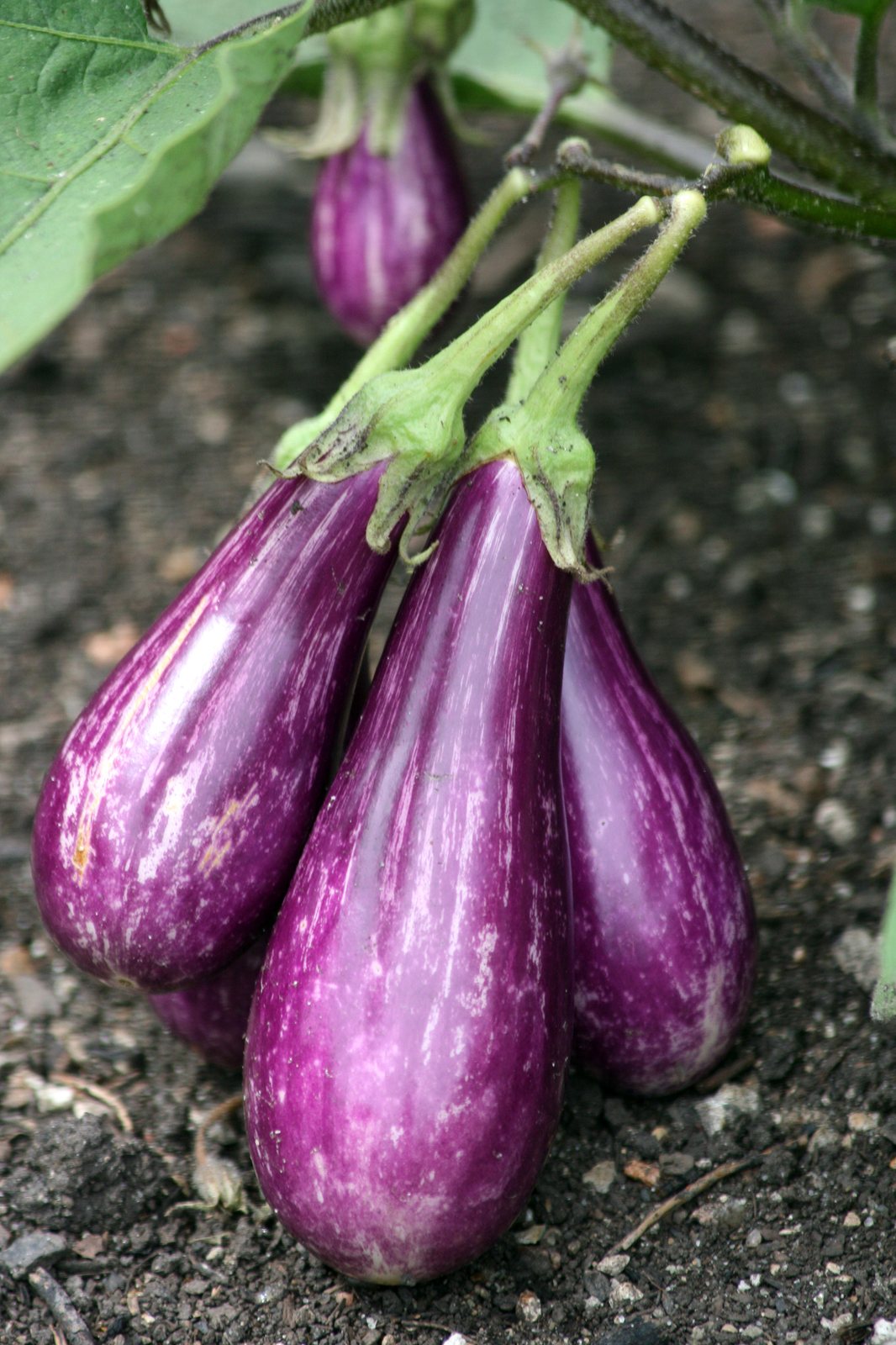
'Black Beauty' is a traditional, open-pollinated eggplant grown for its large, rounded to pear-shaped, glossy purple-black fruits. It is grown as an annual and needs a long, warm growing season; in cool parts of the United Kingdom and Canada, a greenhouse or polytunnel usually gives a more dependable crop.
At a glance
- Sun
- Full sun, ideally at least 6-8 hours daily, in a warm position sheltered from strong winds.
- Water
- Keep soil evenly moist but not waterlogged, especially during flowering and fruit development; containers may need daily watering in hot weather.
- Soil
- Fertile, moisture-retentive, well-drained soil enriched with compost; approximately pH 6.0-7.0.
- Height
- 2-3 ft (0.6-0.9 m)
- Spread
- 2-3 ft (0.6-0.9 m)
- Flowers
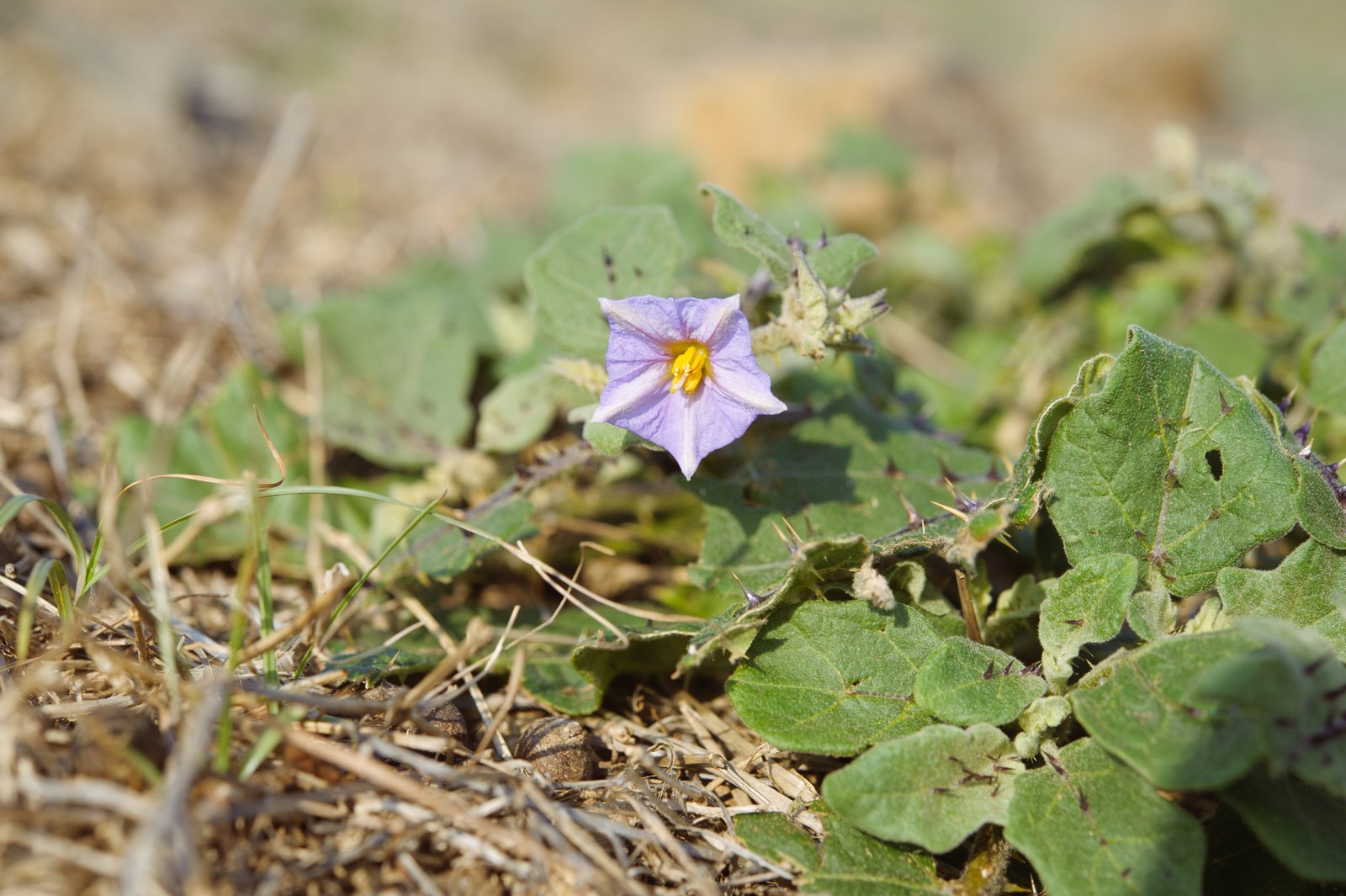
- Purple, star-shaped flowers with yellow centres from summer into early autumn.
- Foliage
- Large, broad, slightly lobed green leaves with a softly hairy surface; stems and leaf veins may be purple-tinged.
- Growth
- Moderate to fast in warm weather; slow in cool conditions.
- Care needed
- Medium
The year at a glance
- Pollinators
- Heat tolerant
- Low allergen
- Edible
| J | F | M | A | M | J | J | A | S | O | N | D | |
|---|---|---|---|---|---|---|---|---|---|---|---|---|
| Flowers | ||||||||||||
| Fruit | ||||||||||||
| Plant |
Northern hemisphere months. In Australia, shift them by six.
- Difficulty
- Moderate
- Toughness
- Needs looking after
Will it suit your garden?
Pick your zone, country, light and whether you have pets.
Full sun is 6 or more hours of direct sun a day, part shade 3 to 6 hours, shade under 3.
How it grows
Planting day
0.5 ft (0.15 m)
After 1 year
2.5 ft (0.75 m)
full size
Full size in one season.
From a typical nursery size, at an average rate for this kind of plant. A rule of thumb, not a forecast.
Good to know
- Cats and dogs
- Toxic
- Growth rate
- Moderate
Care
Jobs through the year
- WaterJun, Sep, every 7 days
- Water established plants deeply as needed; keep newly planted seedlings consistently moist.
- WaterJul–Aug, every 3 days
- Keep established plants evenly moist during fruiting; containers may need daily watering.
- FeedJun
- Apply balanced fertiliser at planting, following label rates.
- FeedJul–Sep, every 14 days
- Feed with tomato fertiliser once fruit develops, following the label.
- MulchJun
- Mulch warmed soil to conserve moisture, keeping material clear of stems.
- ProtectJun
- Plant only with warm soil and nights above about 15°C; protect seedlings from flea beetles with mesh.
- PruneAug
- In short seasons, pinch growing tips to help existing fruits mature; avoid routine heavy pruning.
- HarvestAug–Oct
- Cut glossy, firm fruits before seeds harden; pick usable fruit before frost.
- Plant out only after frost risk has passed, when soil is warm and nights are consistently above about 15°C (59°F); harden off seedlings first.
- Space plants 2-3 ft (0.6-0.9 m) apart, or grow one plant in a container holding at least 25-30 litres (7-8 US gallons).
- Water deeply at soil level and mulch once the soil has warmed to reduce drying and weed competition.
- Apply a balanced fertiliser at planting, then a tomato fertiliser as fruit develops, following label rates; avoid excessive nitrogen.
- Insert a stake at planting and tie stems loosely as heavy fruits develop.
- Ventilate greenhouses in hot weather and gently tap flowering stems to help release pollen.
Pruning. Routine pruning is unnecessary; remove damaged or diseased leaves and any leaves touching the soil. In short-season climates, pinch out growing tips in late summer to direct growth towards existing fruit.
Harvest
Begin picking roughly 75-90 days after transplanting in warm conditions, when fruits are well sized, glossy and firm, and gentle thumb pressure leaves a slight mark that rebounds. Cut the stalk with secateurs, leaving a short stem attached, and wear gloves if the calyx is prickly. Pick regularly before skins become dull and seeds harden.
Through the year
- Late winter
- Sow indoors about 8-10 weeks before the expected planting-out date, using gentle bottom heat around 24-29°C (75-84°F).
- Spring
- Pot seedlings on into individual pots and provide strong light and steady warmth.
- Late spring to early summer
- Harden off and plant into warm soil after frost risk has passed; add stakes and water thoroughly.
- Summer
- Mulch, maintain even moisture, feed as fruit develops and check leaf undersides for pests.
- Late summer to early autumn
- Harvest glossy fruits regularly; in short seasons, pinch out growing tips so existing fruits can finish.
- Autumn
- Pick usable fruit before frost and remove plants at the end of the season; do not compost diseased material.
In the garden
- Plant in sunny vegetable beds where its broad leaves contrast with fine-textured herbs.
- Use in a potager with basil, chives and marigolds for an ornamental edible display.
- Grow a single supported plant in a large patio container near a warm wall.
- Place in raised beds with paths wide enough for easy harvesting without brushing the leaves.
Garden styles it suits: Potager (kitchen garden), Edible landscape, Homestead, Modern courtyard, Mediterranean and Small-space.
Plant it with: Basil, Chives, French marigold, Nasturtium and Lettuce.
Wildlife: Bumblebees and other pollen-collecting bees visit the flowers and can improve pollination. The foliage can also support several leaf-eating insects; this crop is not a substitute for locally native wildlife planting.
Problems to watch for
- Flea beetles make small holes in leaves, especially on young plants: protect seedlings with insect mesh and keep nearby weeds down.
- Red spider mites cause pale stippling and fine webbing, particularly under glass: inspect leaf undersides, prevent drought stress and use suitable biological controls or a labelled insecticidal soap.
- Verticillium wilt causes yellowing and wilting, sometimes on one side: remove affected plants, avoid moving contaminated soil and use fresh container compost where the disease has occurred.
- Poor fruit set or flower drop often follows cool nights, extreme heat or irregular watering: maintain steady moisture, ventilate protected crops and gently tap flowers to help pollen release.
Safety
Leaves, stems and other non-food parts contain glycoalkaloids and can poison people, cats, dogs and horses if eaten in sufficient quantity; digestive upset is possible, with more serious effects after substantial ingestion. Keep pets and livestock from eating the plants. The fruits are edible and normally cooked; discard the stalk and calyx.
Easily confused with
Eggplant 'Black Bell' (Solanum melongena 'Black Bell')
This hybrid also produces glossy dark-purple fruits and can be difficult to distinguish by appearance alone; use labelled seed or plants to confirm the cultivar.
African eggplant (Solanum aethiopicum)
Many forms have smaller, often ribbed fruits that turn orange or red when fully ripe, unlike the large purple-black fruits picked from 'Black Beauty'.
The name
The English name eggplant comes from white, egg-shaped varieties grown before dark-fruited types became common.
Propagation. Grow from seed sown indoors with warmth. As an open-pollinated cultivar, it can come true from saved seed if kept from crossing with other eggplants; seed-saving fruits must ripen well beyond the normal eating stage.
Checked against open data
- Accepted botanical name
- Solanum melongena
- In the US and Canada
- Introduced in the lower 48 states, Pacific Basin and Puerto Rico.
- Native range
- China South-Central, Laos, Malaya, Myanmar, Thailand and Vietnam.
- Measured
- Average height 85 cm.
Sources: GBIF (CC BY 4.0), USDA PLANTS and Trefle (CC BY 4.0). The care and design notes are LandscapeGPT's own.
See it in your own yard.
Upload a photo of your yard and see it redesigned with plants that suit your climate, each checked against your zone.