Fairy foxglove
Erinus alpinus. Family Plantaginaceae. Perennial.
Also called Alpine balsam, Alpine foxglove.
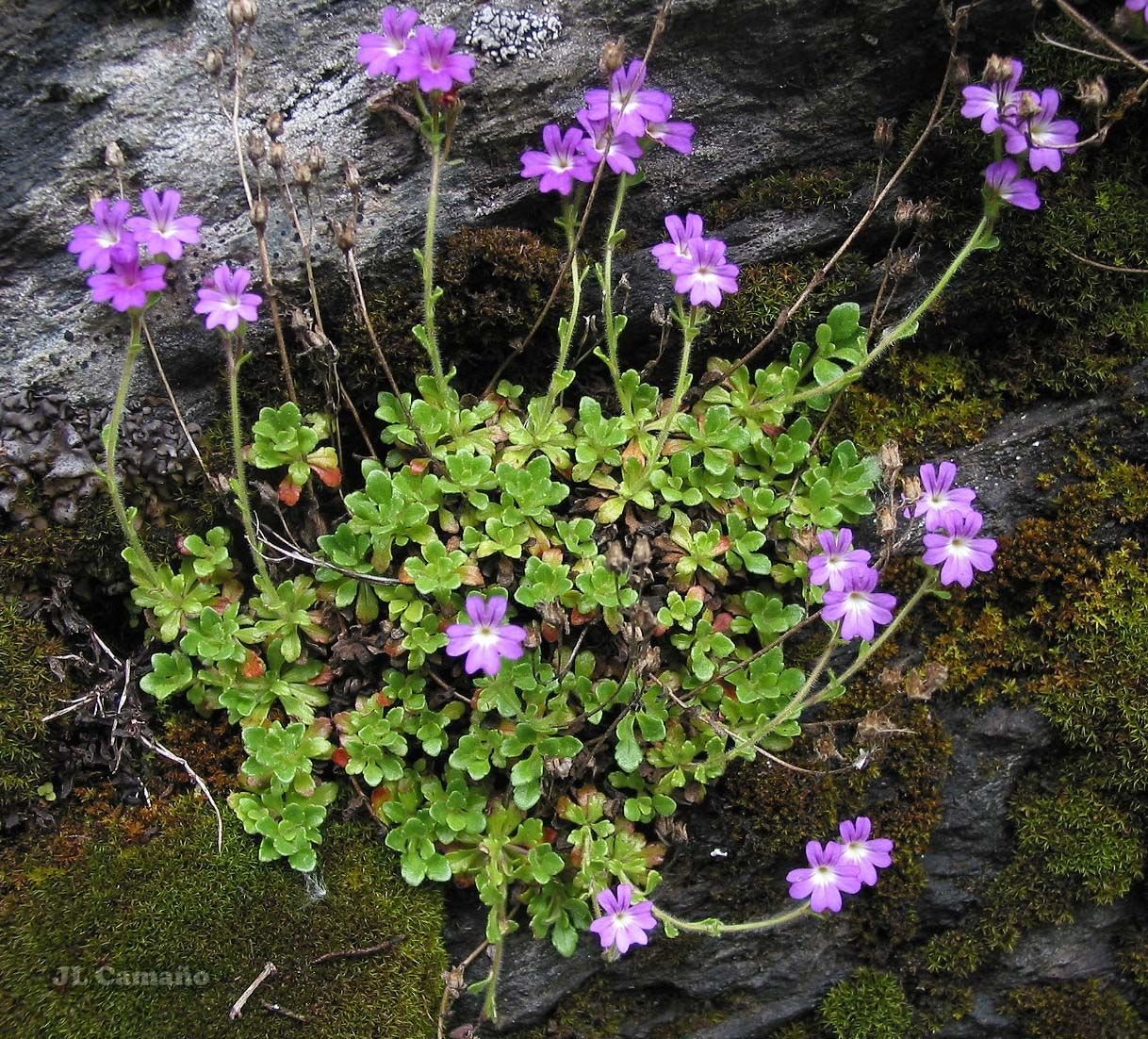
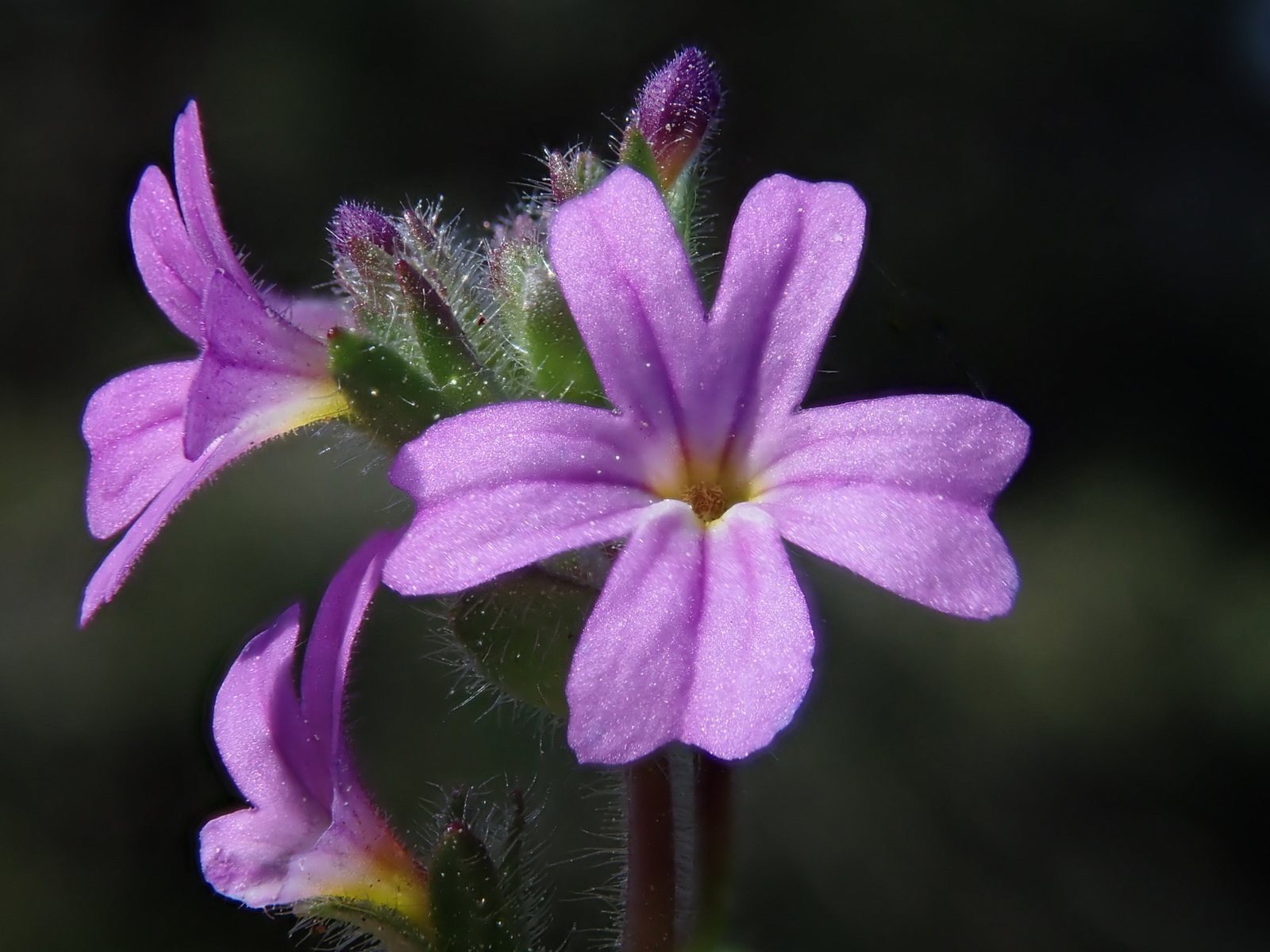
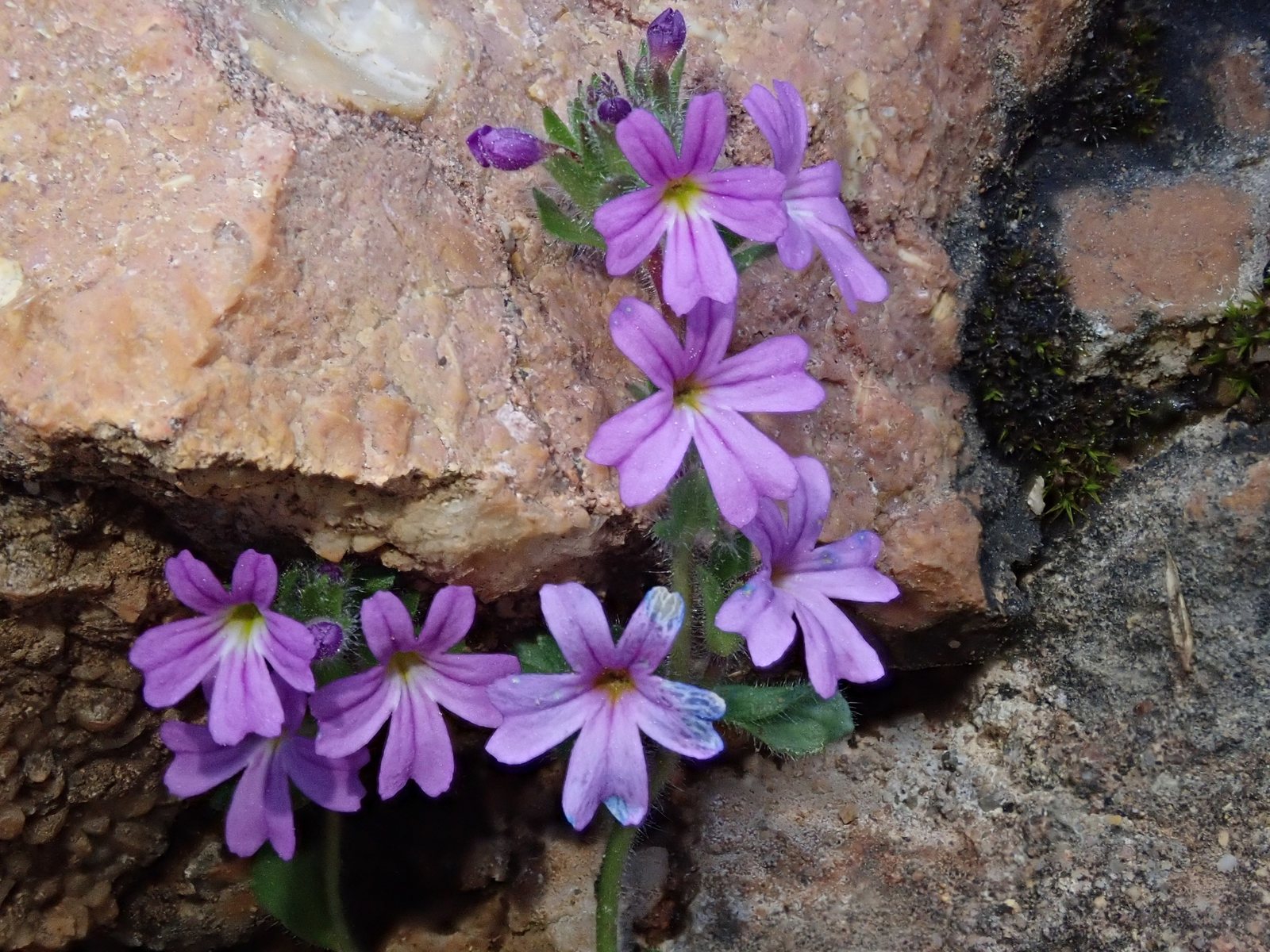
Fairy foxglove is a small, short-lived perennial that forms low tufts of leaves topped with pink to purple flowers in late spring and summer. Gardeners grow it in rock gardens, stone-wall crevices and paving joints, where it often seeds itself into suitable gaps.
At a glance
- Sun
- Full sun to partial shade; light afternoon shade helps in warmer climates.
- Water
- Water regularly while establishing, then during prolonged dry spells. Avoid persistently wet roots, especially in winter.
- Soil
- Well-drained, gritty soil, preferably neutral to alkaline; tolerates lean soil and limestone crevices.
- Height
- 0.25-0.5 ft (0.08-0.15 m)
- Spread
- 0.5-0.75 ft (0.15-0.23 m)
- Flowers
- Late spring through summer; usually pink, rose-purple or lilac, with white forms also available.
- Foliage
- Evergreen. Small, slightly hairy, toothed green leaves form low basal rosettes.
- Growth
- Moderate; individual plants stay small, but seedlings can gradually form colonies.
- Care needed
- Low
The year at a glance
- Pollinators
- Drought tolerant
- Cold hardy
- Low allergen
| J | F | M | A | M | J | J | A | S | O | N | D | |
|---|---|---|---|---|---|---|---|---|---|---|---|---|
| Flowers | ||||||||||||
| Plant |
Northern hemisphere months. In Australia, shift them by six.
- Difficulty
- Easy
- Toughness
- Fairly tough
Will it suit your garden?
Pick your zone, country, light and whether you have pets.
Full sun is 6 or more hours of direct sun a day, part shade 3 to 6 hours, shade under 3.
How it grows
Planting day
0.4 ft (0.12 m)
full size
About 3 years to full size.
From a typical nursery size, at an average rate for this kind of plant. A rule of thumb, not a forecast.
Good to know
- Cats and dogs
- Safe
- In the garden
- Spreads vigorously: plan to contain it.
- Growth rate
- Moderate
Care
Jobs through the year
- WaterApr–May, Sep, every 14 days
- Water established plants only during prolonged dryness; water young plants whenever their root zone begins drying.
- WaterJun–Aug, every 7 days
- Water during extended drought, checking shallow stone crevices more frequently.
- MulchMar–Apr
- Maintain a light gravel dressing around crowns rather than rich organic mulch.
- PruneMar
- Remove dead leaves and uncover crowns buried beneath debris.
- DeadheadJun–Aug, every 14 days
- Snip faded stems to encourage flowers, leaving some to seed and replace short-lived plants.
- ProtectJul–Aug
- Provide light afternoon shade and airflow during hot spells without keeping roots constantly wet.
- ProtectJan–Feb, Oct–Dec
- Clear fallen leaves from tufts and prevent water collecting around crowns.
- Plant in gritty soil or a soil-filled stone crevice with an open drainage route.
- Water young plants when the root zone begins to dry; established plants need extra water during extended drought.
- Avoid rich compost and routine feeding, which encourage soft growth.
- Use a light gravel mulch rather than moisture-holding organic mulch around the crowns.
- Leave a few flower stems to set seed so seedlings can replace short-lived plants.
Pruning. After the main flowering flush, snip off spent stems to tidy plants and sometimes encourage more flowers. Leave some stems uncut if you want seedlings, and remove dead foliage in early spring.
Through the year
- Early spring
- Remove dead leaves and check that crowns have not become buried under wet debris.
- Spring
- Plant young plants in gritty soil, wall crevices or raised rock beds.
- Late spring
- Watch for seedlings and move unwanted ones while they are small.
- Summer
- Trim spent flower stems, leaving a few to ripen seed.
- Summer
- Water during prolonged drought, especially in shallow crevices and containers.
- Autumn
- Clear fallen leaves from the tufts and improve drainage wherever water collects.
In the garden
- Tuck into soil-filled joints in dry-stone walls for small patches of colour without hiding the stone.
- Plant among limestone rocks with saxifrages and houseleeks for a miniature alpine planting.
- Use along lightly used paving edges, away from regular foot traffic.
- Grow in shallow stone troughs with other small plants that need sharp drainage.
Garden styles it suits: Alpine rock garden, Cottage garden, Cotswold cottage, Dry gravel garden, Romantic rose garden and Small-space.
Plant it with: Mossy saxifrage, Houseleek, Creeping thyme, Wall bellflower and Rock cress.
Wildlife: The small flowers provide nectar for visiting insects, including small bees.
Problems to watch for
- Crown or root rot in wet soil: improve drainage, keep debris away from crowns and replace badly rotted plants.
- Slugs and snails eating young growth: check after dark, remove them and use suitable barriers or labelled controls if needed.
- Decline during hot, humid summers: provide afternoon shade and good airflow without keeping the soil constantly wet.
- Plants disappearing after a few seasons: allow some self-seeding and keep replacement seedlings.
Safety
Not known to be toxic to people, cats, dogs or horses, although species-specific safety information is limited. No part is established as poisonous; it is an ornamental plant, not a food. Despite its common name, it is not a true foxglove.
Easily confused with
Ivy-leaved toadflax (Cymbalaria muralis)
Also grows in walls, but has trailing stems, rounded ivy-shaped leaves and small spurred, snapdragon-like flowers rather than low rosettes and open, five-lobed flowers.
Common foxglove (Digitalis purpurea)
A much larger plant with broad leaves and tall spikes of hanging tubular bells. Fairy foxglove stays close to the ground and has much smaller, flatter flowers.
The name
The species name alpinus means alpine, referring to its mountain habitat.
Propagation. Surface-sow seed on gritty seed compost in spring or autumn; do not bury it deeply. Keep moist but not waterlogged. Small self-sown seedlings can be moved carefully while young.
Checked against open data
- Accepted botanical name
- Erinus alpinus
- Native range
- Algeria, Austria, Baleares, France, Italy, Morocco, Sardegna and Switzerland.
- Measured
- Soil pH 7.5 to 8. Average height 13 cm.
Sources: GBIF (CC BY 4.0) and Trefle (CC BY 4.0). The care and design notes are LandscapeGPT's own.
See it in your own yard.
Upload a photo of your yard and see it redesigned with plants that suit your climate, each checked against your zone.