Mossy saxifrage
Saxifraga × arendsii. Family Saxifragaceae. Perennial.
Also called Arends' saxifrage, Mossy rockfoil.
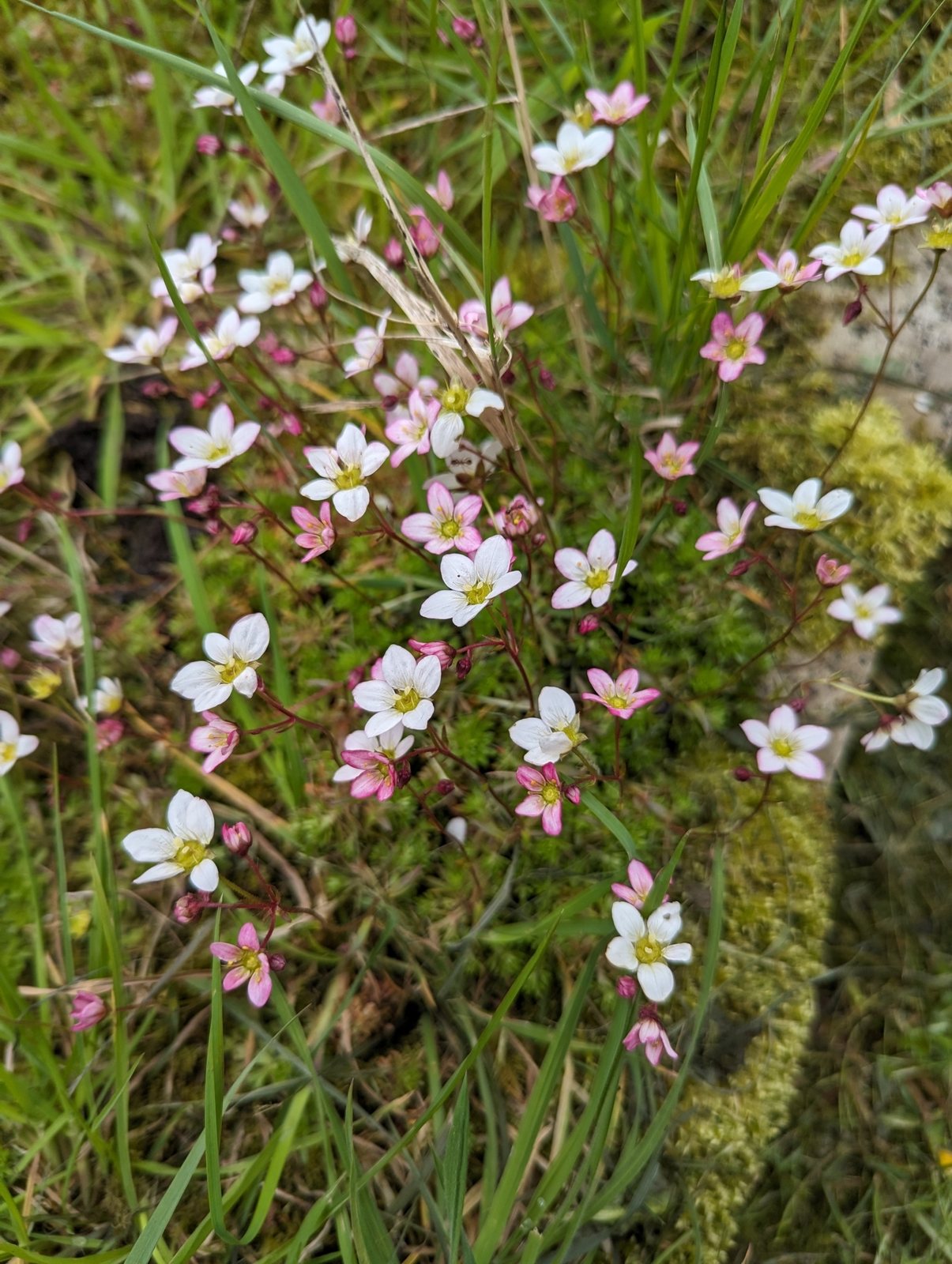
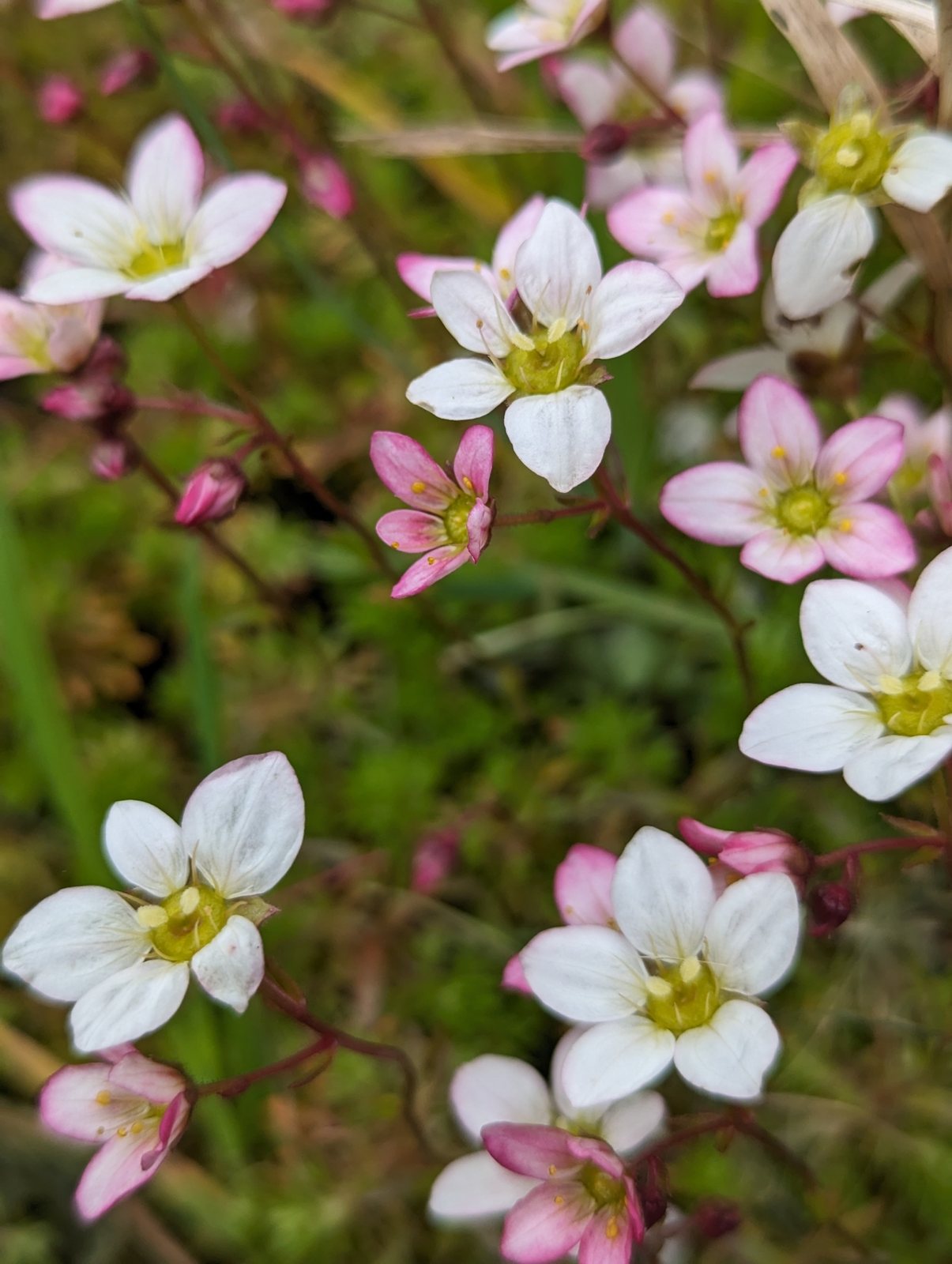
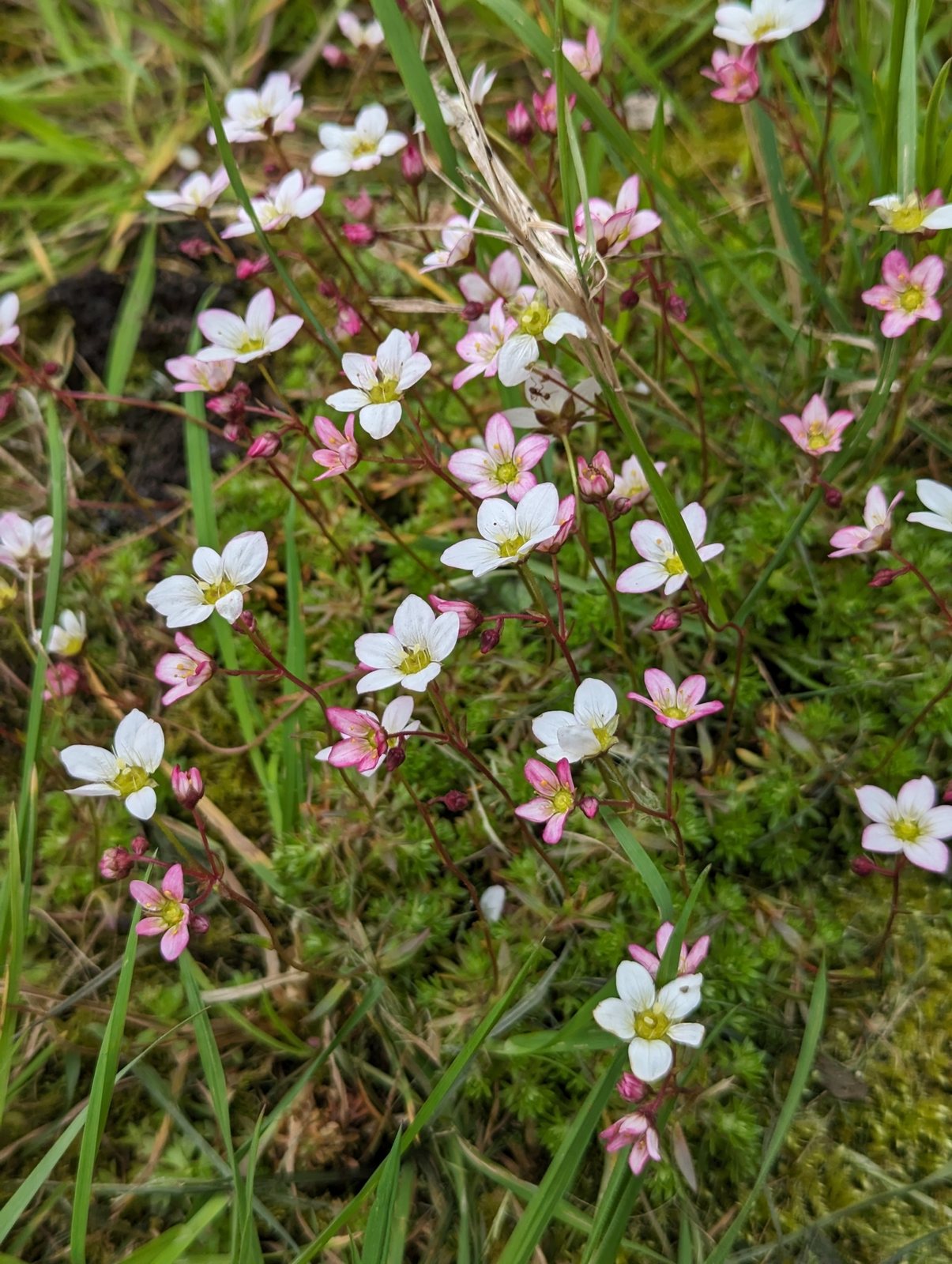
Mossy saxifrage is a group of compact, evergreen hybrids that form cushions of finely divided leaves, with white, pink or red flowers held above them in spring. Grow it in cool rock gardens, troughs or lightly shaded edges where the roots stay moist but never waterlogged; hot, dry summers are its main limitation.
At a glance
- Sun
- Partial shade, preferably morning sun and afternoon shade. Full sun is suitable in cool climates if the roots remain moist.
- Water
- Keep evenly moist during active growth. Water during dry spells, but let excess water drain freely; avoid both prolonged drought and winter saturation.
- Soil
- Humus-rich, gritty, well-drained soil that retains some moisture; slightly acidic to neutral conditions suit most cultivars.
- Height
- 0.3-0.7 ft (0.1-0.2 m), including flower stems
- Spread
- 0.5-1 ft (0.15-0.3 m)
- Flowers
- Spring to early summer; white, pink, rose or red flowers, depending on cultivar.
- Foliage
- Evergreen. Small, deeply divided green leaves packed into low, moss-like cushions.
- Growth
- Moderate; forms small cushions that gradually broaden.
- Care needed
- Medium
The year at a glance
- Pollinators
- Cold hardy
- Low allergen
| J | F | M | A | M | J | J | A | S | O | N | D | |
|---|---|---|---|---|---|---|---|---|---|---|---|---|
| Flowers | ||||||||||||
| Plant |
Northern hemisphere months. In Australia, shift them by six.
- Difficulty
- Moderate
- Toughness
- Needs looking after
Will it suit your garden?
Pick your zone, country, light and whether you have pets.
Full sun is 6 or more hours of direct sun a day, part shade 3 to 6 hours, shade under 3.
How it grows
Planting day
0.5 ft (0.15 m)
full size
About 3 years to full size.
From a typical nursery size, at an average rate for this kind of plant. A rule of thumb, not a forecast.
Good to know
- Cats and dogs
- Safe
- Growth rate
- Moderate
Care
Jobs through the year
- WaterMar–May, Sep–Oct, every 7 days
- Water established cushions at soil level when drying; keep lightly moist, never saturated, and check new plants more often.
- WaterJun–Aug, every 4 days
- During dry weather, water established cushions before they dry completely; new plants need closer monitoring.
- MulchMar
- Add a little compost around plants and renew a thin fine-grit collar without burying the crown.
- PruneMar
- Gently remove dead or browned foliage without cutting healthy green cushions.
- DeadheadMay–Jun, every 14 days
- Snip faded flower stems at their bases.
- DivideJun
- If centres are bare, divide healthy outer sections after flowering in cool, moist conditions.
- ProtectJun–Aug
- Provide afternoon shade during hot weather.
- ProtectOct–Nov
- Clear fallen leaves from cushions and ensure winter rain drains freely.
- Plant with the crown at soil level, in a position sheltered from strong afternoon sun.
- Water at soil level during dry spells, before the cushion dries out completely.
- Apply a light dressing of compost around the plant in spring; avoid heavy feeding.
- Use a thin collar of fine grit around the crown to keep leaves off wet soil.
- Divide healthy outer sections after flowering if the centre becomes bare.
Pruning. Snip off spent flower stems at their base after flowering. Remove dead or browned foliage gently, without cutting into healthy green cushions.
Through the year
- Early spring
- Remove dead foliage and check that the crown is not buried under debris or wet mulch.
- Spring
- Plant new specimens in cool weather and water them in thoroughly.
- Late spring
- Remove flower stems as blooms fade.
- Early summer
- Divide congested cushions after flowering, provided conditions are cool and moist.
- Summer
- Check soil moisture regularly and provide afternoon shade during hot weather.
- Autumn
- Clear fallen leaves from cushions and check drainage before winter rain.
In the garden
- Plant in cool rock-garden pockets between stones, where cushions soften the rock edges.
- Use in alpine troughs with small primroses and dwarf bulbs, keeping the compost moist but freely drained.
- Edge a lightly shaded path with low cushions and a short spring display of flowers.
- Tuck into moist, well-drained wall crevices away from hot afternoon sun.
Garden styles it suits: Alpine rock garden, Mountain lodge, Cottage garden, Woodland, Small-space and Pastel border.
Plant it with: Drumstick primrose, Snowdrops, Crocuses, Dwarf hostas and Maidenhair spleenwort.
Wildlife: The open flowers provide some nectar and pollen for small bees and other visiting insects.
Problems to watch for
- Crown or root rot in wet soil: improve drainage, keep the crown clear and discard badly rotted plants.
- Browning or dieback in hot, dry weather: provide afternoon shade and consistent moisture; do not compensate by leaving the roots waterlogged.
- Vine weevil larvae eating roots, especially in containers: inspect failing plants and use an appropriate biological nematode treatment when soil temperatures suit the product.
- Slugs and snails damaging young growth and flowers: inspect at dusk, remove hiding places nearby and use suitable controls if needed.
Safety
Not known to be toxic to people, cats, dogs or horses; no plant parts are recognized as poisonous. It is an ornamental plant, not a food crop.
Easily confused with
Irish moss (Sagina subulata)
Forms a finer, flatter mat of narrow, undivided leaves, with tiny white flowers rather than the larger white, pink or red flowers of mossy saxifrage.
Moss phlox (Phlox subulata)
Has stiff, needle-like leaves and spreading stems; its flowers have a narrow tube and broad, often notched lobes.
London pride (Saxifraga × urbium)
Has broad, leathery, spoon-shaped leaves with scalloped edges and taller, airy sprays of small flowers, rather than finely divided moss-like foliage.
The name
Saxifraga comes from Latin words meaning 'stone-breaker', while arendsii honours the German plant breeder Georg Arends.
Propagation. Divide healthy cushions after flowering or in early autumn, keeping roots attached to each section. Small non-flowering rosettes can also be rooted as cuttings; seed-grown plants may differ from the parent cultivar.
Checked against open data
- Accepted botanical name
- Saxifraga arendsii
Sources: GBIF (CC BY 4.0). The care and design notes are LandscapeGPT's own.
See it in your own yard.
Upload a photo of your yard and see it redesigned with plants that suit your climate, each checked against your zone.