False Solomon's seal
Maianthemum racemosum. Family Asparagaceae. Perennial.
Also called Solomon's plume, False spikenard, Smilacina racemosa.
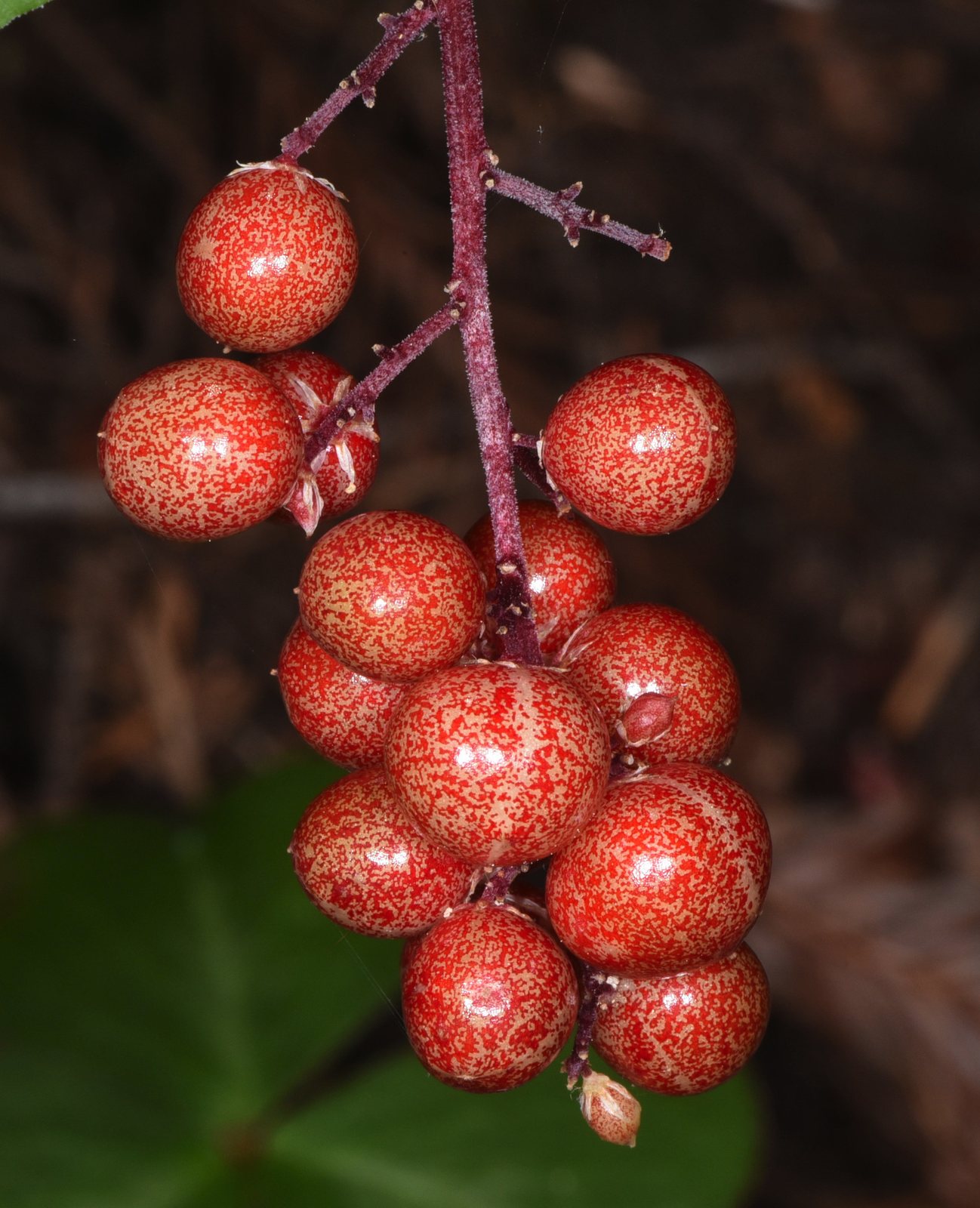
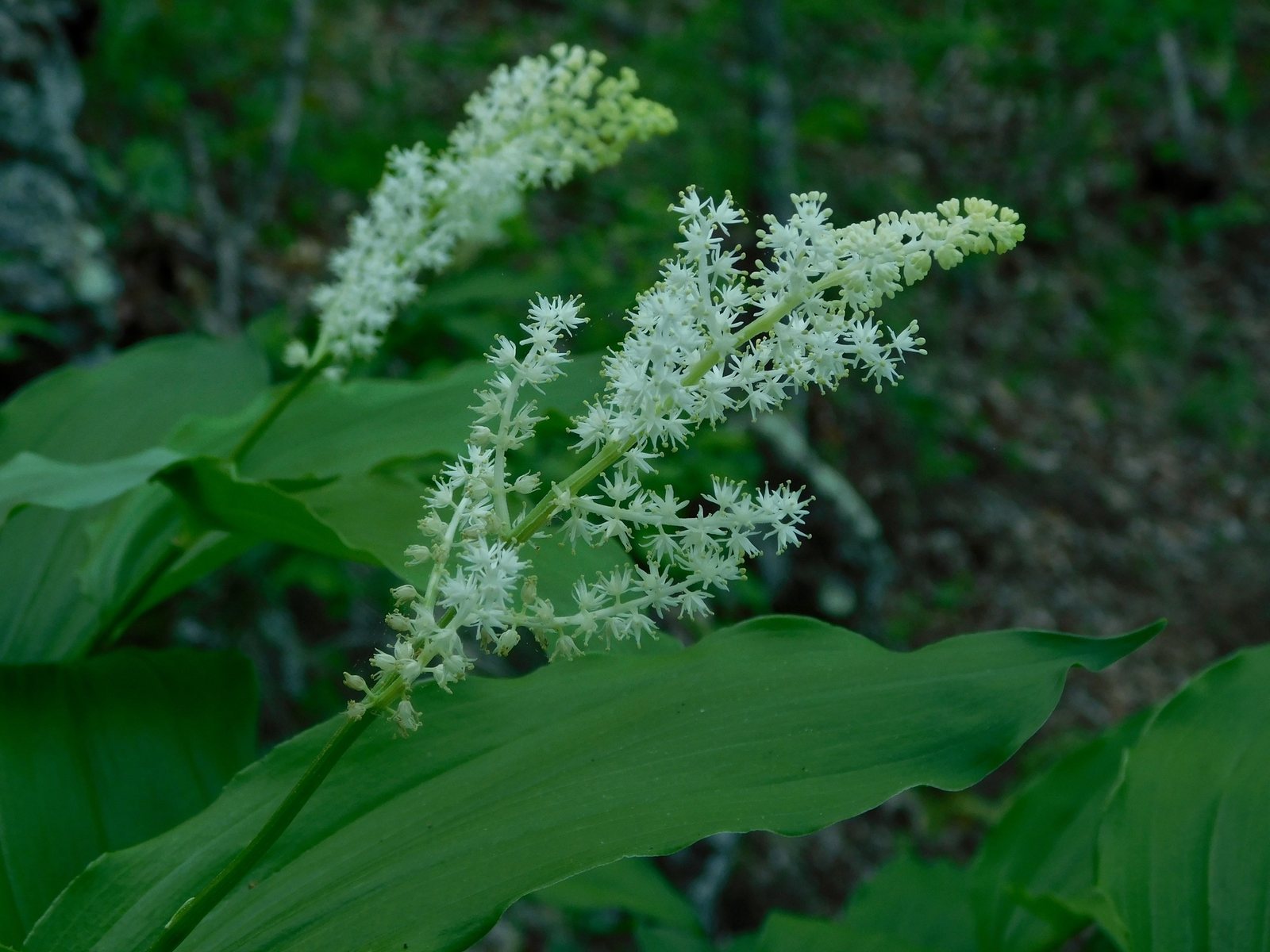
False Solomon's seal is a North American woodland perennial with arching, leafy stems and fluffy clusters of creamy-white flowers at their tips. Gardeners grow it for its graceful shape in shade, fragrant late-spring flowers, red autumn berries and yellow autumn foliage. It spreads gradually by underground rhizomes to form a colony.
At a glance
- Sun
- Partial shade to full shade; morning sun is suitable where the soil stays moist, but avoid hot afternoon sun.
- Water
- Keep the soil evenly moist during establishment and dry spells; established plants tolerate brief dry periods but may go dormant early.
- Soil
- Humus-rich, well-drained soil that retains moisture; slightly acidic to neutral soil is ideal, though the plant tolerates a wider pH range.
- Height
- 2-3 ft (0.6-0.9 m)
- Spread
- 1.5-2 ft (0.45-0.6 m) initially, forming wider colonies over time
- Flowers
- Late spring to early summer; small, fragrant, creamy-white flowers in branching clusters at the stem tips.
- Foliage
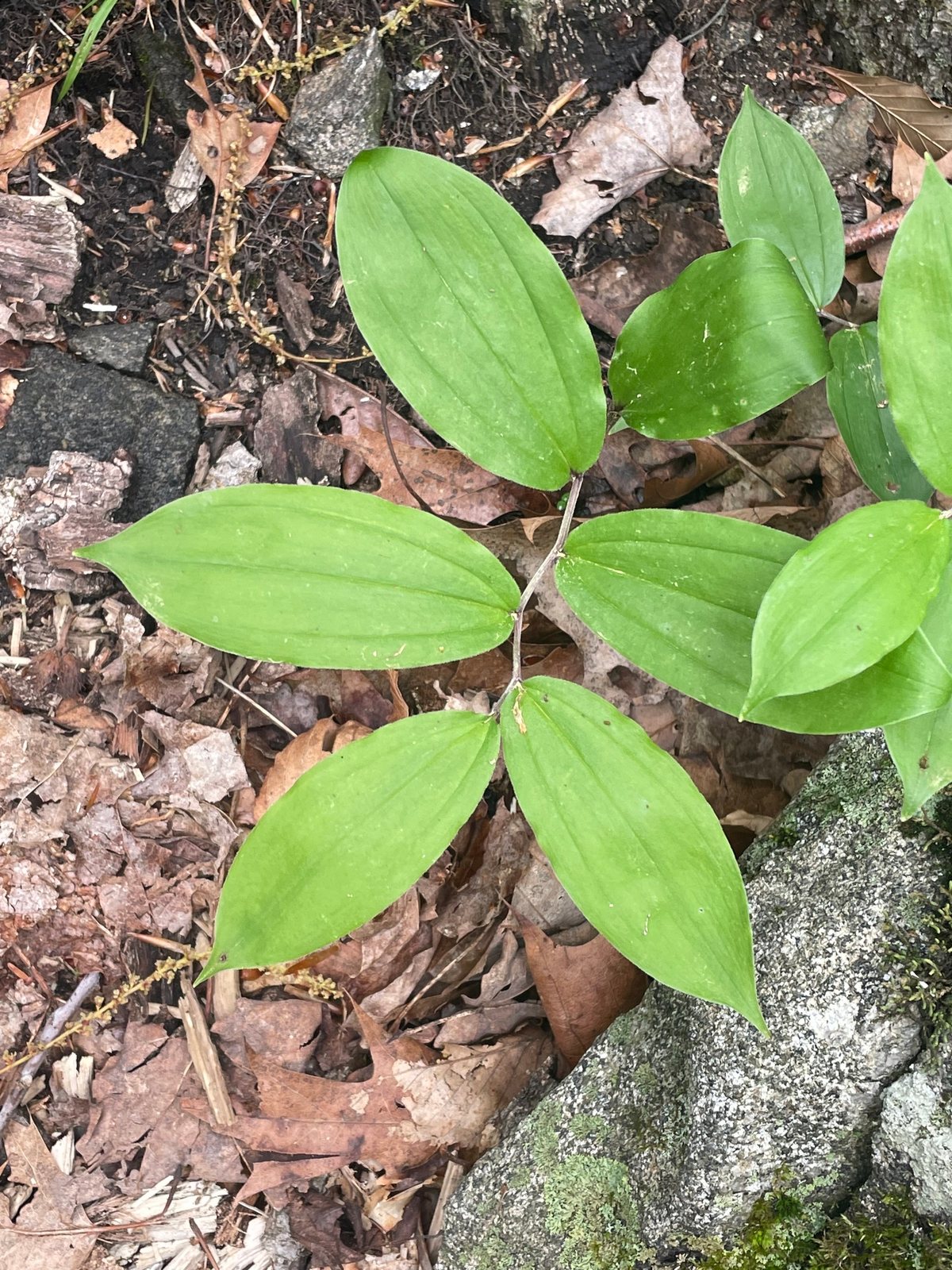
- Alternate, oval to lance-shaped green leaves with conspicuous parallel veins on arching stems; turns yellow in autumn and dies back for winter.
- Growth
- Moderate once established; slow to settle after planting.
- Care needed
- Low
The year at a glance
- Pollinators
- Cold hardy
- Wildlife
- Low allergen
- Fragrant
| J | F | M | A | M | J | J | A | S | O | N | D | |
|---|---|---|---|---|---|---|---|---|---|---|---|---|
| Flowers | ||||||||||||
| Fruit | ||||||||||||
| Plant |
Northern hemisphere months. In Australia, shift them by six.
- Difficulty
- Easy
- Toughness
- Fairly tough
Will it suit your garden?
Pick your zone, country, light and whether you have pets.
Full sun is 6 or more hours of direct sun a day, part shade 3 to 6 hours, shade under 3.
How it grows
Planting day
1 ft (0.3 m)
After 1 year
1.4 ft (0.42 m)
After 2 years
1.7 ft (0.53 m)
After 3 years
2.1 ft (0.65 m)
After 5 years
2.5 ft (0.75 m)
full size
About 4 years to full size.
From a typical nursery size, at an average rate for this kind of plant. A rule of thumb, not a forecast.
Good to know
- Cats and dogs
- Mildly toxic: may upset a stomach
- Native to
- the US and Canada
- Growth rate
- Slow
Care
Jobs through the year
- WaterApr–May, Sep–Oct, every 14 days
- Deep-water established clumps during dry spells; keep first-year plants evenly moist.
- WaterJun–Aug, every 7 days
- Water when prolonged dry weather dries the root zone, especially beneath thirsty trees.
- MulchMar–Apr
- Apply 5 cm of leaf mould or compost, keeping emerging shoots clear.
- PruneFeb
- Cut remaining dead stems to ground level before new growth; retain green stems and developing berries.
- DivideMar
- Divide dormant clumps only if crowded or spreading beyond their allotted space.
- ProtectMar–May, every 7 days
- Inspect emerging shoots for slugs and snails and remove pests by hand.
- ProtectOct–Nov
- Mark clump positions before the stems disappear for winter.
- Plant with the crown at soil level in a sheltered, shaded position.
- Water deeply during the first growing season and whenever prolonged dry weather dries the root zone.
- Apply a 2 in (5 cm) layer of leaf mould or compost each spring, keeping it clear of emerging shoots.
- Avoid routine high-nitrogen feeding; an annual compost mulch is usually enough.
- Leave established clumps undisturbed unless they become crowded or spread beyond their allotted space.
Pruning. Leave stems standing while the foliage remains green and berries are developing. Cut dead stems to ground level in late autumn or late winter, before new shoots emerge.
Through the year
- Late winter
- Remove any remaining dead stems before new shoots appear.
- Early spring
- Plant or divide dormant clumps, then water well.
- Spring
- Mulch with leaf mould or compost and check emerging shoots for slug damage.
- Summer
- Water during prolonged dry spells, particularly beneath thirsty trees.
- Autumn
- Leave berries for birds and allow the yellowing foliage to die back naturally.
- Late autumn
- Plant container-grown specimens while the soil is workable, and mark their positions before they disappear for winter.
In the garden
- Plant in loose groups beneath deciduous trees for arching foliage and late-spring flowers.
- Combine with ferns and sedges along shaded paths, where its stems soften the edges.
- Use behind spring bulbs and woodland ephemerals to fill space as their foliage dies down.
- Repeat through a woodland border with foamflowers and wild ginger for a layered ground-level planting.
Garden styles it suits: Woodland, Wildlife garden, Low-maintenance, Secret garden and Autumn colour.
Plant it with: Christmas fern, Maidenhair fern, Foamflower, Wild ginger, Woodland phlox and Pennsylvania sedge.
Wildlife: Flowers provide pollen for visiting insects, including small bees and flies. Birds and small mammals eat the ripe berries, and colonies provide low woodland cover.
Problems to watch for
- Slugs and snails may chew emerging shoots; check after dark, remove them by hand and use wildlife-conscious controls where needed.
- Brown leaf edges or early dormancy usually indicate drought or excessive sun; water deeply, mulch and provide more afternoon shade.
- Poor growth or rotting rhizomes can result from waterlogged soil; improve drainage or move the plant to a better-drained position.
- Occasional leaf spots are usually minor; remove badly affected leaves, avoid wetting foliage and clear diseased debris.
Safety
Not known to be toxic to cats, dogs or horses, and not generally considered poisonous to people. The berries can have a laxative effect and may cause digestive upset if eaten in quantity. Do not eat unidentified woodland berries: true Solomon's seal and some other lookalikes are poisonous.
Easily confused with
Solomon's seal (Polygonatum spp.)
True Solomon's seal has tubular flowers hanging beneath the stems from the leaf axils, usually followed by dark blue or black berries.
Star-flowered false Solomon's seal (Maianthemum stellatum)
Usually shorter, with narrower leaves and a small, unbranched terminal cluster of distinct star-shaped flowers rather than a dense, branching plume.
White baneberry (Actaea pachypoda)
White baneberry has divided leaves with toothed leaflets, rather than simple leaves with parallel veins. Its white berries have conspicuous dark tips and are poisonous.
The name
The common name refers to its resemblance to Solomon's seal, while racemosum refers to its clustered flowers.
Propagation. Divide rhizomes in early spring before growth starts, keeping several buds and a good root system on each piece. Fresh seed can be sown outdoors in autumn, but germination is slow and may take two winters; seedlings take several years to flower.
Checked against open data
- Accepted botanical name
- Maianthemum racemosum
- In the US and Canada
- Native in Alaska, Canada and the lower 48 states.
- Native range
- Alabama, Alaska, Alberta, Arizona, Arkansas, British Columbia, California, Colorado, Connecticut, Delaware, District of Columbia and Florida.
- Measured
- Average height 24 cm.
Sources: GBIF (CC BY 4.0), USDA PLANTS and Trefle (CC BY 4.0). The care and design notes are LandscapeGPT's own.
See it in your own yard.
Upload a photo of your yard and see it redesigned with plants that suit your climate, each checked against your zone.