Fernbush
Chamaebatiaria millefolium. Family Rosaceae. Shrub.
Also called Desert sweet.
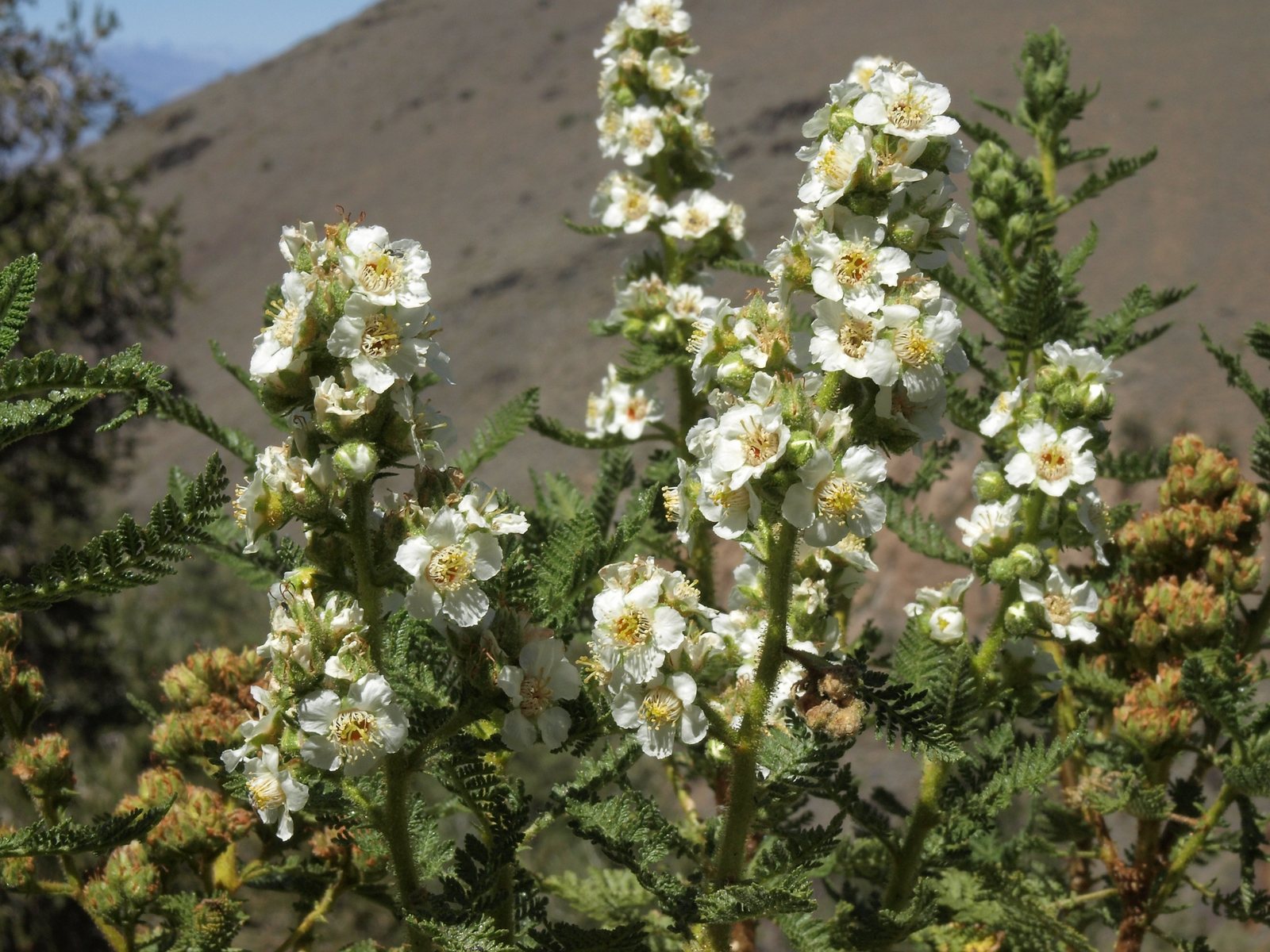
Fernbush is a rounded shrub native to dry, rocky parts of the western United States, grown for its aromatic, finely divided foliage and creamy-white summer flowers. It suits sunny, water-wise gardens with sharply drained soil. Despite its name and fern-like leaves, it is a flowering shrub, not a fern.
At a glance
- Sun
- Full sun; tolerates light shade but flowers less freely and may become open and leggy.
- Water
- Water regularly during establishment, letting the soil dry between soakings. Established plants need little supplemental water except during prolonged drought.
- Soil
- Well-drained sandy, gravelly or rocky soil; tolerates poor and alkaline soils. Avoid waterlogged ground and heavy soil that stays wet in winter.
- Height
- 3-6 ft (0.9-1.8 m)
- Spread
- 3-6 ft (0.9-1.8 m)
- Flowers
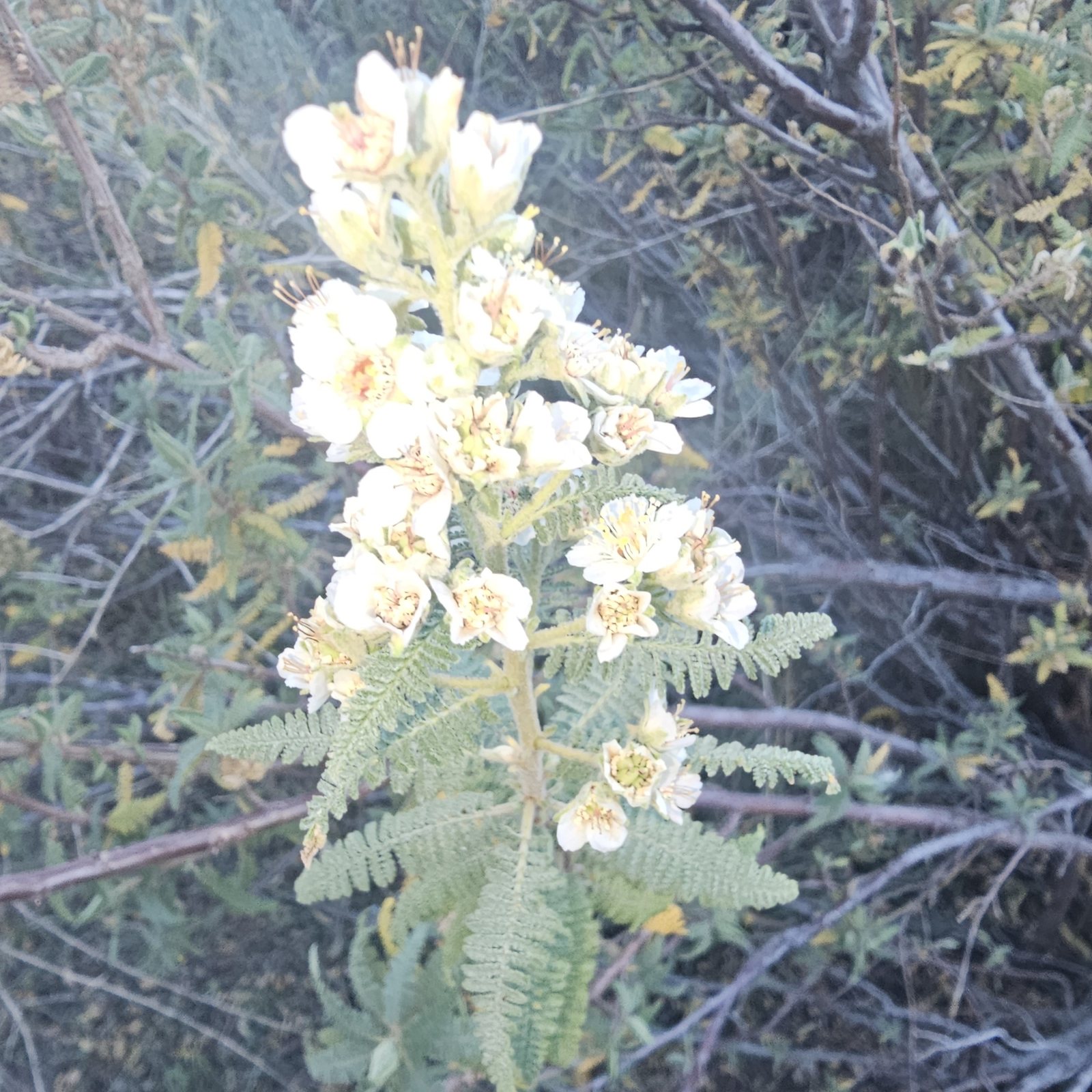
- Creamy-white flowers in upright, branching clusters from early to late summer, depending on climate.
- Foliage
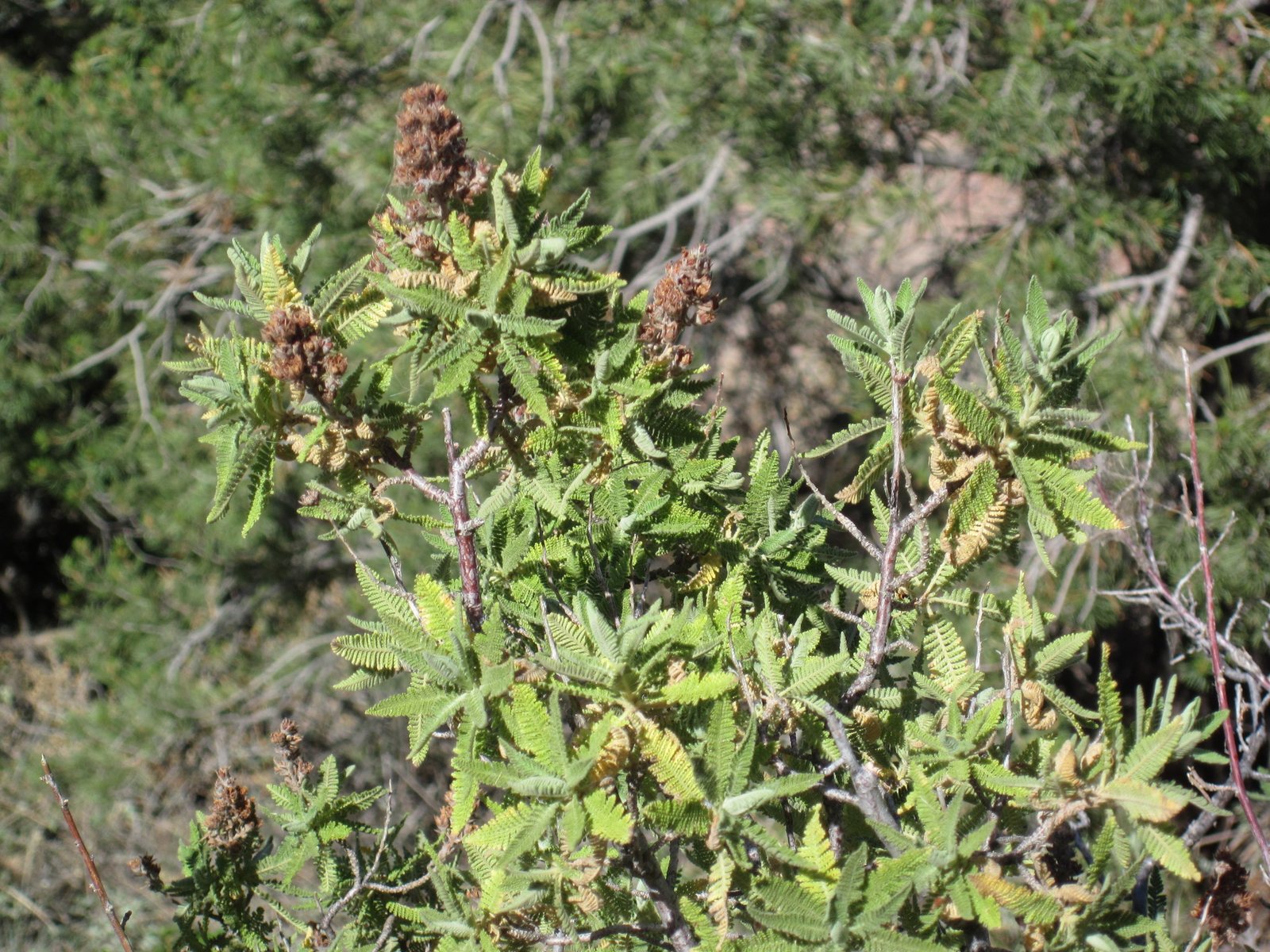
- Finely divided, fern-like green to grey-green leaves with a resinous scent when brushed. Semi-evergreen in mild climates and largely deciduous in cold winters.
- Growth
- Moderate
- Care needed
- Low
The year at a glance
- Pollinators
- Deer resistant
- Drought tolerant
- Cold hardy
- Wildlife
- Low allergen
- Fragrant
| J | F | M | A | M | J | J | A | S | O | N | D | |
|---|---|---|---|---|---|---|---|---|---|---|---|---|
| Flowers | ||||||||||||
| Fruit | ||||||||||||
| Plant |
Northern hemisphere months. In Australia, shift them by six.
- Difficulty
- Easy
- Toughness
- Very tough
Will it suit your garden?
Pick your zone, country, light and whether you have pets.
Full sun is 6 or more hours of direct sun a day, part shade 3 to 6 hours, shade under 3.
How it grows
Planting day
1.6 ft (0.5 m)
After 1 year
2.2 ft (0.67 m)
After 2 years
2.8 ft (0.84 m)
After 3 years
3 ft (1 m)
After 5 years
4 ft (1.4 m)
full size
About 5 years to full size.
From a typical nursery size, at an average rate for this kind of plant. A rule of thumb, not a forecast.
Good to know
- Cats and dogs
- Safe
- Native to
- the US
- Growth rate
- Moderate
Care
Jobs through the year
- WaterApr–May, Sep, every 28 days
- Water established shrubs only in prolonged drought; water new plants more often as the root zone dries.
- WaterJun–Aug, every 21 days
- Deep-water established shrubs only during extended dry spells, allowing soil to dry between soakings.
- PruneFeb–Mar
- Remove damaged wood and lightly shorten wayward shoots before new growth; do not shear.
- MulchApr
- Apply or refresh a thin gravel mulch, keeping the stem bases clear.
- DeadheadAug–Sep
- Optionally remove faded flower clusters, leaving some if seed heads are wanted.
- ProtectOct–Nov
- Clear debris from the crown and ensure winter rain drains away freely.
- Plant with the root crown level with the surrounding soil in a sunny, freely draining position.
- Water deeply through the first growing season, allowing the soil to dry between waterings.
- Once established, avoid frequent irrigation, especially in cool weather.
- Use a thin gravel mulch and keep it clear of the stems.
- Do not routinely fertilize; rich feeding encourages loose growth.
Pruning. In late winter or early spring, remove dead or damaged wood and lightly shorten wayward shoots to retain a rounded shape. Avoid regular shearing; remove spent flower clusters after flowering only if you want a tidier appearance.
Through the year
- Early spring
- Remove winter-damaged stems and lightly shape before strong new growth begins.
- Spring
- Plant in well-drained soil and water thoroughly; spring planting is safest in cold or winter-wet gardens.
- Late spring
- Check newly planted shrubs and water when the root zone has begun to dry.
- Summer
- Enjoy the flowers and visiting insects; water established shrubs only during extended dry spells.
- Late summer
- Remove faded flower clusters if desired, or leave some to develop seed.
- Autumn
- Clear fallen debris from around the crown and check that winter rain can drain away freely.
In the garden
- Use as a medium-sized structural shrub in a gravel garden, contrasting its fine foliage with boulders and coarse-leaved plants.
- Combine with penstemons, yarrows and ornamental grasses in a sunny, low-water border.
- Plant in loose groups on a dry slope where its rounded form can develop without clipping.
- Place beside a sunny path where its scented foliage can be appreciated without obstructing access.
Garden styles it suits: Desert / xeriscape, Dry gravel garden, Southwestern, Mountain lodge, Pollinator garden and Low-maintenance.
Plant it with: Penstemon, Yarrow, Little bluestem, Blue grama, Russian sage and Sulphur buckwheat.
Wildlife: The flowers attract bees and other pollinating insects. Its branching growth also provides shelter for small garden wildlife.
Problems to watch for
- Root and crown rot in persistently wet soil: improve drainage or move the plant to a raised, gravelly position; reduce irrigation.
- Sparse flowering and leggy growth in shade: move to full sun and avoid high-nitrogen fertilizer.
- Poor establishment from drought: water the original root ball deeply during the first season rather than assuming a young plant is already drought-tolerant.
Safety
Not known to be toxic to people, cats, dogs or horses, but reliable species-specific safety information is limited. No particular poisonous part is established; treat it as an ornamental rather than an edible plant.
Easily confused with
Sweetfern (Comptonia peregrina)
Sweetfern has simple, deeply lobed leaves rather than fernbush's finely divided leaves, and bears inconspicuous catkin-like flowers instead of showy creamy-white clusters.
False spiraea (Sorbaria sorbifolia)
False spiraea has pinnate leaves with much larger, sharply toothed leaflets and often forms suckering colonies; fernbush has much finer foliage and is adapted to drier soil.
The name
The common name describes its fern-like foliage, while the species name millefolium means 'thousand-leaved', referring to the finely divided leaves.
Propagation. Grow from seed sown in a free-draining medium, or take softwood to semi-ripe cuttings in late spring or summer. Seed-grown plants may vary in habit.
Checked against open data
- Accepted botanical name
- Chamaebatiaria millefolium
- In the US and Canada
- Native in the lower 48 states.
- Native range
- Arizona, California, Idaho, Nevada, Oregon and Utah.
- Measured
- Soil pH 7 to 8. Average height 122 cm.
Sources: GBIF (CC BY 4.0), USDA PLANTS and Trefle (CC BY 4.0). The care and design notes are LandscapeGPT's own.
See it in your own yard.
Upload a photo of your yard and see it redesigned with plants that suit your climate, each checked against your zone.