Field rose
Rosa arvensis. Family Rosaceae. Climber.
Also called Trailing rose.
Field rose is a deciduous wild rose native to Europe, with long, prickly stems that trail over the ground or scramble through shrubs. Gardeners grow it for its single white summer flowers, autumn hips and informal habit. Give it room in a hedge or woodland-edge planting rather than a small, tidy border.
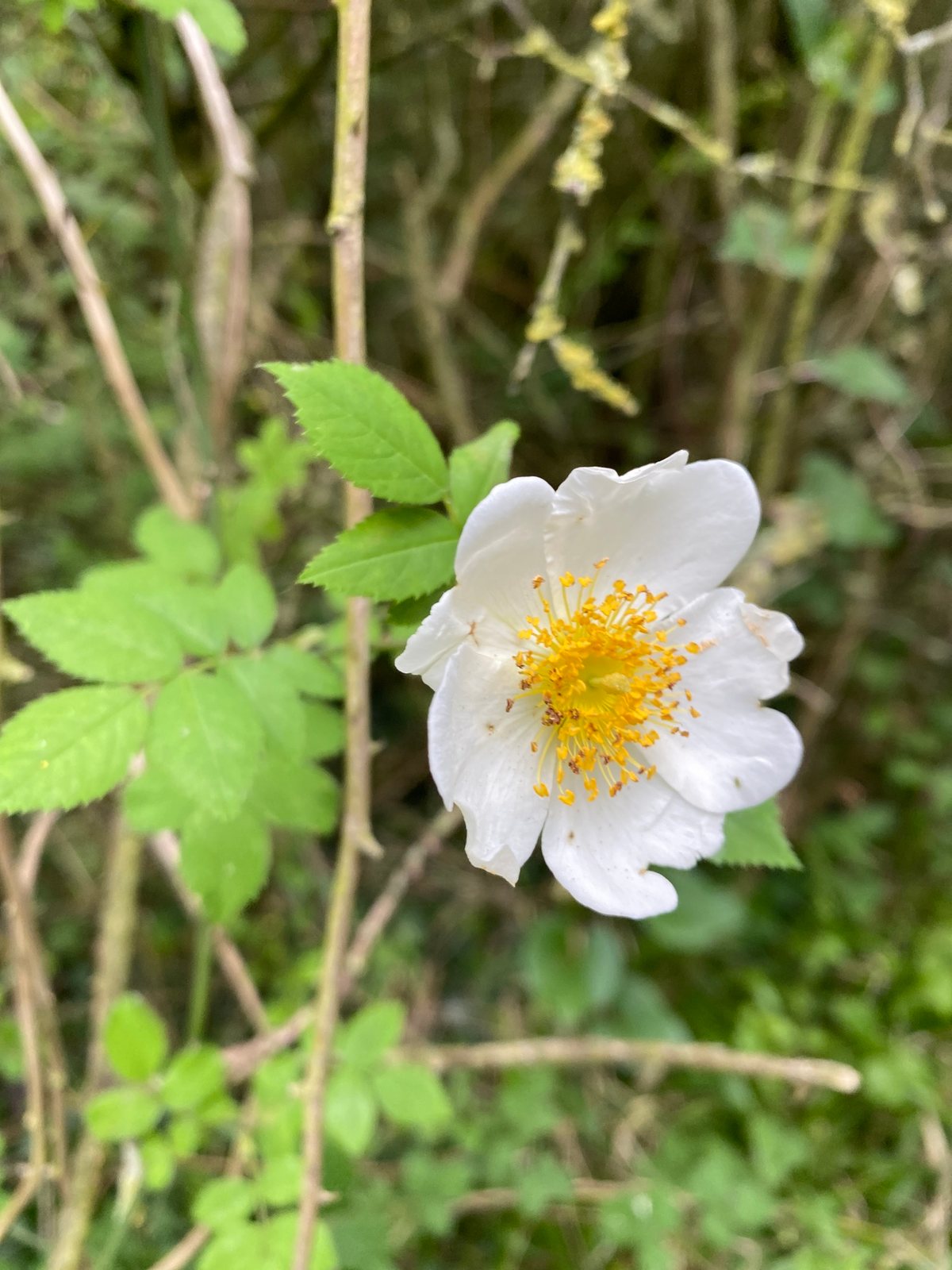
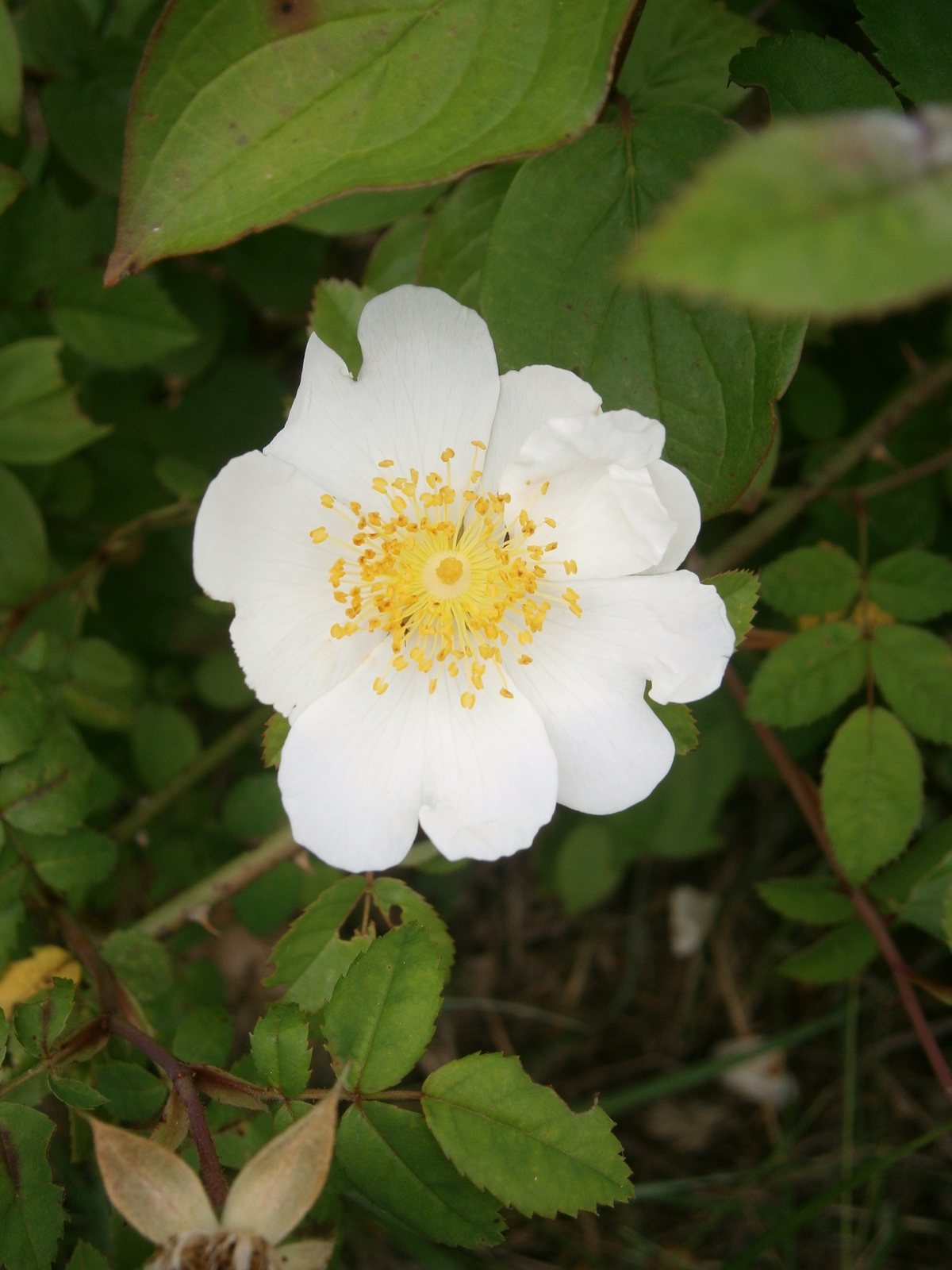
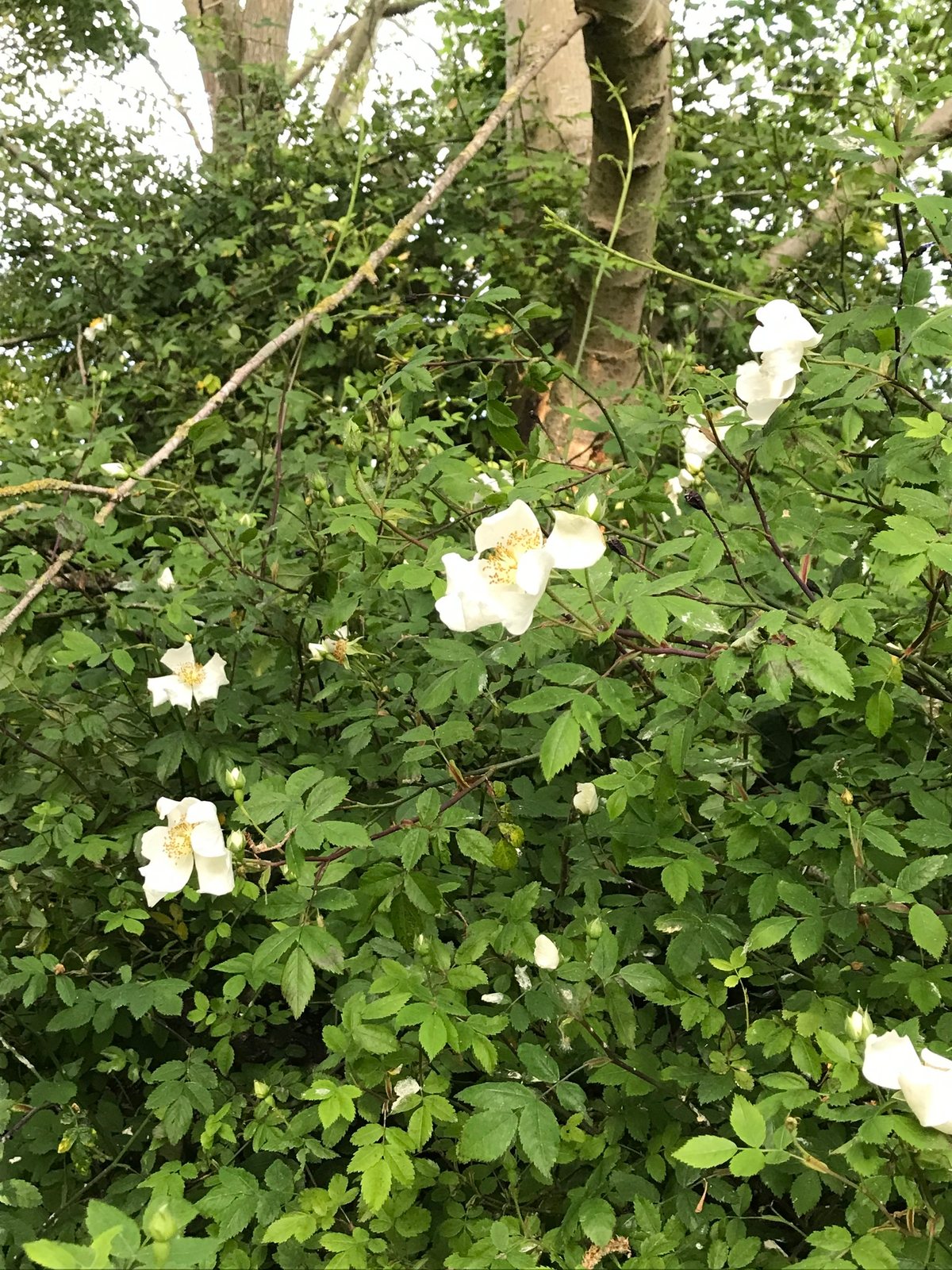
At a glance
- Sun
- Full sun or partial shade; flowers best with several hours of direct sun.
- Water
- Water regularly during the first growing season. Once established, water deeply during prolonged dry spells, especially against walls or beneath trees.
- Soil
- Moist but well-drained soil, including clay or chalk; tolerates a broad pH range. Avoid persistently waterlogged ground.
- Height
- 5-8 ft (1.5-2.4 m), depending on support
- Spread
- 8-13 ft (2.4-4 m)
- Flowers
- Single white flowers with yellow stamens in late spring to early summer; flowers once each year.
- Foliage
- Green, pinnate leaves, usually with five or seven toothed leaflets; deciduous.
- Growth
- Moderate to fast once established
- Care needed
- Medium
The year at a glance
- Pollinators
- Heat tolerant
- Wildlife
- Low allergen
- Fragrant
| J | F | M | A | M | J | J | A | S | O | N | D | |
|---|---|---|---|---|---|---|---|---|---|---|---|---|
| Flowers | ||||||||||||
| Fruit | ||||||||||||
| Plant |
Northern hemisphere months. In Australia, shift them by six.
- Difficulty
- Moderate
- Toughness
- Very tough
Will it suit your garden?
Pick your zone, country, light and whether you have pets.
Full sun is 6 or more hours of direct sun a day, part shade 3 to 6 hours, shade under 3.
How it grows
Planting day
2 ft (0.6 m)
After 1 year
3 ft (0.98 m)
After 2 years
4 ft (1.4 m)
After 3 years
6 ft (1.7 m)
After 5 years
6 ft (1.8 m)
full size
About 3 years to full size.
From a typical nursery size, at an average rate for this kind of plant. A rule of thumb, not a forecast.
Good to know
- Cats and dogs
- Safe
- Native to
- the UK
- Growth rate
- Fast
Care
Jobs through the year
- WaterApr–May, Sep–Oct, every 21 days
- Water established plants during dry spells only; newly planted roses need more regular deep watering.
- WaterJun–Aug, every 14 days
- Water deeply during prolonged drought, especially beside walls or beneath trees.
- MulchMar–Apr
- Mulch with compost or well-rotted manure, keeping it away from stem bases.
- FeedApr
- Apply a light balanced rose feed only if growth is weak.
- PruneFeb–Mar
- Remove dead or broken stems and check that supports and ties are secure.
- PruneJul–Aug
- After flowering, thin crowded old stems and loosely tie in young shoots; retain hips where wanted.
- PruneMay–Oct, every 30 days
- Lift and secure trailing stems or remove rooted sections before they spread.
- ProtectMay–Jun, every 7 days
- Check soft shoots for aphids and wash off colonies while preserving beneficial insects.
- Water deeply during dry weather in its first year rather than giving frequent light sprinklings.
- Mulch in spring with compost or well-rotted manure, keeping it away from the stem bases.
- Feed lightly with a balanced rose fertiliser in spring if growth is weak; avoid heavy nitrogen feeding.
- Tie long stems loosely to sturdy wires or supports; it cannot attach itself.
- Remove or redirect trailing stems before they root where they touch the soil.
Pruning. Prune after flowering, removing dead or damaged wood and cutting a few of the oldest stems back to the base when growth becomes crowded. Retain vigorous young stems for next year's flowers, and leave spent flowers if you want hips.
Through the year
- Late autumn
- Plant bare-root roses while the soil is workable and not waterlogged or frozen.
- Late winter
- Check supports and ties, and remove dead or broken stems.
- Spring
- Mulch, feed lightly if needed, and water newly planted roses during dry spells.
- Early summer
- Check tender shoots for aphids and guide new stems onto their supports.
- After flowering
- Thin crowded growth and tie in young stems; retain spent flowers for hips.
- Autumn
- Remove unwanted rooted stems and leave hips for birds.
In the garden
- Thread through a mixed native hedge for white flowers, hips and nesting cover.
- Train along a sturdy fence at a woodland edge to soften its outline.
- Let it scramble over a large bank where trailing stems have room to spread.
- Grow over a broad rustic arch with a late-flowering clematis to extend the season.
Garden styles it suits: English country, Cottage garden, Woodland, Wildlife garden, Native hedgerow and Rewilded.
Plant it with: Hawthorn, Hazel, Field maple, Foxglove, Hardy geranium and Late-flowering clematis.
Wildlife: Open flowers provide pollen for bees and other insects. Hips feed birds, while dense, prickly growth offers shelter and potential nesting sites.
Problems to watch for
- Aphids on soft shoots: dislodge with water and encourage ladybirds and other predators; avoid routine broad-spectrum spraying.
- Black spot: collect fallen infected leaves, improve airflow and water the soil rather than the foliage.
- Powdery mildew: prevent drought stress, mulch the root area and thin congested growth.
- Unwanted spread from trailing stems: lift stems off the soil or cut out rooted sections before they establish.
Safety
Not known to be toxic to people, cats, dogs or horses. Prickles can injure skin, mouths and eyes; hairs around the seeds inside the hips can irritate the mouth and digestive tract.
Easily confused with
Dog rose (Rosa canina)
Usually more upright and arching, with pink or white flowers. Field rose has styles joined into a conspicuous central column, whereas dog rose has separate styles.
Evergreen rose (Rosa sempervirens)
Also has white flowers and joined styles, but its leaflets are glossier and more leathery, and it retains foliage in mild climates.
Multiflora rose (Rosa multiflora)
Usually bears much larger clusters of small white flowers and has distinctly fringed stipules at the base of each leaf stalk.
The name
The Latin arvensis means 'of fields', referring to the open country and field margins where this rose grows.
Propagation. Layer a low-growing stem into the soil and separate it once well rooted, or take hardwood cuttings in autumn. Seed needs cold stratification and can germinate slowly; seedlings may vary if other roses grow nearby.
Checked against open data
- Accepted botanical name
- Rosa arvensis
- Native range
- Albania, Austria, Belgium, Bulgaria, Corse, Czechoslovakia, France, Germany, Great Britain, Greece, Hungary and Ireland.
- Measured
- Soil pH 6.5 to 7. Average height 100 cm.
Sources: GBIF (CC BY 4.0) and Trefle (CC BY 4.0). The care and design notes are LandscapeGPT's own.
See it in your own yard.
Upload a photo of your yard and see it redesigned with plants that suit your climate, each checked against your zone.