Firesticks
Euphorbia tirucalli 'Sticks on Fire'. Family Euphorbiaceae. Succulent.
Also called Sticks on Fire, Red pencil tree, Firestick plant.
Firesticks is an upright, branching succulent grown for its pencil-thin stems, which turn yellow, orange and red in strong light, especially during cooler weather. It makes a striking container plant or dry-garden accent in frost-free climates, but its highly irritating milky sap means it needs careful placement and handling.
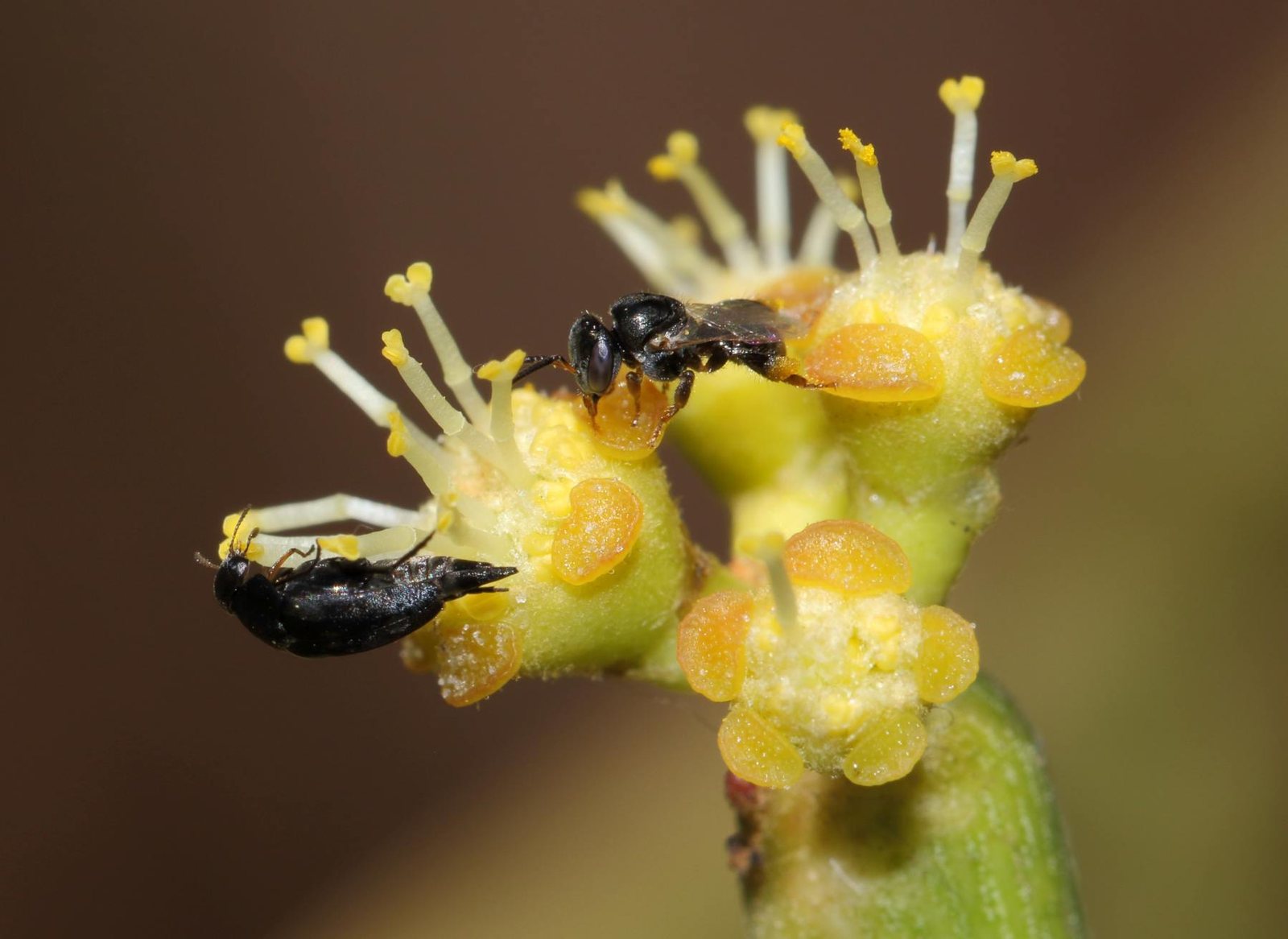
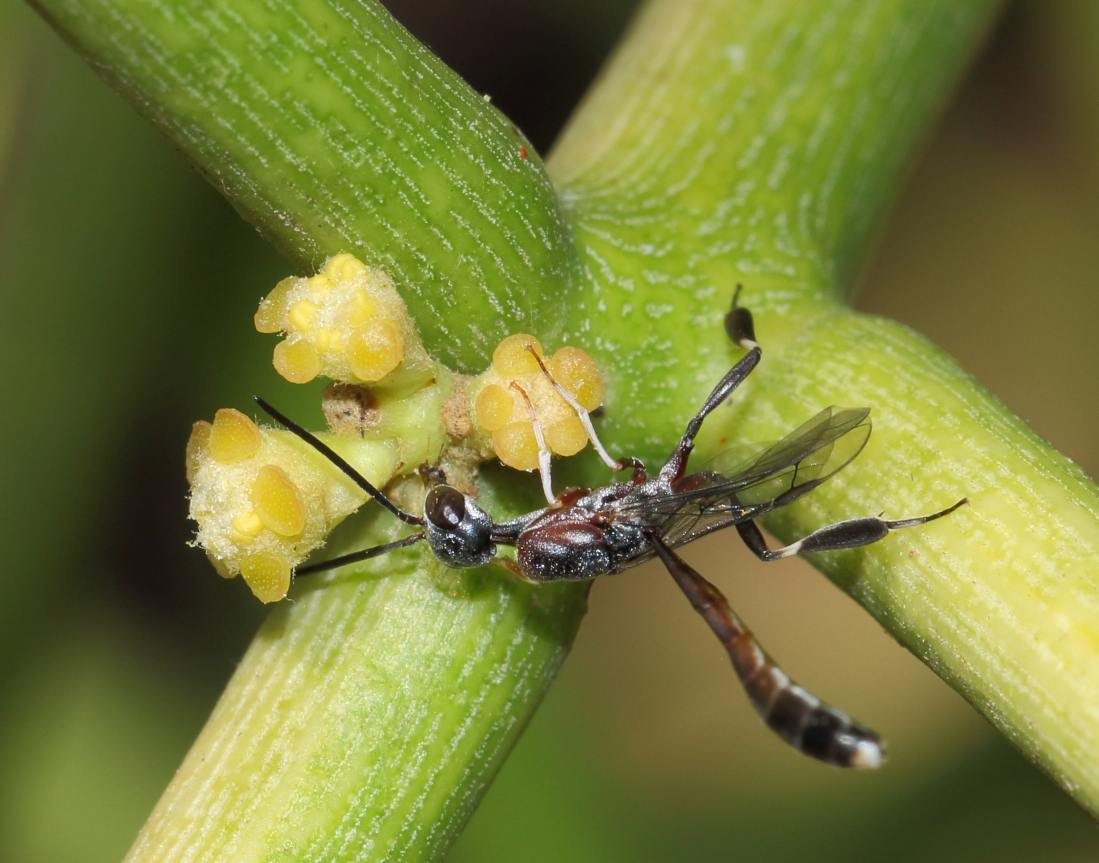
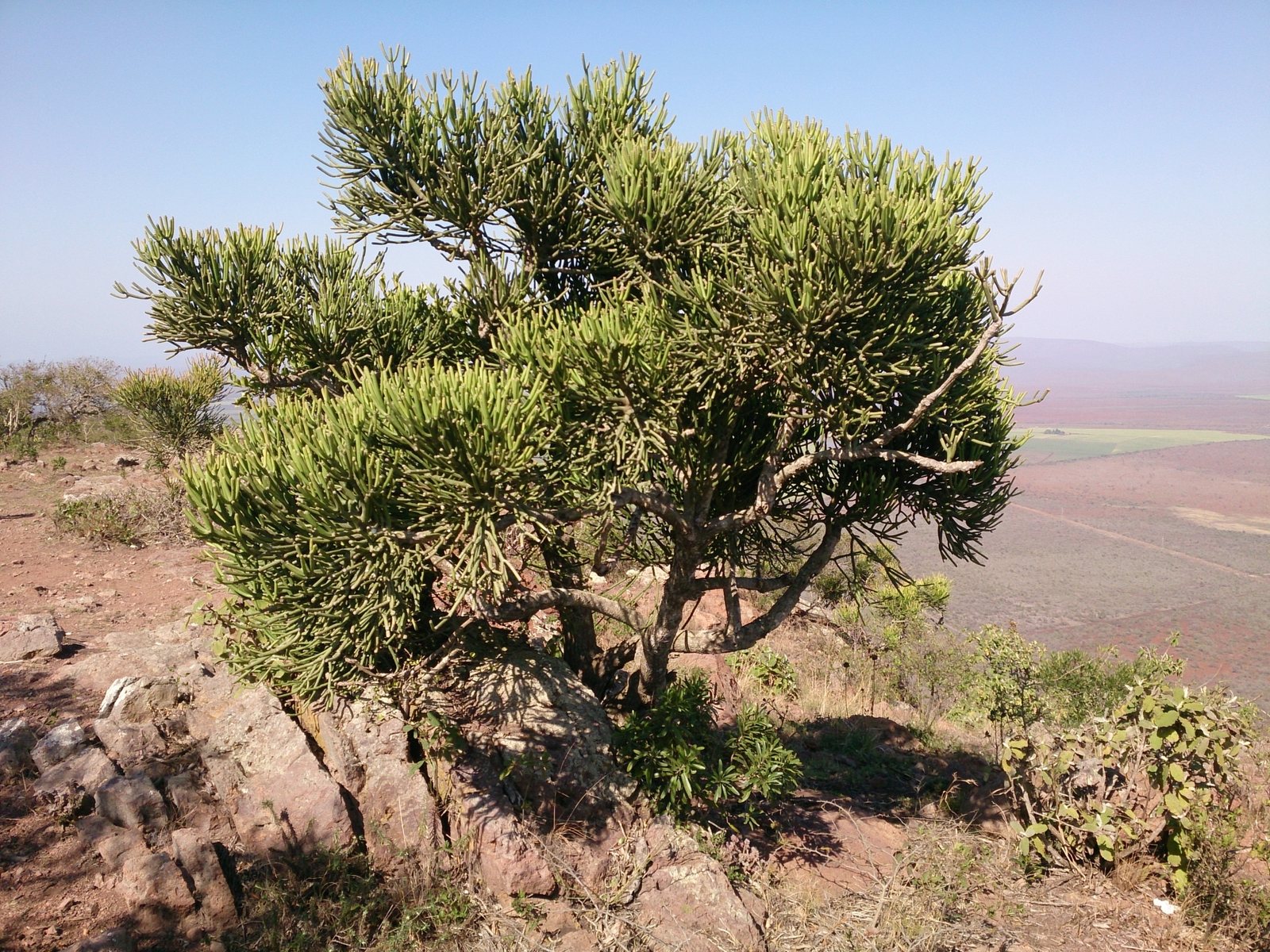
At a glance
- Sun
- Full sun for the strongest colour; tolerates partial sun but becomes greener. Acclimatise indoor-grown plants gradually to direct outdoor sun.
- Water
- Low once established. Water thoroughly, then let the soil dry out before watering again; keep much drier in winter.
- Soil
- Very freely draining sandy or gritty soil. In containers, use cactus compost amended with pumice, grit or perlite, and a pot with drainage holes.
- Height
- 4-8 ft (1.2-2.4 m)
- Spread
- 3-5 ft (0.9-1.5 m)
- Foliage
- Evergreen. Smooth, cylindrical, branching stems provide almost all the display. Tiny leaves appear briefly on new growth, then drop; stem colour ranges from green to yellow, orange and red.
- Growth
- Moderate in warm weather; slow in cool conditions.
- Care needed
- Medium
The year at a glance
- Deer resistant
- Drought tolerant
- Heat tolerant
| J | F | M | A | M | J | J | A | S | O | N | D | |
|---|---|---|---|---|---|---|---|---|---|---|---|---|
| Plant |
Northern hemisphere months. In Australia, shift them by six.
- Difficulty
- Moderate
- Toughness
- Needs looking after
Will it suit your garden?
Pick your zone, country, light and whether you have pets.
Full sun is 6 or more hours of direct sun a day, part shade 3 to 6 hours, shade under 3.
How it grows
Planting day
0.8 ft (0.25 m)
After 1 year
1.5 ft (0.45 m)
After 2 years
2.1 ft (0.65 m)
After 3 years
2.8 ft (0.85 m)
After 5 years
4 ft (1.2 m)
About 8 years to full size.
From a typical nursery size, at an average rate for this kind of plant. A rule of thumb, not a forecast.
Good to know
- Cats and dogs
- Toxic
- Growth rate
- Slow
Care
Jobs through the year
- WaterMar–May, Sep–Oct, every 21 days
- Grow in a movable pot here; water only when the root zone is completely dry.
- WaterJun–Aug, every 14 days
- Water the pot thoroughly only after drying; shelter from persistent rain and drain freely.
- WaterJan–Feb, Nov–Dec, every 42 days
- Under bright frost-free cover, water very sparingly only if fully dry and starting to shrivel.
- FeedApr
- Give one half-strength cactus feed as growth resumes.
- PruneMay–Jun
- Trim only as needed; toxic sap requires waterproof gloves, sleeves and eye protection.
- ProtectSep–Oct
- Move pots into bright cover before cold nights or frost; aim for at least 10°C.
- ProtectJun
- Move outdoors only once nights stay mild, acclimatising gradually to direct sun.
- Water only after the root zone has dried; never leave a container standing in water.
- Give container plants a half-strength cactus fertiliser once in spring; avoid heavy feeding.
- Bring pots under bright, frost-free cover before cold weather; a winter minimum around 50°F (10°C) is a useful safety margin.
- Use a light gravel mulch rather than moisture-holding organic mulch against the stems.
- Wear waterproof gloves, long sleeves and eye protection when handling damaged stems; keep the plant away from children, pets and busy paths.
Pruning. Prune sparingly in late spring or early summer, removing dead growth and shortening overlong branches with clean secateurs. Avoid touching the milky sap, contain dripping cut material and wash tools carefully after use.
Through the year
- Early spring
- Check roots and drainage; repot only if crowded, using a freely draining succulent mix.
- Spring
- Resume watering as growth starts and give container plants one light feed.
- Late spring
- Move sheltered plants outdoors once nights are reliably mild, introducing direct sun gradually.
- Early summer
- Prune only where needed, wearing gloves and eye protection.
- Summer
- Check soil before watering and inspect branch joints for mealybugs.
- Autumn
- Move pots under cover before frost or prolonged cold rain; reduce watering.
- Winter
- Provide the brightest frost-free position available and water very sparingly.
In the garden
- Use as a single architectural specimen in a heavy, well-drained container, away from seating and circulation routes.
- Combine with blue-grey agaves and low succulents for contrasting colour and shape in a frost-free gravel garden.
- Plant against a plain wall where its fine branching outline and seasonal colour are easy to see.
- Use as an upright accent among low, drought-tolerant plants in warm, dry courtyards.
Garden styles it suits: Desert modern, Architectural minimal, Contemporary minimal, Dry gravel garden, Desert / xeriscape and Modern Mediterranean.
Plant it with: Foxtail agave, Blue chalksticks, Flapjack succulent, Golden barrel cactus and Echeveria.
Wildlife: Offers little food value for garden wildlife and is not a useful choice where flowers for pollinators are the priority.
Problems to watch for
- Root or stem rot from wet soil: improve drainage, stop watering until dry and remove affected material using sap precautions; badly rotted plants may not recover.
- Mealybugs or scale insects: inspect branch joints, isolate affected pots and use a labelled treatment suitable for succulents.
- Cold damage causing dark, soft stems: move under frost-free cover and remove dead tissue once the extent of damage is clear.
- Sun scorch after a sudden move outdoors: introduce stronger light gradually; damaged patches will not regain their original colour.
Safety
Toxic to people, cats, dogs and horses. All parts contain milky latex that can cause severe skin irritation, blistering and serious eye injury, including temporary loss of vision. Swallowing it can burn the mouth and cause vomiting or diarrhoea. Keep broken stems out of reach; eye exposure needs immediate prolonged rinsing with clean water and urgent medical advice.
Easily confused with
Pencil tree (Euphorbia tirucalli)
The ordinary green form has much the same pencil-like branching but usually stays predominantly green and can grow far larger.
Mistletoe cactus (Rhipsalis baccifera)
Has flexible, trailing green stems, small cactus areoles and often white berries; Firesticks forms a stiff, upright shrub and releases irritating milky latex when damaged.
The name
Firesticks and 'Sticks on Fire' refer to the flame-like yellow, orange and red colouring of its slender stems.
Propagation. Propagate from stem cuttings in warm weather. Wearing waterproof gloves and eye protection, take a cutting, allow the cut end to dry and callus for several days, then insert it into a dry, gritty propagation mix; water sparingly once rooting begins. Keep cuttings and sap away from children and animals.
Checked against open data
- Accepted botanical name
- Euphorbia tirucalli
- In the US and Canada
- Introduced in Hawaii, the lower 48 states, Pacific Basin, Puerto Rico and US Virgin Islands.
- Native range
- Madagascar.
- Measured
- Average height 420 cm.
Sources: GBIF (CC BY 4.0), USDA PLANTS and Trefle (CC BY 4.0). The care and design notes are LandscapeGPT's own.
See it in your own yard.
Upload a photo of your yard and see it redesigned with plants that suit your climate, each checked against your zone.