Foxtail palm
Wodyetia bifurcata. Family Arecaceae. Tree.
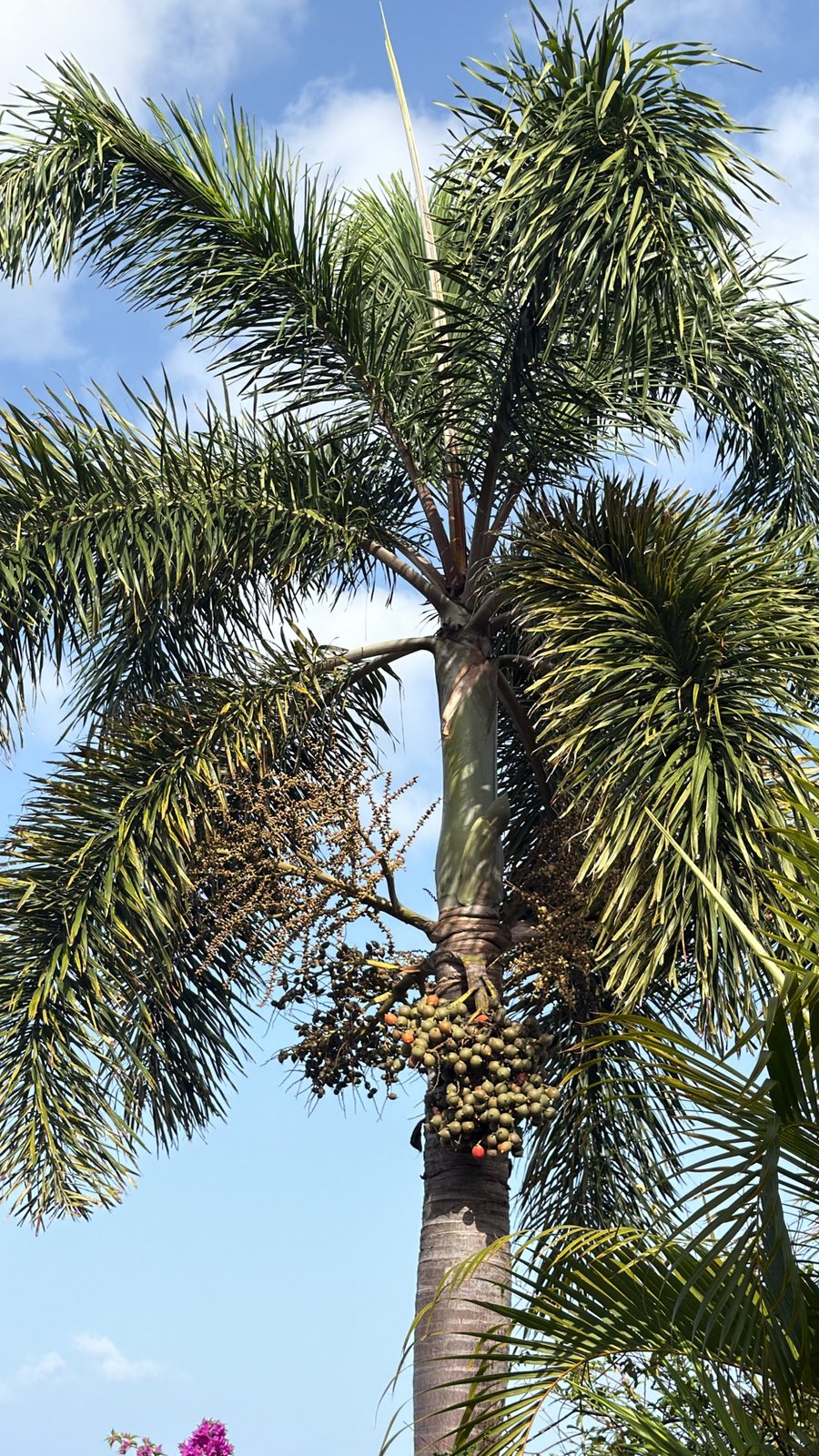
An evergreen Australian palm with a smooth, ringed trunk and arching fronds whose leaflets radiate like a fox's tail. Gardeners grow it for its rounded crown and clean architectural shape in warm, frost-free gardens. In the UK, Canada and colder regions elsewhere, it needs a tall, heated conservatory or greenhouse for winter.
At a glance
- Sun
- Full sun; young plants tolerate partial shade. Acclimatise greenhouse-grown plants gradually before exposing them to strong outdoor sun.
- Water
- Water regularly while establishing. Established palms tolerate short dry spells but grow best with deep watering during prolonged dry weather; avoid constantly wet roots.
- Soil
- Well-drained sandy or loamy soil; tolerates a range of pH levels but struggles in waterlogged ground.
- Height
- 20-30 ft (6-9 m)
- Spread
- 10-20 ft (3-6 m)
- Flowers
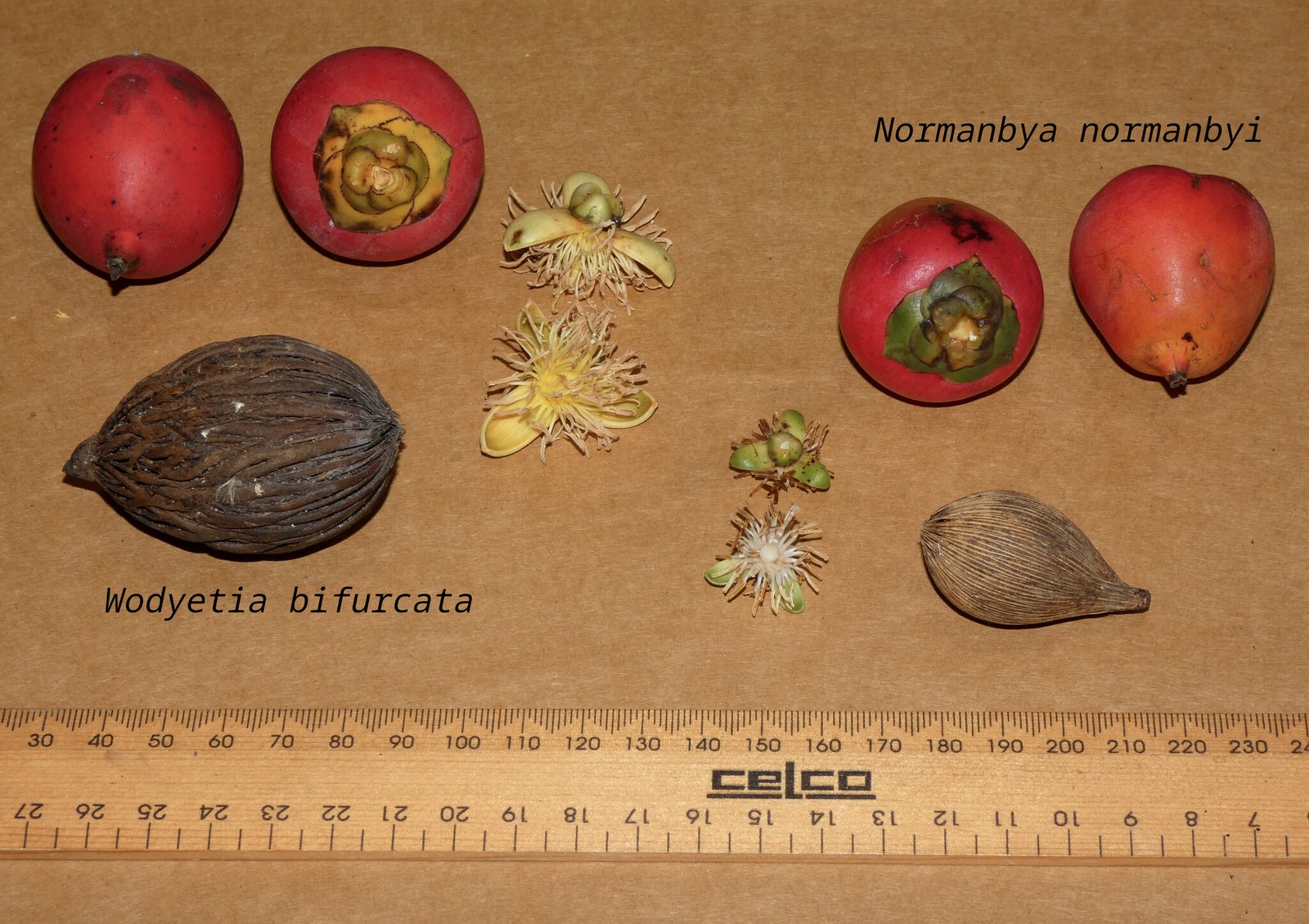
- Creamy-white flowers in branched clusters beneath the crown, usually during the warmer months; followed by orange-red fruit.
- Foliage
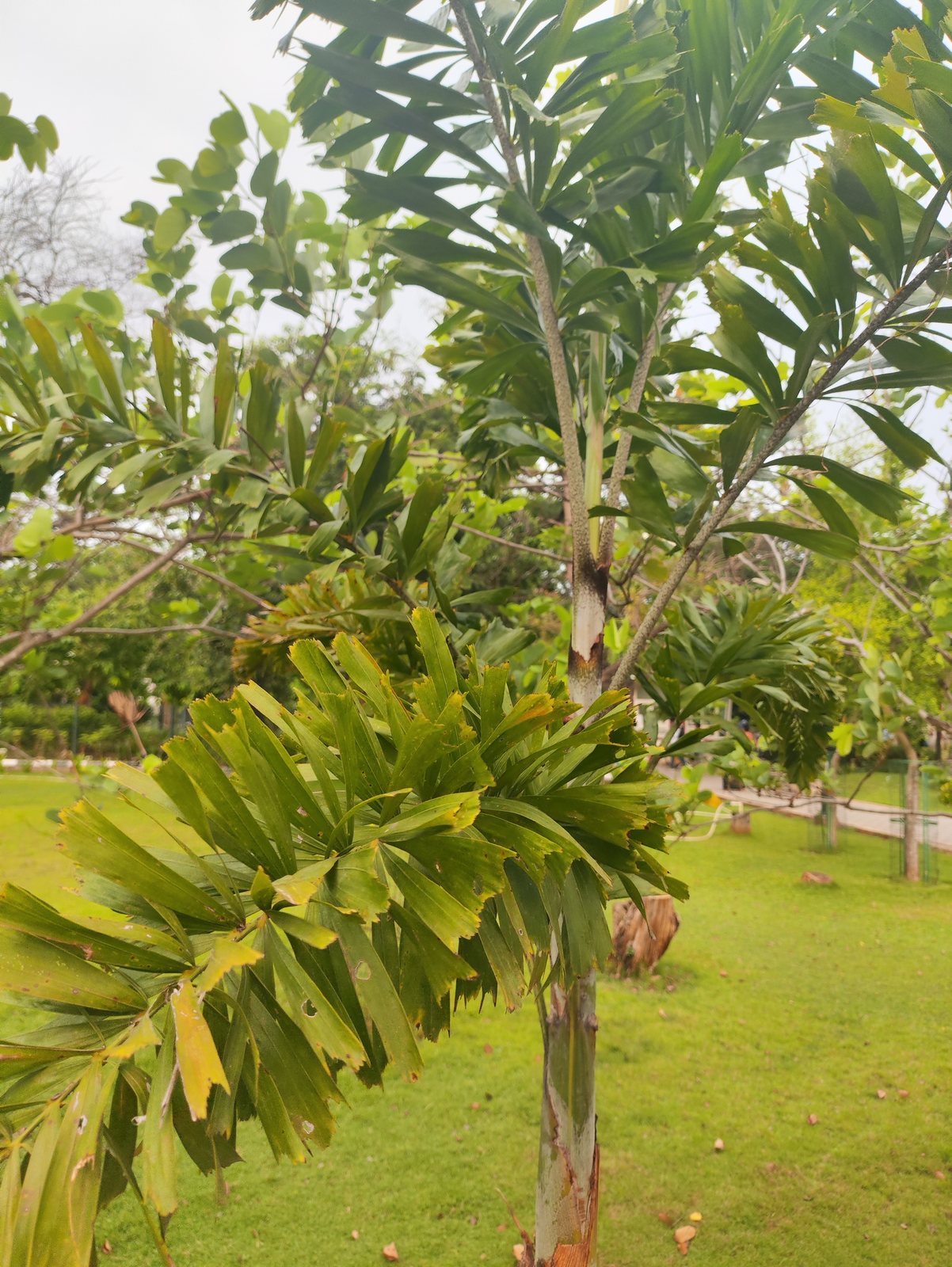
- Evergreen. Arching, feather-like green fronds with narrow leaflets arranged around the leaf stalk, creating a bushy, bottlebrush effect.
- Growth
- Moderate to fast in warm conditions with adequate water and nutrition.
- Care needed
- Medium
The year at a glance
- Pollinators
- Heat tolerant
- Wildlife
| J | F | M | A | M | J | J | A | S | O | N | D | |
|---|---|---|---|---|---|---|---|---|---|---|---|---|
| Flowers | ||||||||||||
| Fruit | ||||||||||||
| Plant |
Northern hemisphere months. In Australia, shift them by six.
- Difficulty
- Hard
- Toughness
- Needs looking after
Will it suit your garden?
Pick your zone, country, light and whether you have pets.
Full sun is 6 or more hours of direct sun a day, part shade 3 to 6 hours, shade under 3.
How it grows
Planting day
7 ft (2 m)
After 1 year
8 ft (2.3 m)
After 2 years
9 ft (2.7 m)
After 3 years
10 ft (3 m)
After 5 years
12 ft (3.7 m)
About 16 years to full size.
From a typical nursery size, at an average rate for this kind of plant. A rule of thumb, not a forecast.
Good to know
- Cats and dogs
- Toxic
- Native to
- Australia
- Growth rate
- Fast
Care
Jobs through the year
- WaterApr–May, Sep–Oct, every 7 days
- Locally grow in a container; water when the upper mix dries and allow excess to drain.
- WaterJun–Aug, every 4 days
- Check pots and water deeply as needed; young palms need closer attention and roots must not stay wet.
- WaterJan–Mar, Nov–Dec, every 14 days
- Check sheltered pots and water sparingly as needed, avoiding both saturation and complete drying.
- FeedApr, Jul
- Apply complete slow-release palm fertiliser at the labelled container rate and interval.
- PruneMay–Sep
- Remove only fully brown fronds or damaged stalks; retain green leaves and never cut the growing tip.
- ProtectJan–May, Sep–Dec
- Overwinter in bright heated shelter; not hardy outdoors locally, and container flowering or fruiting is unlikely.
- ProtectJun
- Move outside only in reliably warm weather and acclimatise gradually to direct sun.
- Plant in spring or early summer once the soil is warm, keeping the base of the trunk at its original soil level.
- Water the root zone deeply during establishment, allowing excess water to drain away.
- In warm growing weather, apply a slow-release palm fertiliser containing magnesium and micronutrients at the labelled rate.
- Mulch the root area, keeping mulch clear of the trunk.
- Bring container plants under bright, heated cover before cold weather; keep them frost-free and reduce watering in winter.
Pruning. Remove only fully brown fronds or damaged flower and fruit stalks, without cutting into the trunk or crownshaft. Never top the palm or remove healthy green fronds; damage to its single growing point can kill it.
Through the year
- Spring
- Plant or repot as temperatures rise, keeping the original planting depth.
- Spring
- Begin palm fertiliser applications according to the product label and check new growth for yellowing or distortion.
- Summer
- Water deeply during dry spells and check that containers drain freely.
- Late summer
- Collect fallen fruit and remove fully dead fronds if they have not shed naturally.
- Autumn
- Move container plants into frost-free shelter before nights become cold.
- Winter
- Keep sheltered plants in strong light, water sparingly and inspect for scale insects and spider mites.
In the garden
- Use a single palm as a focal point in a sunny lawn or broad planting bed, allowing room for the mature crown.
- Plant a loose group beside a terrace for high-level foliage without a dense screen at eye level.
- Repeat along a wide driveway or entrance for a strong vertical rhythm, away from parked cars and pedestrian routes where fronds may fall.
- Combine with broad-leaved tropical plants and low groundcovers to contrast fine and bold foliage textures.
Garden styles it suits: Modern tropical, Architectural minimal, Luxury resort, Coastal, Australian native and Florida subtropical.
Plant it with: Bird of paradise, Philodendron, Bromeliads, Lomandra, Cast-iron plant and Dwarf mondo grass.
Wildlife: Flowers attract visiting insects, and ripe fruit may attract fruit-eating birds in warm regions.
Problems to watch for
- Yellowing older fronds or weak, distorted new growth can indicate nutrient deficiencies. Use a complete palm fertiliser and seek a soil or tissue diagnosis if symptoms persist; do not remove yellow fronds prematurely.
- Root rot in wet soil causes decline despite watering. Improve drainage, reduce irrigation and avoid planting in low, waterlogged spots.
- Cold damage browns fronds and may injure the growing point. Protect young palms from frost and wait for warm-weather regrowth before judging recovery.
- Scale insects and spider mites can affect sheltered or container-grown plants. Inspect leaf undersides, wash off mites and use a palm-safe horticultural oil or insecticidal soap as labelled.
Safety
Fruit and seeds are commonly reported as poisonous and should not be eaten. Reliable information on the toxic compounds and severity of poisoning in people, cats, dogs and horses is limited; keep fallen fruit away from children and animals, and contact a poison service or veterinarian if it is swallowed.
Easily confused with
Royal palm (Roystonea regia)
Also has a smooth trunk and green crownshaft, but becomes much taller and more massive, with longer fronds and a less compact, rounded crown.
Queen palm (Syagrus romanzoffiana)
Has feathery fronds but lacks the foxtail palm's smooth green crownshaft; its leaflets hang more loosely.
Christmas palm (Adonidia merrillii)
Has a crownshaft and red fruit, but its leaflets form a flatter feather rather than radiating around the leaf stalk in a bushy foxtail.
The name
Wodyetia honours Wodyeti, an Aboriginal man associated with bringing the palm to botanical attention, while bifurcata refers to its forked leaflet tips and foxtail describes its bushy fronds.
Propagation. Grow from fresh seed after removing all fruit flesh, wearing gloves during cleaning. Sow in a warm, freely draining medium and keep evenly moist; germination can take several months. This single-trunked palm cannot be divided or grown from stem cuttings.
Checked against open data
- Accepted botanical name
- Wodyetia bifurcata
- Native range
- Queensland.
Sources: GBIF (CC BY 4.0) and Trefle (CC BY 4.0). The care and design notes are LandscapeGPT's own.
See it in your own yard.
Upload a photo of your yard and see it redesigned with plants that suit your climate, each checked against your zone.