Franchet's cotoneaster
Cotoneaster franchetii. Family Rosaceae. Shrub.
Also called Orange cotoneaster, Franchet cotoneaster.
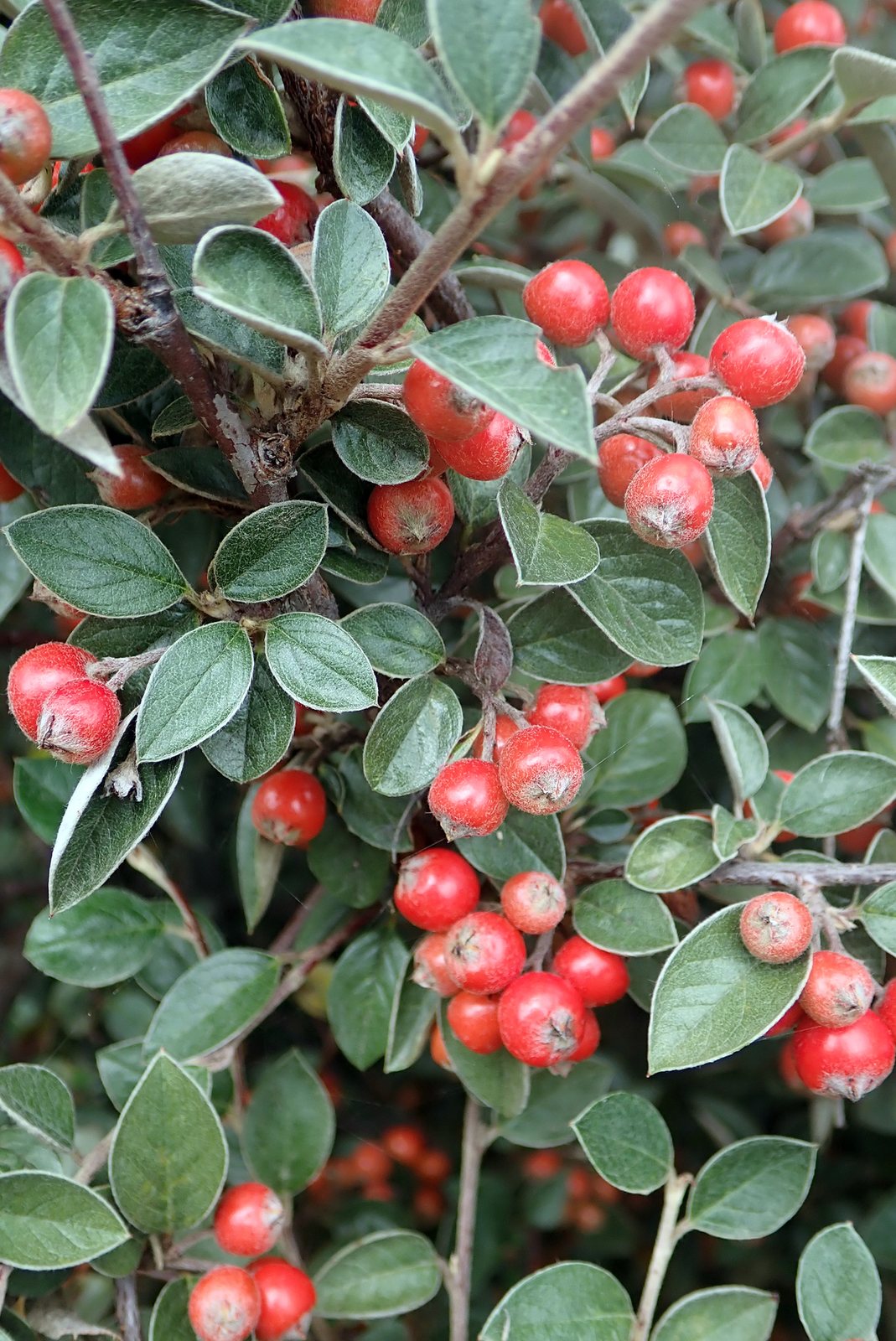
Franchet's cotoneaster is a large, arching shrub grown for its grey-green leaves, small summer flowers and orange-red autumn berries. It makes a useful informal hedge or screening shrub, but birds spread its seeds into surrounding land, and it should not be planted where it is invasive.
At a glance
- Sun
- Full sun to partial shade; flowering and berry production are usually best in sun.
- Water
- Water regularly during establishment. Established shrubs tolerate dry spells, but need occasional deep watering during prolonged drought.
- Soil
- Most well-drained soils, including chalky and moderately poor soils. Avoid ground that remains waterlogged.
- Height
- 8-12 ft (2.4-3.7 m)
- Spread
- 8-12 ft (2.4-3.7 m)
- Flowers
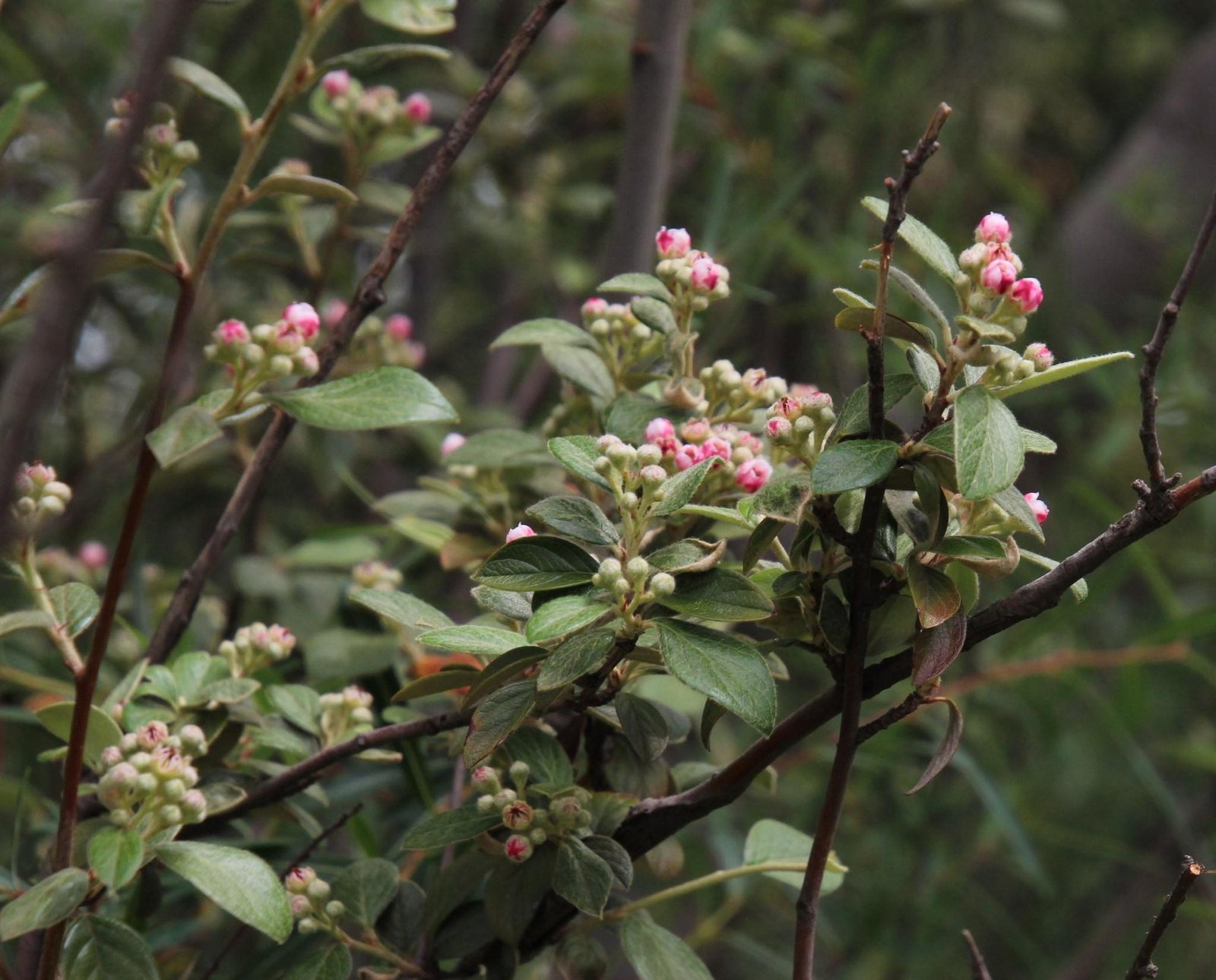
- Late spring to early summer; clusters of small pink-tinged white flowers.
- Foliage
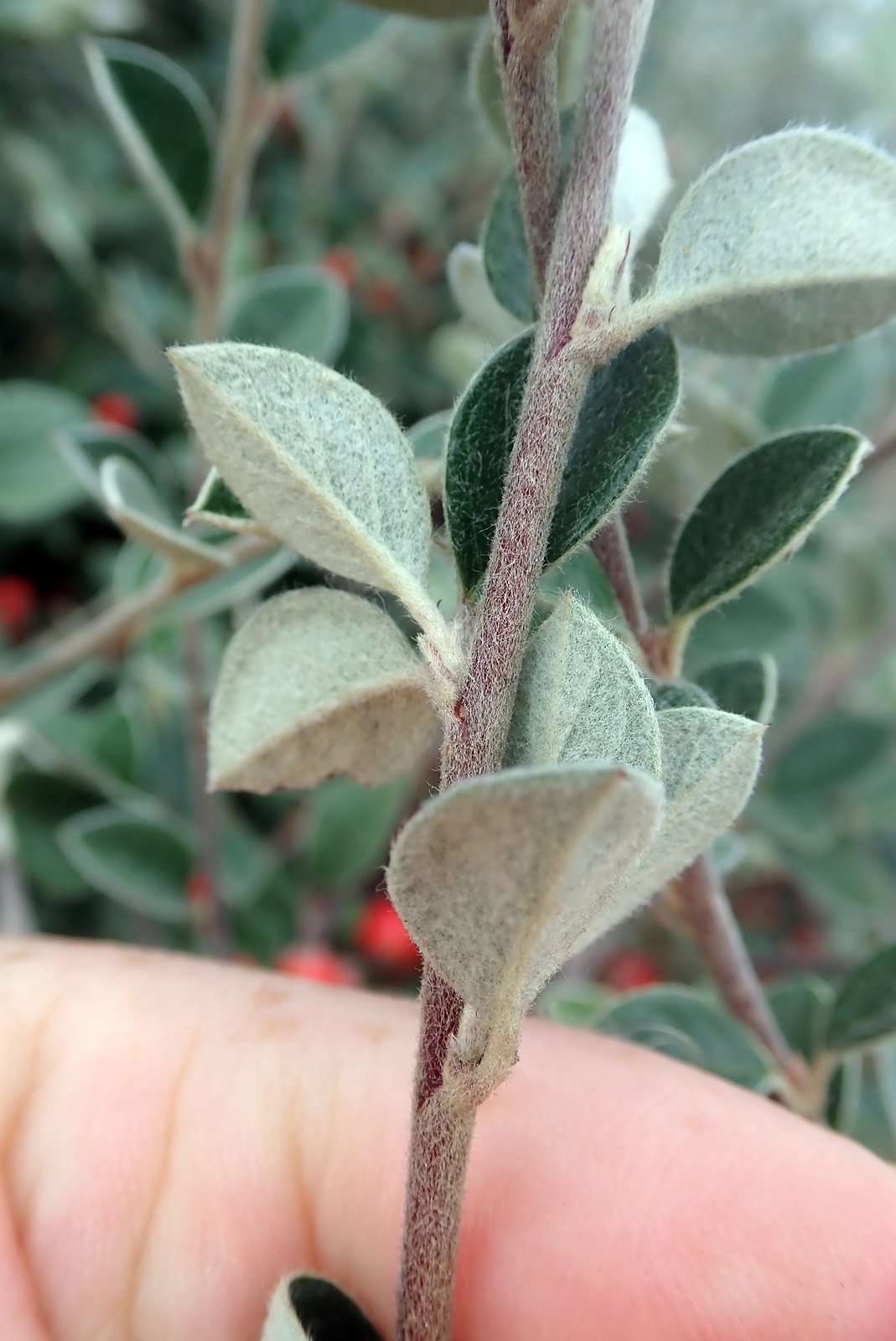
- Small, oval, grey-green leaves with pale, felted undersides. Usually evergreen in mild climates, but partly or fully deciduous in colder winters.
- Growth
- Moderate to fast
- Care needed
- Low
The year at a glance
- Pollinators
- Drought tolerant
- Heat tolerant
- Wildlife
- Low allergen
| J | F | M | A | M | J | J | A | S | O | N | D | |
|---|---|---|---|---|---|---|---|---|---|---|---|---|
| Flowers | ||||||||||||
| Fruit | ||||||||||||
| Plant |
Northern hemisphere months. In Australia, shift them by six.
- Difficulty
- Easy
- Toughness
- Very tough
Will it suit your garden?
Pick your zone, country, light and whether you have pets.
Full sun is 6 or more hours of direct sun a day, part shade 3 to 6 hours, shade under 3.
How it grows
Planting day
1.6 ft (0.5 m)
After 1 year
4 ft (1.1 m)
After 2 years
6 ft (1.8 m)
After 3 years
8 ft (2.4 m)
After 5 years
10 ft (3.1 m)
full size
About 4 years to full size.
From a typical nursery size, at an average rate for this kind of plant. A rule of thumb, not a forecast.
Good to know
- Cats and dogs
- Toxic
- Invasive in
- the US and Australia
- Growth rate
- Fast
Care
Jobs through the year
- WaterApr–May, Sep–Oct, every 21 days
- Water established shrubs only if dry; water young shrubs more often for two years.
- WaterJun–Aug, every 14 days
- Deep-water established shrubs during prolonged drought, allowing soil to dry between.
- MulchMar–Apr
- Maintain 5–8 cm of organic mulch, keeping it away from stems.
- PruneFeb–Mar
- Thin dead, crossing and crowded stems; avoid shearing away flowering wood.
- PruneSep–Oct
- Where spread is a concern, remove fruiting clusters before birds disperse seeds.
- Check local invasive-plant guidance before buying or planting.
- Water deeply during dry weather for the first two growing seasons.
- Apply a 2-3 in (5-8 cm) mulch over the root area, keeping it clear of the stems.
- Feed only if growth is weak; a light spring application of a balanced fertiliser is usually sufficient.
- Pull out bird-sown seedlings promptly, including those beneath nearby trees and fences.
Pruning. In late winter or early spring, remove dead, crossing and crowded branches, cutting selected old stems back to the base. Keep routine trimming light: repeated shearing removes flowering wood and reduces the berry display.
Through the year
- Late winter
- Thin crowded growth and remove dead or damaged branches before new growth starts.
- Spring
- Plant where locally appropriate, water thoroughly and mulch the root area.
- Late spring
- Check new shoots for aphids and signs of fire blight.
- Summer
- Water young shrubs during dry spells and check beneath nearby perches for seedlings.
- Autumn
- Check for seedlings beyond the planting area; where spread is a concern, remove fruit before birds disperse it.
- Winter
- Check for snow damage and avoid walking or working on saturated soil around the roots.
In the garden
- An informal boundary hedge where its arching branches have room to develop.
- A background shrub in mixed borders, contrasting its pale leaf undersides with dark evergreen foliage.
- A loose screen for service areas or less attractive garden boundaries.
- An autumn and winter feature paired with ornamental grasses and colourful dogwood stems, where it is not invasive.
Garden styles it suits: English country, Traditional, Cottage garden, Low-maintenance, Native hedgerow and Winter interest.
Plant it with: Lavender, Rosemary, Laurustinus, Red-stemmed dogwood and Feather reed grass.
Wildlife: Flowers provide nectar and pollen for bees and other insects. Birds eat the berries and use dense branches for shelter, but they also carry the seeds into natural habitats.
Problems to watch for
- Fire blight causes blackened, wilted shoots, sometimes with hooked tips. Cut affected growth well back into healthy wood in dry weather, disinfect tools between cuts and avoid heavy nitrogen feeding.
- Aphids can cluster on soft shoots. Wash them off with water and allow ladybirds and other predators to control small colonies.
- Scale insects may cause sticky honeydew and sooty mould. Prune out badly infested shoots and use a locally approved horticultural oil according to its label if needed.
- Waterlogged soil can cause root decline and dieback. Improve drainage before planting or choose a better-drained site rather than watering a declining shrub more often.
Safety
Not edible. Cotoneaster leaves and berries, especially the seeds, contain cyanogenic compounds and are potentially toxic to people, cats, dogs and horses. Small accidental berry ingestions usually cause no symptoms or mild stomach upset, but larger amounts may be more serious; species-specific evidence for horses is limited. Seek medical or veterinary advice after a substantial ingestion or if symptoms develop.
Where it spreads. Invasive in coastal California and parts of New Zealand, and an environmental weed in southeastern Australia, including parts of New South Wales, Victoria, Tasmania and South Australia. It is also naturalised and can escape into semi-natural habitats in the United Kingdom. Birds spread its seeds; check local restrictions and avoid planting near susceptible natural areas.
Easily confused with
Hollyberry cotoneaster (Cotoneaster bullatus)
Has much larger, strongly wrinkled leaves, is deciduous and usually bears red rather than orange-red fruit.
Parney's cotoneaster (Cotoneaster lacteus)
Has larger, more deeply veined leaves and conspicuous clusters of red berries; its leaves also have pale, felted undersides.
Himalayan cotoneaster (Cotoneaster simonsii)
Usually has a more upright habit and greener, less persistently felted leaf undersides; Franchet's cotoneaster has a distinctly grey-green appearance and arching branches.
The name
The species name franchetii honours the French botanist Adrien René Franchet.
Propagation. Take semi-ripe cuttings in mid- to late summer and root them in a free-draining medium under humid conditions. Seed needs dormancy-breaking treatment and can germinate slowly; do not propagate or distribute this shrub where it is invasive.
Checked against open data
- Accepted botanical name
- Cotoneaster franchetii
- In the US and Canada
- Introduced in the lower 48 states.
- Native range
- China South-Central, Thailand and Tibet.
- Measured
- Average height 300 cm.
Sources: GBIF (CC BY 4.0), USDA PLANTS and Trefle (CC BY 4.0). The care and design notes are LandscapeGPT's own.
See it in your own yard.
Upload a photo of your yard and see it redesigned with plants that suit your climate, each checked against your zone.