Frangipani
Plumeria rubra. Family Apocynaceae. Tree.
Also called Red frangipani, Temple tree, Plumeria.
Frangipani is a frost-tender, usually deciduous small tree with thick branches and fragrant, waxy flowers. Gardeners grow it as a specimen tree in warm climates or in a large container that can be moved under cover for winter. In the UK and most of Canada, it needs a heated conservatory or a bright indoor winter position.
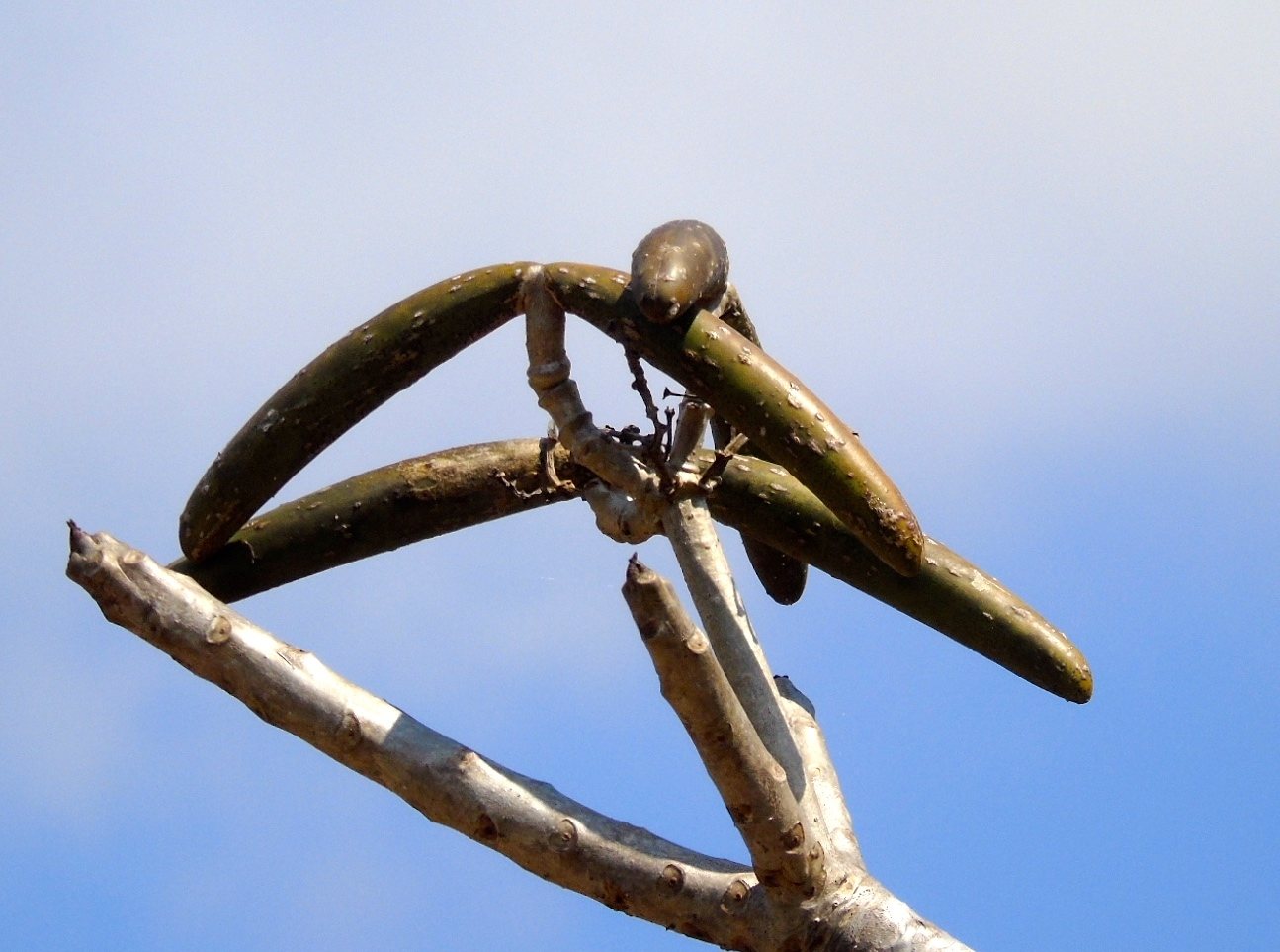
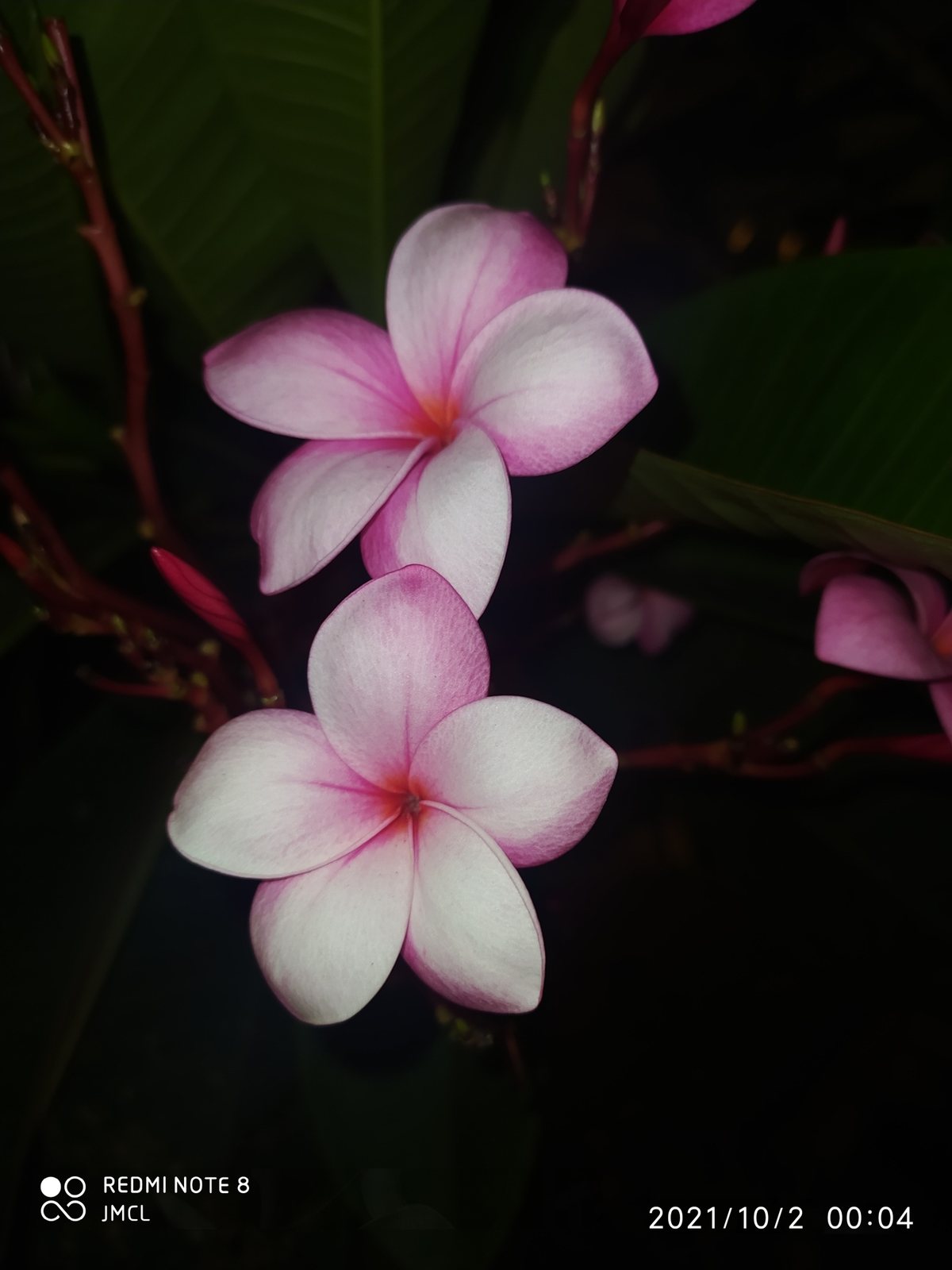
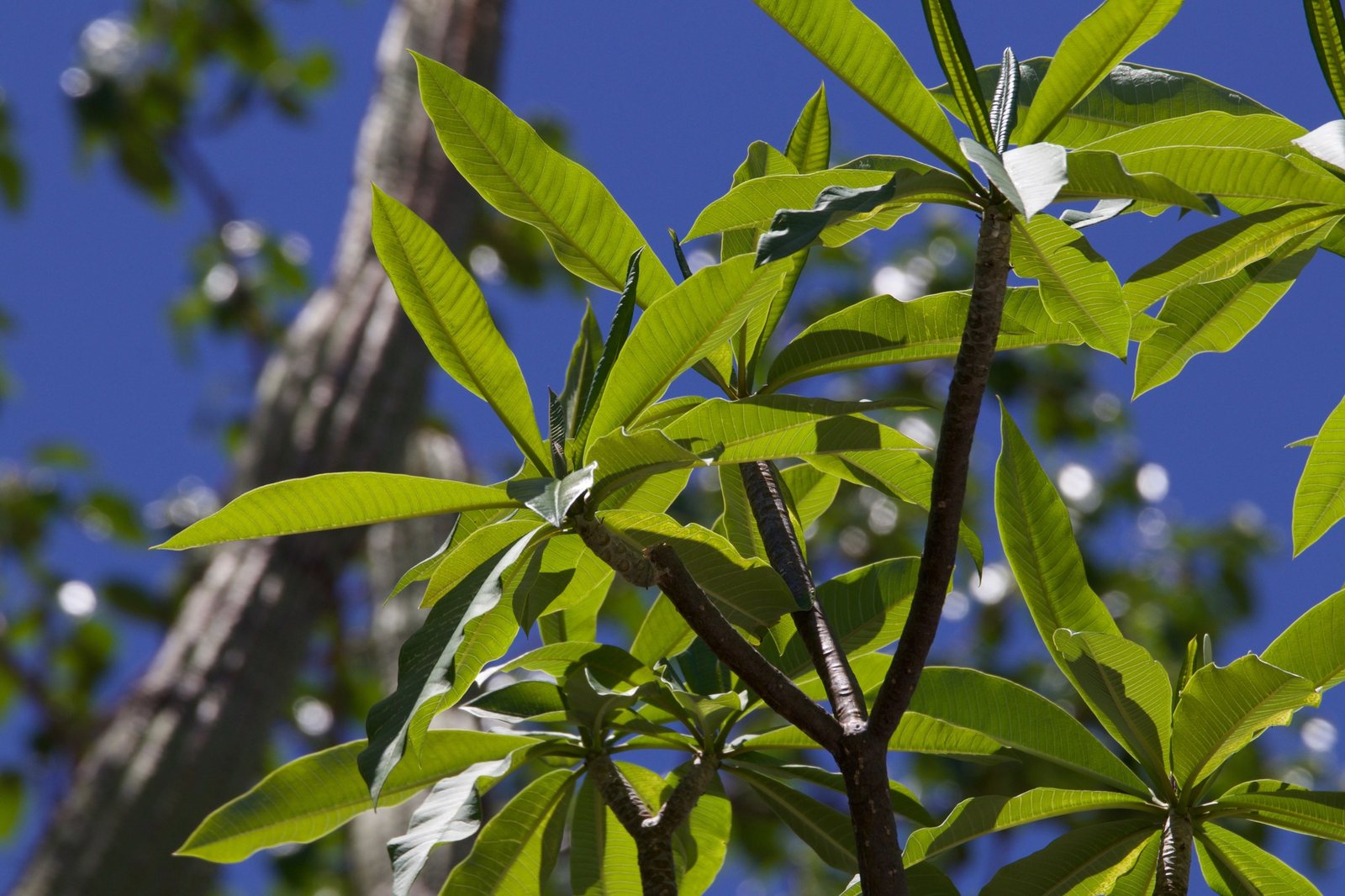
At a glance
- Sun
- Full sun; allow at least six hours of direct sunlight for good flowering.
- Water
- Water thoroughly during active growth, then let the soil partly dry before watering again. Keep almost dry when leafless and dormant.
- Soil
- Free-draining sandy or loamy soil; use a gritty, free-draining potting mix in containers. Avoid waterlogged ground.
- Height
- 15-25 ft (4.5-7.6 m); usually smaller in containers
- Spread
- 15-25 ft (4.5-7.6 m)
- Flowers
- Summer into autumn, sometimes longer in tropical climates; fragrant clusters in pink, red, white, yellow or mixed shades, depending on the selection.
- Foliage
- Large, leathery, elongated green leaves clustered at branch tips; usually shed during cool or dry weather.
- Growth
- Moderate in warm conditions; slow in cool climates
- Care needed
- Medium
The year at a glance
- Drought tolerant
- Heat tolerant
- Low allergen
- Fragrant
| J | F | M | A | M | J | J | A | S | O | N | D | |
|---|---|---|---|---|---|---|---|---|---|---|---|---|
| Flowers | ||||||||||||
| Plant |
Northern hemisphere months. In Australia, shift them by six.
- Difficulty
- Hard
- Toughness
- Needs looking after
Will it suit your garden?
Pick your zone, country, light and whether you have pets.
Full sun is 6 or more hours of direct sun a day, part shade 3 to 6 hours, shade under 3.
How it grows
Planting day
7 ft (2 m)
After 1 year
7 ft (2.2 m)
After 2 years
8 ft (2.3 m)
After 3 years
8 ft (2.5 m)
After 5 years
9 ft (2.8 m)
About 26 years to full size.
From a typical nursery size, at an average rate for this kind of plant. A rule of thumb, not a forecast.
Good to know
- Cats and dogs
- Toxic
- Growth rate
- Slow
Care
Jobs through the year
- WaterApr–May, Sep, every 10 days
- Grow in a container in this climate; water only during leafy growth when the upper few inches of mix have dried.
- WaterJun–Aug, every 7 days
- For container-grown plants, water thoroughly when the upper mix dries; check more often in heat and never leave standing water.
- WaterJan–Mar, Oct–Dec, every 30 days
- Check sheltered plants; keep leafless plants almost dry and give only a little water if stems begin shrivelling.
- FeedMay–Aug, every 28 days
- Feed actively growing container plants with balanced fertilizer at the product's recommended rate.
- PruneMar–Apr
- As buds swell, remove dead wood and shorten only necessary branches; wear gloves against irritating sap.
- ProtectMay–Jun
- Move outdoors only when nights stay above 10°C, gradually acclimatizing foliage to direct sun.
- ProtectJan–Apr, Sep–Dec
- Keep in bright frost-free shelter whenever nights fall below 10°C; outdoor ground planting is unsuitable here.
- Use a pot with generous drainage holes and never leave it standing in water.
- Water when the upper few inches of soil have dried during leafy growth; reduce watering sharply after leaf fall.
- Feed container plants with a balanced fertilizer at the label rate during spring and summer; stop during dormancy.
- Move plants under cover before nights regularly fall below 50°F (10°C), and protect them from frost.
- Acclimatize overwintered plants gradually to outdoor sun to prevent leaf scorch.
Pruning. Prune in early spring as growth resumes, removing dead or damaged wood and shortening only branches that need controlling. Heavy pruning delays flowering; wear gloves and keep the milky sap away from skin and eyes.
Through the year
- Early spring
- Check for rot and dead branches; prune lightly as buds begin to swell.
- Spring
- Repot crowded container plants into a slightly larger pot with fresh, free-draining mix.
- Late spring
- Once nights stay above 50°F (10°C), gradually acclimatize indoor plants to outdoor sun.
- Summer
- Water during active growth, feed container plants and inspect leaf undersides for mites and rust.
- Autumn
- Stop feeding and move container plants into a bright, frost-free winter position before cold nights.
- Winter
- Keep dormant plants almost dry; water leafy plants sparingly according to warmth and soil dryness.
In the garden
- Use as a sculptural specimen in a sunny, frost-free courtyard.
- Place a large container near a summer seating area where the flower scent can be enjoyed.
- Combine with agaves and aloes for contrasting leaf shapes in a well-drained warm-climate garden.
- Plant against a plain wall to show off the branching silhouette, allowing room for the mature canopy.
Garden styles it suits: Modern tropical, Luxury resort, Architectural minimal, Modern courtyard, Sensory garden and Tropical.
Plant it with: Agave, Aloe, Bird of paradise, Bougainvillea and Society garlic.
Wildlife: Fragrant flowers attract moths, including hawkmoths, which can pollinate them. The flowers generally offer little or no nectar, so this is not a strong choice for feeding pollinators.
Problems to watch for
- Root or stem rot: avoid cold, wet soil, improve drainage and remove soft, rotting tissue with clean tools.
- Frangipani rust: orange powdery pustules appear beneath leaves; collect fallen leaves, improve airflow and avoid wetting foliage.
- Spider mites, especially indoors: check for fine webbing and stippled leaves; rinse foliage and use a labeled insecticidal soap if needed.
- Poor flowering: provide more direct sun and warmth, avoid excessive nitrogen feeding and allow recovery time after pruning.
Safety
All parts contain irritating milky sap. Chewing or swallowing plant material can cause mouth irritation, vomiting or diarrhoea in people, cats and dogs; sap can irritate skin and seriously irritate eyes. Horse-specific toxicity information is limited, so keep it away from grazing animals. Seek medical or veterinary advice after ingestion or eye exposure.
Easily confused with
White frangipani (Plumeria alba)
Usually has much narrower leaves with rolled-under edges and white flowers with yellow centres; flower colour alone does not distinguish it from white-flowered Plumeria rubra.
Singapore frangipani (Plumeria obtusa)
Typically has glossy leaves with rounded tips and white, yellow-centred flowers; it often retains its leaves in consistently warm conditions.
Native frangipani (Hymenosporum flavum)
An Australian evergreen tree with smaller leaves and cream flowers that age yellow; it lacks the thick, succulent-looking branches of Plumeria.
The name
Plumeria honours the French botanist Charles Plumier, and rubra is Latin for red, referring to the flower colour of the originally named form.
Propagation. Take stem cuttings in spring or early summer. Allow the cut end to dry and callus for about one to two weeks, then insert it into a gritty propagation mix and keep warm with minimal watering until rooted. Seed-grown plants may differ from the parent and take several years to flower.
Checked against open data
- Accepted botanical name
- Plumeria rubra
- In the US and Canada
- Introduced in Pacific Basin, Puerto Rico and US Virgin Islands.
- Native range
- Belize, Colombia, Costa Rica, El Salvador, Guatemala, Honduras, Mexico Central, Mexico Gulf, Mexico Northeast, Mexico Northwest, Mexico Southeast and Mexico Southwest.
- Measured
- Average height 520 cm.
Sources: GBIF (CC BY 4.0), USDA PLANTS and Trefle (CC BY 4.0). The care and design notes are LandscapeGPT's own.
See it in your own yard.
Upload a photo of your yard and see it redesigned with plants that suit your climate, each checked against your zone.