Fringecup
Tellima grandiflora. Family Saxifragaceae. Perennial.
Also called Fringe cups, Bigflower tellima.
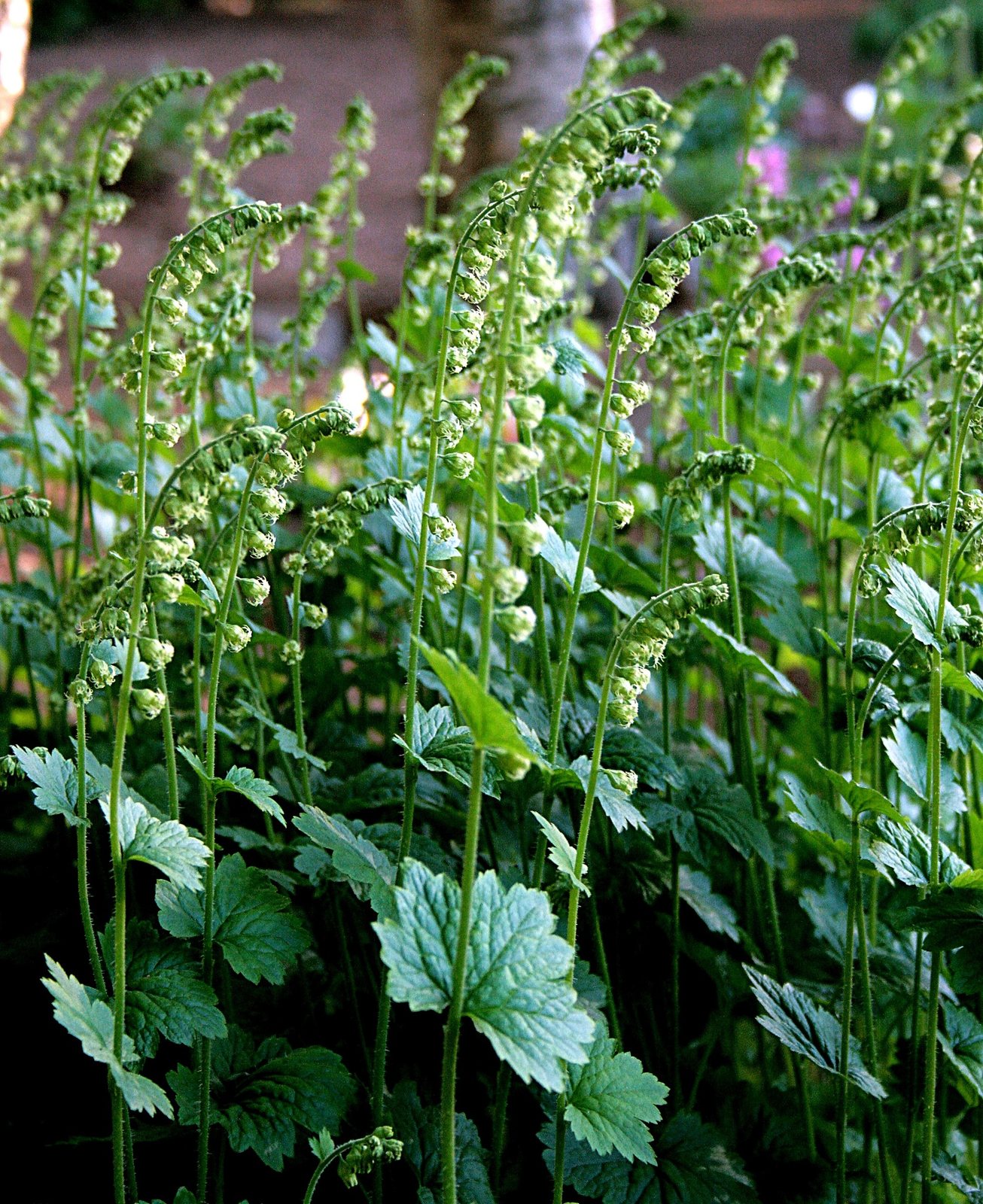
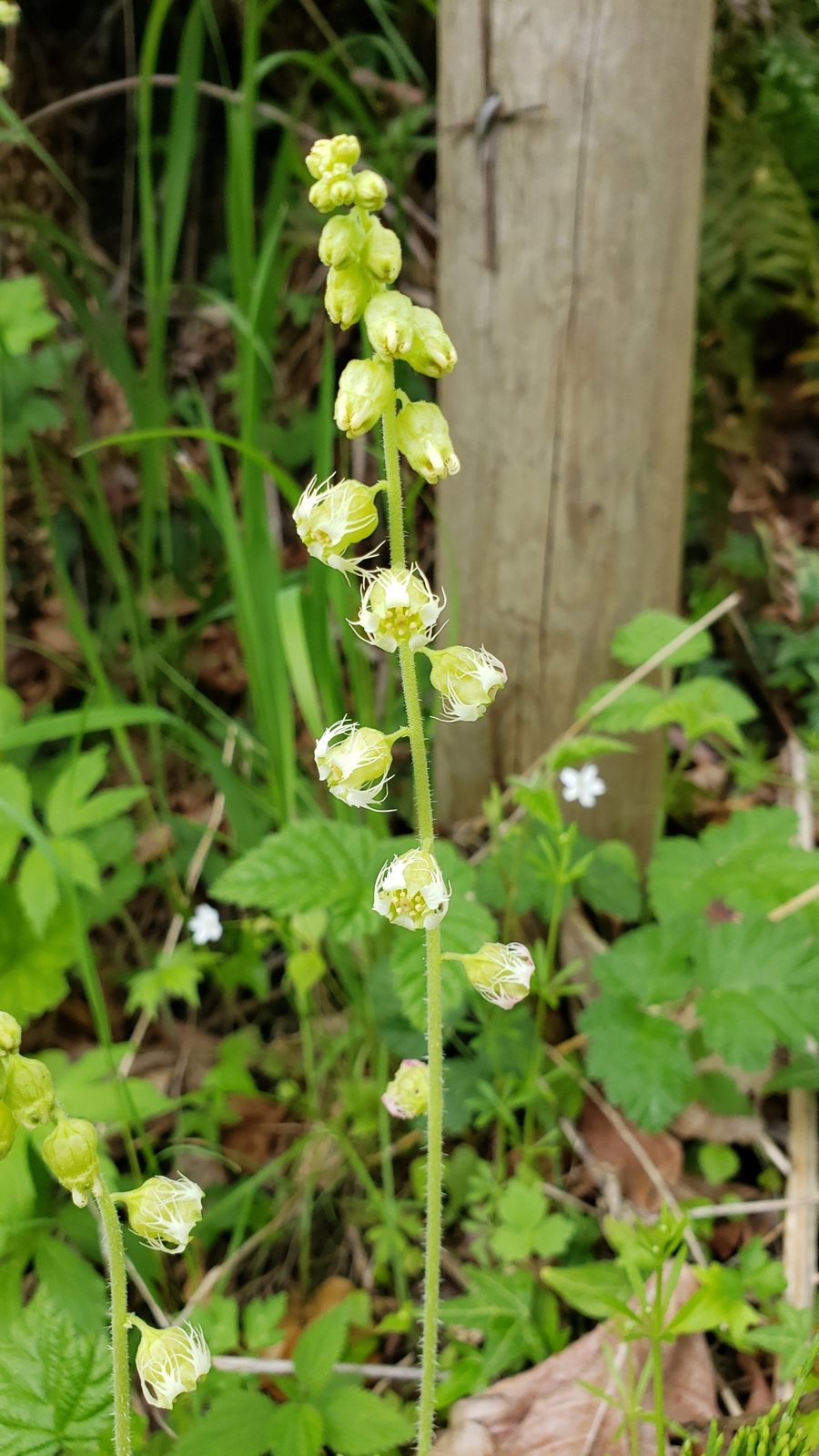
Fringecup is a clump-forming perennial native to western North America, grown for its softly hairy, rounded leaves and slender stems of fringed flowers. It makes useful ground cover in cool, shaded gardens, especially beneath deciduous trees where the soil stays reasonably moist.
At a glance
- Sun
- Partial shade to full shade; tolerates some sun where summers are cool and the soil stays moist.
- Water
- Moderate; keep evenly moist while establishing and water during prolonged dry spells. Established plants tolerate some dry shade, but foliage may deteriorate.
- Soil
- Humus-rich, well-drained soil that retains moisture; tolerates clay if it is not waterlogged.
- Height
- 1-3 ft (0.3-0.9 m), including flower stems
- Spread
- 1-2 ft (0.3-0.6 m) per clump
- Flowers
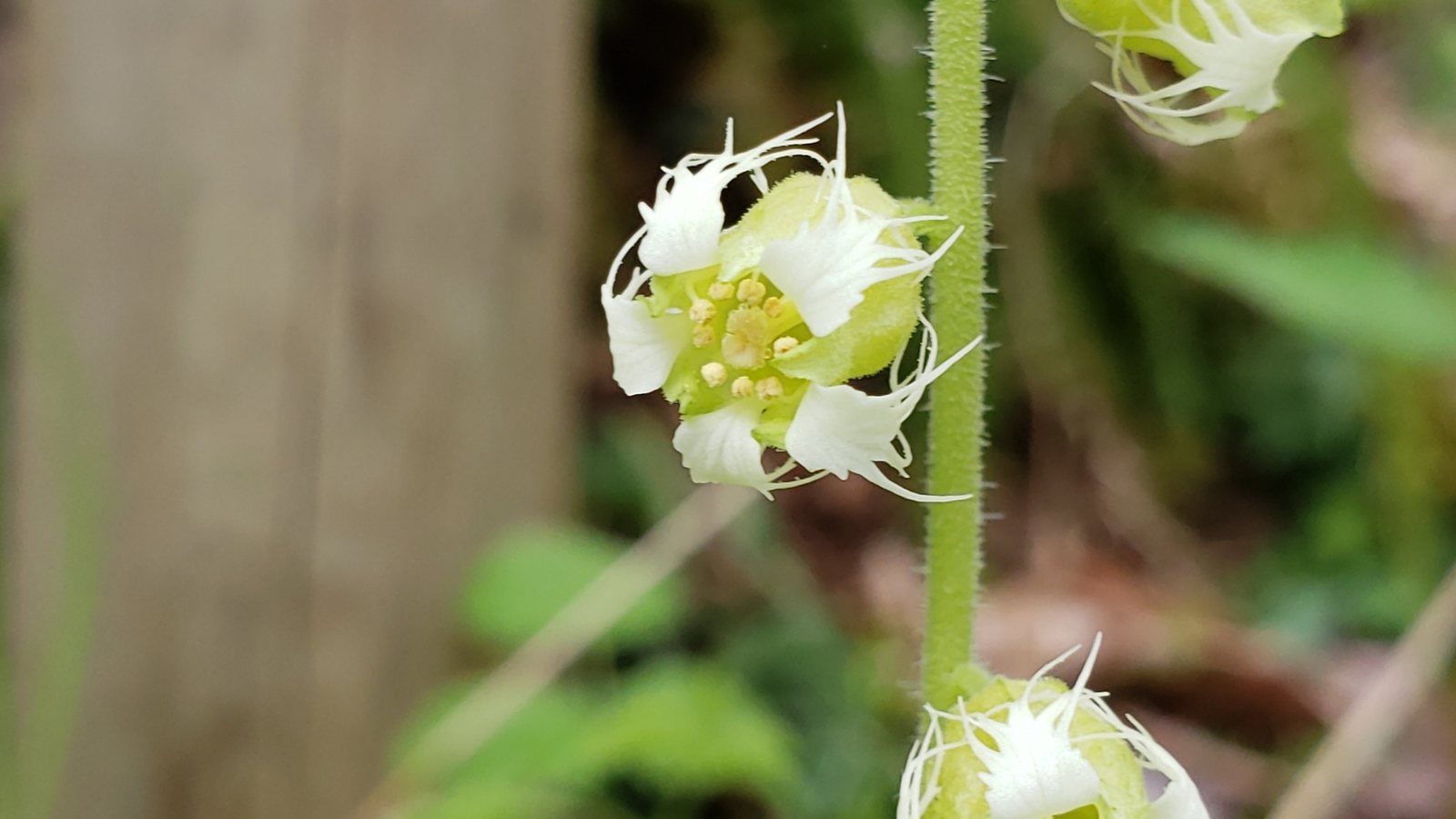
- Late spring to early summer; small greenish-white bells with finely fringed petals, often turning pink or reddish as they age.
- Foliage
- Evergreen. Rounded to heart-shaped, shallowly lobed green leaves with soft hairs; sometimes develops bronze or reddish winter tones.
- Growth
- Moderate; self-sown seedlings can gradually extend a planting.
- Care needed
- Low
The year at a glance
- Pollinators
- Cold hardy
- Wildlife
- Low allergen
| J | F | M | A | M | J | J | A | S | O | N | D | |
|---|---|---|---|---|---|---|---|---|---|---|---|---|
| Flowers | ||||||||||||
| Plant |
Northern hemisphere months. In Australia, shift them by six.
- Difficulty
- Easy
- Toughness
- Fairly tough
Will it suit your garden?
Pick your zone, country, light and whether you have pets.
Full sun is 6 or more hours of direct sun a day, part shade 3 to 6 hours, shade under 3.
How it grows
Planting day
1 ft (0.3 m)
After 1 year
1.3 ft (0.4 m)
After 2 years
1.6 ft (0.5 m)
After 3 years
2 ft (0.6 m)
full size
About 3 years to full size.
From a typical nursery size, at an average rate for this kind of plant. A rule of thumb, not a forecast.
Good to know
- Cats and dogs
- Safe
- Native to
- Canada
- In the garden
- Spreads vigorously: plan to contain it.
- Growth rate
- Moderate
Care
Jobs through the year
- WaterApr–May, Sep–Oct, every 14 days
- Water established clumps if soil is dry; water new plants more frequently through their first season.
- WaterJun–Aug, every 7 days
- Water during prolonged dry weather, especially where tree roots compete for moisture.
- MulchMar
- Dress with leaf mould or compost, leaving crowns uncovered.
- PruneFeb–Mar
- Remove winter-worn or damaged leaves without cutting into the crown.
- DeadheadJun–Jul, every 14 days
- Cut fading flower stems to the base before seeds ripen unless seedlings are wanted.
- DivideMar–Apr, Sep
- Divide only crowded clumps and water divisions until established.
- Water regularly through the first growing season, especially beneath trees competing for moisture.
- Apply leaf mould or compost around the plants each spring, keeping the crowns uncovered.
- Water during prolonged summer drought to prevent scorched or collapsing foliage.
- Avoid rich fertiliser; a light compost dressing is usually sufficient.
- Divide crowded clumps in spring or autumn, and remove unwanted seedlings while small.
Pruning. Cut spent flower stems to the base after flowering unless you want seedlings. Remove damaged or winter-worn leaves in late winter or early spring; foliage may die back in colder climates.
Through the year
- Late winter
- Remove dead or damaged leaves without cutting into the crown.
- Early spring
- Plant or divide clumps, water them in, and mulch with leaf mould.
- Late spring
- Check young leaves for slug damage and remove unwanted seedlings.
- Early summer
- Cut off fading flower stems before seed ripens if you want to limit spreading.
- Summer
- Water during prolonged dry spells, particularly under established trees.
- Autumn
- Plant or divide where winters are mild, allowing time for roots to establish before freezing weather.
In the garden
- Plant in loose groups beneath deciduous trees for a leafy woodland floor and airy spring flowers.
- Edge shaded paths with low foliage, allowing the flower stems to rise above neighbouring plants.
- Combine with ferns and hostas for contrasting leaf shapes in a cool, shaded border.
- Use between spring bulbs to cover their fading foliage without creating a tall summer canopy.
Garden styles it suits: Woodland, Pacific Northwest woodland, Cottage garden, Wildlife garden, Green on green and Low-maintenance.
Plant it with: Lady fern, Western sword fern, Hosta, Lungwort, Siberian bugloss and Foamflower.
Wildlife: The small flowers provide nectar and pollen for visiting insects. Dense foliage offers shelter for small garden invertebrates.
Problems to watch for
- Slugs and snails may chew young leaves; hand-pick after dark and use wildlife-conscious barriers or labelled iron phosphate bait where necessary.
- Dry soil and strong sun can scorch leaves; water deeply and move plants to a cooler, shaded position if damage recurs.
- Waterlogged soil can rot crowns; improve drainage and avoid planting in standing winter water.
- Self-sown seedlings can become numerous; cut flower stems before seed ripens and pull surplus seedlings promptly.
Safety
Not known to be toxic to people, cats, dogs or horses. No part is recognised as a significant poisoning hazard, but it is not a food plant and should not be deliberately eaten.
Where it spreads. Can spread vigorously by seed in damp, shaded gardens in Britain and Ireland, where it has also naturalised in woodland. Remove seed heads and avoid planting beside sensitive woodland if seedlings are escaping.
Easily confused with
Foamflower (Tiarella cordifolia)
Foamflower has fluffy clusters of white or pale pink star-shaped flowers with conspicuous stamens; fringecup has separate small bells with deeply fringed petals.
Two-leaved miterwort (Mitella diphylla)
Miterwort is generally smaller, with tiny white fringed flowers and a distinctive opposite pair of leaves on the flowering stem; fringecup carries larger, greenish bells above a substantial basal clump.
The name
Tellima is an anagram of Mitella, a related genus, while grandiflora means large-flowered and fringecup describes the flowers' finely divided petals.
Propagation. Divide established clumps in spring or autumn. Sow fresh seed in pots in a sheltered outdoor position and allow exposure to winter cold; seedlings may differ from named garden selections.
Checked against open data
- Accepted botanical name
- Tellima grandiflora
- Native range
- Alaska, Aleutian Is., British Columbia, California, Idaho, Montana, Oregon and Washington.
- Measured
- Average height 75 cm.
Sources: GBIF (CC BY 4.0) and Trefle (CC BY 4.0). The care and design notes are LandscapeGPT's own.
See it in your own yard.
Upload a photo of your yard and see it redesigned with plants that suit your climate, each checked against your zone.