Western sword fern
Polystichum munitum. Family Dryopteridaceae. Fern.
Also called Sword fern, Giant sword fern.
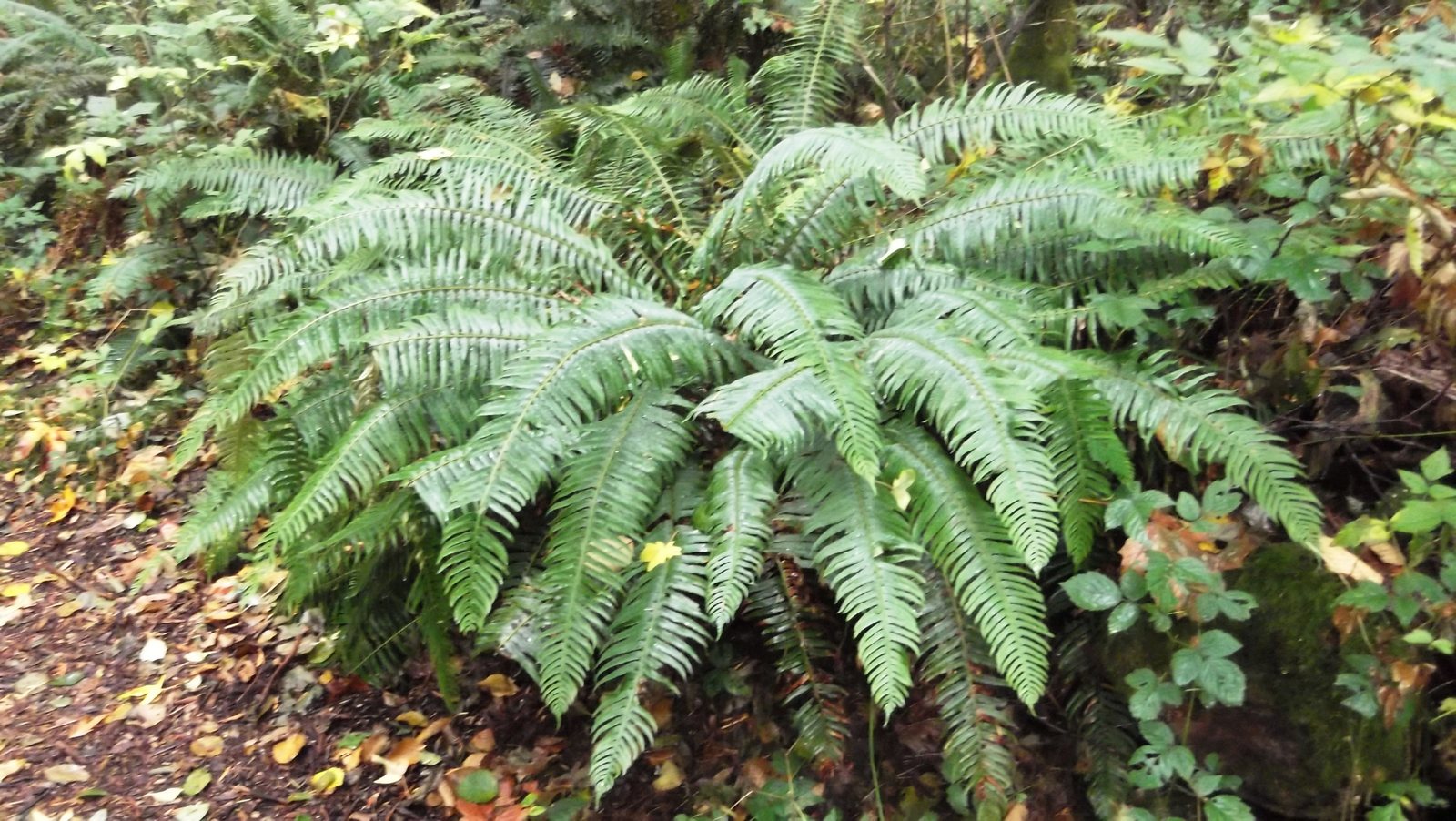
Western sword fern is a large evergreen fern native to western North America, with arching, leathery fronds that form a substantial clump. Grow it for year-round structure beneath trees, along shaded paths or in woodland borders; it performs best where summers are not excessively hot and dry.
At a glance
- Sun
- Partial to full shade; tolerates some sun in cool climates if the soil stays moist. Avoid hot afternoon sun.
- Water
- Keep evenly moist while establishing. Established clumps tolerate seasonal dryness in shade, but benefit from deep watering during prolonged drought.
- Soil
- Humus-rich, well-drained soil, preferably acidic to neutral. Tolerates clay if it drains adequately; avoid permanently waterlogged ground.
- Height
- 3-5 ft (0.9-1.5 m)
- Spread
- 3-5 ft (0.9-1.5 m)
- Foliage
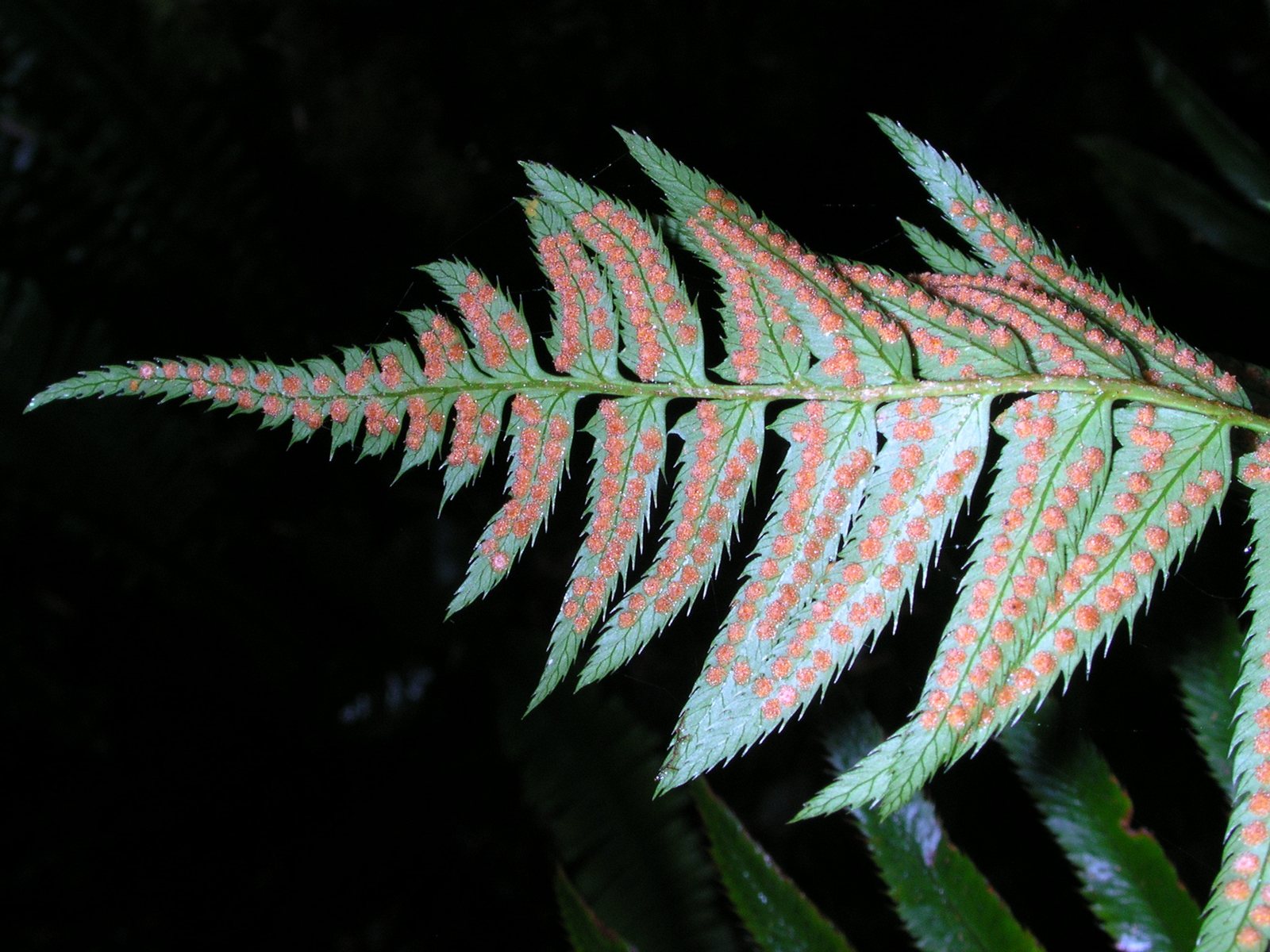
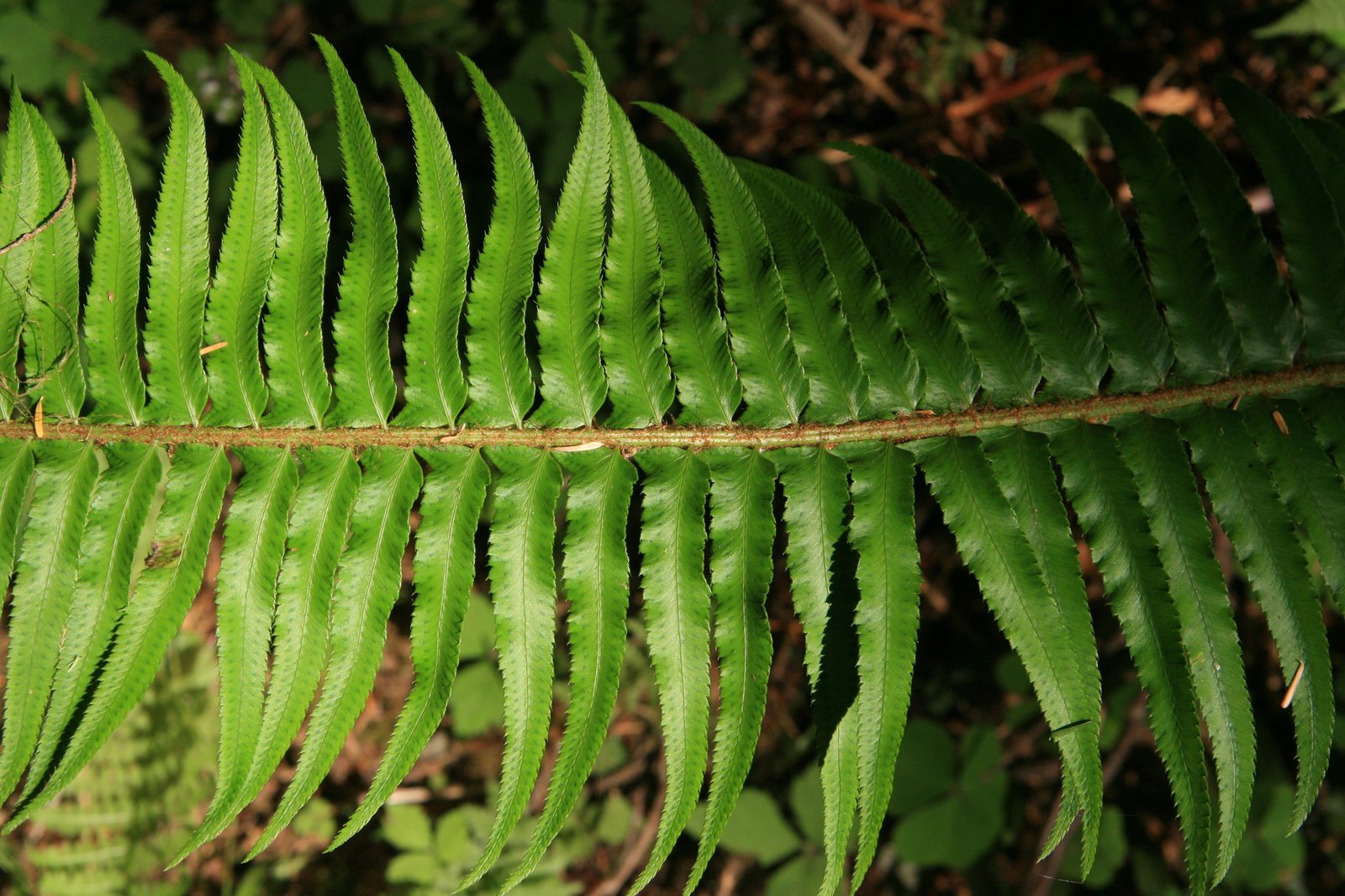
- Evergreen. Long, arching, dark green fronds divided once into narrow, toothed leaflets. Each leaflet has a small upward-pointing lobe at its base; mature fronds carry rows of round spore clusters underneath.
- Growth
- Moderate
- Care needed
- Low
The year at a glance
- Deer resistant
- Drought tolerant
- Wildlife
| J | F | M | A | M | J | J | A | S | O | N | D | |
|---|---|---|---|---|---|---|---|---|---|---|---|---|
| Plant |
Northern hemisphere months. In Australia, shift them by six.
- Difficulty
- Easy
- Toughness
- Very tough
Will it suit your garden?
Pick your zone, country, light and whether you have pets.
Full sun is 6 or more hours of direct sun a day, part shade 3 to 6 hours, shade under 3.
How it grows
Planting day
1 ft (0.3 m)
After 1 year
2 ft (0.6 m)
After 2 years
3 ft (0.9 m)
After 3 years
4 ft (1.2 m)
full size
About 3 years to full size.
From a typical nursery size, at an average rate for this kind of plant. A rule of thumb, not a forecast.
Good to know
- Cats and dogs
- Safe
- Native to
- the US and Canada
- Growth rate
- Moderate
Care
Jobs through the year
- WaterApr–May, Sep–Oct, every 14 days
- Water established clumps only during dry spells; keep first-year plants evenly moist.
- WaterJun–Aug, every 10 days
- Water deeply during prolonged drought, especially beneath trees; skip when soil remains moist.
- MulchApr–May
- Top-dress with leaf mould or compost, leaving the crown uncovered.
- PruneFeb–Mar
- Remove damaged fronds at their bases before new shoots unfurl; retain healthy green fronds.
- DivideMar–Apr
- Divide large clumps only when propagation is wanted, keeping substantial rooted sections.
- ProtectJan–Feb, Nov–Dec
- Keep wet leaf mats off the crown and shelter exposed plants from drying winter winds.
- Plant with the crown at soil level, allowing room for the mature arching fronds.
- Water deeply through the first growing season, keeping the root zone moist but not saturated.
- Apply leaf mould or compost as mulch each spring, keeping it away from the crown.
- Water established plants during extended dry spells, especially beneath thirsty trees.
- Avoid routine heavy feeding; a light compost top-dressing is usually enough.
Pruning. In late winter or early spring, remove brown or damaged fronds at their bases before new fronds unfurl. Retain healthy green fronds where possible, and take care not to cut the emerging curled shoots.
Through the year
- Late winter
- Remove damaged old fronds before new growth begins.
- Spring
- Plant new ferns or divide large clumps while conditions are cool and moist.
- Late spring
- Top-dress with leaf mould or compost, leaving the crown uncovered.
- Summer
- Check soil moisture during dry weather and water deeply when needed.
- Autumn
- Plant in mild climates while the soil is still warm, and water until seasonal rain takes over.
- Winter
- Keep fallen leaves from forming a dense, wet mat over the crown.
In the garden
- Mass beneath deciduous trees for an evergreen woodland floor, leaving space around tree trunks.
- Repeat beside shaded paths to create a consistent rhythm of arching foliage.
- Pair with hostas and large-leaved perennials for contrasting leaf shapes.
- Use among mossy rocks and fallen timber in naturalistic woodland planting.
- Place behind spring bulbs to provide structure after their foliage dies back.
Garden styles it suits: Woodland, Pacific Northwest woodland, Japanese, Green on green, Winter interest and Low-maintenance.
Plant it with: Vine maple, Salal, Redwood sorrel, Hostas, Barrenwort and Siberian bugloss.
Wildlife: Dense clumps provide shelter for small animals and invertebrates. It produces no flowers or nectar and is usually little browsed by deer, although browsing can occur.
Problems to watch for
- Brown or scorched fronds: protect from hot afternoon sun and drying wind, and water during prolonged drought.
- Crown or root rot in saturated soil: improve drainage or move the plant; do not bury the crown.
- Slugs and snails chewing emerging fronds: inspect during damp evenings, remove by hand and use iron phosphate bait if necessary.
- Winter-burned foliage: shelter exposed plants from cold, drying winds and remove damaged fronds before spring growth.
Safety
Not known to be toxic to cats, dogs, horses or people; no part is recognised as a serious poisoning hazard. It is not a recommended food plant, and unidentified fern shoots should not be eaten.
Easily confused with
Soft shield fern (Polystichum setiferum)
Its softer, more finely divided fronds have leaflets divided again into smaller segments; western sword fern has firm fronds divided only once.
Deer fern (Blechnum spicant)
Has low, spreading sterile fronds and separate upright fertile fronds with very narrow segments. Western sword fern has broadly similar arching fronds, with spore clusters on their undersides.
Christmas fern (Polystichum acrostichoides)
Usually smaller, with fertile leaflets noticeably narrowed toward the tips of fertile fronds. Western sword fern generally forms a much larger clump and has rows of round spore clusters beneath ordinary-sized leaflets.
The name
Polystichum means 'many rows', referring to the arrangement of spore clusters, while munitum means 'armed', referring to the bristle-tipped teeth on the leaflets.
Propagation. Divide a large, multi-crowned clump in early spring, keeping a healthy growing point and substantial roots on each division. It can also be raised from spores, but this is slow and requires clean, consistently moist conditions.
Checked against open data
- Accepted botanical name
- Polystichum munitum
- In the US and Canada
- Native in Alaska, Canada and the lower 48 states.
- Native range
- Alaska, British Columbia, California, Idaho, Mexican Pacific Is., Mexico Northwest, Montana, Oregon, South Dakota and Washington.
- Measured
- Soil pH 5.8 to 7.5.
Sources: GBIF (CC BY 4.0), USDA PLANTS and Trefle (CC BY 4.0). The care and design notes are LandscapeGPT's own.
See it in your own yard.
Upload a photo of your yard and see it redesigned with plants that suit your climate, each checked against your zone.