Vine maple
Acer circinatum. Family Sapindaceae. Tree.
Also called Oregon vine maple.
Vine maple is a deciduous small tree or large, multi-stemmed shrub native to western North America. Gardeners grow it for its graceful branching, rounded leaves and yellow, orange or red autumn colour. It suits cool, sheltered gardens, especially woodland edges, but struggles with prolonged heat and dry soil.
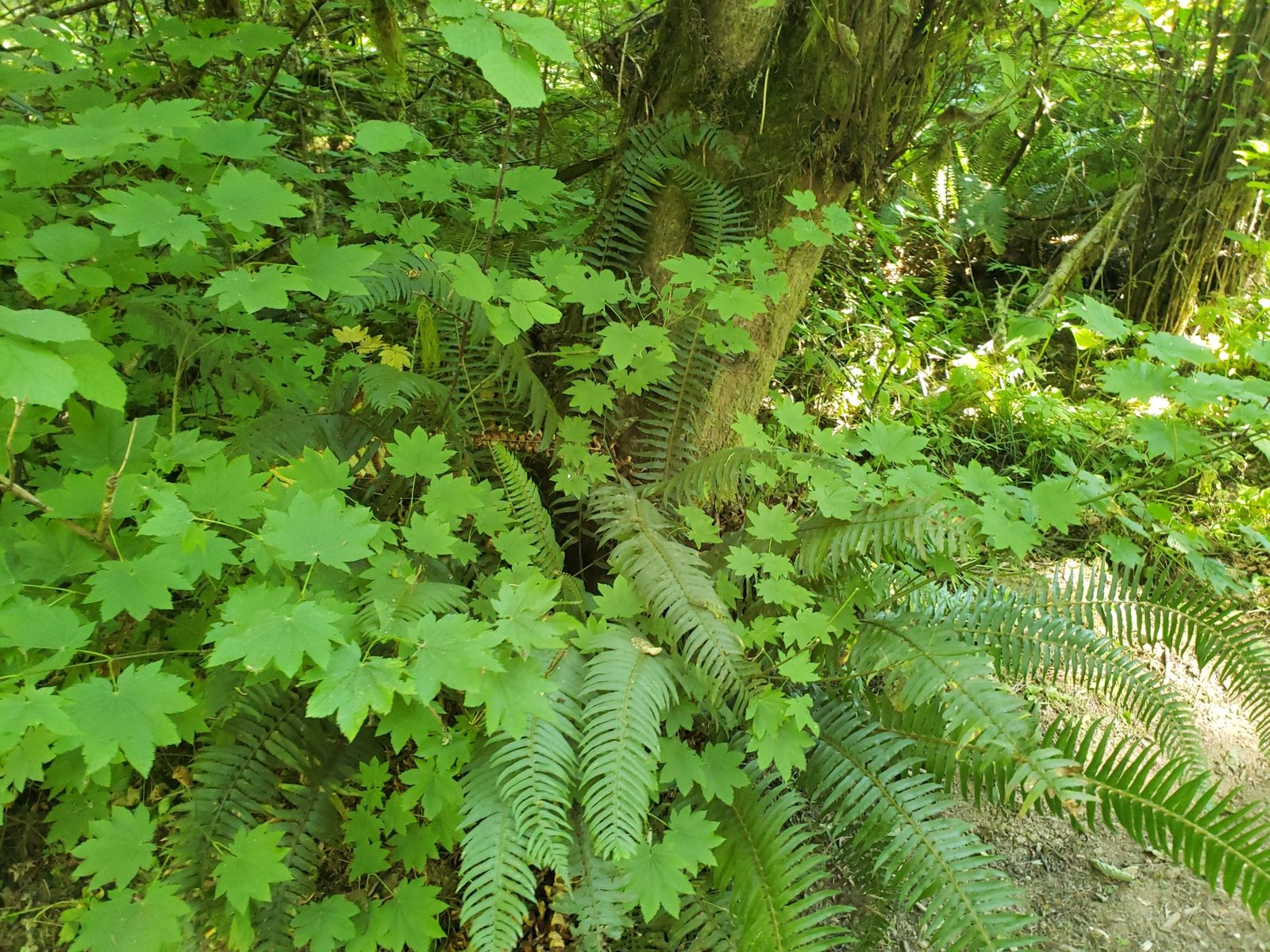
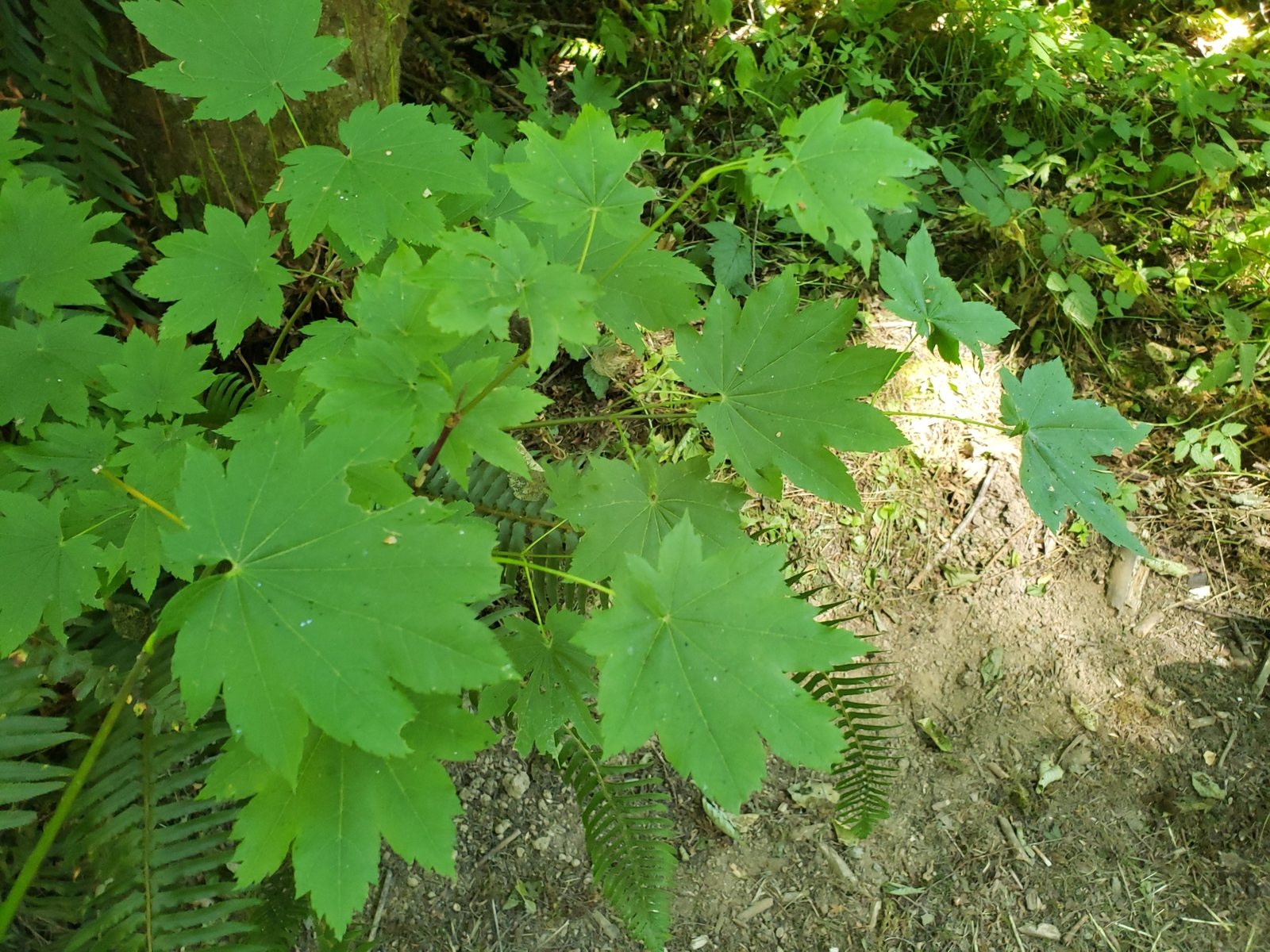
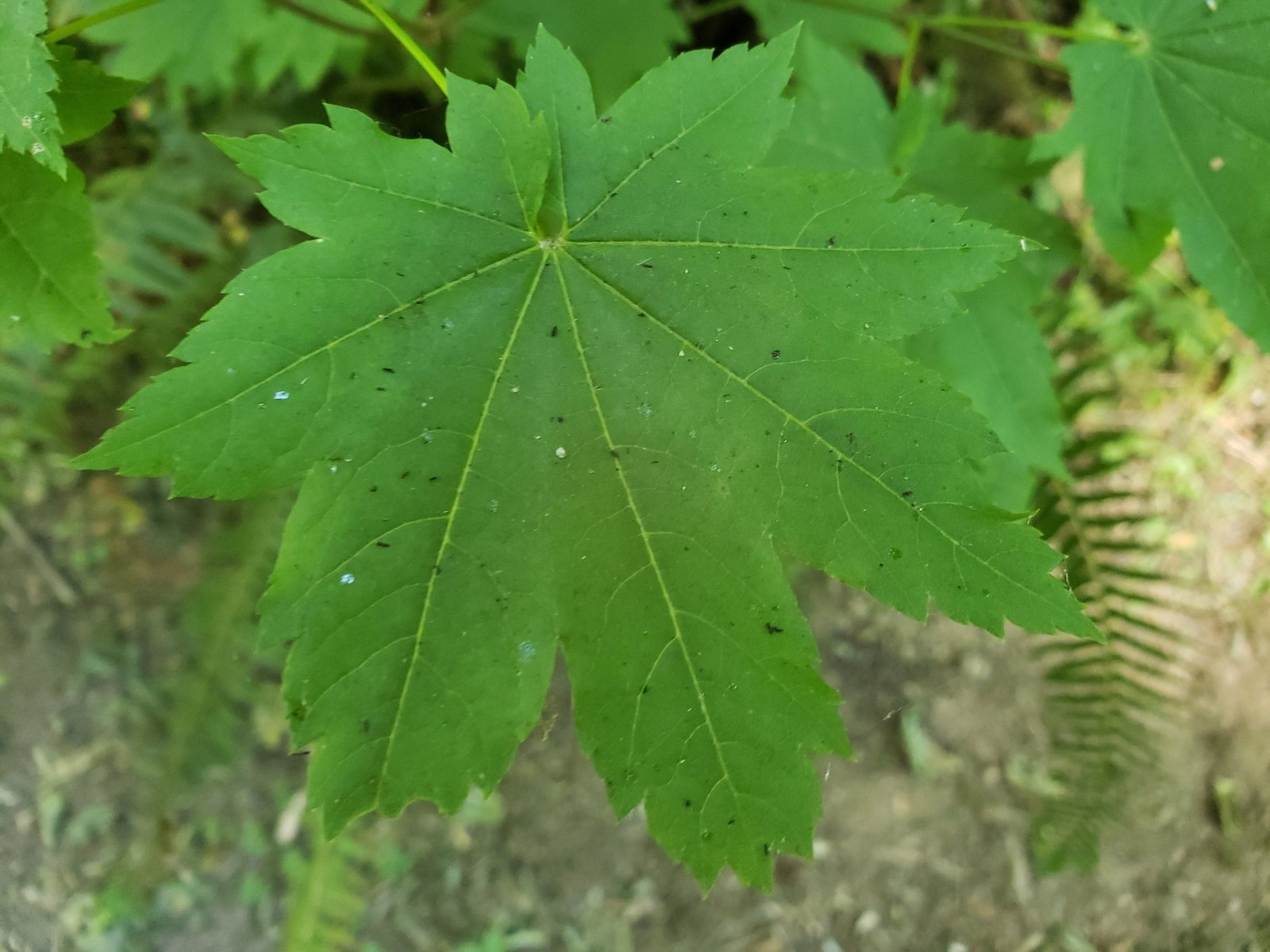
At a glance
- Sun
- Partial shade is ideal; tolerates deeper shade or full sun where summers are cool and soil stays moist. Shelter from hot afternoon sun and drying winds.
- Water
- Keep evenly moist but not waterlogged, especially during establishment. Established plants tolerate some seasonal dryness in shade but may scorch during prolonged drought.
- Soil
- Humus-rich, well-drained soil, preferably slightly acidic to neutral. Avoid compacted, waterlogged ground and very dry, shallow soil.
- Height
- 15-25 ft (4.5-7.6 m)
- Spread
- 15-20 ft (4.5-6 m)
- Flowers
- Small reddish-purple and creamy-white flowers in spring, appearing with the new leaves.
- Foliage
- Rounded green leaves with usually 7-9 pointed lobes and toothed edges; autumn colour ranges from yellow to orange and scarlet, depending on light and growing conditions.
- Growth
- Slow to moderate; usually more upright in brighter light and more spreading or arching in shade.
- Care needed
- Low
The year at a glance
- Wildlife
| J | F | M | A | M | J | J | A | S | O | N | D | |
|---|---|---|---|---|---|---|---|---|---|---|---|---|
| Flowers | ||||||||||||
| Fruit | ||||||||||||
| Plant |
Northern hemisphere months. In Australia, shift them by six.
- Difficulty
- Easy
- Toughness
- Fairly tough
Will it suit your garden?
Pick your zone, country, light and whether you have pets.
Full sun is 6 or more hours of direct sun a day, part shade 3 to 6 hours, shade under 3.
How it grows
Planting day
7 ft (2 m)
After 1 year
7 ft (2.2 m)
After 2 years
8 ft (2.3 m)
After 3 years
8 ft (2.5 m)
After 5 years
9 ft (2.8 m)
About 26 years to full size.
From a typical nursery size, at an average rate for this kind of plant. A rule of thumb, not a forecast.
Good to know
- Cats and dogs
- Safe
- Native to
- the US and Canada
- Growth rate
- Slow
Care
Jobs through the year
- WaterApr–May, Sep–Oct, every 14 days
- Water established trees deeply when soil begins to dry; young trees need more frequent checks and watering.
- WaterJun–Aug, every 7 days
- Water established trees deeply during dry spells, keeping soil evenly moist but never waterlogged.
- MulchApr
- Maintain 5–8 cm of leaf mould or bark mulch, keeping it clear of stems.
- PruneAug
- Lightly remove damaged or rubbing branches, preserving the natural framework and avoiding heavy cuts.
- ProtectJun–Aug
- Provide afternoon shade and shelter from hot drying winds to prevent leaf scorch.
- Plant with the root flare at soil level and allow room for its spreading, often multi-stemmed shape.
- Water deeply during dry spells for the first two or three growing seasons; check soil moisture before watering again.
- Apply 2-3 in (5-8 cm) of leaf mould or bark mulch, keeping it clear of the stems.
- Avoid routine feeding; use a modest spring application of balanced fertiliser only if growth is weak and a soil test indicates a need.
- Protect from hot, drying winds and provide afternoon shade in warmer districts.
Pruning. Prune lightly in late summer, removing dead, damaged or rubbing branches and retaining the natural branching structure. Avoid heavy pruning and late-winter or early-spring cuts, which can bleed sap.
Through the year
- Autumn
- Plant while soil is workable, or wait until spring in very cold districts.
- Early spring
- Check newly planted trees for frost heaving and water if the soil is dry.
- Spring
- Renew the organic mulch without piling it against the stems.
- Summer
- Water deeply during dry spells and watch for scorched leaf edges.
- Late summer
- Remove damaged or crossing branches with minimal pruning.
- Late autumn
- Check that fallen leaves and mulch are not blocking drainage around the root zone.
In the garden
- Use as a small specimen tree beside a shaded patio, allowing space for its arching branches.
- Plant at a woodland edge with ferns and shade-tolerant perennials for layered foliage.
- Set against evergreen shrubs or conifers to make its autumn colour stand out.
- Use in a Pacific Northwest native planting, with room for low branches to spread naturally.
Garden styles it suits: Woodland, Pacific Northwest woodland, Japanese, Wildlife garden, Autumn colour and Moss and fern garden.
Plant it with: Western sword fern, Deer fern, Salal, Evergreen huckleberry, Inside-out flower and Pacific bleeding heart.
Wildlife: Seeds are eaten by birds and small mammals. The branching canopy provides shelter and nesting cover, and the leaves support native browsing animals and insects within its natural range.
Problems to watch for
- Leaf scorch: brown edges usually follow drought, hot sun or drying wind; water deeply, mulch and provide afternoon shade.
- Verticillium wilt: sudden wilting or branch dieback can indicate this soil-borne disease; seek a diagnosis, remove dead wood and replace severely affected trees with a less susceptible plant.
- Root rot: persistent wetness can cause decline; improve drainage and avoid planting too deeply or watering already wet soil.
- Aphids: curled new leaves and sticky honeydew may appear in spring; wash small colonies off with water and encourage natural predators.
Safety
Not known to be toxic to people, cats or dogs. Safety for horses is not well established; keep fallen leaves and seeds out of paddocks rather than assuming that all maple species are safe.
Easily confused with
Japanese maple (Acer palmatum)
Typical Japanese maple leaves have deeper cuts between narrower lobes; vine maple leaves are more rounded, with usually 7-9 relatively shallow lobes. Cultivars vary, so leaf shape alone is not always conclusive.
Bigleaf maple (Acer macrophyllum)
Bigleaf maple becomes a much larger tree and has much larger leaves, usually with five main lobes, rather than vine maple's smaller, rounded, 7-9-lobed leaves.
The name
The name circinatum means rounded, referring to the leaf outline, while vine maple describes its flexible, arching stems, which can trail and root where they touch the ground.
Propagation. Grow from fresh seed sown outdoors in autumn; germination can be slow and may take two springs. Low branches can be layered where they contact moist soil. Named cultivars are generally propagated by grafting.
Checked against open data
- Accepted botanical name
- Acer circinatum
- In the US and Canada
- Native in Alaska, Canada and the lower 48 states.
- Native range
- Alaska, British Columbia, California, Oregon and Washington.
- Measured
- Soil pH 5.5 to 7.5. Average height 460 cm.
Sources: GBIF (CC BY 4.0), USDA PLANTS and Trefle (CC BY 4.0). The care and design notes are LandscapeGPT's own.
See it in your own yard.
Upload a photo of your yard and see it redesigned with plants that suit your climate, each checked against your zone.