Pacific bleeding heart
Dicentra formosa. Family Papaveraceae. Perennial.
Also called Western bleeding heart, Western fringed bleeding heart.
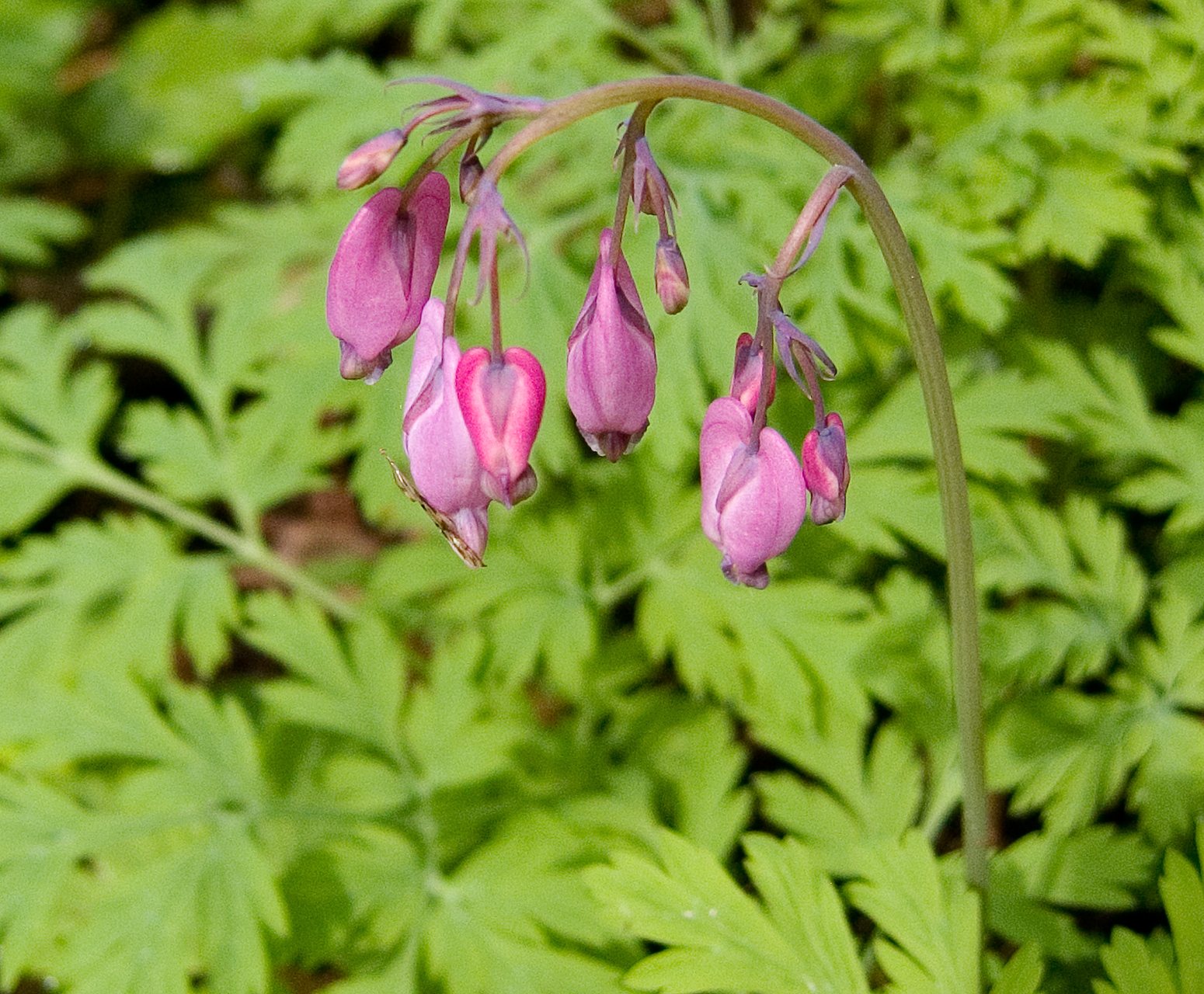
Pacific bleeding heart is a spreading woodland perennial native to western North America, grown for its finely divided foliage and dangling pink, heart-shaped flowers. It makes a soft groundcover in cool, shaded gardens, but may go dormant during hot or dry summers.
At a glance
- Sun
- Partial shade or dappled shade; tolerates deeper shade but flowers less. Morning sun is suitable where summers are cool and soil stays moist.
- Water
- Keep evenly moist during active growth, without waterlogging. Established plants tolerate some summer dryness by going dormant.
- Soil
- Humus-rich, well-drained soil; slightly acidic to neutral conditions are ideal. Avoid compacted soil and sites that remain wet in winter.
- Height
- 1-1.5 ft (0.3-0.45 m)
- Spread
- 1-2 ft (0.3-0.6 m), spreading farther over time by rhizomes
- Flowers
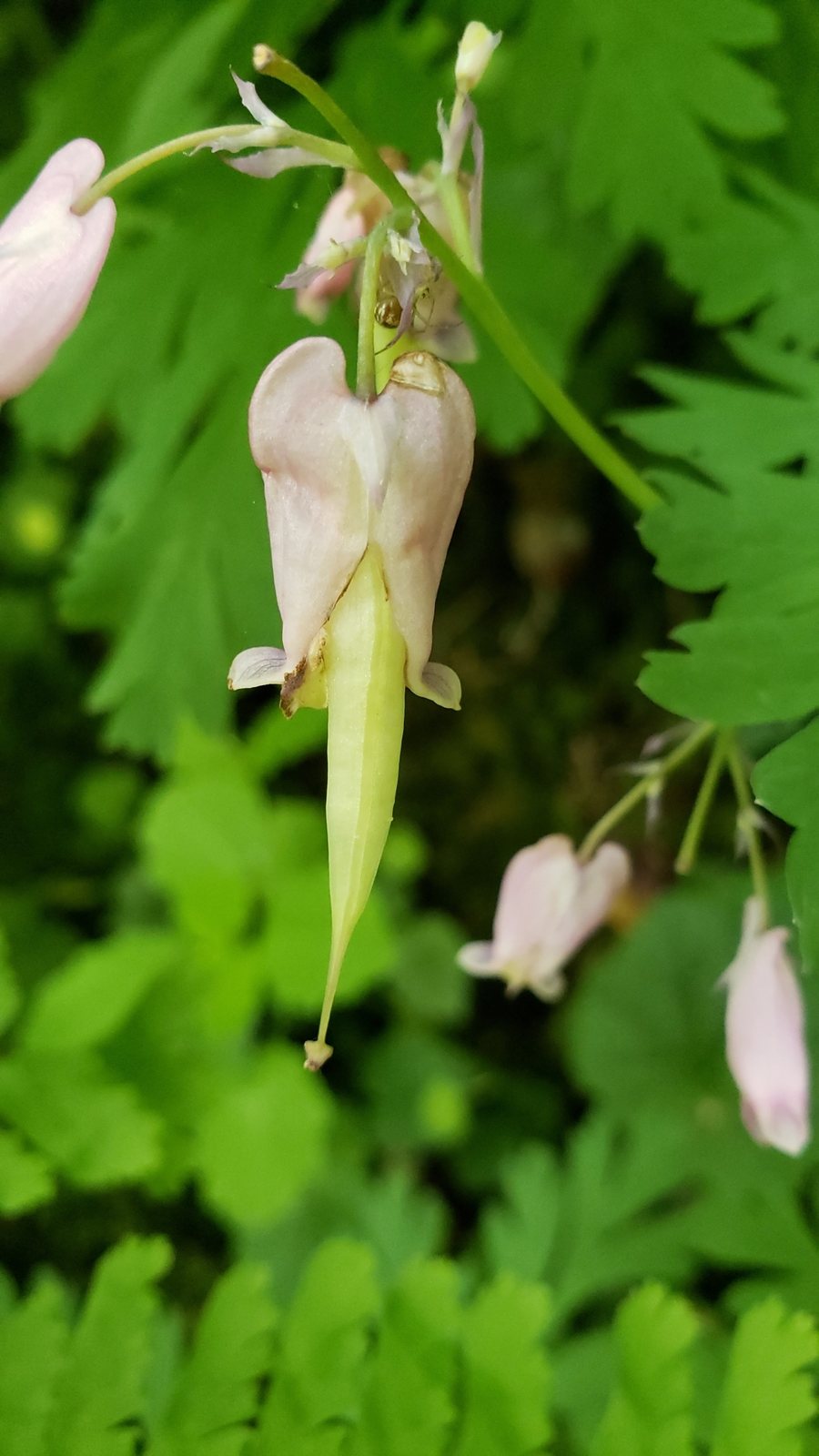
- Pink to rose-purple heart-shaped flowers from mid-spring into early summer; scattered repeat flowering may continue in cool, moist conditions.
- Foliage
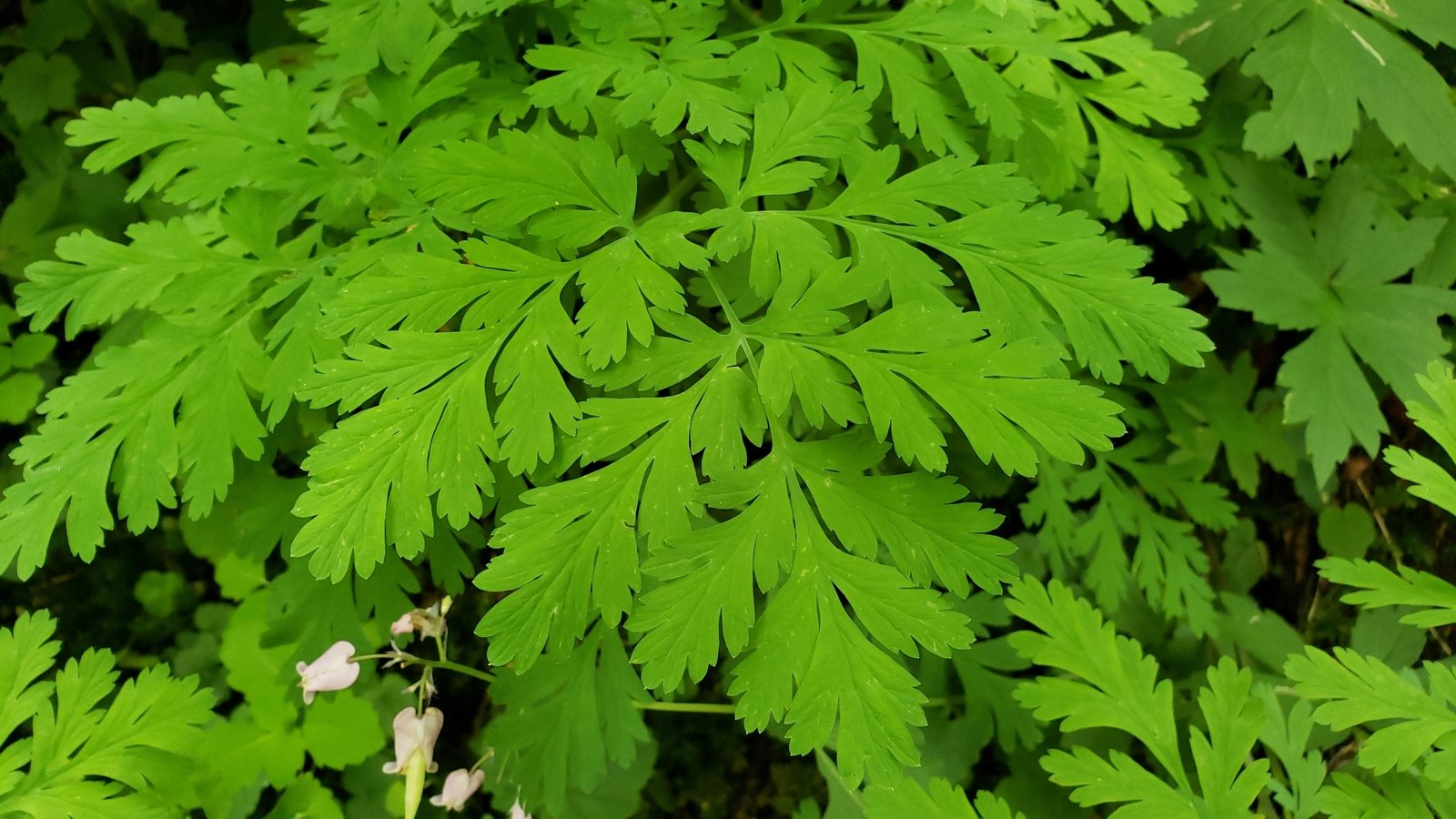
- Soft, fern-like, finely divided green to blue-green leaves arising near ground level; deciduous and sometimes summer-dormant.
- Growth
- Moderate; forms expanding colonies where conditions suit it.
- Care needed
- Low
The year at a glance
- Pollinators
- Deer resistant
- Cold hardy
- Low allergen
| J | F | M | A | M | J | J | A | S | O | N | D | |
|---|---|---|---|---|---|---|---|---|---|---|---|---|
| Flowers | ||||||||||||
| Plant |
Northern hemisphere months. In Australia, shift them by six.
- Difficulty
- Easy
- Toughness
- Very tough
Will it suit your garden?
Pick your zone, country, light and whether you have pets.
Full sun is 6 or more hours of direct sun a day, part shade 3 to 6 hours, shade under 3.
How it grows
Planting day
1 ft (0.3 m)
After 1 year
1.1 ft (0.32 m)
After 2 years
1.1 ft (0.35 m)
After 3 years
1.2 ft (0.38 m)
full size
About 3 years to full size.
From a typical nursery size, at an average rate for this kind of plant. A rule of thumb, not a forecast.
Good to know
- Cats and dogs
- Toxic
- Native to
- the US and Canada
- In the garden
- Spreads vigorously: plan to contain it.
- Growth rate
- Moderate
Care
Jobs through the year
- WaterMar–Apr, Sep–Oct, every 14 days
- Water established plants if soil is drying during active growth; keep new divisions moist.
- WaterMay–Aug, every 7 days
- Water active plants during dry spells; stop routine watering if summer dormancy develops.
- MulchMar
- Apply a thin compost or leaf-mould layer, leaving growing points uncovered.
- DeadheadMay–Jul, every 14 days
- Remove faded flower stems for tidiness or to reduce self-seeding.
- PruneJul–Nov
- Cut foliage to ground level only once fully yellowed; mark summer-dormant clumps.
- DivideMar, Sep–Oct
- Divide crowded colonies when needed and remove rhizomes spreading into neighbouring plants.
- Water during dry spells in spring and early summer, aiming for moist rather than saturated soil.
- Apply a thin layer of compost or leaf mould in spring; rich soil rarely needs additional fertiliser.
- Mulch with leaf mould or fine bark, keeping the growing points uncovered.
- Divide crowded colonies in early spring or autumn, and remove unwanted rhizomes before they enter neighbouring plants.
- If foliage dies back in summer, mark the site and avoid digging there or watering heavily to force regrowth.
Pruning. Remove faded flower stems if you want a tidier appearance or fewer seedlings. Cut foliage to ground level only after it has yellowed and died back, whether in summer or autumn.
Through the year
- Early spring
- Plant or divide clumps as new growth appears; water thoroughly after planting.
- Spring
- Top-dress with compost or leaf mould and check emerging shoots for slug damage.
- Late spring
- Water during dry weather and remove spent flower stems if seedlings are unwanted.
- Summer
- Allow heat-stressed plants to become dormant; remove fully yellowed foliage and mark their position.
- Autumn
- Plant or divide in moist, workable soil, and lift rhizomes that have spread beyond their allotted space.
- Winter
- Check that water drains freely and avoid disturbing the dormant crowns.
In the garden
- Plant beneath deciduous trees and shrubs for a low layer of spring flowers and finely textured foliage.
- Combine with ferns and hostas in shaded borders, where their later foliage can cover gaps left by summer dormancy.
- Edge shaded paths with loose colonies, allowing room for their gradual spread.
- Use in Pacific Northwest native woodland gardens alongside trilliums and woodland shrubs.
Garden styles it suits: Woodland, Pacific Northwest woodland, Cottage garden, Romantic rose garden, Secret garden and Blues and silvers.
Plant it with: Western sword fern, Lady fern, Hosta, Pacific trillium, Foamflower and Vine maple.
Wildlife: Flowers provide nectar for bumblebees and may attract hummingbirds within their native range. Ants help disperse the seeds. Deer usually leave the foliage alone, although no plant is completely deer-proof.
Problems to watch for
- Slugs and snails can eat emerging shoots: inspect at dusk, remove pests and use an approved iron phosphate bait if needed.
- Crown or root rot in waterlogged soil: improve drainage or move plants to a better-drained site; discard badly rotted crowns.
- Early yellowing in hot or dry weather usually signals summer dormancy: let foliage die back rather than repeatedly soaking the dormant plant.
- Rhizomes can crowd small neighbours in favourable soil: lift and divide the colony, removing unwanted sections.
Safety
All parts contain toxic alkaloids and should be treated as poisonous to people, cats, dogs and horses if eaten. Ingestion can cause vomiting, diarrhoea, trembling or other nervous-system effects; substantial ingestion can be serious. Sap may irritate sensitive skin. Keep it away from grazing animals and seek medical or veterinary advice after ingestion.
Easily confused with
Eastern fringed bleeding heart (Dicentra eximia)
A closely related eastern North American species with very similar foliage and flowers. It generally forms a more compact clump, but garden hybrids blur the differences, so provenance or a reliable label is often needed.
Common bleeding heart (Lamprocapnos spectabilis)
Usually taller, with larger, broader leaflets and conspicuous rows of larger heart-shaped flowers hanging from arching, leafy stems.
Dutchman's breeches (Dicentra cucullaria)
Has white flowers shaped like upside-down trousers, with two prominent spreading spurs, rather than elongated pink hearts; it normally disappears soon after spring flowering.
The name
Dicentra means 'two-spurred', referring to the flower's paired spurs, while formosa means 'beautiful'; 'bleeding heart' describes the heart-shaped flowers and their protruding inner petals.
Propagation. Divide rhizomes in early spring or autumn, retaining roots and growing points on each piece. Fresh seed can be sown outdoors when ripe; germination may require a period of cold and can be slow or uneven. Seedlings may differ from the parent.
Checked against open data
- Accepted botanical name
- Dicentra formosa
- In the US and Canada
- Native in Canada and the lower 48 states.
- Native range
- British Columbia, California, Oregon and Washington.
- Measured
- Soil pH 5.5 to 6. Average height 43 cm.
Sources: GBIF (CC BY 4.0), USDA PLANTS and Trefle (CC BY 4.0). The care and design notes are LandscapeGPT's own.
See it in your own yard.
Upload a photo of your yard and see it redesigned with plants that suit your climate, each checked against your zone.