Evergreen huckleberry
Vaccinium ovatum. Family Ericaceae. Shrub.
Also called California huckleberry, Shot huckleberry.
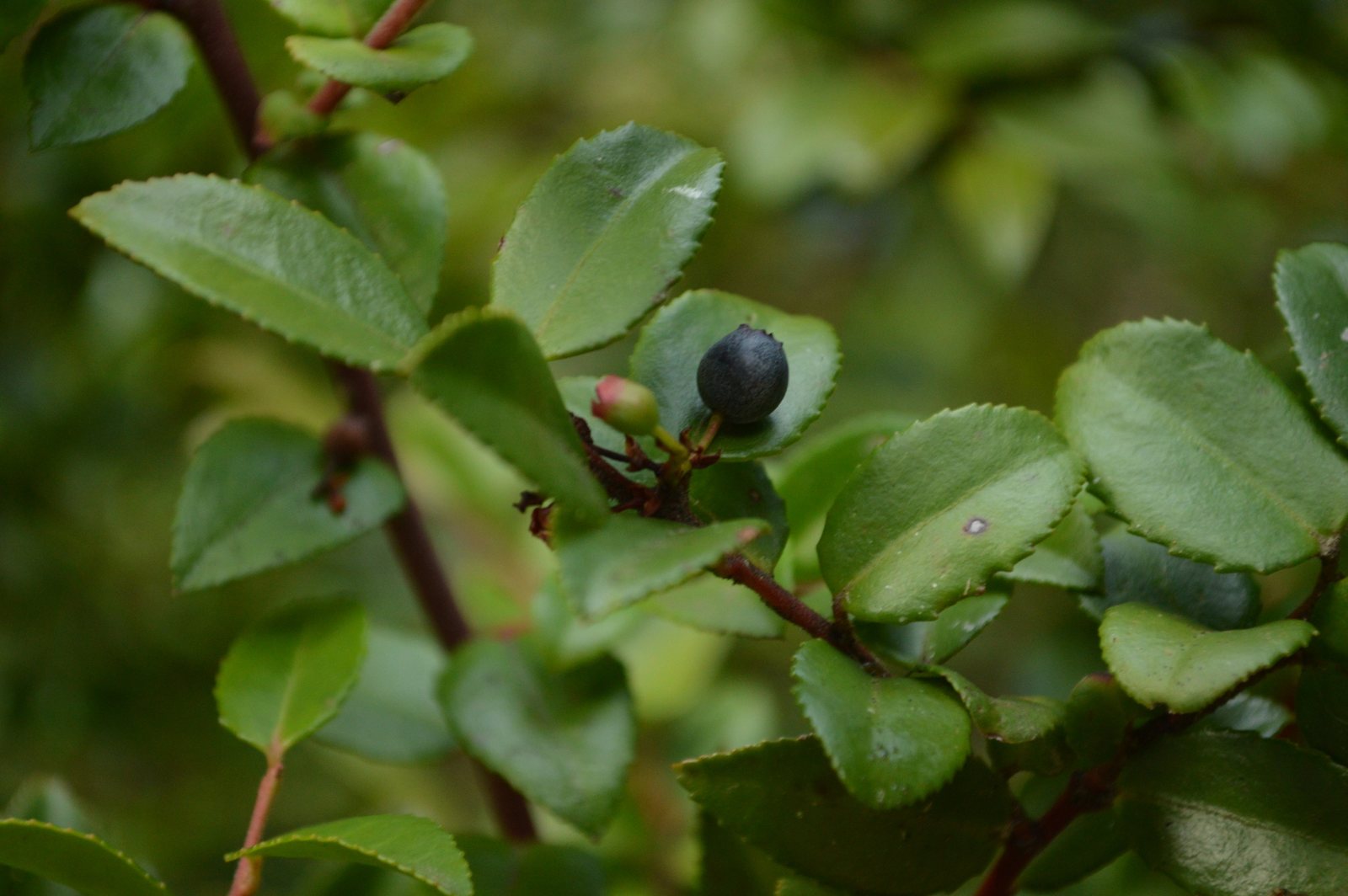
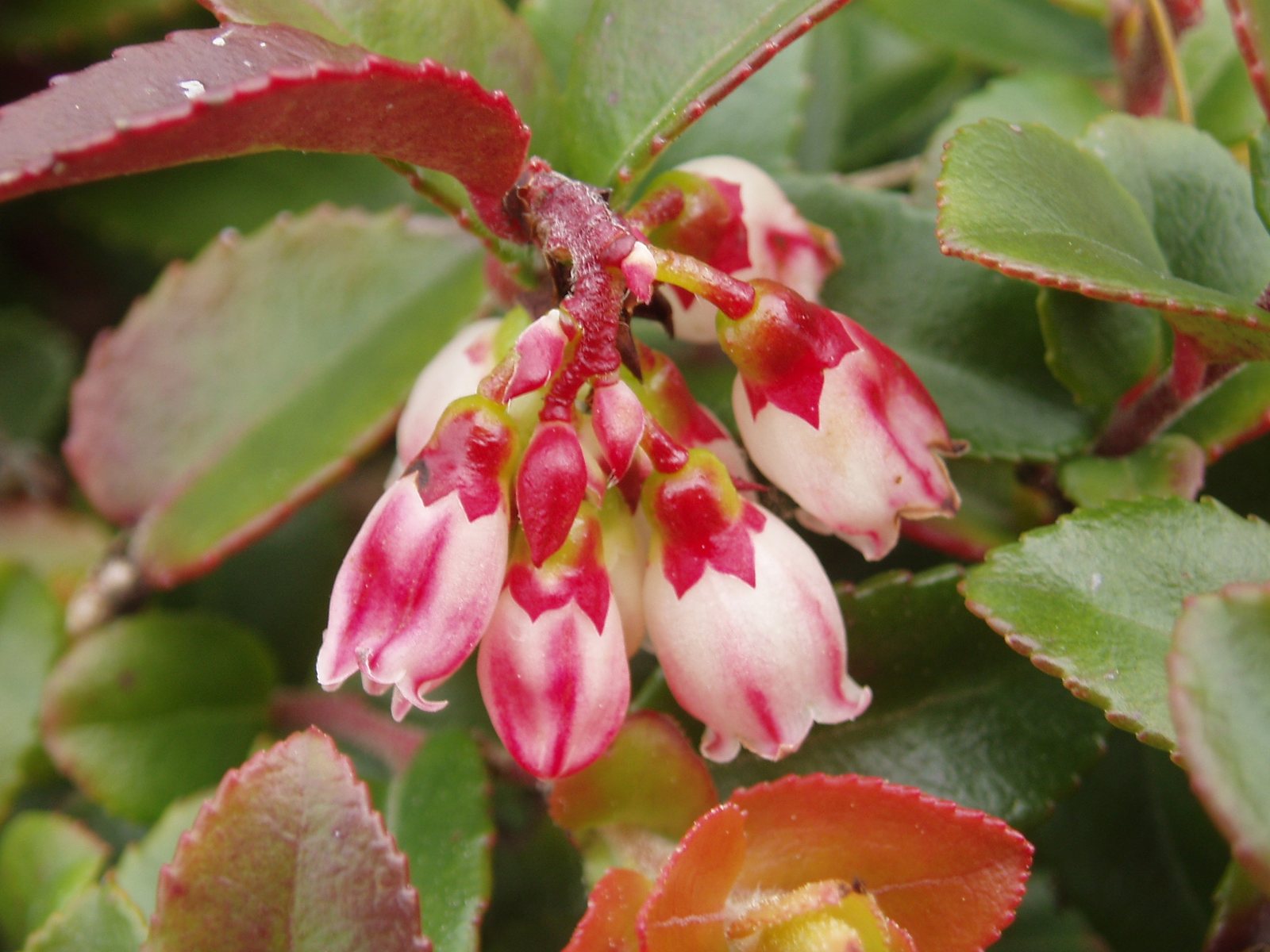
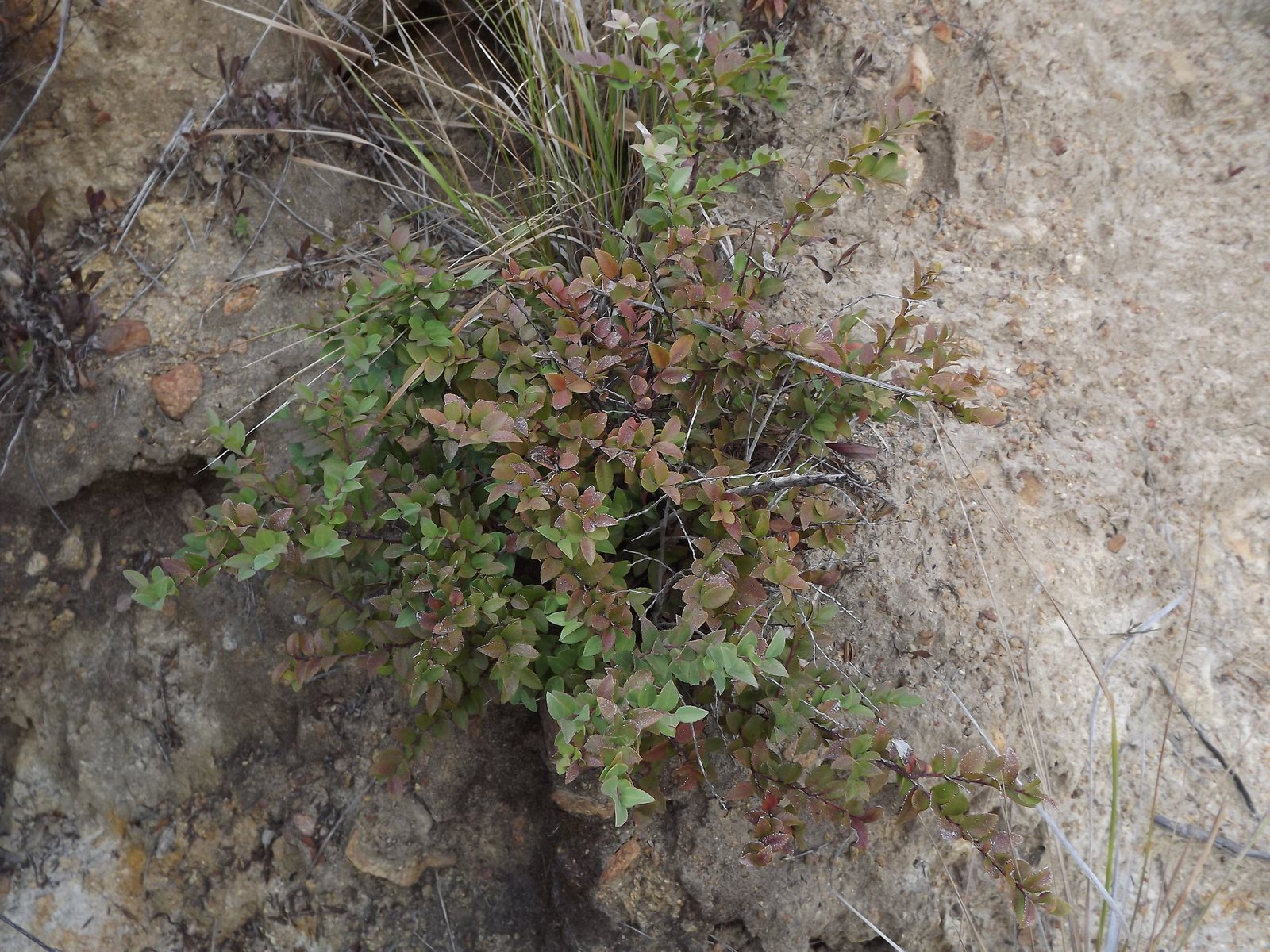
Evergreen huckleberry is a slow-growing shrub native to the Pacific coast of North America, with glossy leaves, small bell-shaped flowers and edible dark berries. Gardeners grow it for year-round screening, woodland planting and fruit, though crops are lighter in deep shade.
At a glance
- Sun
- Full sun to partial shade; tolerates deeper shade but flowers and fruits less. Provide afternoon shade in hot inland gardens.
- Water
- Keep evenly moist while establishing. Established plants tolerate some summer dryness in cool coastal climates, but fruit better with occasional deep watering.
- Soil
- Acidic, humus-rich, well-drained soil, ideally pH 4.5-6.0. Avoid chalk, lime and waterlogged ground.
- Height
- 3-8 ft (0.9-2.4 m), occasionally 12-15 ft (3.7-4.6 m) in shaded woodland
- Spread
- 3-6 ft (0.9-1.8 m)
- Flowers
- Spring to early summer; small white to pale pink bell-shaped flowers in clusters.
- Foliage
- Evergreen. Small, leathery, glossy dark green leaves with finely toothed edges; new growth is often bronze or reddish.
- Growth
- Slow
- Care needed
- Low
The year at a glance
- Pollinators
- Wildlife
- Low allergen
- Edible
| J | F | M | A | M | J | J | A | S | O | N | D | |
|---|---|---|---|---|---|---|---|---|---|---|---|---|
| Flowers | ||||||||||||
| Fruit | ||||||||||||
| Plant |
Northern hemisphere months. In Australia, shift them by six.
- Difficulty
- Moderate
- Toughness
- Fairly tough
Will it suit your garden?
Pick your zone, country, light and whether you have pets.
Full sun is 6 or more hours of direct sun a day, part shade 3 to 6 hours, shade under 3.
How it grows
Planting day
1.6 ft (0.5 m)
After 1 year
2.1 ft (0.64 m)
After 2 years
2.6 ft (0.79 m)
After 3 years
3 ft (0.93 m)
After 5 years
4 ft (1.2 m)
About 8 years to full size.
From a typical nursery size, at an average rate for this kind of plant. A rule of thumb, not a forecast.
Good to know
- Cats and dogs
- Safe
- Native to
- the US and Canada
- Growth rate
- Slow
Care
Jobs through the year
- WaterApr–May, Oct, every 14 days
- Water established plants if soil is drying; check young plants more often for two growing seasons.
- WaterJun–Sep, every 7 days
- Water deeply in dry weather, especially during berry development; use rainwater if tap water is alkaline.
- MulchMar–Apr
- Apply 5–8 cm of leaf mould or fine bark, keeping stems clear.
- FeedApr
- Use a light ericaceous feed only if growth is weak; avoid lime and heavy feeding.
- PruneFeb–Mar
- Remove dead or crossing wood and shorten stray shoots sparingly; do not shear.
- HarvestAug–Nov, every 7 days
- Pick soft, easily detached black berries, tasting first to confirm sweetness.
- ProtectJan–Feb, Nov–Dec
- In colder gardens, shelter young shrubs from drying winds and severe frost.
- Plant with the top of the root ball level with the surrounding soil; avoid disturbing the roots unnecessarily.
- Water deeply during dry spells for the first two growing seasons, and during fruit development thereafter.
- Apply 2-3 in (5-8 cm) of leaf mould or fine bark mulch, keeping it away from the stems.
- Feed lightly in spring with fertiliser for acid-loving shrubs only if growth is weak; avoid lime and heavy feeding.
- In containers, use ericaceous compost and rainwater where your tap water is hard.
Pruning. In late winter or early spring, remove dead, damaged or crossing branches and shorten stray shoots sparingly. Avoid routine shearing if you want berries, as it removes flowering wood.
Harvest
Pick berries in late summer and autumn when fully blue-black to black, slightly soft and easily detached; taste a few before harvesting because colour can develop before full sweetness. Nursery-grown plants commonly take about 3-5 years after planting to give a worthwhile crop, with longer waits in deep shade or poor conditions.
Through the year
- Early spring
- Plant when the soil is workable, keeping the root ball moist until established.
- Late winter
- Remove dead or damaged wood and make any light shaping cuts.
- Spring
- Renew the mulch and feed lightly only if growth or leaf colour suggests a need.
- Summer
- Water during prolonged dry weather, especially while berries are swelling.
- Late summer
- Begin checking berries for sweetness and pick ripe fruit in several passes.
- Autumn
- Continue harvesting and plant new shrubs where winters are mild and drainage is good.
In the garden
- Use as an informal evergreen hedge or screen in acidic soil.
- Plant beneath open-canopied trees with ferns for a layered woodland edge.
- Mix into an edible landscape where attractive foliage matters as much as fruit.
- Group with rhododendrons and other acid-loving shrubs for year-round structure.
Garden styles it suits: Woodland, Wildlife garden, Pacific Northwest woodland, California native, Edible landscape and Food forest.
Plant it with: Western sword fern, Salal, Red huckleberry, Vine maple, Western azalea and Rhododendrons.
Wildlife: Flowers provide nectar and pollen for bees, including bumblebees. Birds and small mammals eat the berries, and dense evergreen growth provides cover.
Problems to watch for
- Yellow leaves with green veins often indicate alkaline soil or hard irrigation water; check soil pH, use rainwater and grow in ericaceous compost if the ground is unsuitable.
- Root rot can develop in saturated soil; improve drainage or move the plant to a raised planting area, and avoid persistent overwatering.
- Leaf spots may occur in damp, crowded growth; remove fallen affected leaves, improve airflow and water at soil level.
- Scorch and poor growth occur in hot, dry, exposed positions; provide afternoon shade, mulch and deep watering.
Safety
Not known to be toxic to people, cats, dogs or horses. Ripe berries are edible; leaves and stems are not normally eaten. Large amounts of fruit may cause digestive upset.
Easily confused with
Salal (Gaultheria shallon)
Salal has much larger, broader leaves and flowers arranged along elongated, often one-sided clusters; evergreen huckleberry has small leaves and shorter flower clusters.
Red huckleberry (Vaccinium parvifolium)
Red huckleberry loses its thin leaves in winter, has conspicuously angular green twigs and bears bright red rather than blue-black fruit.
The name
The species name ovatum means egg-shaped, referring to the outline of the leaves.
Propagation. Take semi-ripe cuttings in late summer, although rooting can be slow and uneven. Seed can also be sown, but seedlings grow slowly and may take several years to fruit.
Checked against open data
- Accepted botanical name
- Vaccinium ovatum
- In the US and Canada
- Native in Canada and the lower 48 states.
- Native range
- British Columbia, California, Oregon and Washington.
- Measured
- Soil pH 5.5 to 7.5. Average height 244 cm.
Sources: GBIF (CC BY 4.0), USDA PLANTS and Trefle (CC BY 4.0). The care and design notes are LandscapeGPT's own.
See it in your own yard.
Upload a photo of your yard and see it redesigned with plants that suit your climate, each checked against your zone.