Western azalea
Rhododendron occidentale. Family Ericaceae. Shrub.
Also called California azalea, Western white azalea.
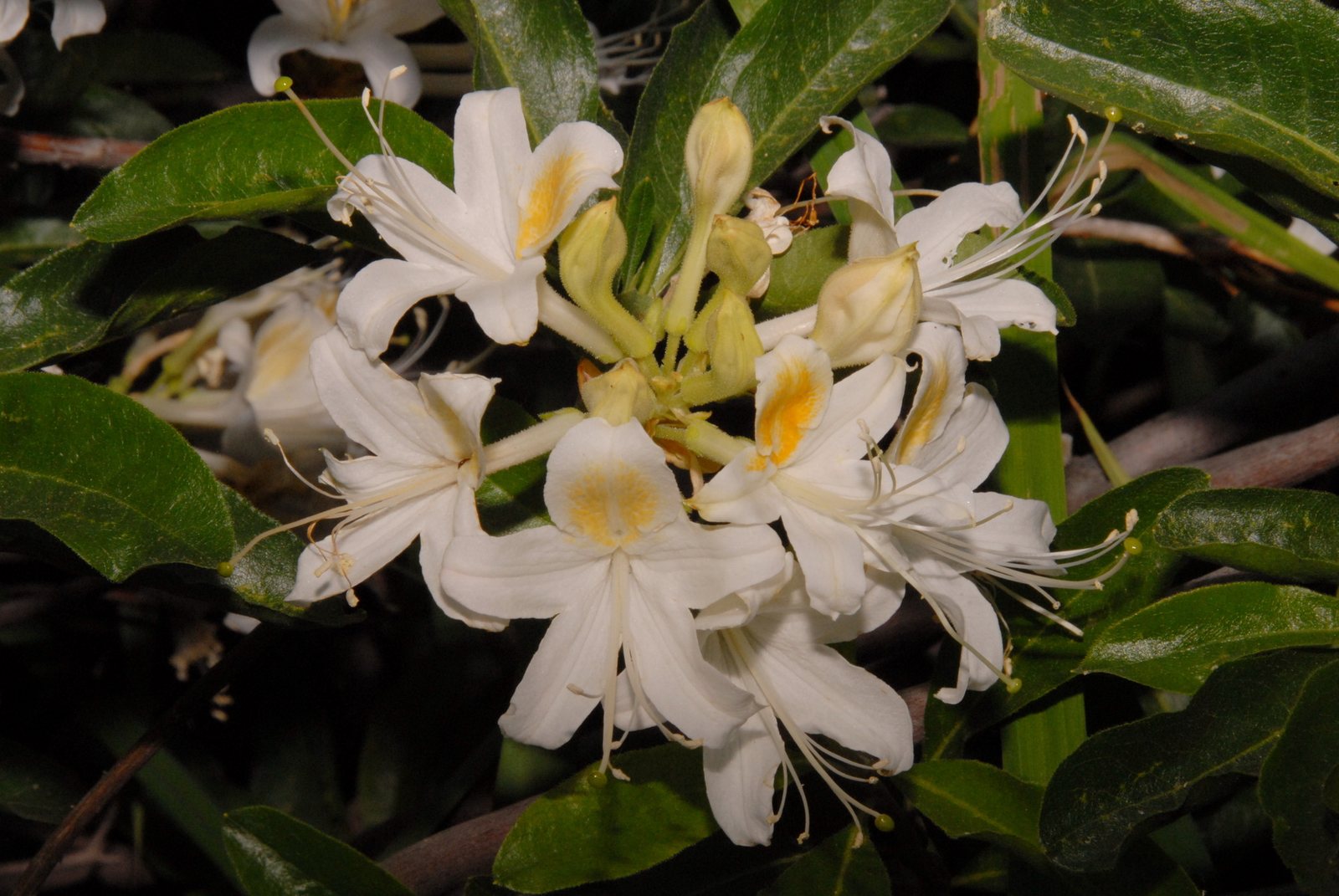
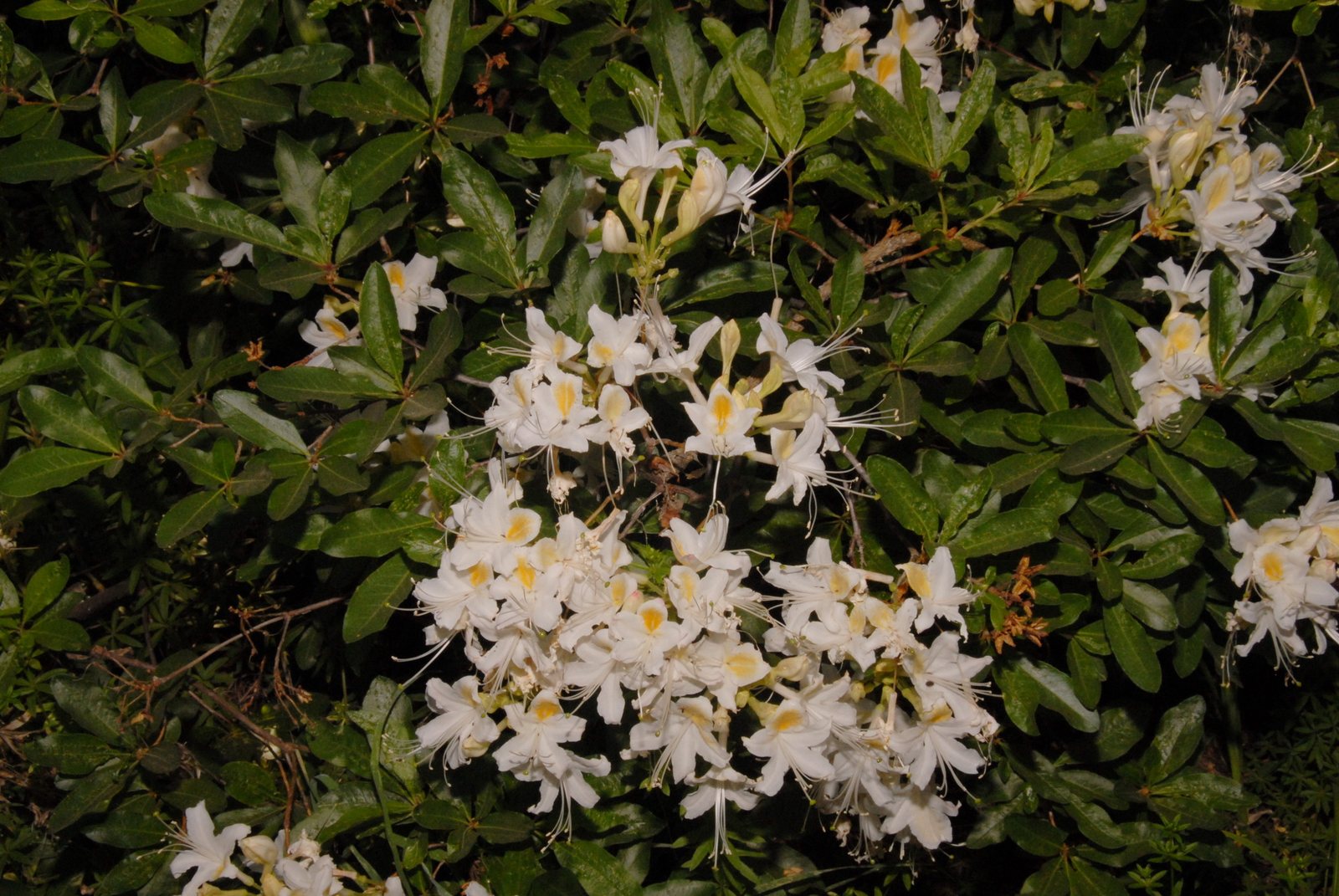
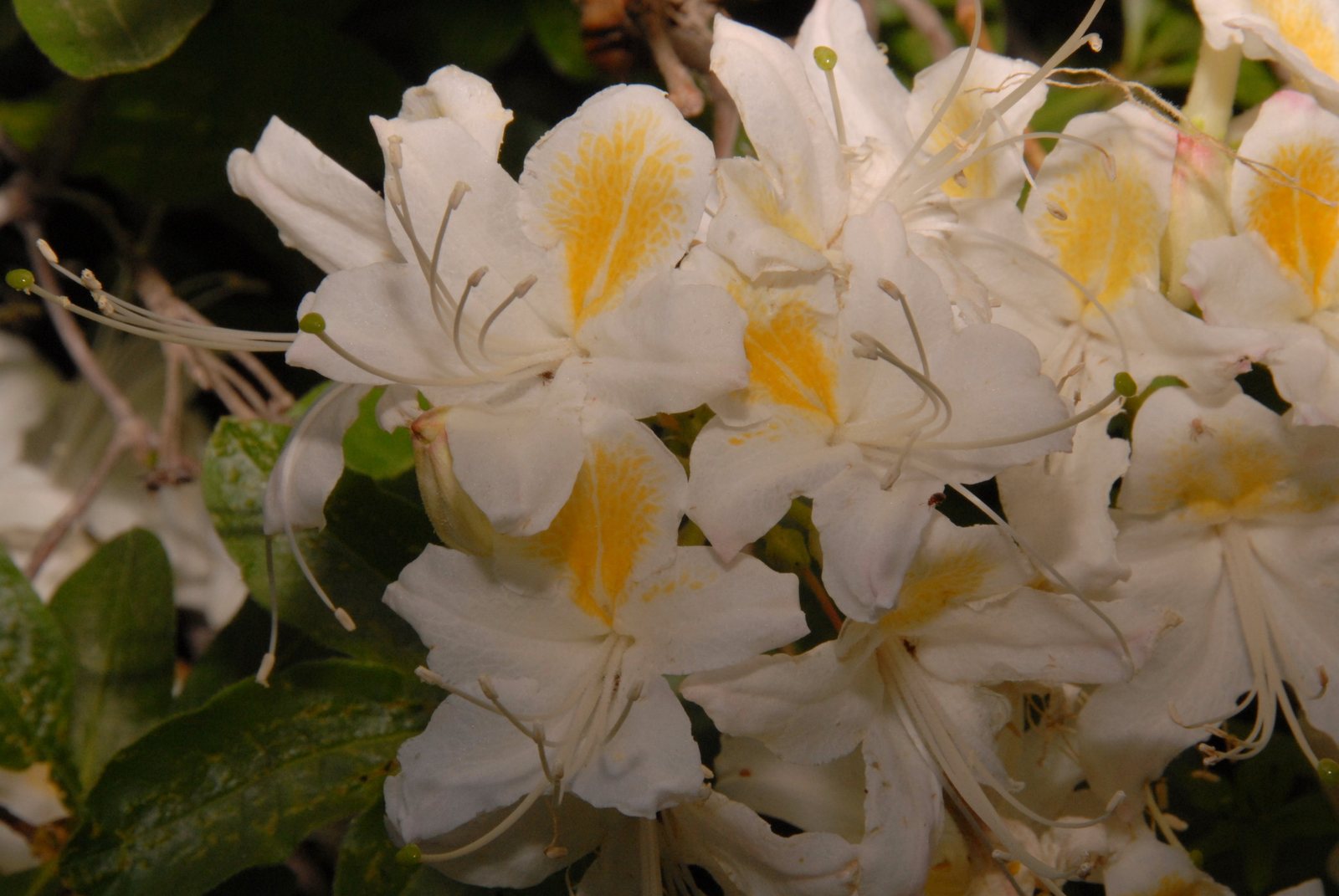
Western azalea is a deciduous shrub native to California and southwestern Oregon, grown for its strongly fragrant white to pale pink flowers with a yellow blotch. It suits moist, acidic woodland gardens and streamside planting, but needs reliable summer moisture and does poorly in hot, dry sites.
At a glance
- Sun
- Partial shade, preferably morning sun and afternoon shade; tolerates more sun in cool coastal climates if roots remain moist.
- Water
- Keep evenly moist, especially through summer; do not let the shallow roots dry out or sit in stagnant water.
- Soil
- Acidic, humus-rich, moisture-retentive soil with good drainage; aim for pH 4.5-6.0. Avoid chalky soil.
- Height
- 6-15 ft (1.8-4.6 m)
- Spread
- 6-10 ft (1.8-3 m)
- Flowers
- Late spring to early summer, sometimes later in cool locations; fragrant white to pale pink flowers with a yellow to orange blotch on the upper petal.
- Foliage
- Soft green, oval to oblong leaves, often turning yellow, orange or red in autumn before falling.
- Growth
- Slow to moderate
- Care needed
- Medium
The year at a glance
- Pollinators
- Wildlife
- Low allergen
- Fragrant
| J | F | M | A | M | J | J | A | S | O | N | D | |
|---|---|---|---|---|---|---|---|---|---|---|---|---|
| Flowers | ||||||||||||
| Plant |
Northern hemisphere months. In Australia, shift them by six.
- Difficulty
- Moderate
- Toughness
- Needs looking after
Will it suit your garden?
Pick your zone, country, light and whether you have pets.
Full sun is 6 or more hours of direct sun a day, part shade 3 to 6 hours, shade under 3.
How it grows
Planting day
1.6 ft (0.5 m)
After 1 year
3 ft (0.92 m)
After 2 years
4 ft (1.3 m)
After 3 years
6 ft (1.7 m)
After 5 years
8 ft (2.6 m)
About 7 years to full size.
From a typical nursery size, at an average rate for this kind of plant. A rule of thumb, not a forecast.
Good to know
- Cats and dogs
- Toxic
- Native to
- the US
- Growth rate
- Slow
Care
Jobs through the year
- WaterMar–May, Sep–Oct, every 7 days
- Water established shrubs when rainfall is insufficient; keep young root balls moist and use rainwater if possible.
- WaterJun–Aug, every 7 days
- Soak the root zone during dry weather; check sooner in heat and never let shallow roots dry out.
- MulchMar–Apr
- Maintain 5–8 cm of leaf mould or fine pine bark, keeping stems uncovered.
- FeedMar–Apr
- Apply a light ericaceous feed only if growth is weak.
- PruneJun–Jul
- Immediately after flowering, remove dead wood and lightly shorten wayward shoots.
- ProtectJan–Feb, Nov–Dec
- Shelter newly planted shrubs from severe frost and cold drying winds in zone 6 gardens.
- Plant with the top of the root ball level with, or slightly above, the surrounding soil; do not bury the stem base.
- Water deeply during dry spells, using rainwater where tap water is alkaline.
- Apply 2-3 in (5-8 cm) of leaf mould or fine pine bark over the root zone, keeping it clear of the stems.
- Feed lightly in spring with an ericaceous fertiliser only if growth is weak; avoid heavy feeding and late-season nitrogen.
- Keep cultivation and digging away from its shallow roots.
Pruning. Prune lightly just after flowering, removing dead wood and shortening wayward shoots only where needed. Avoid routine shearing or late-season pruning, which removes developing flower buds.
Through the year
- Early spring
- Check soil moisture, refresh mulch and feed lightly if growth was weak the previous year.
- Spring
- Plant while conditions are cool and moist, keeping the root ball shallow.
- Late spring
- Enjoy the fragrant flowers and check young foliage for aphids or stippling from lace bugs.
- Early summer
- Prune lightly after the last flowers fade.
- Summer
- Water during dry weather and protect the root zone from drying out.
- Autumn
- Plant in mild regions and collect healthy fallen leaves for leaf mould.
In the garden
- Plant beside a woodland path or seating area where the flower fragrance can be enjoyed.
- Use in a moist, acidic border with ferns, camellias and other rhododendrons.
- Place along the upper bank of a pond or stream, above permanently saturated ground.
- Combine with western North American woodland plants for a naturalistic planting with spring flowers and autumn colour.
Garden styles it suits: Woodland, California native, Pacific Northwest woodland, Sensory garden, Romantic rose garden and Autumn colour.
Plant it with: Western sword fern, Deer fern, Vine maple, Redwood sorrel, Camellia and Japanese pieris.
Wildlife: Flowers attract bees and other pollinating insects. The branching shrub provides cover for small birds.
Problems to watch for
- Yellow leaves with green veins usually indicate alkaline soil or water: test the pH, use rainwater and grow in an ericaceous raised bed if the native soil is unsuitable.
- Phytophthora root rot causes wilting and root decay in poorly drained soil: improve drainage before planting and remove badly affected plants.
- Powdery mildew can mark foliage: improve air circulation, maintain even soil moisture and remove badly affected fallen leaves.
- Azalea lace bugs cause pale stippling and dark specks beneath leaves: inspect leaf undersides and treat young infestations with insecticidal soap labelled for azaleas.
Safety
All parts are toxic to people, cats, dogs and horses if eaten, including leaves, flowers and nectar. Grayanotoxins can cause vomiting, weakness, dangerously slow heart rate and potentially fatal poisoning; seek urgent medical or veterinary advice after ingestion.
Easily confused with
Swamp azalea (Rhododendron viscosum)
Also deciduous with fragrant white flowers, but its flowers are generally smaller, have conspicuously sticky tubes and lack western azalea's prominent yellow upper-petal blotch.
Flame azalea (Rhododendron calendulaceum)
Has predominantly yellow, orange or red flowers rather than white to pale pink, and the flowers usually lack a strong fragrance.
The name
The species name occidentale means 'western', referring to its native range in western North America.
Propagation. Sow fresh seed on the surface of an acidic seed compost and keep humid in bright, indirect light. Layer low branches for plants matching the parent; semi-ripe cuttings can also be tried but may be slow or difficult to root.
Checked against open data
- Accepted botanical name
- Rhododendron occidentale
- In the US and Canada
- Native in the lower 48 states.
- Native range
- California and Oregon.
- Measured
- Soil pH 4.5 to 6.5. Average height 183 cm.
Sources: GBIF (CC BY 4.0), USDA PLANTS and Trefle (CC BY 4.0). The care and design notes are LandscapeGPT's own.
See it in your own yard.
Upload a photo of your yard and see it redesigned with plants that suit your climate, each checked against your zone.