Fuji apple
Malus domestica 'Fuji'. Family Rosaceae. Tree.
Also called Fuji.
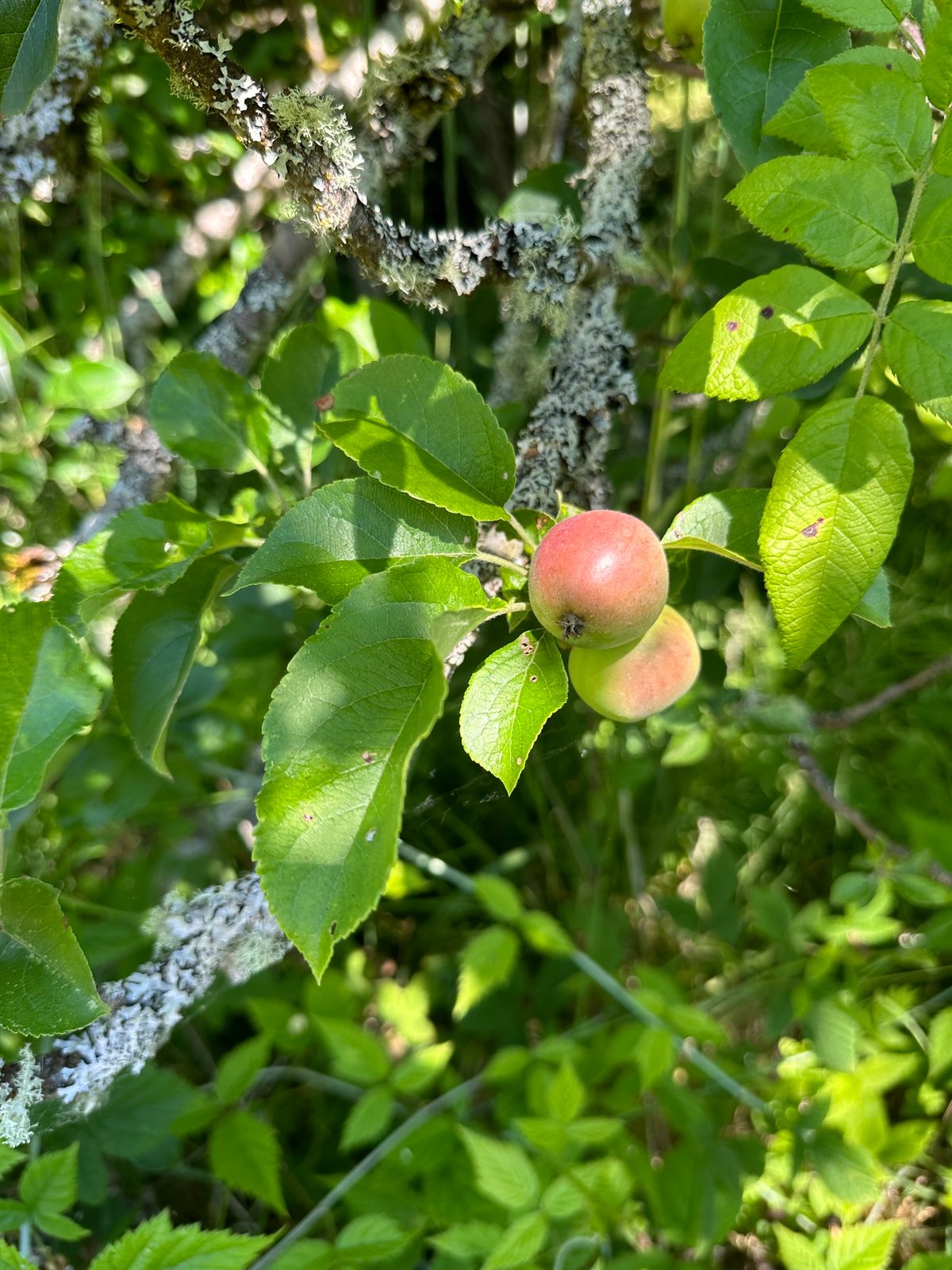
Fuji is a deciduous apple tree grown for large, crisp, very sweet apples with red striping over a yellow-green background. It needs winter chilling, a compatible apple nearby and a long growing season to ripen well; it is less dependable in cool, short summers, including many UK gardens.
At a glance
- Sun
- Full sun, preferably at least 6-8 hours daily; choose a warm, sheltered position outside frost pockets.
- Water
- Water deeply during establishment and dry spells, especially while fruit is swelling; avoid persistently wet roots.
- Soil
- Deep, well-drained loam with moderate fertility; slightly acidic to neutral soil, ideally pH 6.0-7.0.
- Height
- 8-12 ft (2.4-3.7 m) on dwarfing rootstock; 12-18 ft (3.7-5.5 m) on semi-dwarfing rootstock;
- Spread
- 8-12 ft (2.4-3.7 m) on dwarfing rootstock; 12-18 ft (3.7-5.5 m) on semi-dwarfing rootstock;
- Flowers
- Mid- to late spring; pink buds open to white or pale pink flowers.
- Foliage
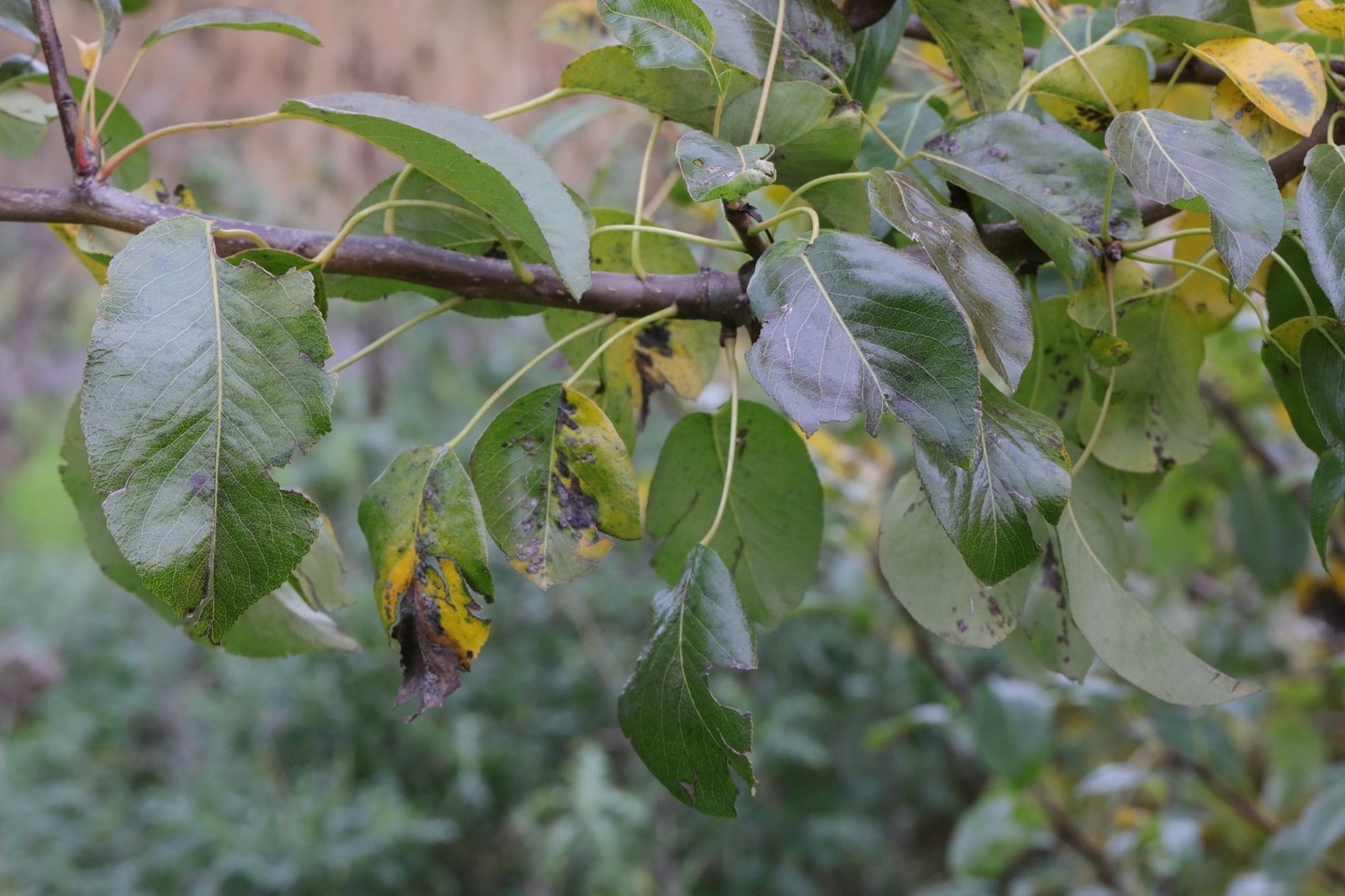
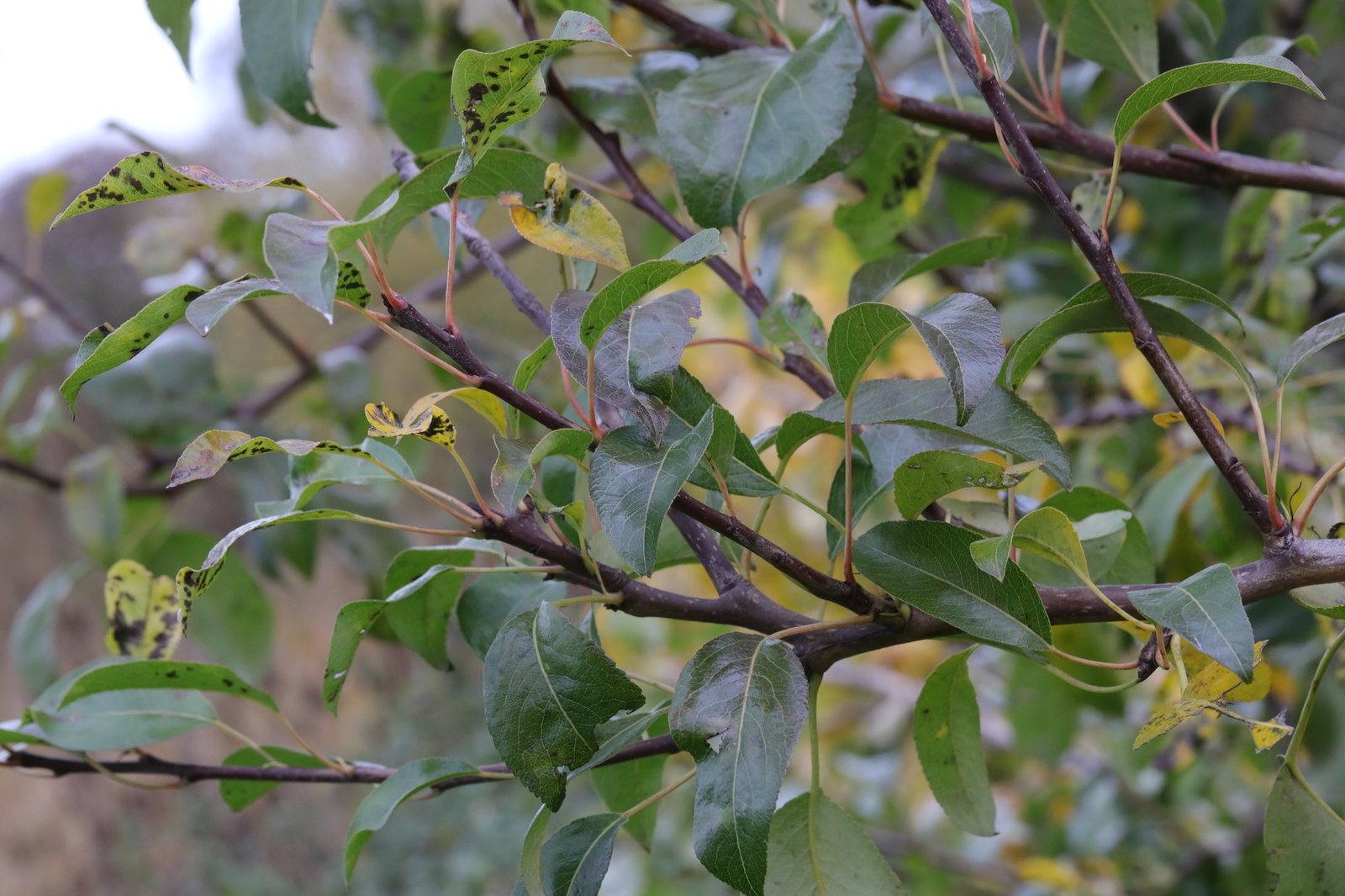
- Deciduous, oval green leaves with toothed edges; autumn colour is usually yellow and often modest.
- Growth
- Moderate; rootstock, soil and pruning strongly affect growth and final size.
- Care needed
- High
The year at a glance
- Pollinators
- Heat tolerant
- Wildlife
- Low allergen
- Edible
| J | F | M | A | M | J | J | A | S | O | N | D | |
|---|---|---|---|---|---|---|---|---|---|---|---|---|
| Flowers | ||||||||||||
| Fruit | ||||||||||||
| Plant |
Northern hemisphere months. In Australia, shift them by six.
- Difficulty
- Hard
- Toughness
- Fairly tough
Will it suit your garden?
Pick your zone, country, light and whether you have pets.
Full sun is 6 or more hours of direct sun a day, part shade 3 to 6 hours, shade under 3.
How it grows
Planting day
7 ft (2 m)
After 1 year
7 ft (2.1 m)
After 2 years
7 ft (2.1 m)
After 3 years
7 ft (2.2 m)
After 5 years
7 ft (2.3 m)
About 20 years to full size.
From a typical nursery size, at an average rate for this kind of plant. A rule of thumb, not a forecast.
Good to know
- Cats and dogs
- Toxic
- Growth rate
- Moderate
Care
Jobs through the year
- WaterApr–May, Sep–Oct, every 14 days
- Water established trees deeply if rain is insufficient; young trees need more frequent watering.
- WaterJun–Aug, every 7 days
- Water established trees deeply in dry weather, especially during fruit swelling.
- FeedMar–Apr
- Feed lightly only if growth is weak; avoid excess nitrogen.
- MulchMar–Apr
- Refresh organic mulch, leaving a clear gap around the trunk.
- PruneFeb–Mar
- Prune while dormant to maintain an open framework and retain fruiting spurs.
- PruneJun
- After natural fruit drop, thin to one apple per cluster, about 15 cm apart.
- PruneJul–Aug
- Lightly summer-prune trained forms only, avoiding severe cuts.
- ProtectApr–May
- Ensure a compatible apple flowers nearby; avoid insecticides during blossom.
- ProtectJun–Sep
- Monitor scab, fire blight and codling moth; promptly remove damaged fruit.
- HarvestOct–Nov
- Taste-test for sweetness and pick when fruit releases easily, before damaging frost.
- ProtectNov
- Clear fallen fruit and diseased leaves; check stakes, ties and trunk guards.
- Choose a rootstock suited to your available space and soil; keep the graft union above soil level.
- Provide a different apple cultivar with overlapping bloom, such as Gala or Granny Smith, within bee-foraging distance; do not rely on Fuji alone for a good crop.
- Water young trees deeply during dry weather and maintain a mulch layer, keeping it clear of the trunk.
- Feed lightly in early spring if growth is weak; excessive nitrogen encourages leafy growth and increases fire blight risk.
- Thin young fruit after natural fruit drop to one apple per cluster, roughly 6 in (15 cm) apart, to improve size and reduce alternate-year cropping.
- Stake young trees securely; strongly dwarfing rootstocks generally need permanent support. Check local winter-chill suitability before buying, especially in warm climates.
Pruning. Prune in late winter while dormant, removing dead, damaged and crossing branches and maintaining an open, well-spaced framework with fruiting spurs. Use light summer pruning to control trained trees, and avoid heavy cuts that stimulate excessive upright shoots.
Harvest
Pick in late autumn, commonly October-November in the Northern Hemisphere and April-May in the Southern Hemisphere, depending on climate. Sample fruit for sweetness and crispness, look for the green background to turn yellow-green, and lift and twist gently; red colour alone does not prove ripeness.
Through the year
- Winter
- Plant bare-root trees when soil is workable, keeping the graft above ground and fitting support as needed.
- Late winter
- Prune the framework and remove mummified fruit and dead or diseased wood.
- Early spring
- Refresh mulch, assess growth before feeding, and check ties and trunk guards.
- Spring
- Check that a compatible apple is flowering nearby; avoid insecticides during bloom.
- Early summer
- Thin fruit after natural drop and monitor for codling moth and apple scab.
- Summer
- Water during dry spells and lightly prune trained forms if needed.
- Late autumn
- Taste-test and harvest mature fruit; store only sound apples and clear fallen fruit and leaves.
In the garden
- Plant in a home orchard with compatible pollinating cultivars and enough room for mature crowns.
- Train on dwarfing rootstock as an espalier beside a sunny fence or on wires in an edible garden.
- Use a free-standing tree as a productive focal point in a lawn, keeping a mulched circle around its base.
- Combine with low flowering herbs around, rather than against, the trunk to bring seasonal flowers into an edible landscape.
Garden styles it suits: Backyard orchard, Edible landscape, Homestead, Potager (kitchen garden), Cottage garden and Food forest.
Plant it with: Gala apple, Granny Smith apple, Chives, Thyme, Sweet alyssum and Yarrow.
Wildlife: Spring flowers provide pollen and nectar for bees and other pollinating insects. Fruit attracts birds, mammals and wasps; protect ripening apples where necessary and collect windfalls.
Problems to watch for
- Apple scab: olive-dark leaf spots and scabby fruit develop in wet weather. Remove fallen leaves, open the canopy and use locally recommended preventive treatments if infections recur.
- Fire blight: blossoms and shoots blacken, often with hooked tips. Prune infected wood well below visible damage in dry weather, disinfect tools between cuts and avoid excessive nitrogen; seek local advice for severe cases.
- Codling moth: larvae tunnel into apples, leaving frass near entry holes. Remove infested and fallen fruit promptly, monitor with traps and use locally approved controls timed to egg hatch.
- Poor crops or alternate-year bearing: check pollination, winter chilling, blossom frost and whether fruit can ripen before cold weather. Thin heavy crops early and avoid planting Fuji where summers are too short.
Safety
Apple flesh is not known to be toxic to people, cats, dogs or horses. Seeds and other plant tissues, particularly chewed seeds and damaged or wilted leaves, contain cyanogenic compounds and can cause serious poisoning if enough is eaten; do not feed prunings to livestock. Whole apples and cores can also cause choking, and large quantities of fruit can upset digestion.
Easily confused with
Gala apple (Malus domestica 'Gala')
Fruit can have similar red striping, but Gala generally ripens much earlier and is often smaller. Leaves and flowers cannot reliably distinguish the cultivars.
Pink Lady apple (Malus domestica 'Cripps Pink')
Usually has a pink-red blush rather than Fuji's more obvious striping, with firmer, more sharply acidic flesh. Appearance overlaps, so a reliable label is the best confirmation.
Crab apple (Malus spp.)
Most ornamental crab apples bear much smaller, often tart or astringent fruit, generally under 2 in (5 cm) across; flowers and leaves may look very similar.
The name
Fuji was bred in Japan from Ralls Janet and Red Delicious and named for Fujisaki, where it was developed.
Propagation. Propagate by grafting or budding Fuji scion wood onto a suitable apple rootstock. Seedlings do not come true to the cultivar and may take many years to fruit.
Checked against open data
- Accepted botanical name
- Malus domestica
- Native range
- Afghanistan, Kazakhstan, Kirgizstan, Pakistan, Tadzhikistan, Uzbekistan and Xinjiang.
- Measured
- Soil pH 5 to 7.5. Average height 700 cm.
Sources: GBIF (CC BY 4.0) and Trefle (CC BY 4.0). The care and design notes are LandscapeGPT's own.
See it in your own yard.
Upload a photo of your yard and see it redesigned with plants that suit your climate, each checked against your zone.