Granny Smith apple
Malus domestica 'Granny Smith'. Family Rosaceae. Tree.
Also called Granny Smith.
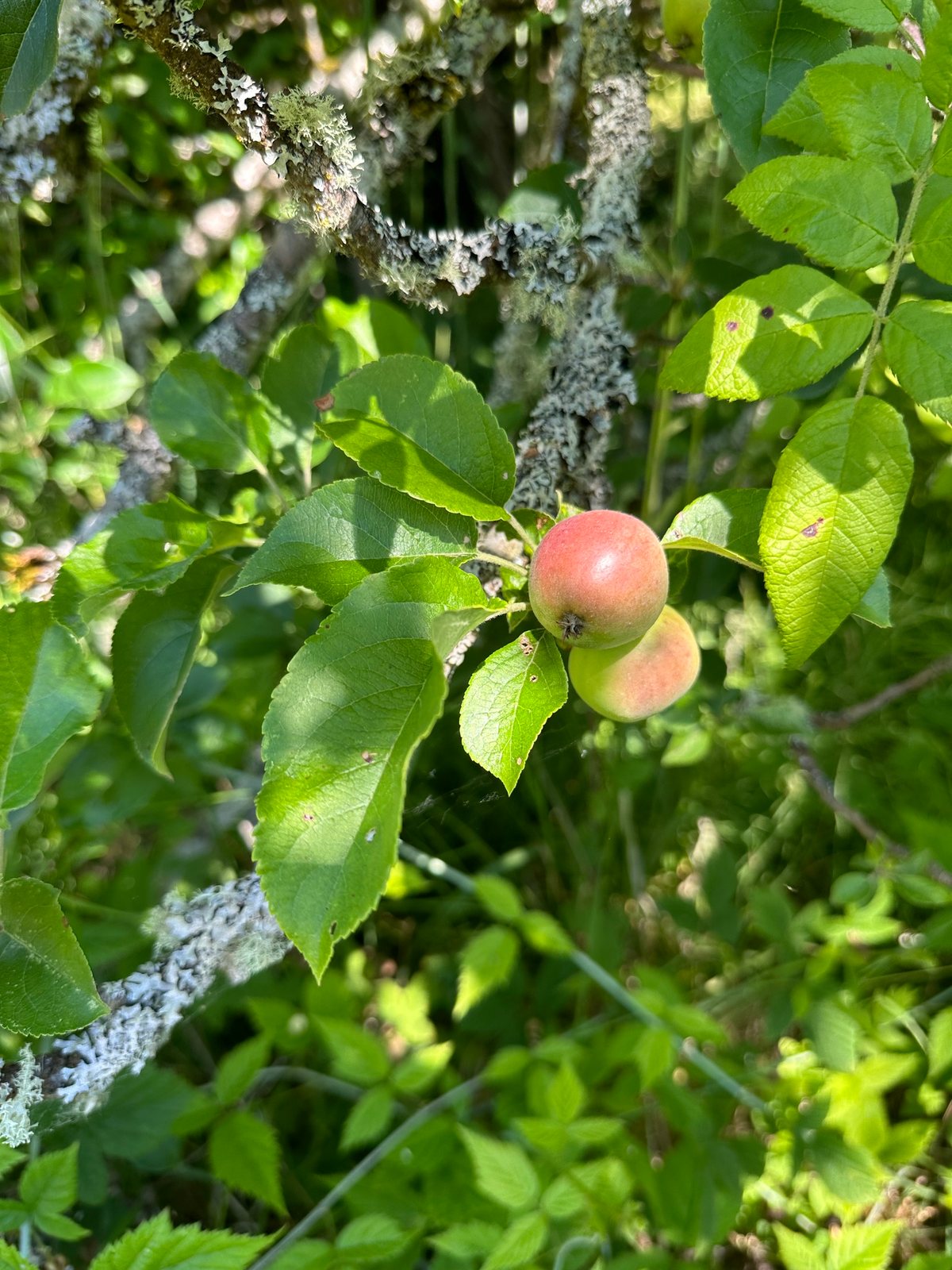
A deciduous apple tree grown for crisp, green, sharply tart fruit used fresh, in cooking and for storage. It needs winter chilling and a long, warm growing season to ripen well, so fruit quality can be disappointing in cool parts of the UK and Canada even where the tree survives winter.
At a glance
- Sun
- Full sun, preferably with at least 6-8 hours of direct light and shelter from strong winds.
- Water
- Water deeply during dry spells, especially for the first two growing seasons and while fruit is swelling; avoid waterlogged soil.
- Soil
- Fertile, well-drained loam is ideal; tolerates other soil textures if drainage is good. Aim for pH 6.0-7.0.
- Height
- 8-25 ft (2.4-7.6 m), depending on rootstock and training; dwarf trees remain near the lower end.
- Spread
- 6-25 ft (1.8-7.6 m), depending on rootstock and pruning.
- Flowers
- White flowers opening from pink buds in mid- to late spring.
- Foliage
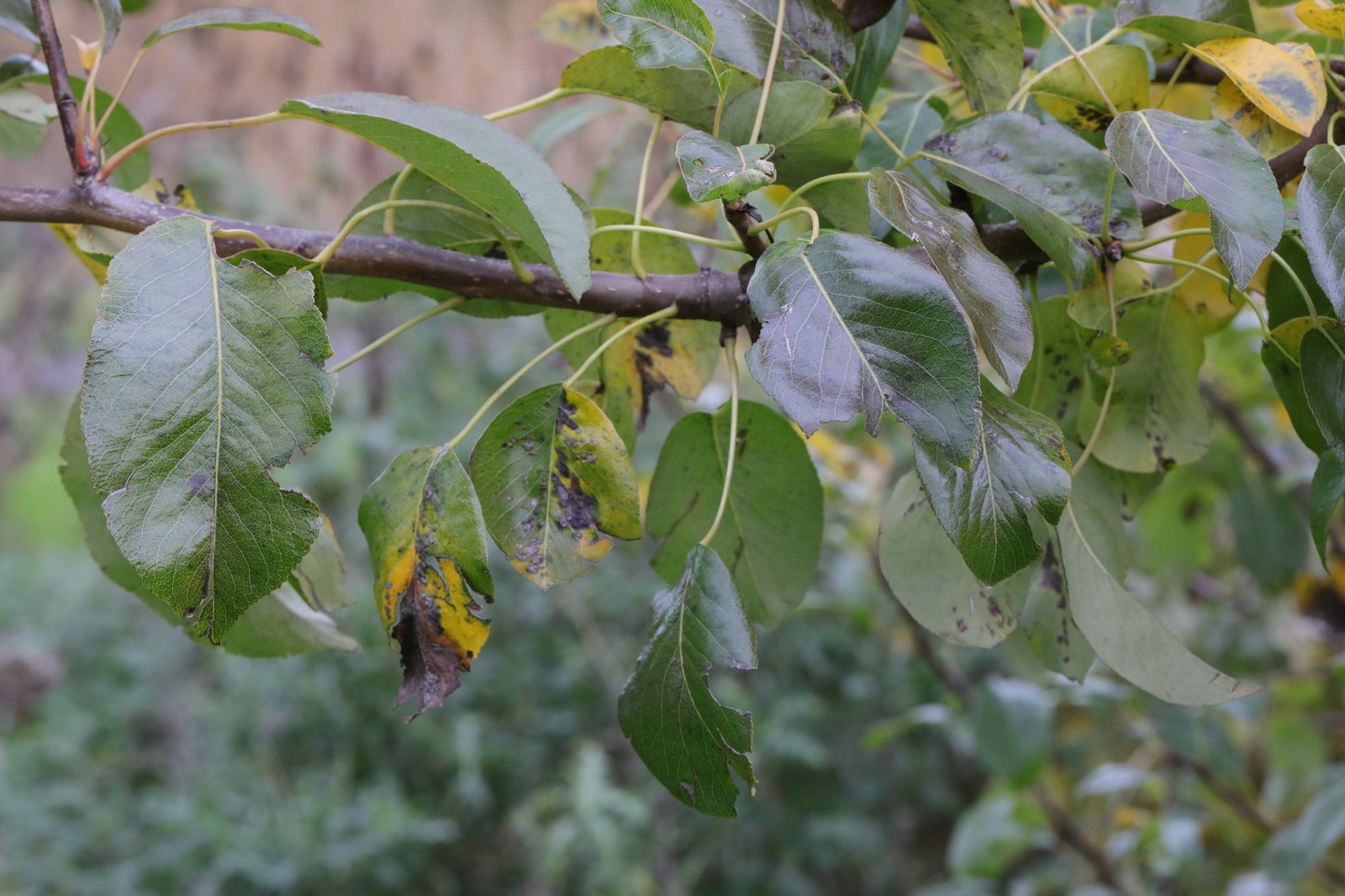
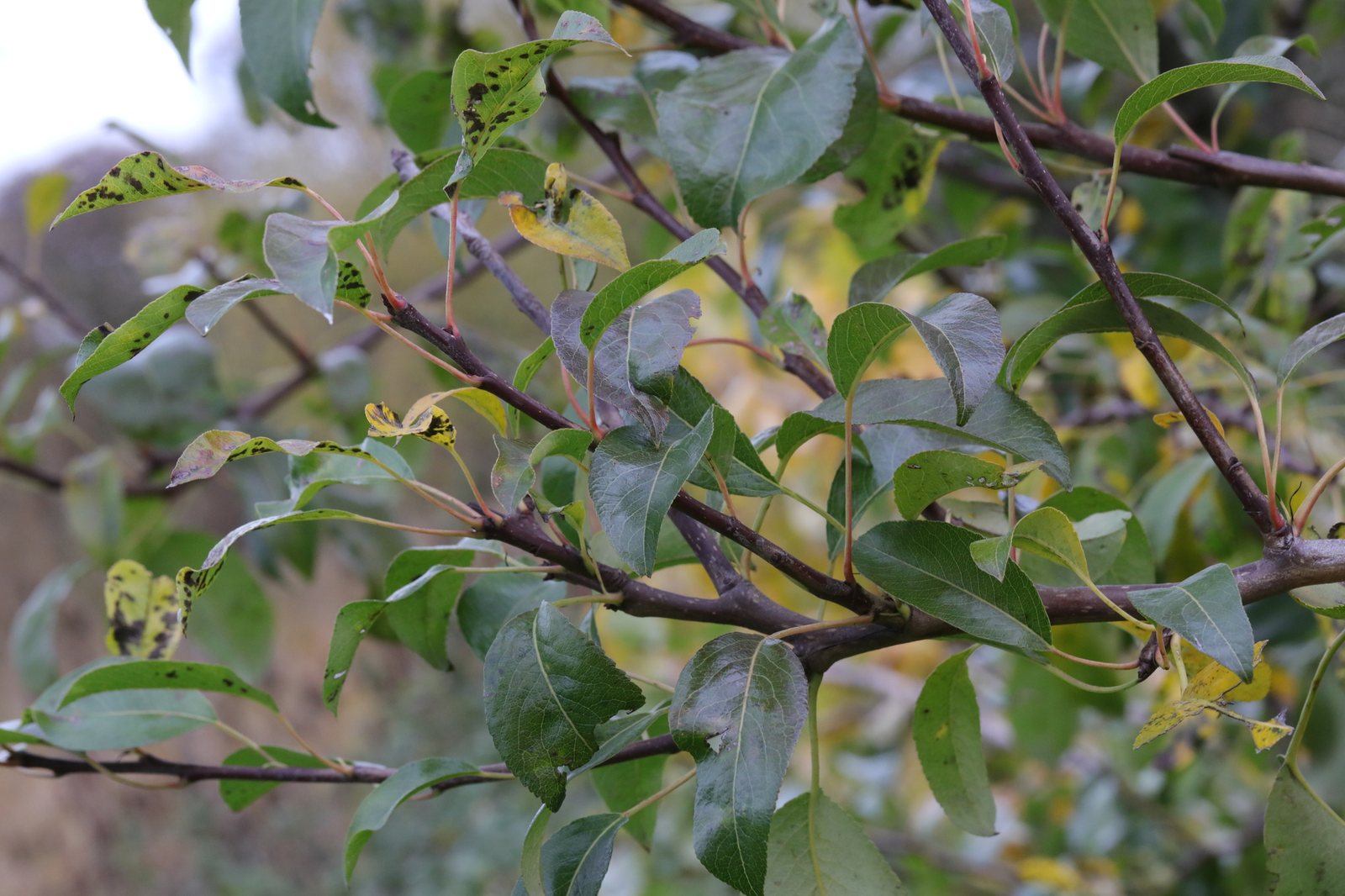
- Oval, toothed green leaves, sometimes turning yellow before falling in autumn.
- Growth
- Moderate; vigour varies substantially with rootstock, soil and pruning.
- Care needed
- High
The year at a glance
- Pollinators
- Heat tolerant
- Wildlife
- Low allergen
- Edible
| J | F | M | A | M | J | J | A | S | O | N | D | |
|---|---|---|---|---|---|---|---|---|---|---|---|---|
| Flowers | ||||||||||||
| Fruit | ||||||||||||
| Plant |
Northern hemisphere months. In Australia, shift them by six.
- Difficulty
- Hard
- Toughness
- Fairly tough
Will it suit your garden?
Pick your zone, country, light and whether you have pets.
Full sun is 6 or more hours of direct sun a day, part shade 3 to 6 hours, shade under 3.
How it grows
Planting day
7 ft (2 m)
After 1 year
7 ft (2.2 m)
After 2 years
8 ft (2.3 m)
After 3 years
8 ft (2.5 m)
After 5 years
9 ft (2.8 m)
About 20 years to full size.
From a typical nursery size, at an average rate for this kind of plant. A rule of thumb, not a forecast.
Good to know
- Cats and dogs
- Toxic
- Growth rate
- Moderate
Care
Jobs through the year
- WaterApr–May, Sep–Oct, every 14 days
- Water established trees deeply during dry spells; trees in their first two years need closer checks.
- WaterJun–Aug, every 7 days
- During dry weather, soak the root zone while fruit swells; dwarf trees may need more frequent watering.
- PruneFeb–Mar
- While dormant, remove dead, crossing and crowded branches to maintain an open framework.
- PruneJun
- After the natural fruit drop, thin to one apple per cluster, roughly 15 cm apart.
- PruneJul–Aug
- For trained espaliers only, shorten new side shoots while retaining fruit-shading foliage.
- MulchMar–Apr
- Renew a 5-8 cm organic mulch, leaving a clear gap around the trunk.
- FeedMar
- Feed only if weak growth or a soil test indicates need; avoid excess nitrogen.
- ProtectApr–May
- Cover blossom on small trees during forecast frosts; uncover for daytime pollination.
- ProtectJan–Feb, Nov–Dec
- Check trunk guards, ties and stakes to prevent browsing and support damage.
- HarvestOct–Nov, every 7 days
- Taste-test for maturity and pick apples that lift with a gentle twist before damaging freezes.
- Choose a rootstock suited to your space and climate; keep the graft union above the soil when planting.
- Water the root zone deeply in dry weather rather than giving frequent light sprinklings.
- Apply 2-3 in (5-8 cm) of organic mulch, leaving a clear gap around the trunk.
- Feed in early spring only as needed for healthy growth; excess nitrogen encourages leafy shoots rather than fruit.
- Stake young trees securely; many dwarfing rootstocks need permanent support.
- Thin crowded fruit after the natural early-summer drop to one apple per cluster, roughly 6 in (15 cm) apart. Provide another compatible apple flowering at the same time for more reliable crops.
Pruning. Prune established trees in late winter while dormant, removing dead, crossing and crowded branches and retaining a well-spaced framework. Shorten new side shoots on trained espaliers in summer, and avoid severe pruning that produces excessive upright growth.
Harvest
Pick apples in late autumn, commonly October-November in the Northern Hemisphere and April-May in Australia, with timing varying by climate. Mature fruit remains green but develops a slightly paler background colour, tastes less starchy and lifts away with a gentle twist; taste several apples rather than judging by colour alone.
Through the year
- Late autumn
- Harvest mature apples before damaging freezes; store sound fruit somewhere cool and check regularly for decay.
- Winter
- Plant bare-root trees when soil is workable and not waterlogged; protect trunks from browsing animals.
- Late winter
- Prune for an open framework and inspect ties and stakes.
- Early spring
- Renew mulch and feed if growth or a soil test indicates a need.
- Spring
- Protect blossom from forecast frost where practical, and avoid insecticides while flowers are open.
- Early summer
- Thin fruit after the natural drop and begin checking for codling moth damage.
- Summer
- Water during dry spells and summer-prune trained forms without removing too much fruit-shading foliage.
In the garden
- Train as an espalier along a sunny boundary to produce fruit in a narrow space.
- Use a dwarf tree as a focal point in a kitchen garden, with low flowers outside its mulched root zone.
- Plant in a mixed orchard with compatible apple varieties for improved pollination.
- Use a freestanding tree in an edible lawn or family garden, allowing room for harvesting and fallen fruit.
Garden styles it suits: Backyard orchard, Edible landscape, Potager (kitchen garden), Cottage garden, Homestead and Traditional.
Plant it with: Golden Delicious apple, Crab apple, Chives, Sweet alyssum and Yarrow.
Wildlife: Flowers provide pollen and nectar for bees and other insects. Fallen apples feed birds and mammals but also attract wasps; remove damaged fruit near paths and seating.
Problems to watch for
- Apple scab: dark leaf spots and scabby fruit are encouraged by wet weather. Remove fallen leaves, improve airflow and use locally approved treatments if repeated damage warrants them.
- Codling moth: larvae tunnel into fruit. Remove affected apples promptly, use monitoring traps and follow local advice on treatment timing.
- Fire blight: blackened shoots may curl at their tips. Prune infected wood well back into healthy growth in dry weather, disinfect tools and avoid excessive nitrogen.
- Poor cropping or unripe fruit: check for inadequate winter chilling, frost-damaged blossom, poor pollination or a growing season too short for this late cultivar.
Safety
Apple flesh is not known to be toxic to people, cats, dogs or horses. Seeds, leaves and stems contain cyanogenic compounds and can cause serious poisoning if enough is chewed and eaten; a few accidentally swallowed whole seeds are unlikely to cause harm. Remove the core and seeds before offering apple pieces to pets, and prevent horses from eating prunings or large quantities of fallen apples.
Easily confused with
Golden Delicious apple (Malus domestica 'Golden Delicious')
Unripe fruit can look similar, but ripe Golden Delicious usually becomes yellow and tastes much sweeter.
Bramley's Seedling apple (Malus domestica 'Bramley's Seedling')
Also produces tart green cooking apples, but these are usually larger, flatter and more irregularly ribbed, sometimes with a red flush.
The name
The name honours Maria Ann 'Granny' Smith, who raised the original seedling in Eastwood, near Sydney, Australia, in the nineteenth century.
Propagation. Propagate by grafting or budding onto a suitable apple rootstock. Seedlings do not come true to 'Granny Smith'; buy a named, grafted tree for predictable fruit and size.
Checked against open data
- Accepted botanical name
- Malus domestica
- Native range
- Afghanistan, Kazakhstan, Kirgizstan, Pakistan, Tadzhikistan, Uzbekistan and Xinjiang.
- Measured
- Soil pH 5 to 7.5. Average height 700 cm.
Sources: GBIF (CC BY 4.0) and Trefle (CC BY 4.0). The care and design notes are LandscapeGPT's own.
See it in your own yard.
Upload a photo of your yard and see it redesigned with plants that suit your climate, each checked against your zone.