Garden balsam
Impatiens balsamina. Family Balsaminaceae. Annual.
Also called Rose balsam, Touch-me-not, Spotted snapweed.
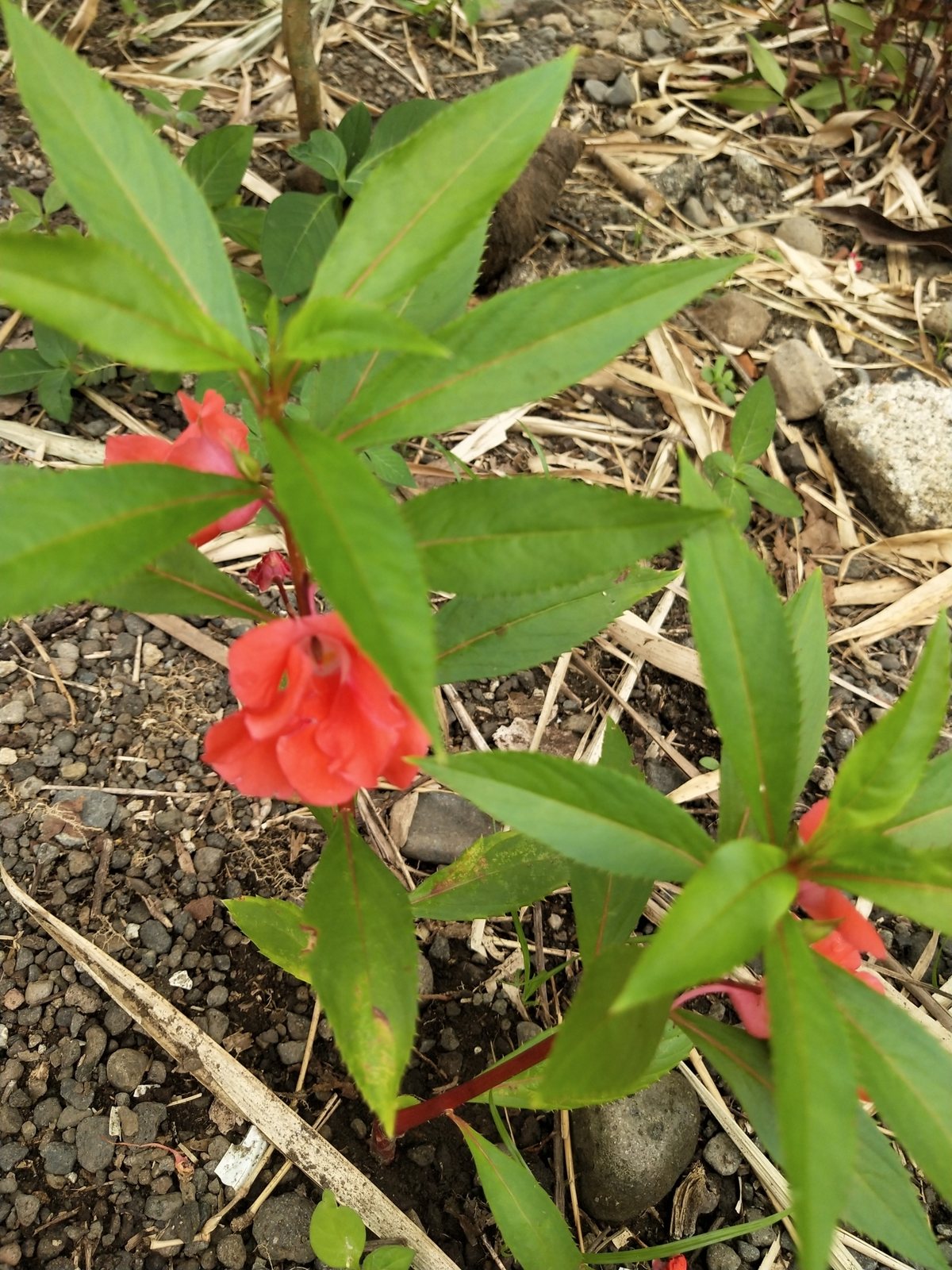
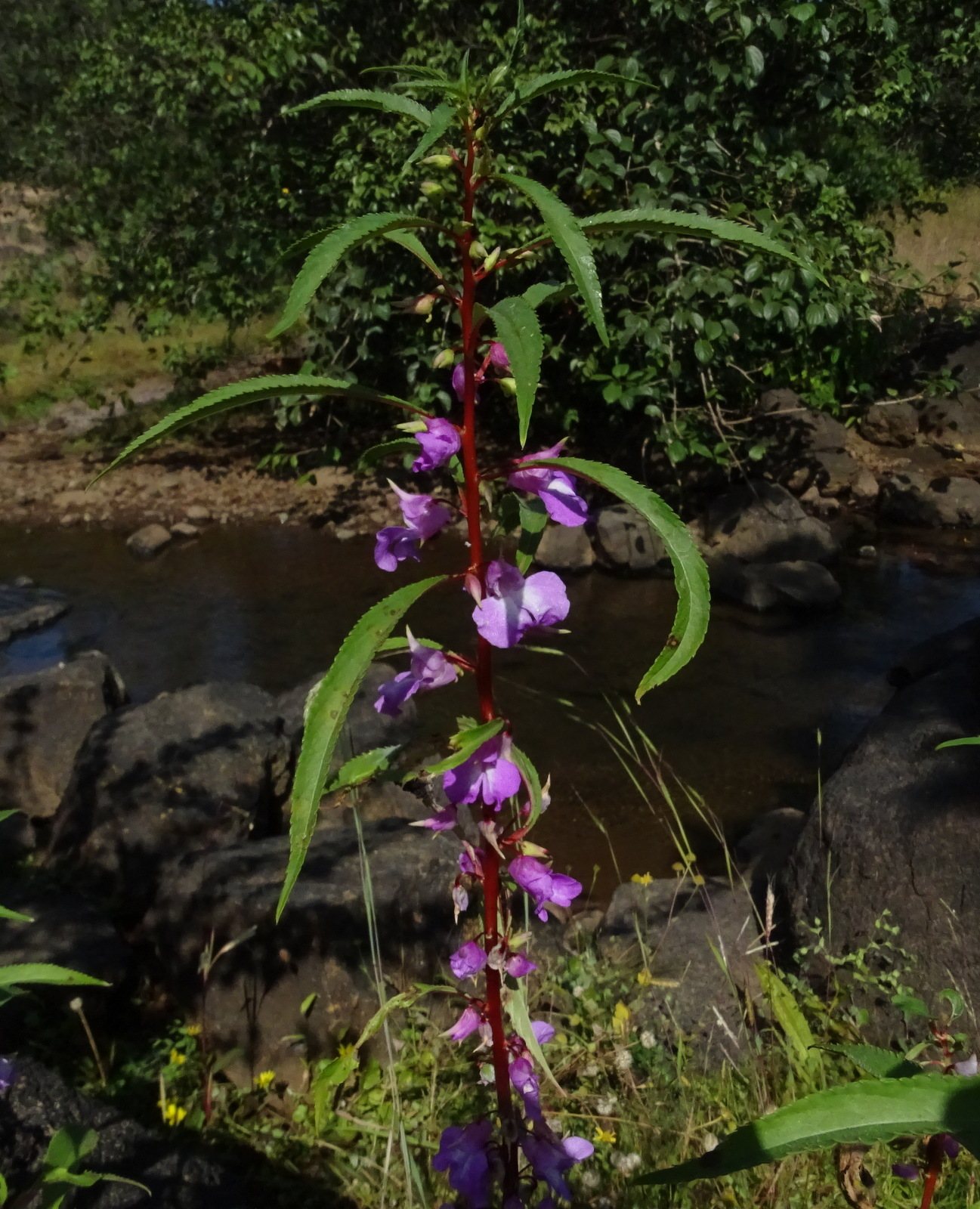
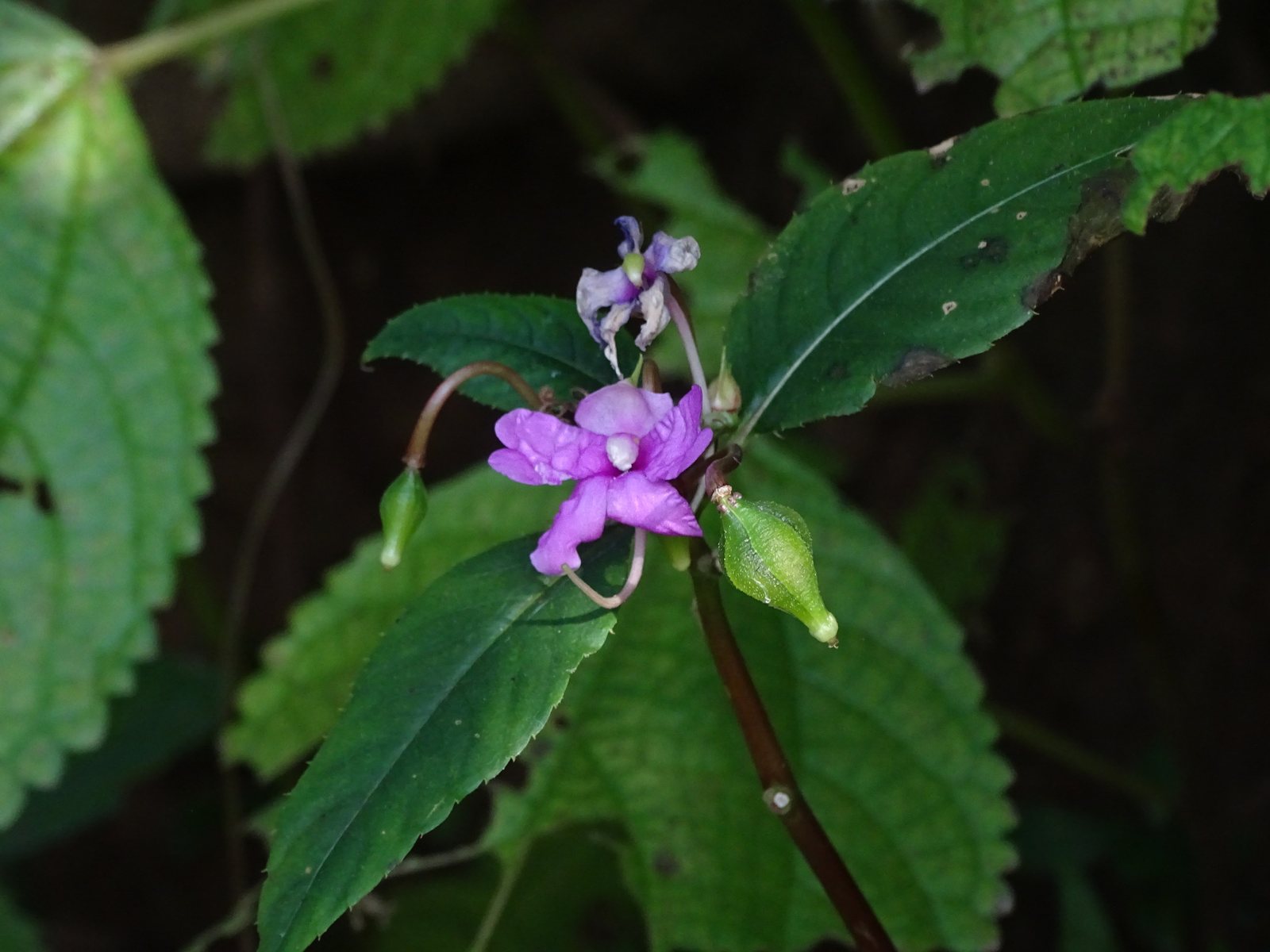
Garden balsam is a frost-tender plant grown as an annual for its pink, red, purple or white flowers, which sit close to upright, leafy stems. Single and double forms bring summer colour to sheltered borders and containers, and plants often self-seed where conditions suit them.
At a glance
- Sun
- Partial shade or morning sun; full sun where summers are cool and the soil stays moist. Provide afternoon shade in hot climates.
- Water
- Keep evenly moist but not waterlogged. Water at soil level when the surface starts to dry; containers may need daily watering in hot weather.
- Soil
- Fertile, moisture-retentive but well-drained soil enriched with compost; tolerates mildly acidic to neutral conditions.
- Height
- 1-3 ft (0.3-0.9 m)
- Spread
- 0.5-1.5 ft (0.15-0.45 m)
- Flowers
- Summer into autumn, until frost; white, pink, red, purple or bicoloured flowers, either single or double.
- Foliage
- Narrow, pointed green leaves with toothed edges, carried along fleshy, upright stems.
- Growth
- Fast; flowers in its first growing season.
- Care needed
- Low
The year at a glance
- Pollinators
- Heat tolerant
- Low allergen
| J | F | M | A | M | J | J | A | S | O | N | D | |
|---|---|---|---|---|---|---|---|---|---|---|---|---|
| Flowers | ||||||||||||
| Fruit | ||||||||||||
| Plant |
Northern hemisphere months. In Australia, shift them by six.
- Difficulty
- Easy
- Toughness
- Fairly tough
Will it suit your garden?
Pick your zone, country, light and whether you have pets.
Full sun is 6 or more hours of direct sun a day, part shade 3 to 6 hours, shade under 3.
How it grows
Planting day
0.5 ft (0.15 m)
After 1 year
2 ft (0.6 m)
full size
Full size in one season.
From a typical nursery size, at an average rate for this kind of plant. A rule of thumb, not a forecast.
Good to know
- Cats and dogs
- Safe
- Invasive in
- the US
- In the garden
- Spreads vigorously: plan to contain it.
- Growth rate
- Fast
Care
Jobs through the year
- WaterMay–Jun, every 7 days
- Keep established plants evenly moist, watering sooner if the surface dries; seedlings need closer attention.
- WaterJul–Aug, every 3 days
- Water at soil level as the surface dries; skip after rain, and check containers daily in heat.
- WaterSep–Oct, every 7 days
- Water when the surface starts drying, reducing frequency in cool wet weather and stopping after frost.
- MulchJun
- Apply a light moisture-retaining mulch without covering the stems.
- PruneJun
- Optionally pinch young growing tips once for bushier plants.
- DeadheadAug–Oct, every 7 days
- Remove developing seed capsules before they burst if self-seeding is unwanted.
- Plant out after the last frost, once the soil has warmed, spacing plants 1-1.5 ft (0.3-0.45 m) apart.
- Water during dry spells before plants wilt severely; avoid leaving pots standing in water.
- Mix compost into the planting area and feed container plants lightly with a balanced fertiliser according to its label.
- Apply a light mulch to retain moisture, keeping it clear of the stems.
- Remove unwanted seedlings and developing seed capsules if you do not want plants spreading.
Pruning. Pinch out the growing tip of young plants if you want bushier growth. Remove damaged stems as needed and pull up plants after frost; deadheading is optional but removing seed capsules limits self-seeding.
Through the year
- Early spring
- Sow indoors 6-8 weeks before your expected last frost, covering seeds lightly and keeping them warm and moist.
- Late spring
- Harden off seedlings and plant outside after frost danger has passed; alternatively, sow directly into warm soil.
- Early summer
- Mulch around established plants and pinch young growing tips if a bushier shape is wanted.
- Summer
- Water through dry spells and check containers frequently for drying out.
- Late summer
- Remove seed capsules before they burst, or collect a few in a paper bag for next year's sowing.
- Autumn
- Pull up frost-killed plants and remove diseased material rather than leaving it on the soil.
In the garden
- Plant in small groups through cottage borders for upright summer colour among softer, spreading plants.
- Use compact forms in sheltered patio pots with begonias or trailing lobelia.
- Fill gaps left by spring bulbs in lightly shaded beds, without disturbing the bulbs beneath.
- Edge a sheltered path with shorter forms so the flowers along the stems can be seen closely.
Garden styles it suits: Cottage garden, Traditional, Victorian, Romantic rose garden, Modern courtyard and Pastel border.
Plant it with: Wax begonias, Coleus, Trailing lobelia, Wishbone flower, Sweet alyssum and Ferns.
Wildlife: Single flowers provide nectar for bees and other visiting insects. Densely double flowers offer less accessible food.
Problems to watch for
- Wilting and scorched leaves: water thoroughly and provide afternoon shade; repeated drying damages growth and flowering.
- Root or stem rot in wet soil: improve drainage, avoid standing water and remove badly affected plants.
- Powdery mildew: improve spacing and airflow, avoid drought stress and remove heavily affected foliage.
- Aphids on soft shoots: dislodge with a gentle jet of water or use insecticidal soap labelled for ornamental plants.
Safety
Not known to be toxic to cats, dogs or horses. Human toxicity information is less clear, and eating plant material may cause stomach upset; do not treat the flowers, leaves or seeds as food.
Where it spreads. Self-seeds readily, with ripe capsules scattering seeds when touched. Reported as invasive in Hawaii and the Galapagos Islands; avoid planting where local guidance discourages it and remove seedlings before they set seed.
Easily confused with
Busy Lizzie (Impatiens walleriana)
Usually forms a lower, branching mound with broad leaves and flat-faced flowers held above the foliage; garden balsam has a more upright habit, narrow leaves and flowers tucked along its stems.
Himalayan balsam (Impatiens glandulifera)
Usually much taller, often over 6 ft (1.8 m), with leaves commonly in whorls of three and large, helmet-shaped pink flowers on branching stalks.
New Guinea impatiens (Impatiens hawkeri)
Has larger, flatter flowers displayed above a bushier plant, often with bronze or variegated foliage; garden balsam carries its flowers close against upright stems.
The name
Impatiens means 'impatient', referring to the ripe seed capsules that burst at a touch, while balsamina comes from an old name for balsam plants.
Propagation. Grow from seed sown indoors before the last frost or directly outdoors once the soil is warm. Keep seed compost moist but not saturated. Saved seed from double or named forms may produce variable offspring.
Checked against open data
- Accepted botanical name
- Impatiens balsamina
- In the US and Canada
- Introduced in the lower 48 states, Pacific Basin and Puerto Rico.
- Native range
- India and Sri Lanka.
- Measured
- Average height 41 cm.
Sources: GBIF (CC BY 4.0), USDA PLANTS and Trefle (CC BY 4.0). The care and design notes are LandscapeGPT's own.
See it in your own yard.
Upload a photo of your yard and see it redesigned with plants that suit your climate, each checked against your zone.