Garden verbena
Verbena × hybrida. Family Verbenaceae. Annual.
Also called Bedding verbena, Hybrid verbena, Glandularia × hybrida.
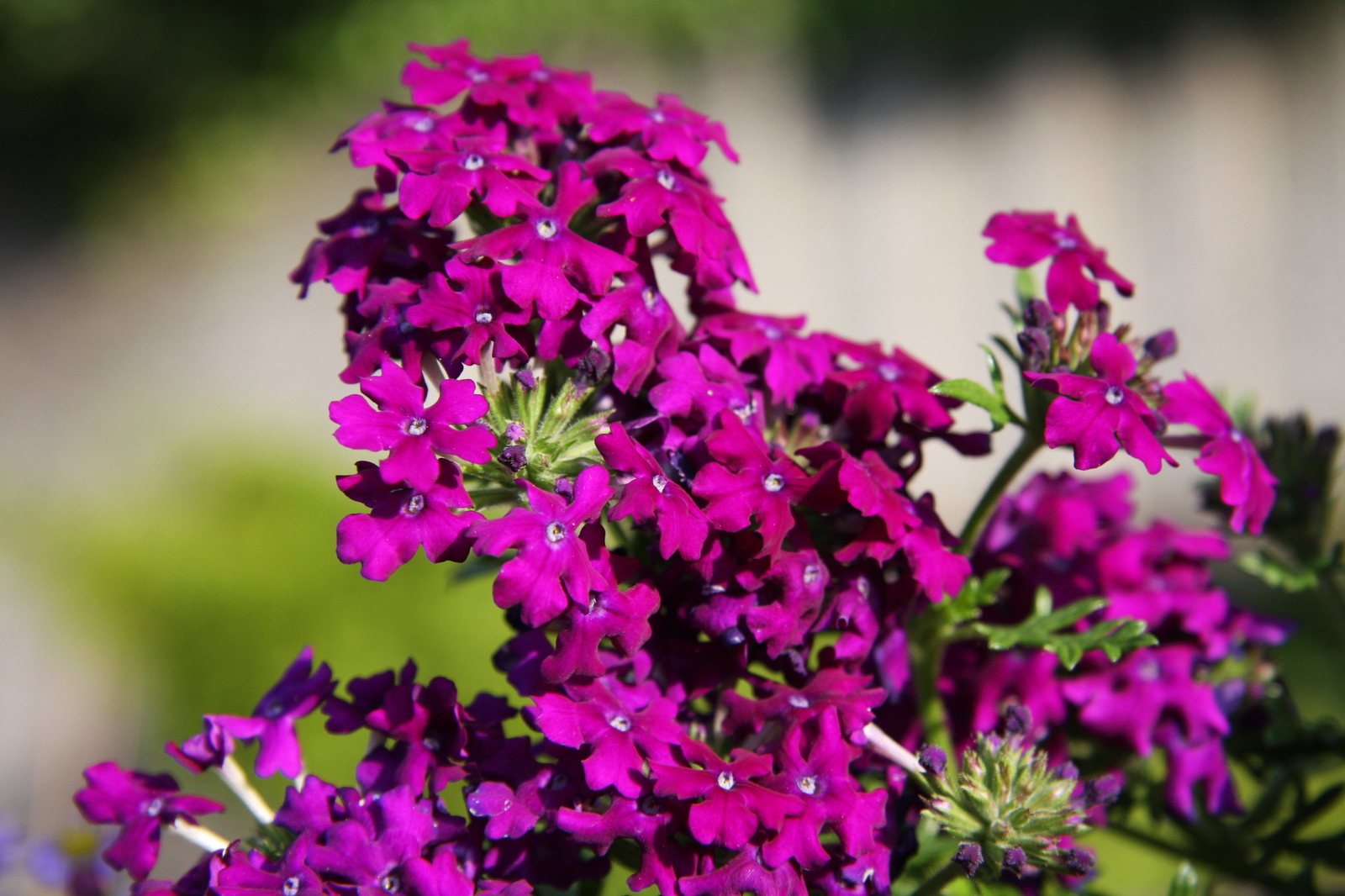
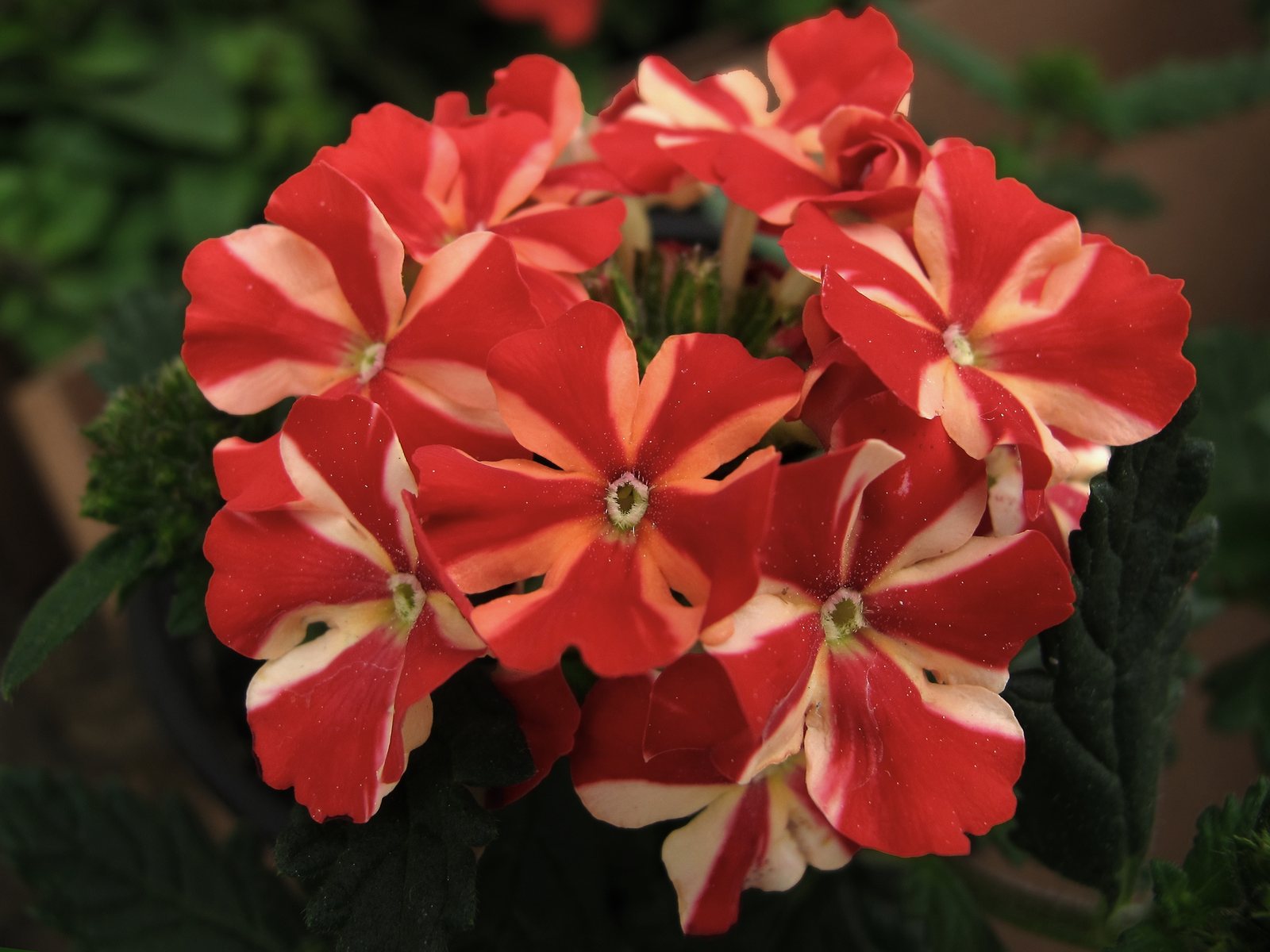
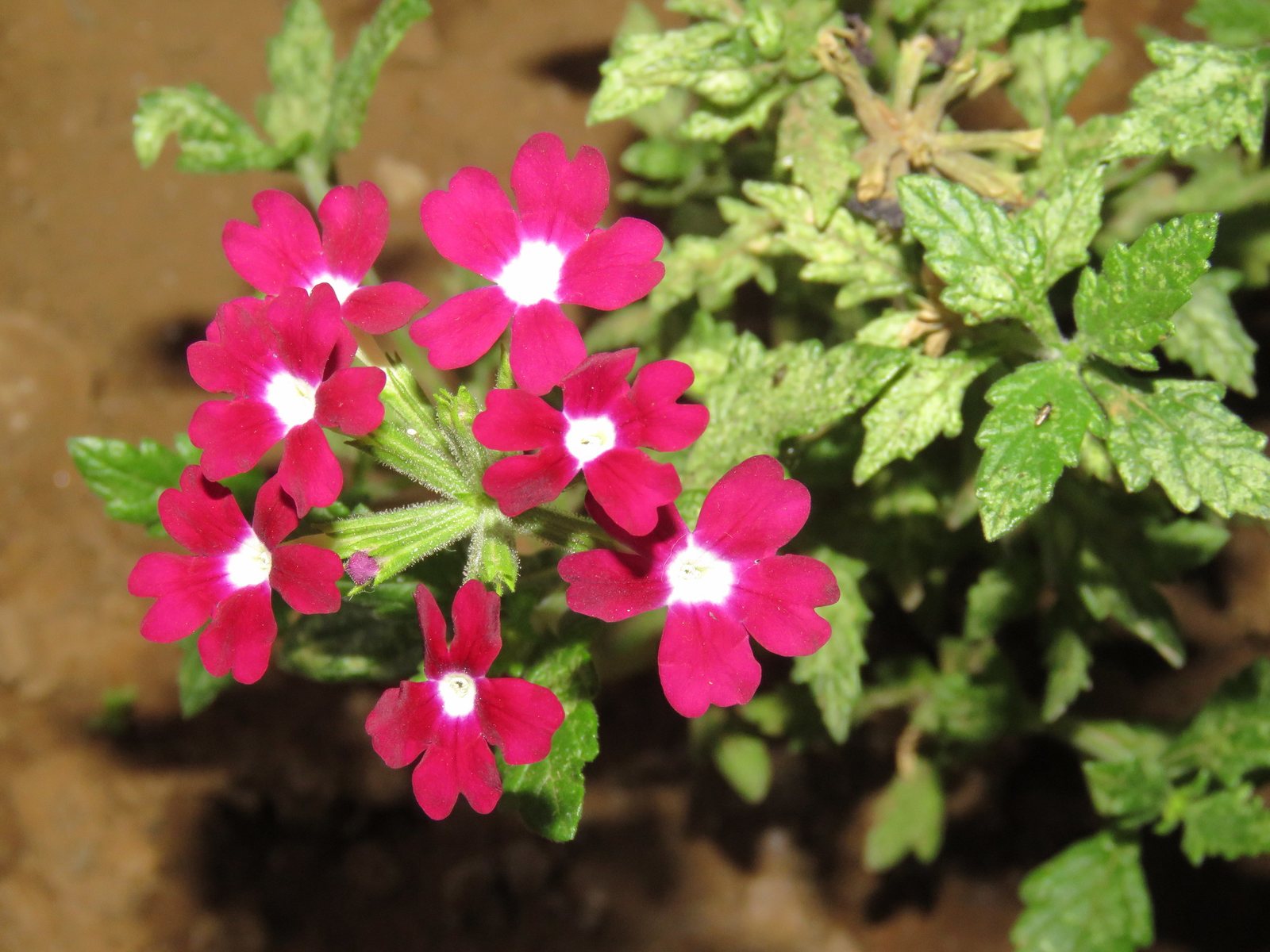
Garden verbena is a tender, short-lived perennial usually grown as an annual for its clusters of brightly coloured flowers from late spring until frost. Compact forms fill sunny borders and pots, while trailing forms spill over hanging baskets and container edges.
At a glance
- Sun
- Full sun; aim for at least 6 hours of direct sunlight daily.
- Water
- Water regularly while establishing, then when the soil surface begins to dry. Established plants tolerate brief dry spells, but containers need more frequent watering.
- Soil
- Well-drained soil of moderate fertility; use free-draining potting mix in containers. Avoid heavy, persistently wet ground.
- Height
- 0.5-1.5 ft (0.15-0.45 m)
- Spread
- 1-3 ft (0.3-0.9 m), depending on variety
- Flowers
- Late spring to autumn, often until the first frost; white, pink, red, purple, lavender or blue-purple, sometimes with contrasting eyes or two-coloured petals.
- Foliage
- Green, opposite leaves with toothed or lobed edges and a slightly rough or hairy surface.
- Growth
- Fast; usually reaches flowering size within one growing season.
- Care needed
- Medium
The year at a glance
- Pollinators
- Heat tolerant
- Low allergen
| J | F | M | A | M | J | J | A | S | O | N | D | |
|---|---|---|---|---|---|---|---|---|---|---|---|---|
| Flowers | ||||||||||||
| Plant |
Northern hemisphere months. In Australia, shift them by six.
- Difficulty
- Moderate
- Toughness
- Fairly tough
Will it suit your garden?
Pick your zone, country, light and whether you have pets.
Full sun is 6 or more hours of direct sun a day, part shade 3 to 6 hours, shade under 3.
How it grows
Planting day
0.5 ft (0.15 m)
After 1 year
1 ft (0.3 m)
full size
Full size in one season.
From a typical nursery size, at an average rate for this kind of plant. A rule of thumb, not a forecast.
Good to know
- Cats and dogs
- Safe
- Growth rate
- Fast
Care
Jobs through the year
- WaterMay, Sep–Oct, every 10 days
- Water established beds if the surface is drying and rain is insufficient; water new plants more often.
- WaterJun–Aug, every 7 days
- Water established beds deeply during dry weather; check containers more frequently.
- FeedMay–Sep, every 28 days
- Feed containers with balanced liquid fertiliser at label strength; avoid excess nitrogen.
- MulchMay–Jun
- Apply a thin mulch after planting, keeping crowns uncovered.
- DeadheadJun–Oct, every 7 days
- Remove spent clusters if flowering slows; self-cleaning varieties need little deadheading.
- PruneJul–Aug
- Trim leggy plants back by one-third, then water and feed lightly.
- ProtectSep–Oct
- If saving plants, root cuttings before frost and keep them bright and frost-free.
- Plant out after frost danger has passed and the soil has warmed.
- Space plants for their mature spread so air can circulate through the foliage.
- Water at soil level, wetting the root zone without leaving it waterlogged.
- Feed container plants with a balanced liquid fertiliser at the label rate; avoid excessive nitrogen.
- Apply a thin mulch around bedding plants, keeping it away from their crowns.
Pruning. Remove spent flower clusters if flowering slows; some modern varieties need little deadheading. In midsummer, trim leggy stems back by about one-third, then water and feed lightly to encourage fresh growth.
Through the year
- Late winter
- Sow seed indoors according to the packet instructions, allowing roughly 10-12 weeks before your expected last frost.
- Spring
- Gradually harden off young plants, then plant outside after frost danger has passed.
- Late spring
- Check moisture regularly as roots establish, especially in baskets and small pots.
- Summer
- Feed container plants and remove spent flowers where needed; inspect for mildew and mites.
- Midsummer
- Trim sprawling or sparsely flowering plants by about one-third to encourage another flush.
- Late summer
- Take non-flowering stem cuttings if you want to keep a particular plant through winter under frost-free cover.
- Autumn
- Remove plants killed by frost; keep any overwintered cuttings in bright, frost-free conditions with restrained watering.
In the garden
- Trail over hanging baskets and window boxes, mixed with calibrachoa or sweet alyssum.
- Edge sunny paths and flower beds with compact varieties for a low band of summer colour.
- Plant in groups at the front of a border beneath taller salvias and ornamental grasses.
- Use a single flower colour repeatedly through patio containers to link separate seating areas.
Garden styles it suits: Cottage garden, Pollinator garden, Modern courtyard, Small-space, Pastel border and Hot border.
Plant it with: Calibrachoa, Sweet alyssum, Annual salvia, Petunia, French marigold and Blue fescue.
Wildlife: Flowers attract butterflies and bees. Pollen and nectar availability varies among varieties.
Problems to watch for
- Powdery mildew causes a white coating on leaves: give plants full sun and good spacing, avoid drought stress, and remove badly affected growth.
- Spider mites cause pale stippling and fine webbing in hot, dry conditions: rinse leaf undersides and use an insecticidal soap labelled for the pest if needed.
- Aphids gather on tender shoots: wash them off with water or treat persistent colonies with an appropriate insecticidal soap.
- Root or crown rot develops in waterlogged soil: improve drainage, keep crowns clear of mulch and discard rotting plants.
Safety
Garden verbena is not known to be toxic to cats, dogs, horses or people, and no particular part is recognised as poisonous. Specific safety data are limited, so do not treat it as edible; eating plant material may still cause stomach upset.
Easily confused with
Trailing lantana (Lantana montevidensis)
Also has trailing stems and rounded flower clusters, but develops woody stems and has strongly scented, wrinkled leaves; it may produce dark berries.
Moss verbena (Glandularia tenuisecta)
Has much more finely divided, fernlike leaves than the broader, toothed or lobed leaves of most garden verbenas.
Tall verbena (Verbena bonariensis)
Produces small purple flower clusters on tall, stiff, branching stems rather than the low, spreading growth and larger flower clusters of garden verbena.
The name
The botanical epithet hybrida means hybrid, referring to the plant's mixed parentage.
Propagation. Grow from seed or take softwood stem cuttings in spring or late summer. Seedlings may not match the parent, and some varieties produce little viable seed; cuttings retain the parent's characteristics. Check propagation restrictions before multiplying protected varieties.
Checked against open data
- Accepted botanical name
- Verbena hybrida
Sources: GBIF (CC BY 4.0). The care and design notes are LandscapeGPT's own.
See it in your own yard.
Upload a photo of your yard and see it redesigned with plants that suit your climate, each checked against your zone.