Giant miscanthus
Miscanthus × giganteus. Family Poaceae. Ornamental grass.
Also called Giant silver grass, Elephant grass.
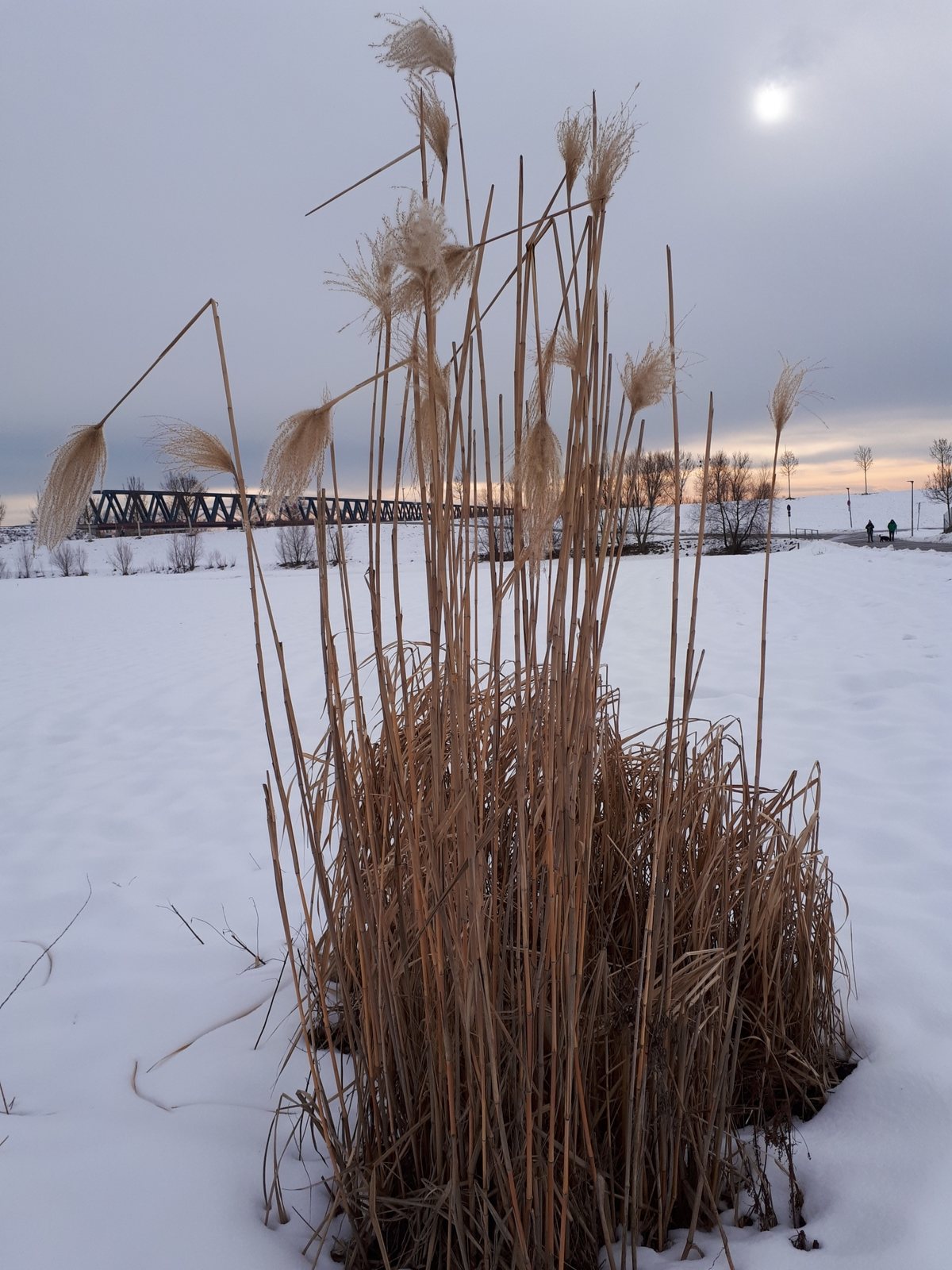
A very tall, deciduous perennial grass with bamboo-like stems and arching leaves. Gardeners grow it for summer screening, bold structure and the straw-coloured stems that stand through winter. It needs substantial space and dies back each year, so it does not provide permanent evergreen privacy.
At a glance
- Sun
- Full sun; tolerates light shade but becomes less upright.
- Water
- Moderate; water regularly during establishment and during prolonged dry spells. Established clumps tolerate some drought, but grow taller with consistent moisture.
- Soil
- Deep, reasonably fertile, moisture-retentive soil with good drainage; tolerates clay but not prolonged waterlogging.
- Height
- 8-12 ft (2.4-3.7 m)
- Spread
- 4-8 ft (1.2-2.4 m), widening gradually through rhizomes
- Flowers
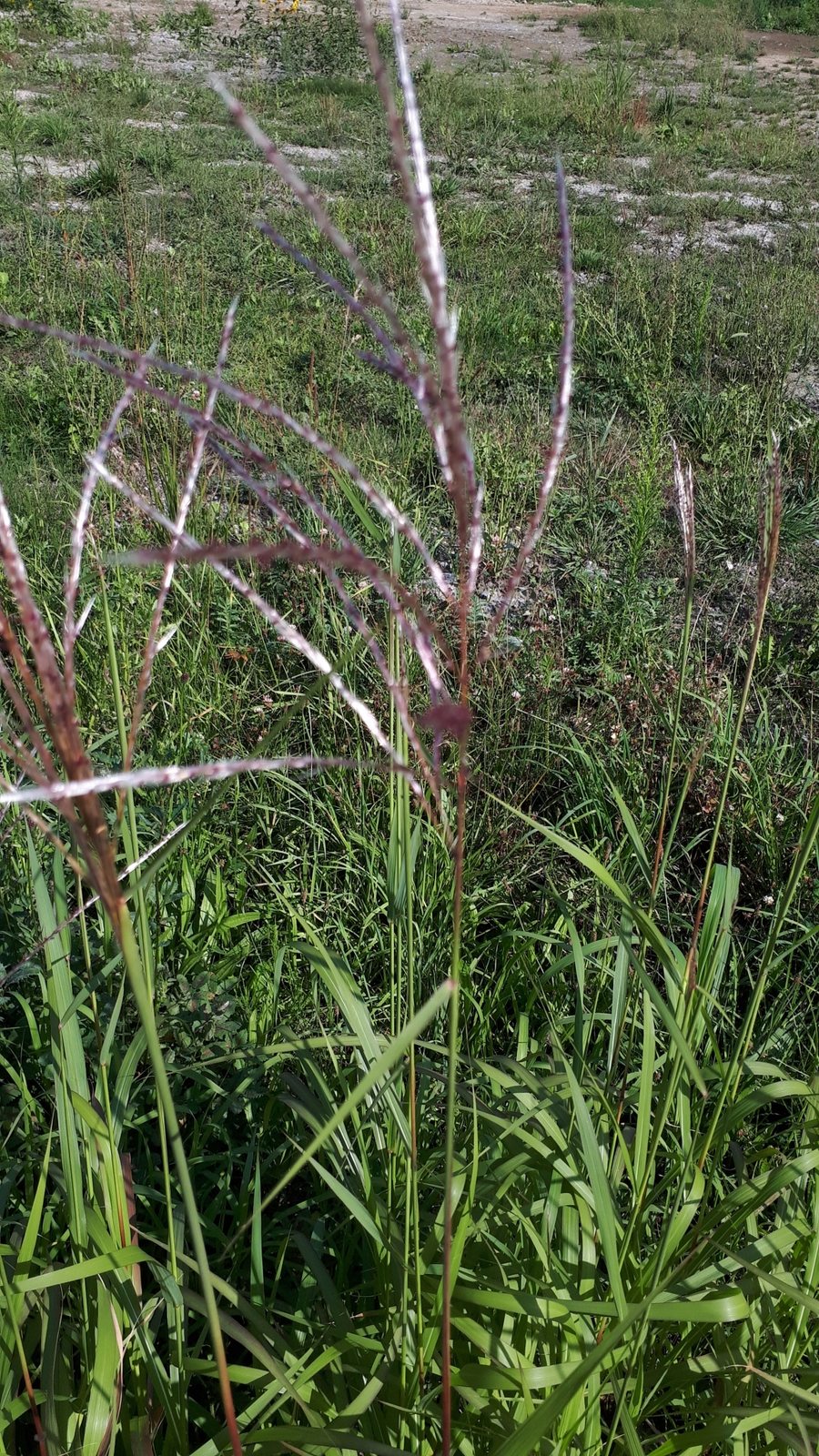
- Pink-tinged plumes ageing to silver in late summer or autumn; flowering is often sparse or absent in cool climates or short growing seasons.
- Foliage
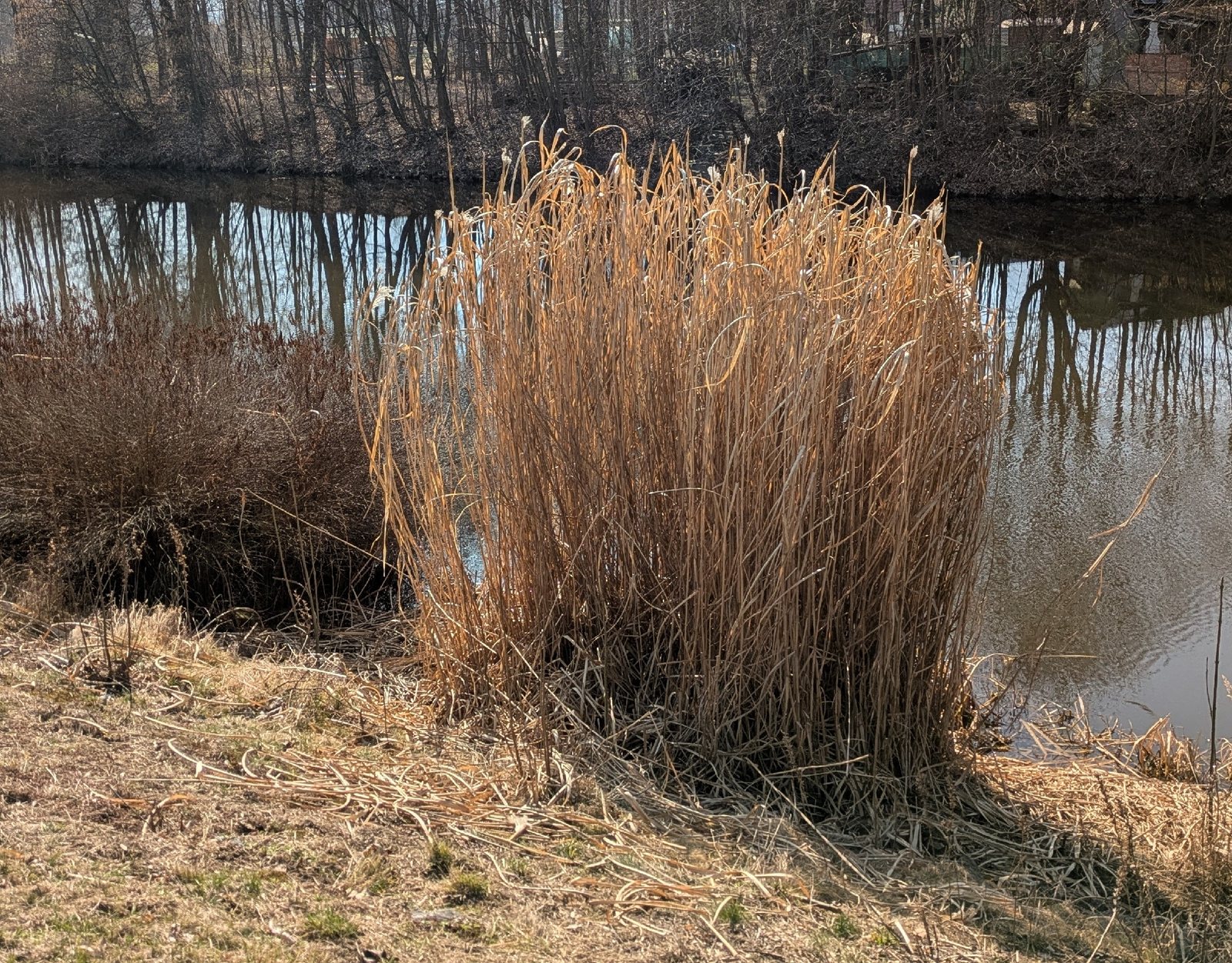
- Long, arching green blades with a conspicuous pale midrib; turns yellow to buff in autumn and dries to straw colour for winter.
- Growth
- Fast once established; allow two or three growing seasons for a substantial clump.
- Care needed
- Medium
The year at a glance
- Deer resistant
- Drought tolerant
- Heat tolerant
- Wildlife
| J | F | M | A | M | J | J | A | S | O | N | D | |
|---|---|---|---|---|---|---|---|---|---|---|---|---|
| Flowers | ||||||||||||
| Plant |
Northern hemisphere months. In Australia, shift them by six.
- Difficulty
- Easy
- Toughness
- Very tough
Will it suit your garden?
Pick your zone, country, light and whether you have pets.
Full sun is 6 or more hours of direct sun a day, part shade 3 to 6 hours, shade under 3.
How it grows
Planting day
1.2 ft (0.37 m)
After 1 year
7 ft (2 m)
After 2 years
10 ft (3.1 m)
full size
About 2 years to full size.
From a typical nursery size, at an average rate for this kind of plant. A rule of thumb, not a forecast.
Good to know
- Cats and dogs
- Safe
- Growth rate
- Fast
Care
Jobs through the year
- WaterApr–May, Sep, every 21 days
- Water established clumps only during extended dry spells; new plants need more frequent watering.
- WaterJun–Aug, every 14 days
- Water established clumps deeply during prolonged drought to maintain height and healthy foliage.
- PruneFeb–Mar
- Cut old stems to 15-30 cm before new shoots emerge; wear gloves, long sleeves and eye protection.
- MulchApr–May
- Apply a thin compost mulch around the clump, clear of emerging shoots.
- DivideApr–May
- Divide only when the clump outgrows its space; mature crowns are heavy and difficult to cut.
- Plant in spring after the soil begins to warm, leaving room for the mature clump rather than placing it against a path.
- Water deeply through the first growing season; water established plants during extended drought.
- Apply a thin layer of compost in spring; avoid heavy nitrogen feeding, which can encourage weak growth.
- Mulch around new plants to conserve moisture and suppress weeds, keeping mulch away from emerging shoots.
- Divide in spring if the clump outgrows its space; mature crowns are heavy and may require a sharp spade or saw.
Pruning. In late winter or early spring, before new shoots emerge, cut the old stems to 6-12 in (15-30 cm) above ground. Wear gloves, long sleeves and eye protection when handling the sharp-edged leaves and stiff stems.
Through the year
- Late winter
- Cut down standing stems before new growth starts; leave them longer where they still provide useful shelter and structure.
- Spring
- Plant or divide as the soil warms, and water divisions thoroughly.
- Late spring
- Weed around emerging shoots and apply compost and mulch.
- Summer
- Water new plants and check the clump's edges for shoots growing beyond the intended area.
- Autumn
- Leave dry foliage and any flower plumes standing for winter interest.
- Winter
- Remove broken stems that fall across paths, but retain sound stems until the seasonal cutback.
In the garden
- Plant as a seasonal screen along an open boundary, allowing for the loss of privacy after spring cutback.
- Use a single large clump as an architectural accent in a spacious lawn or gravel planting.
- Place at the back of deep borders with Joe-Pye weed, asters and tall coneflowers for a layered late-season display.
- Repeat clumps through large naturalistic plantings to provide height, movement and winter structure.
Garden styles it suits: Architectural minimal, Modern, New perennial (prairie), Modern rustic, Winter interest and Grand estate.
Plant it with: Joe-Pye weed, New England aster, Purple coneflower, Black-eyed Susan, Switchgrass and Culver's root.
Wildlife: Dense clumps offer shelter for insects and other small animals, and standing stems provide overwintering habitat. Wind-pollinated flowers offer little value to nectar-feeding insects, and the usual sterile hybrid provides little or no seed for birds.
Problems to watch for
- Flopping or leaning stems: provide full sun, avoid rich nitrogen fertilisers and divide overcrowded clumps if necessary.
- Weak growth or crown rot in wet soil: improve drainage or move the plant; do not leave the crown in standing water.
- Brown leaf tips and reduced height during drought: water deeply and mulch the root area.
- Miscanthus mealybug can cause stunting and distorted shoots: inspect beneath leaf sheaths, avoid moving infested divisions and seek local advice if an infestation is confirmed.
Safety
Not known to be toxic to cats, dogs, horses or people. Leaves have sharp edges that can cut skin or irritate the mouth, and stiff cut stems can cause physical injury.
Easily confused with
Chinese silver grass (Miscanthus sinensis)
Usually shorter and more finely textured, with many cultivars flowering more freely. Giant miscanthus generally has much taller, thicker canes and often flowers poorly in cool regions.
Amur silver grass (Miscanthus sacchariflorus)
Usually shorter, with conspicuous silvery plumes and long-running rhizomes that form spreading colonies rather than the slower-expanding mass typical of giant miscanthus.
Giant reed (Arundo donax)
Has broader, more blue-green leaves that clasp stout, conspicuously jointed canes; the leaves lack the strong white midrib typical of giant miscanthus. Giant reed is aggressively invasive in several warm regions.
The name
Miscanthus comes from Greek words referring to stalked flowers, while giganteus means gigantic and describes the plant's exceptional height.
Propagation. Divide rhizomes or young clumps in spring as growth begins, ensuring each piece has roots and viable buds. The usual cultivated hybrid is a sterile triploid and is propagated vegetatively, not reliably from seed; its rhizomes can still expand beyond the original planting.
Checked against open data
- Accepted botanical name
- Miscanthus longiberbis Miscanthus × giganteus is an older name for Miscanthus longiberbis.
Sources: GBIF (CC BY 4.0). The care and design notes are LandscapeGPT's own.
See it in your own yard.
Upload a photo of your yard and see it redesigned with plants that suit your climate, each checked against your zone.