Golden Alexanders
Zizia aurea. Family Apiaceae. Perennial.
Also called Golden zizia.
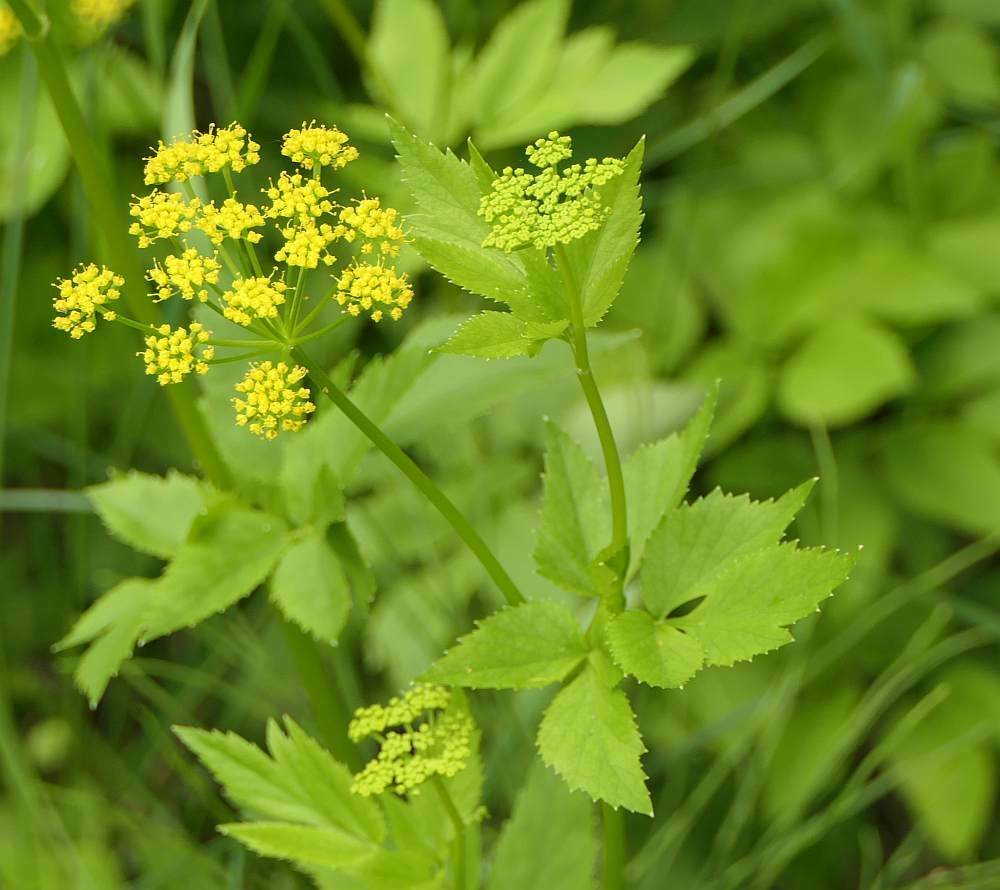
Golden Alexanders is a clump-forming perennial native to eastern and central North America, grown for its flat-topped clusters of small yellow flowers in late spring. It suits moist meadow plantings and informal borders, providing early food for pollinating insects and foliage for black swallowtail caterpillars within their native range.
At a glance
- Sun
- Full sun to partial shade; afternoon shade helps in hot summers.
- Water
- Keep the soil moderately moist, especially during establishment. Established plants tolerate brief dry spells but perform poorly in prolonged drought.
- Soil
- Average to rich, moisture-retentive soil with reasonable drainage; tolerates clay and occasional brief flooding.
- Height
- 1.5-3 ft (0.45-0.9 m)
- Spread
- 1-2 ft (0.3-0.6 m)
- Flowers
- Late spring to early summer; small golden-yellow flowers in flat-topped clusters.
- Foliage
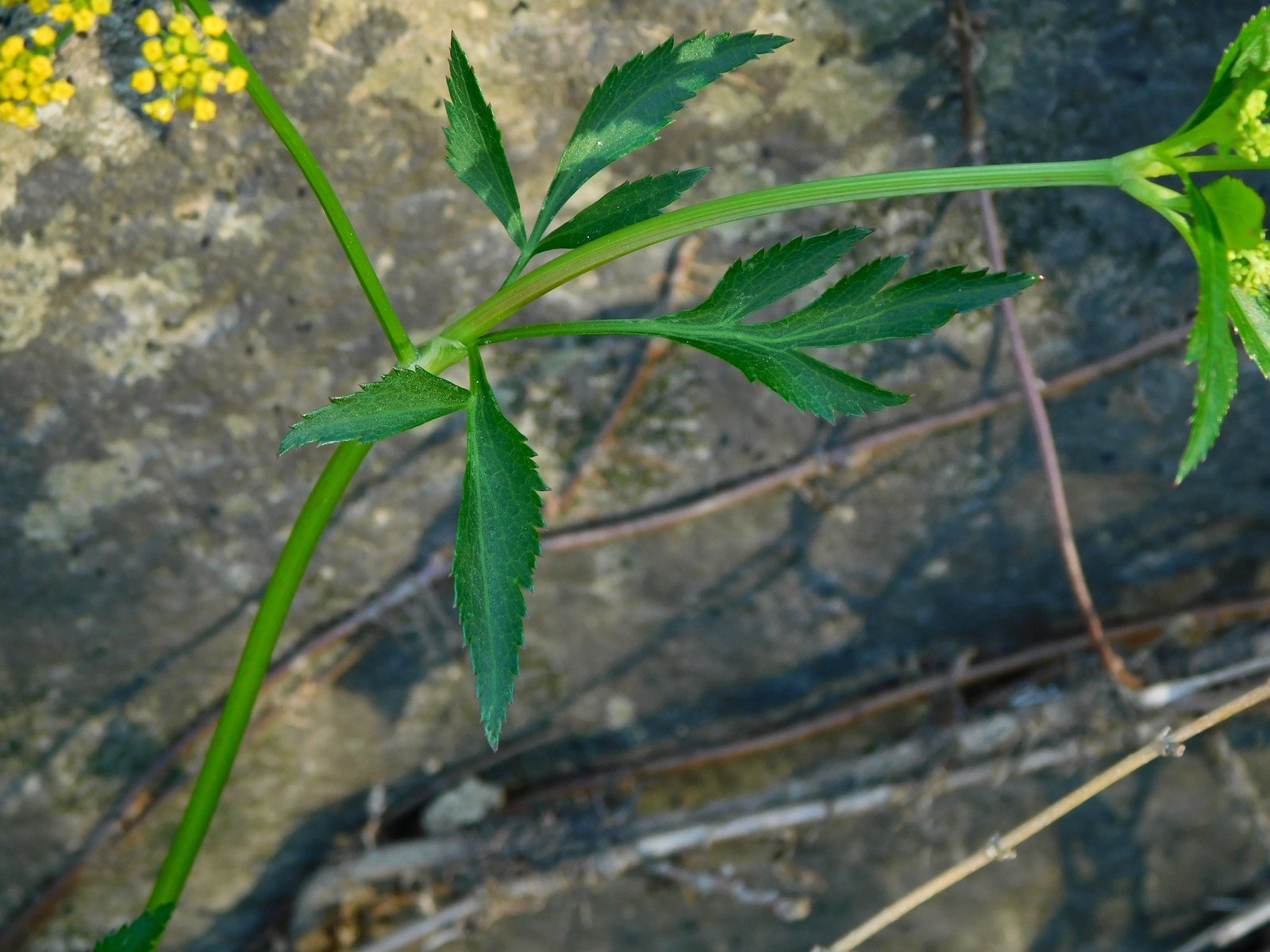
- Green, toothed leaves divided into leaflets, with lower leaves more finely divided than upper leaves; foliage dies back for winter.
- Growth
- Moderate
- Care needed
- Low
The year at a glance
- Pollinators
- Cold hardy
- Wildlife
- Low allergen
| J | F | M | A | M | J | J | A | S | O | N | D | |
|---|---|---|---|---|---|---|---|---|---|---|---|---|
| Flowers | ||||||||||||
| Fruit | ||||||||||||
| Plant |
Northern hemisphere months. In Australia, shift them by six.
- Difficulty
- Easy
- Toughness
- Fairly tough
Will it suit your garden?
Pick your zone, country, light and whether you have pets.
Full sun is 6 or more hours of direct sun a day, part shade 3 to 6 hours, shade under 3.
How it grows
Planting day
1 ft (0.3 m)
After 1 year
1.4 ft (0.43 m)
After 2 years
1.8 ft (0.55 m)
After 3 years
2.2 ft (0.68 m)
full size
About 3 years to full size.
From a typical nursery size, at an average rate for this kind of plant. A rule of thumb, not a forecast.
Good to know
- Cats and dogs
- Safe
- Native to
- the US and Canada
- Growth rate
- Moderate
Care
Jobs through the year
- WaterApr–May, Sep, every 14 days
- Water established clumps if soil is drying; keep newly planted clumps more consistently moist.
- WaterJun–Aug, every 7 days
- Water established clumps deeply during dry weather to prevent premature leaf decline.
- MulchMar–Apr
- Apply a thin compost dressing and moisture-conserving mulch, keeping crowns clear.
- DivideMar–Apr
- Divide crowded clumps only as needed and water divisions thoroughly.
- DeadheadJun–Jul
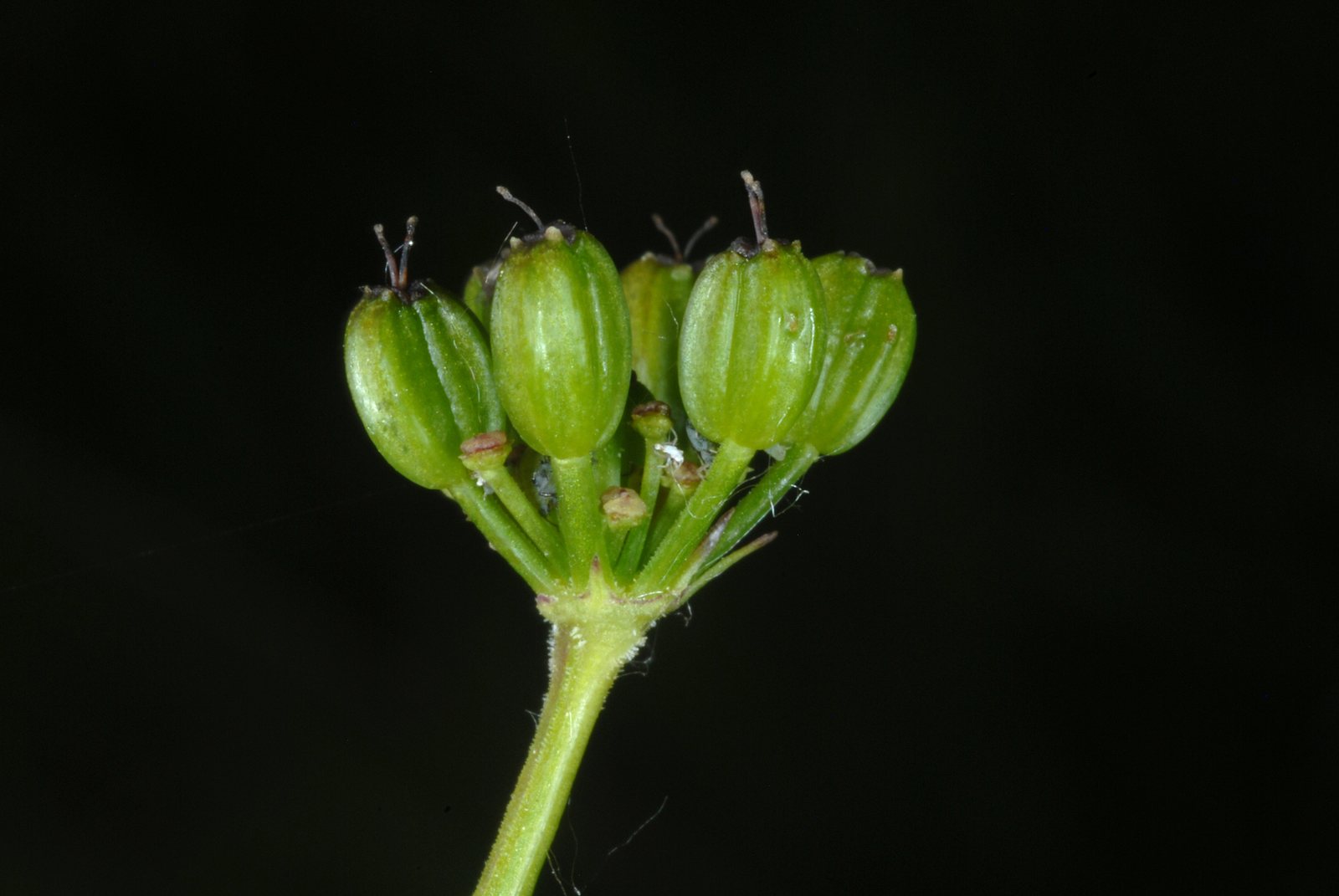
- Remove fading flower heads before seeds ripen if self-seeding is unwanted.
- PruneFeb–Mar
- Cut old stems back before new growth lengthens.
- ProtectMay–Aug
- Tolerate swallowtail caterpillar feeding where practical and avoid insecticides.
- Water newly planted clumps whenever the upper soil begins to dry.
- Water established plants during prolonged dry weather to prevent early leaf decline.
- Apply a thin layer of compost in spring; routine fertiliser is usually unnecessary.
- Mulch around plants to conserve moisture, keeping mulch clear of the crowns.
- Divide crowded clumps in spring and remove unwanted seedlings while small.
Pruning. Remove spent flower heads before seeds ripen if you want to limit self-seeding. Otherwise, leave stems standing through winter and cut them back in early spring before new growth develops.
Through the year
- Early spring
- Cut back old stems before new shoots lengthen.
- Spring
- Plant or divide clumps, water thoroughly and mulch around them.
- Late spring
- Check soil moisture during flowering, especially in newly planted beds.
- Early summer
- Remove fading flower heads if you do not want seedlings.
- Summer
- Water during prolonged drought; leave caterpillar-chewed foliage where practical.
- Autumn
- Sow fresh seed outdoors for natural winter chilling, or leave seed heads for natural regeneration.
In the garden
- Plant in drifts through a moist meadow with sedges and prairie grasses for early yellow colour.
- Use near the front or middle of an informal border with blue-flowered perennials.
- Place along a sunny woodland edge where soil stays moist but is not permanently waterlogged.
- Combine with later-flowering perennials to keep a pollinator border flowering after its spring display.
Garden styles it suits: Native meadow, Wildflower, Pollinator garden, Woodland, New perennial (prairie) and Cottage garden.
Plant it with: Wild blue indigo, Foxglove beardtongue, Wild geranium, Prairie dropseed, Tussock sedge and New England aster.
Wildlife: Flowers feed small native bees, flies and other beneficial insects. In North America, the foliage is a host for black swallowtail caterpillars.
Problems to watch for
- Excessive self-seeding: remove flower heads before seeds mature and pull unwanted seedlings.
- Flopping stems in deep shade or overly rich soil: move to a brighter position and avoid high-nitrogen feeding.
- Early yellowing or dieback during drought: water deeply and mulch to keep the root zone cooler and moister.
- Leaf chewing by black swallowtail caterpillars in North America: usually tolerate the damage; avoid insecticides if growing it for wildlife.
Safety
Not known to be toxic to people, cats, dogs or horses, although species-specific animal safety information is limited. Do not eat it or use it as forage: it can be confused with harmful members of the carrot family.
Easily confused with
Heart-leaved golden Alexanders (Zizia aptera)
Its basal leaves are simple and heart-shaped, while golden Alexanders has divided basal leaves with separate leaflets.
Wild parsnip (Pastinaca sativa)
Usually taller and coarser, with pinnate leaves bearing several pairs of broad, often lobed leaflets. Its sap can cause severe skin burns in sunlight, so do not handle an uncertain plant.
The name
Zizia honours German botanist Johann Baptist Ziz, and aurea means golden, referring to the flowers.
Propagation. Divide established clumps in spring. Sow fresh seed outdoors in autumn; germination is often uneven and benefits from a prolonged period of cold, moist conditions over winter.
Checked against open data
- Accepted botanical name
- Zizia aurea
- In the US and Canada
- Native in Canada and the lower 48 states.
- Native range
- Alabama, Arkansas, Connecticut, Delaware, District of Columbia, Florida, Georgia, Illinois, Indiana, Iowa, Kansas and Kentucky.
- Measured
- Average height 58 cm.
Sources: GBIF (CC BY 4.0), USDA PLANTS and Trefle (CC BY 4.0). The care and design notes are LandscapeGPT's own.
See it in your own yard.
Upload a photo of your yard and see it redesigned with plants that suit your climate, each checked against your zone.