Golden dewdrop
Duranta erecta. Family Verbenaceae. Shrub.
Also called Skyflower, Pigeon berry, Golden chain.
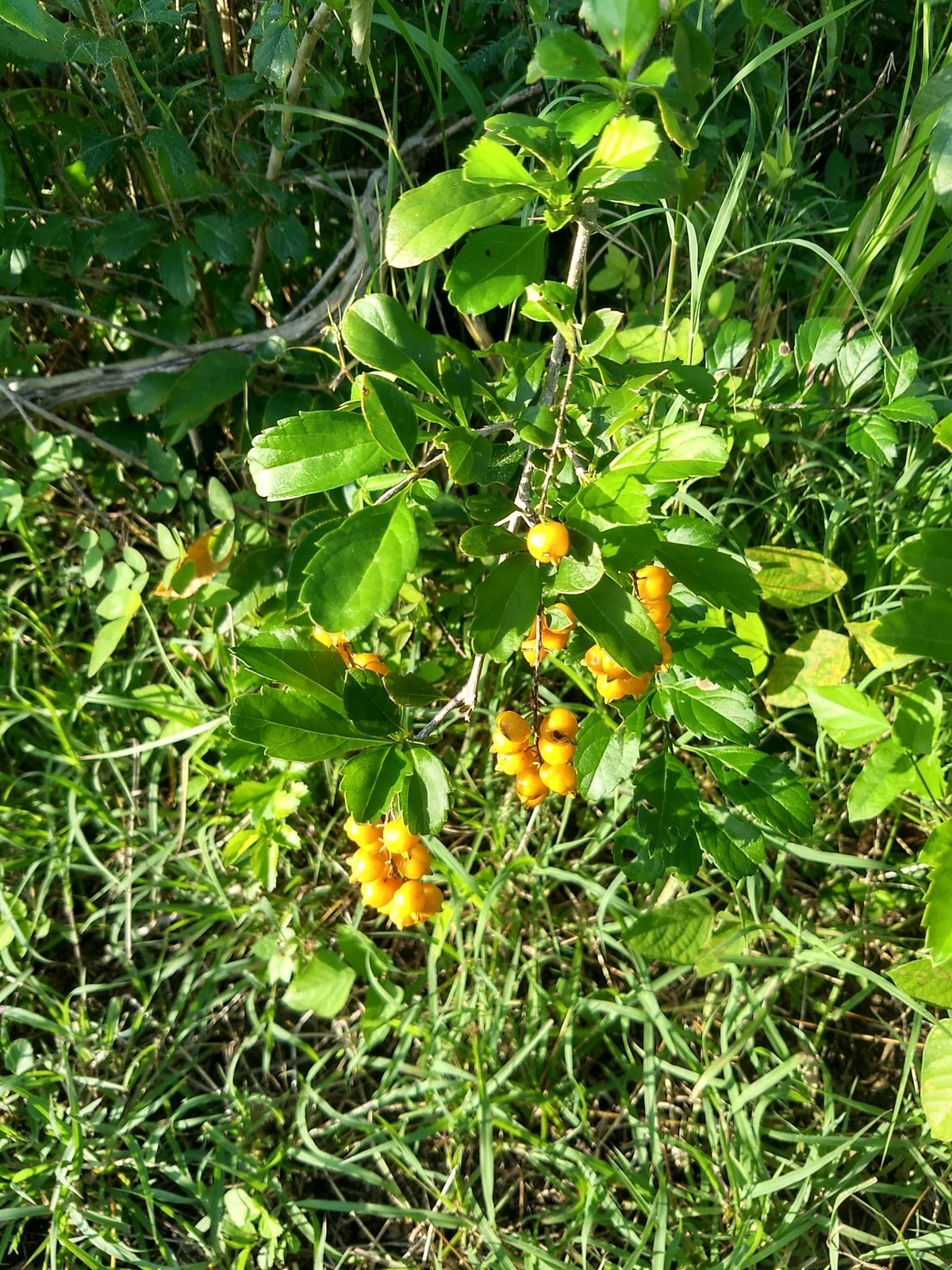
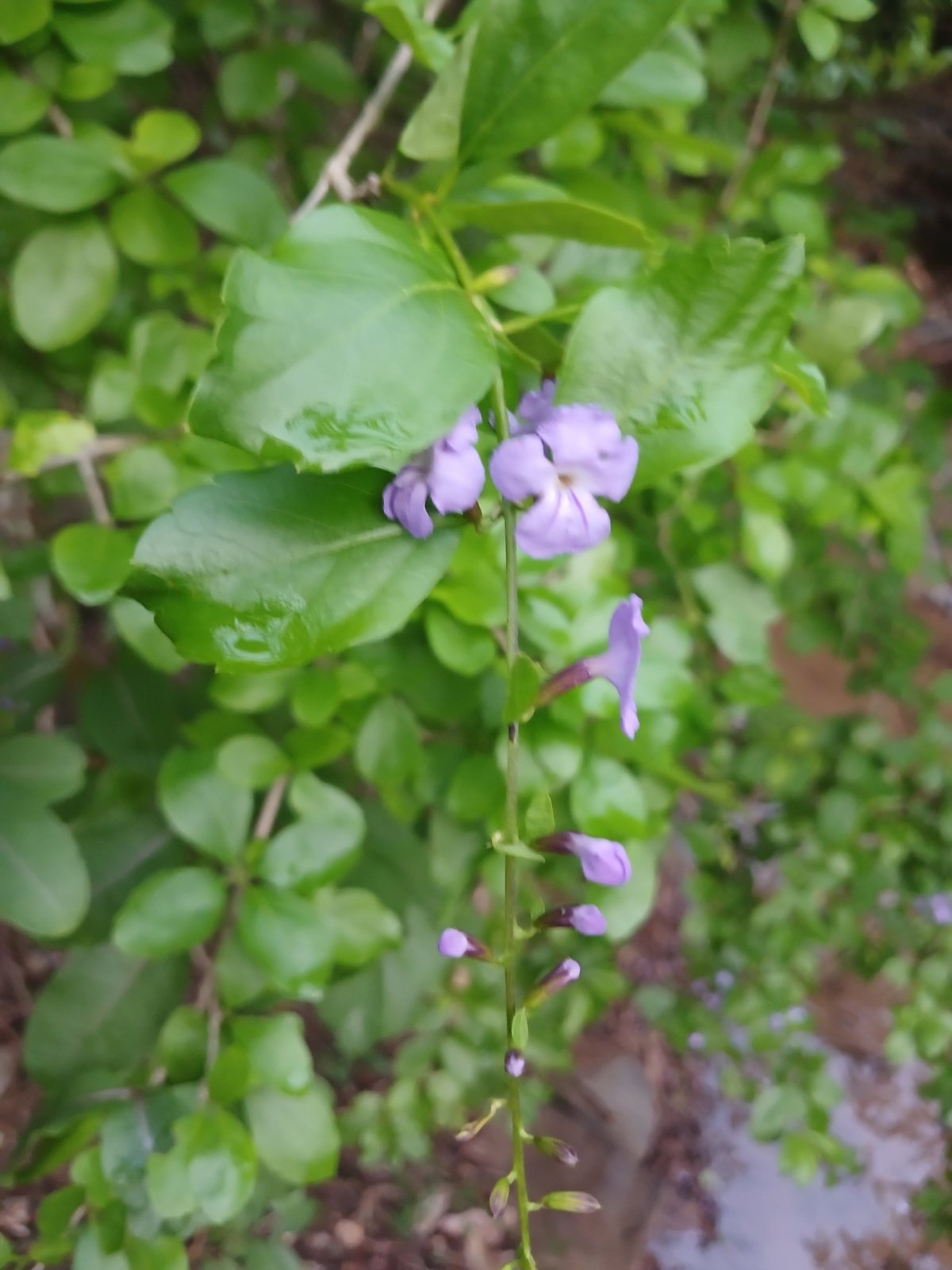
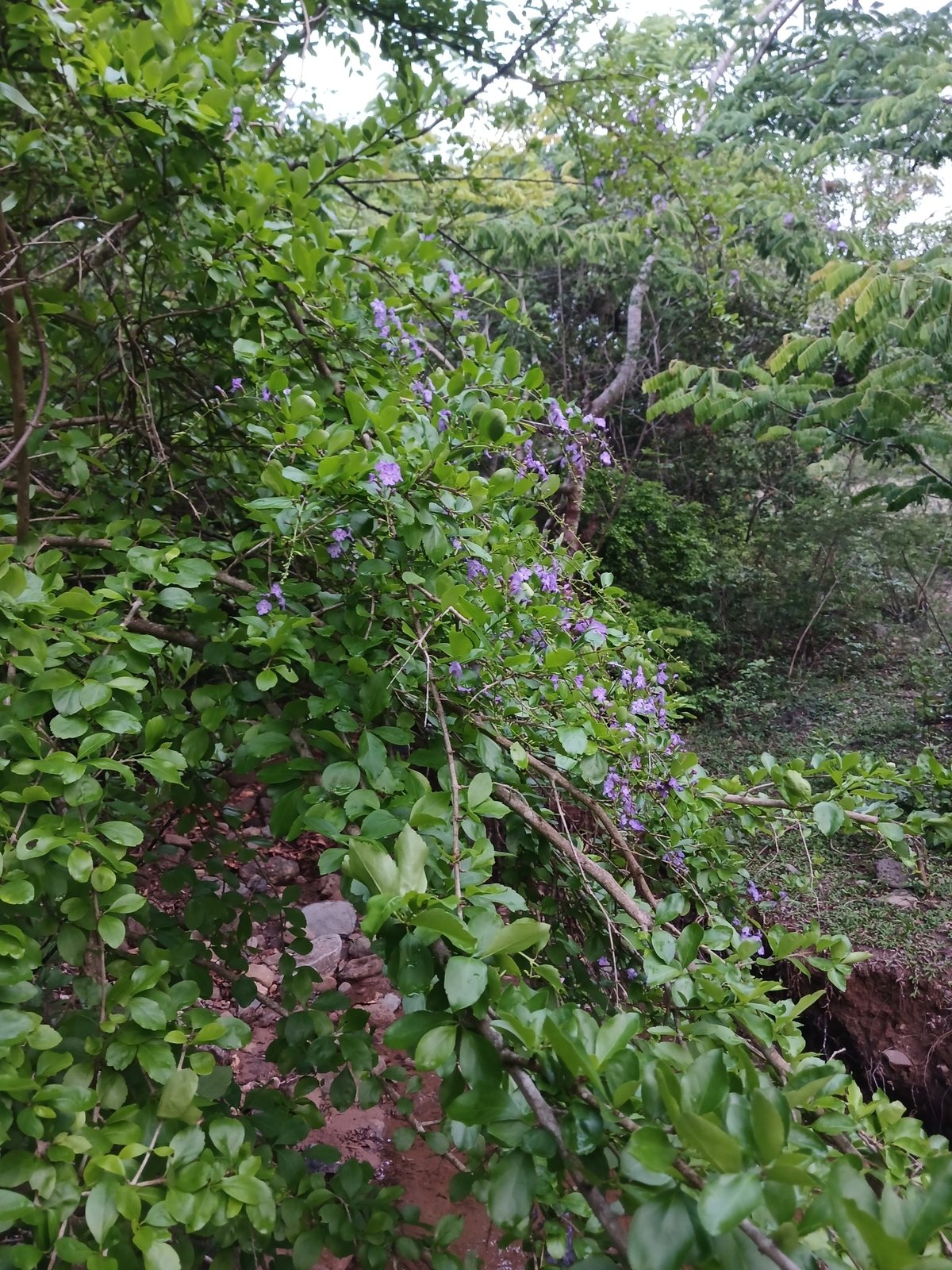
Golden dewdrop is a fast-growing tropical shrub with arching branches, clusters of blue-violet flowers and hanging strings of golden-orange berries. Gardeners grow it as a flowering hedge, specimen or container plant; in colder regions it needs frost-free winter shelter. Its poisonous berries and tendency to escape into bushland make careful placement important.
At a glance
- Sun
- Full sun gives the best flowering; tolerates partial shade with fewer flowers and looser growth.
- Water
- Water regularly while establishing, then deeply when the upper soil dries. Established plants tolerate short dry spells; containers need more frequent watering.
- Soil
- Well-drained soil enriched with organic matter; tolerates sandy and loamy soils but dislikes prolonged waterlogging.
- Height
- 10-20 ft (3-6 m)
- Spread
- 6-12 ft (1.8-3.7 m)
- Flowers
- Drooping clusters of blue-violet flowers, often edged in white, from late spring through autumn; flowering can continue year-round in frost-free tropical climates. White-flowered forms also occur.
- Foliage
- Evergreen. Small, oval, bright to mid-green leaves on arching stems; older branches may bear sharp spines.
- Growth
- Fast in warm weather.
- Care needed
- Medium
The year at a glance
- Pollinators
- Heat tolerant
- Wildlife
- Low allergen
| J | F | M | A | M | J | J | A | S | O | N | D | |
|---|---|---|---|---|---|---|---|---|---|---|---|---|
| Flowers | ||||||||||||
| Fruit | ||||||||||||
| Plant |
Northern hemisphere months. In Australia, shift them by six.
- Difficulty
- Moderate
- Toughness
- Needs looking after
Will it suit your garden?
Pick your zone, country, light and whether you have pets.
Full sun is 6 or more hours of direct sun a day, part shade 3 to 6 hours, shade under 3.
How it grows
Planting day
1.8 ft (0.54 m)
After 1 year
6 ft (1.8 m)
After 2 years
10 ft (3 m)
After 3 years
14 ft (4.2 m)
After 5 years
15 ft (4.5 m)
full size
About 3 years to full size.
From a typical nursery size, at an average rate for this kind of plant. A rule of thumb, not a forecast.
Good to know
- Cats and dogs
- Toxic
- Native to
- the US
- Invasive in
- Australia
- In the garden
- Spreads vigorously: plan to contain it.
- Growth rate
- Fast
Care
Jobs through the year
- WaterApr–May, Sep–Oct, every 14 days
- For established ground plants in suitable climates, water when upper soil dries; pots need more frequent checks.
- WaterJun–Aug, every 7 days
- Water deeply when upper soil dries; young plants and containers may need water sooner.
- WaterJan–Mar, Nov–Dec, every 14 days
- Water sheltered pots sparingly after upper soil dries, without letting the root ball dry completely.
- FeedApr–May
- Apply balanced slow-release fertiliser at the label rate; avoid excess nitrogen.
- MulchMay
- Apply 5–8 cm of organic mulch over ground-grown roots, keeping stems clear.
- PruneApr–May
- Remove dead or crowded stems and shorten long branches as growth resumes.
- PruneJun–Aug
- Lightly shape after flowering only if needed; repeated shearing reduces flowers.
- ProtectJul–Oct, every 14 days
- Remove toxic developing berries where children or pets have access or birds could spread seed.
- ProtectMay–Jun
- In zones 6–7, grow in a movable pot and acclimatise outdoors after the last frost.
- ProtectSep–Oct
- Move pots into bright, frost-free shelter before cold nights.
- ProtectJan–Mar, Nov–Dec
- Maintain frost-free shelter and inspect for whiteflies, aphids and spider mites.
- Water new plants deeply whenever the upper soil begins to dry; avoid keeping the root zone saturated.
- Apply a balanced slow-release fertiliser in spring at the label rate; excessive nitrogen encourages leaves rather than flowers.
- Spread 2-3 in (5-8 cm) of organic mulch over the roots, keeping it clear of the stems.
- Bring containers into a bright, frost-free position before cold weather; water sparingly through winter without letting the root ball dry completely.
- Remove developing fruit where children or pets have access, and wherever birds could spread seed into nearby natural areas.
Pruning. In late winter or early spring, after frost risk has passed, remove dead or crowded stems and shorten long branches to shape. Lightly trim after a flowering flush if needed; repeated shearing removes flowers and developing berries.
Through the year
- Late winter
- Check sheltered container plants for pests and remove dead growth; delay outdoor pruning until frost risk has passed.
- Spring
- Plant once the weather is reliably warm, or move overwintered pots outdoors gradually after the last frost.
- Spring
- Feed established plants and renew mulch without covering the stem bases.
- Summer
- Water during dry spells and check tender shoots for aphids and whiteflies.
- Late summer
- Take semi-ripe cuttings and remove unwanted fruit before birds disperse the seed.
- Autumn
- Move pots under frost-free cover before cold nights and reduce watering as growth slows.
In the garden
- Use as a loose flowering screen in a warm, sheltered garden, allowing room for its arching branches.
- Grow in a large container on a sunny terrace where it can be moved under cover for winter.
- Combine with hibiscus and cannas for a layered tropical border with contrasting leaf sizes.
- Train as a small standard for a courtyard focal point, away from paths where thorny shoots or fallen berries could cause problems.
Garden styles it suits: Tropical, Modern tropical, Luxury resort, Modern courtyard, Caribbean and Florida subtropical.
Plant it with: Tropical hibiscus, Canna, Agapanthus, Society garlic, Pentas and Cordyline.
Wildlife: Flowers attract butterflies and other nectar-feeding insects. Birds eat the berries and disperse the seeds, which contributes to its spread outside gardens.
Problems to watch for
- Aphids and whiteflies gather on soft growth and cause sticky honeydew; wash off small infestations and use insecticidal soap for persistent colonies, following the label.
- Spider mites cause fine stippling and webbing, especially under cover; rinse leaf undersides and treat persistent infestations with a labelled insecticidal soap.
- Root rot and yellowing can follow waterlogging; improve drainage, empty pot saucers and let the upper soil dry between waterings.
- Frost can blacken leaves and kill shoots; protect or move pots before freezing weather, and wait until spring growth resumes before cutting back damaged stems.
Safety
Leaves and berries are poisonous to people, dogs and cats, and can poison livestock, including horses. Swallowing them can cause vomiting, diarrhoea and potentially severe or fatal poisoning; keep children and animals away from fallen fruit and prunings. Seek urgent medical or veterinary advice after ingestion.
Where it spreads. An invasive environmental weed in parts of Queensland and New South Wales, Australia, and invasive in South Africa and parts of the Pacific, including Hawaii. Birds spread its seed into bushland and other natural areas. Check local restrictions before planting and choose a non-invasive alternative near vulnerable habitats.
Easily confused with
Lantana (Lantana camara)
Lantana has rough, strongly scented leaves and compact, rounded flower heads, followed by dark purple-black ripe berries. Golden dewdrop has looser, hanging flower clusters and golden-orange ripe berries.
Cape leadwort (Plumbago auriculata)
Cape leadwort has larger, flat-faced pale blue flowers with long tubes and sticky flower bases. It does not produce golden berries.
The name
Duranta honours the Italian physician and botanist Castore Durante, erecta means upright, and golden dewdrop refers to the hanging golden berries.
Propagation. Take softwood cuttings in late spring or semi-ripe cuttings in summer, rooting them in a moist, free-draining medium with warmth. Seed-grown plants vary; cuttings preserve the parent plant's characteristics.
Checked against open data
- Accepted botanical name
- Duranta erecta
- In the US and Canada
- Native in the lower 48 states, Navassa Island, Puerto Rico and US Virgin Islands. Introduced in Hawaii and Pacific Basin.
- Native range
- Bahamas, Cayman Is., Colombia, Costa Rica, Cuba, Dominican Republic, El Salvador, Florida, French Guiana, Guatemala, Guyana and Haiti.
- Measured
- Average height 425 cm.
Sources: GBIF (CC BY 4.0), USDA PLANTS and Trefle (CC BY 4.0). The care and design notes are LandscapeGPT's own.
See it in your own yard.
Upload a photo of your yard and see it redesigned with plants that suit your climate, each checked against your zone.