Golden kiwi
Actinidia chinensis. Family Actinidiaceae. Climber.
Also called Gold kiwifruit, Chinese gooseberry.
A vigorous, deciduous climbing vine grown for its edible kiwifruit and large, rounded leaves. Golden-fleshed selections of Actinidia chinensis need a warm, sheltered position, a long growing season and usually a compatible male vine to produce fruit; not every plant of this species has golden flesh.

At a glance
- Sun
- Full sun, sheltered from strong winds and spring frost; light afternoon shade can help in hot inland gardens.
- Water
- Keep the root zone evenly moist during growth and fruit development, but never waterlogged. Water deeply during dry spells.
- Soil
- Deep, fertile, well-drained soil, preferably slightly acidic. Avoid chalky soil, compacted ground and frost pockets.
- Height
- 20-30 ft (6-9 m) with support
- Spread
- 10-20 ft (3-6 m) when trained; unpruned vines can spread farther
- Flowers
- Late spring to early summer; fragrant, creamy-white flowers that age towards yellow.
- Foliage
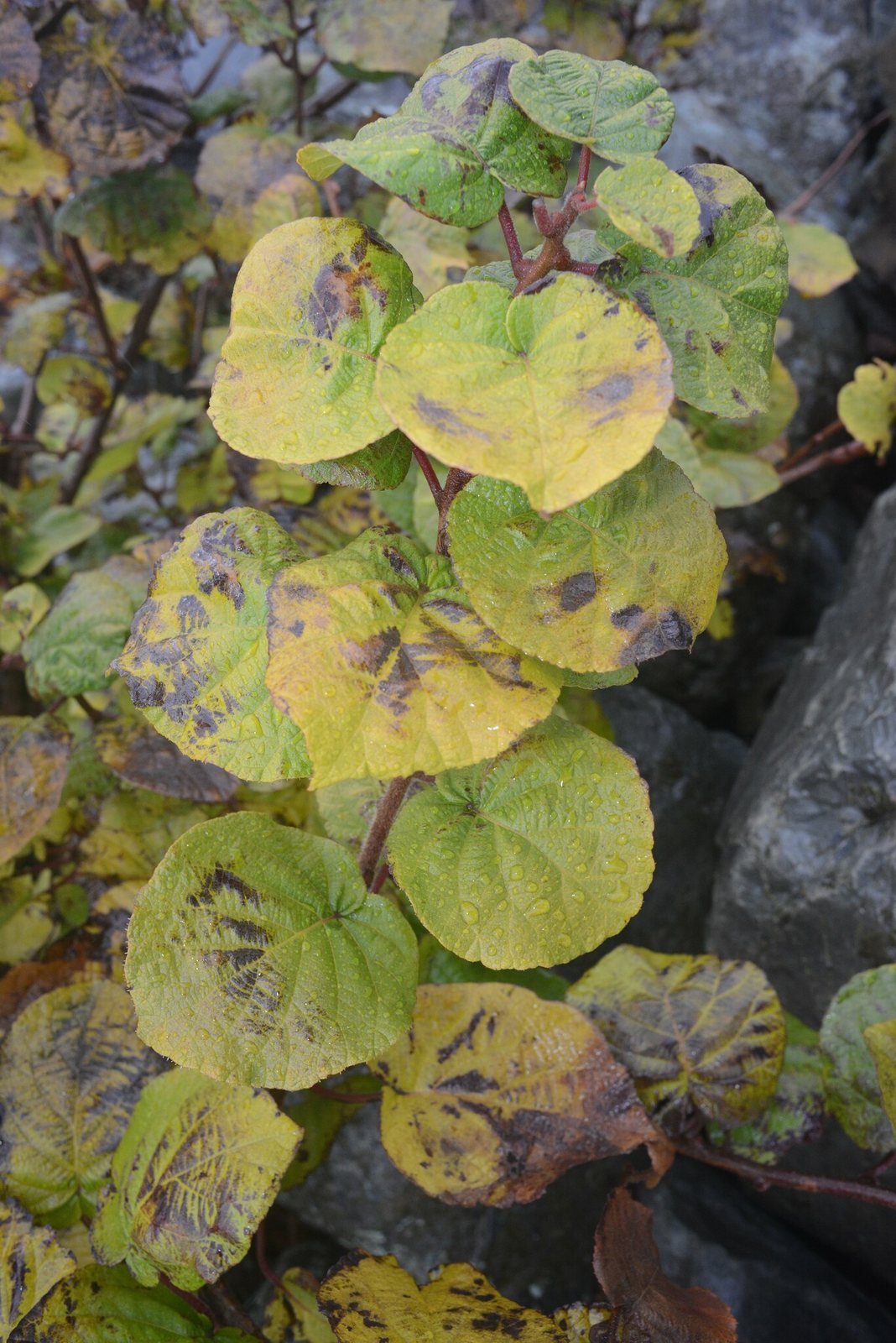
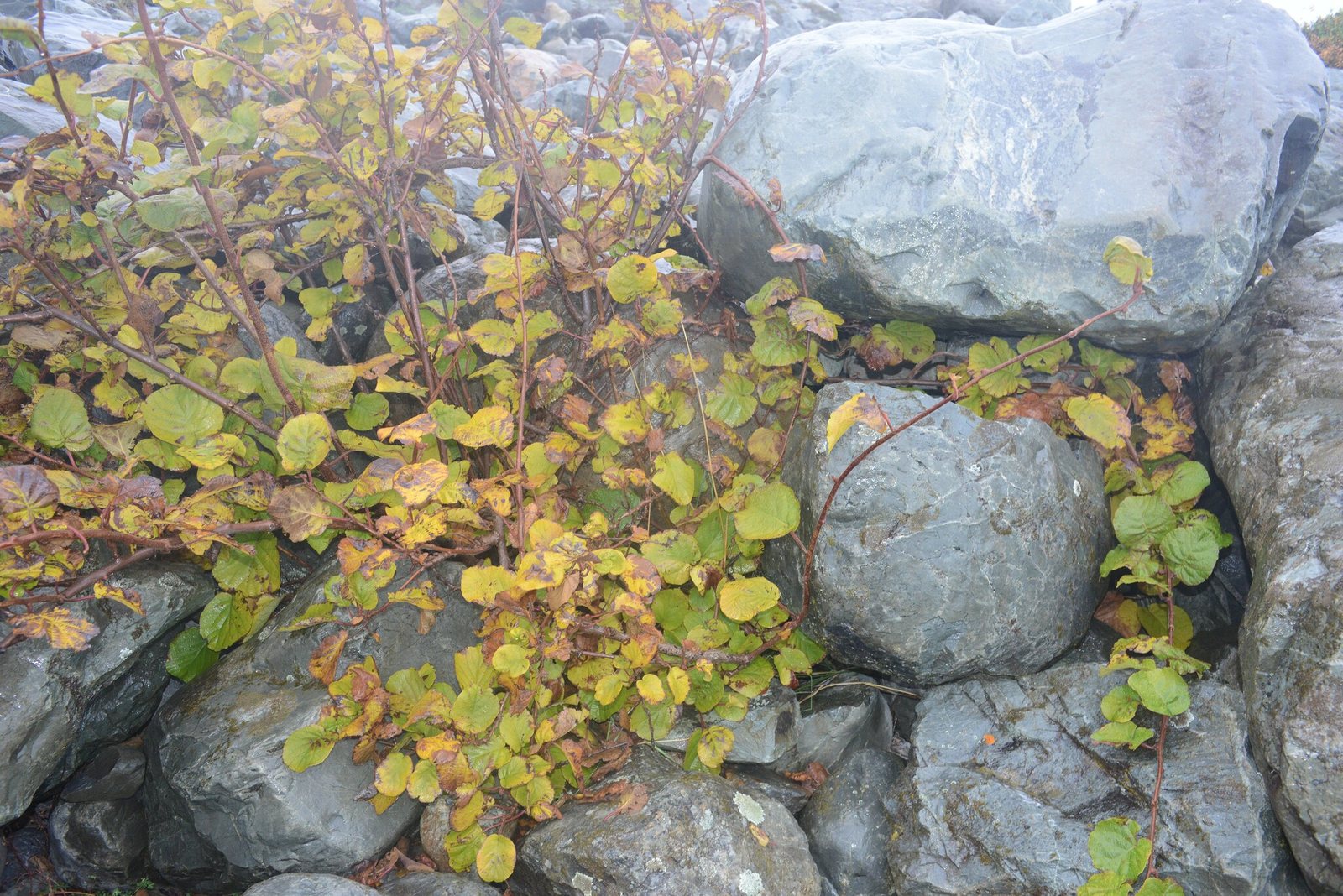
- Large, rounded to heart-shaped green leaves, often softly hairy beneath; young shoots can have reddish hairs.
- Growth
- Fast once established
- Care needed
- High
The year at a glance
- Pollinators
- Heat tolerant
- Low allergen
- Fragrant
- Edible
| J | F | M | A | M | J | J | A | S | O | N | D | |
|---|---|---|---|---|---|---|---|---|---|---|---|---|
| Flowers | ||||||||||||
| Fruit | ||||||||||||
| Plant |
Northern hemisphere months. In Australia, shift them by six.
- Difficulty
- Hard
- Toughness
- Needs looking after
Will it suit your garden?
Pick your zone, country, light and whether you have pets.
Full sun is 6 or more hours of direct sun a day, part shade 3 to 6 hours, shade under 3.
How it grows
Planting day
2 ft (0.6 m)
After 1 year
3 ft (1.1 m)
After 2 years
5 ft (1.5 m)
After 3 years
6 ft (1.8 m)
full size
About 3 years to full size.
From a typical nursery size, at an average rate for this kind of plant. A rule of thumb, not a forecast.
Good to know
- Cats and dogs
- Safe
- Growth rate
- Fast
Care
Jobs through the year
- ProtectMar–Apr
- Check the strong supporting framework; provide a flowering-compatible male for female vines.
- WaterApr–May, Oct, every 7 days
- Deep-water established vines if rain is insufficient; young vines need more frequent checks.
- WaterJun–Sep, every 5 days
- Keep the root zone evenly moist as fruit swells; skip watering if soil is already moist.
- FeedMar–Apr
- Apply balanced fertilizer at the label rate; avoid excessive nitrogen.
- MulchMar–Apr
- Spread compost or well-rotted organic mulch, keeping it away from the trunk.
- ProtectMar–May
- Cover accessible emerging shoots with horticultural fleece when late frost is forecast.
- PruneJan, Dec
- Prune fully dormant vines before sap rises, retaining the framework and renewing fruiting canes.
- PruneJun–Aug, every 30 days
- Shorten excess growth beyond fruit and tie in replacement canes without suddenly exposing fruit.
- HarvestOct–Nov, every 7 days
- Before damaging frost, clip full-sized fruit with black seeds in a sample; soften indoors.
- Install a strong pergola or braced wire trellis before planting; mature vines and their fruit are heavy.
- For fruit, plant a named female selection with a compatible male Actinidia chinensis that flowers at the same time; one male can usually pollinate several females.
- Water deeply in dry weather, especially while fruit is swelling.
- Apply a balanced fertiliser in spring according to the label; avoid heavy nitrogen feeding that encourages excess leafy growth.
- Mulch annually with compost or well-rotted organic matter, keeping it clear of the trunk.
- Protect emerging shoots from late frost with horticultural fleece where practical.
Pruning. Prune in winter while fully dormant, before sap starts rising: retain a permanent framework and replace older fruiting wood with well-spaced young canes. In summer, shorten excessive leafy growth beyond the fruit and remove tangled or unwanted shoots without exposing fruit suddenly to strong sun.
Harvest
Named plants commonly give their first useful crop about 3-5 years after planting, depending on climate and training. Pick fruit in autumn before damaging frost, when it has reached full size and the seeds inside a sample fruit are black; skin colour alone is unreliable. Cut or clip fruit carefully and let firm fruit soften indoors before eating.
Through the year
- Winter
- Prune dormant vines before sap rises, renew fruiting canes and inspect the support structure.
- Early spring
- Plant container-grown vines once the soil is workable; feed established plants and refresh mulch.
- Spring
- Protect opening buds and young shoots when late frost is forecast.
- Late spring
- Check that male and female flowers overlap; avoid insecticides while pollinating insects are visiting.
- Summer
- Tie in replacement canes, shorten excessive growth and water consistently as fruit develops.
- Autumn
- Test a sample fruit for maturity and harvest before damaging frost.
In the garden
- Train over a sturdy pergola to provide summer shade and an overhead fruit crop.
- Grow along braced horizontal wires at the sunny edge of a kitchen garden.
- Use against a warm, sheltered wall on a separate wire framework to improve ripening in cooler districts.
- Train as a seasonal leafy screen beside a seating area, allowing access for pruning and picking.
Garden styles it suits: Potager (kitchen garden), Edible landscape, Backyard orchard, Homestead, Food forest and Modern courtyard.
Plant it with: Chives, Calendula, Sweet alyssum and Borage.
Wildlife: Flowers attract bees and other pollinating insects. Dense summer foliage offers cover for small birds, which may also peck ripe fruit.
Problems to watch for
- Late frost kills young shoots and flowers: choose a sheltered site outside frost pockets and cover accessible growth when frost threatens.
- Poor fruit set: provide a flowering-compatible male, encourage pollinating insects and check that spring frost has not damaged the flowers.
- Root and crown rot in wet soil: improve drainage before planting, avoid standing water and keep mulch away from the trunk.
- Bacterial canker, including Psa, causes shoot dieback, cankers or reddish ooze: buy healthy stock, disinfect pruning tools and seek local plant-health advice if symptoms appear.
Safety
Not known to be toxic to cats, dogs, horses or people. The ripe fruit is edible, but kiwi can cause serious allergic reactions in susceptible people, and its enzymes may irritate the mouth; leaves and stems are not normally eaten.
Easily confused with
Fuzzy kiwi (Actinidia deliciosa)
Usually has fruit with a thicker coat of persistent brown hairs and green flesh. Actinidia chinensis fruit generally has finer, sparser hairs, but the species are closely related and a labelled cultivar is more reliable…
Hardy kiwi (Actinidia arguta)
Has smaller, smoother leaves and small, smooth-skinned fruit eaten whole; it is substantially more cold-hardy.
Variegated kiwi (Actinidia kolomikta)
Often has striking white and pink leaf patches, especially on male plants, and bears much smaller, smooth-skinned fruit.
The name
Actinidia refers to the radiating arrangement of the flower's styles, chinensis means 'from China', and 'golden kiwi' describes the yellow flesh of selected varieties.
Propagation. Propagate named selections by softwood or semi-ripe cuttings, grafting or layering to retain their fruit characteristics and sex. Seedlings vary, may take many years to flower and will not reliably produce golden fruit.
Checked against open data
- Accepted botanical name
- Actinidia chinensis
- In the US and Canada
- Introduced in the lower 48 states.
- Native range
- China North-Central, China South-Central, China Southeast and Taiwan.
Sources: GBIF (CC BY 4.0), USDA PLANTS and Trefle (CC BY 4.0). The care and design notes are LandscapeGPT's own.
See it in your own yard.
Upload a photo of your yard and see it redesigned with plants that suit your climate, each checked against your zone.