Goldie's wood fern
Dryopteris goldiana. Family Dryopteridaceae. Fern.
Also called Goldie's fern, Giant wood fern.
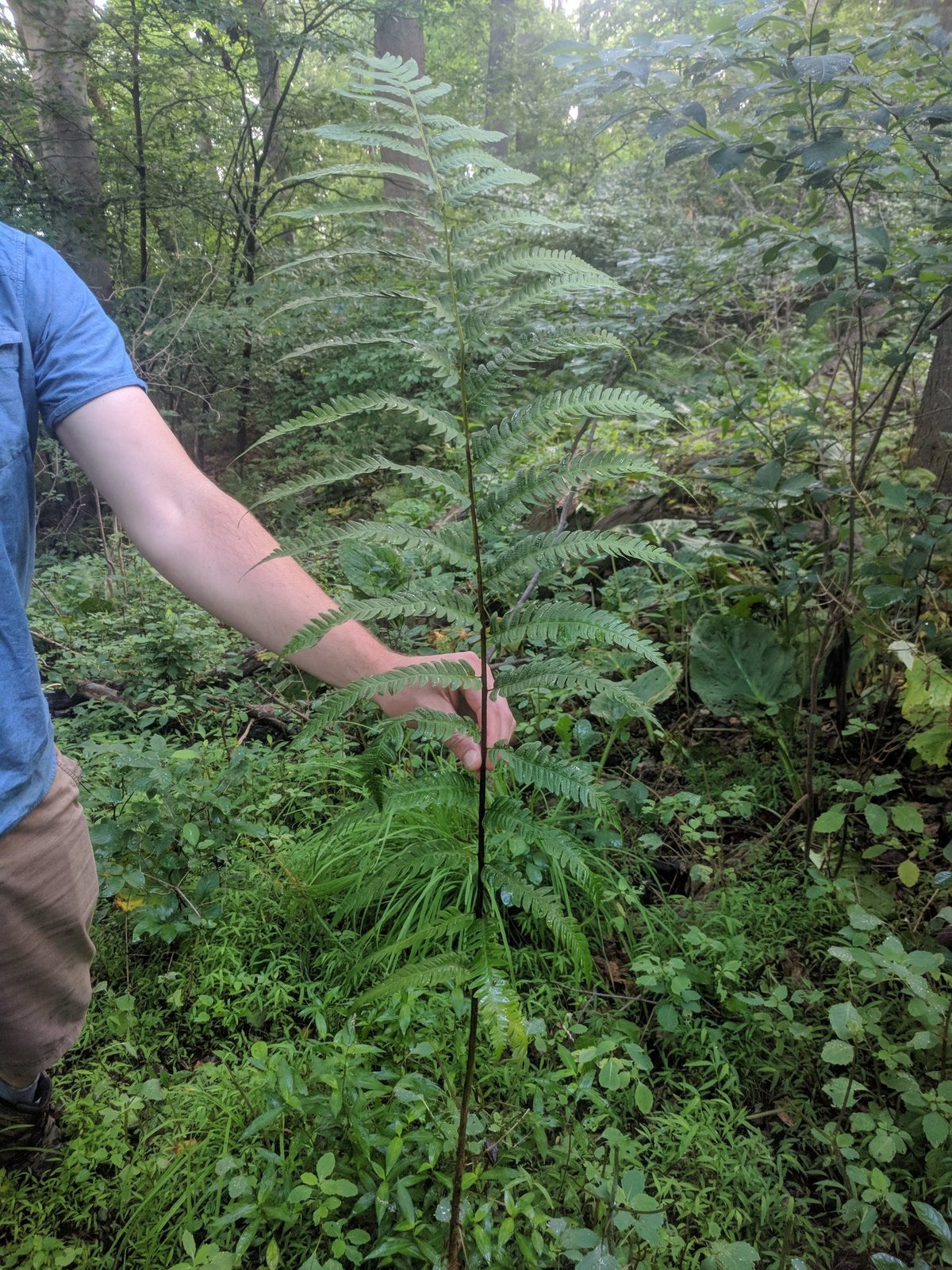
Goldie's wood fern is a large, deciduous fern native to rich, moist woods in eastern North America. Its broad, arching fronds make substantial clumps in shaded gardens, where it needs cool roots, dependable moisture and shelter from drying winds.
At a glance
- Sun
- Partial to full shade; avoid hot afternoon sun.
- Water
- Keep evenly moist, especially during establishment and summer heat; avoid prolonged waterlogging.
- Soil
- Deep, humus-rich, well-drained soil, preferably slightly acidic to neutral; tolerates some alkalinity.
- Height
- 3-4 ft (0.9-1.2 m)
- Spread
- 3-5 ft (0.9-1.5 m)
- Foliage
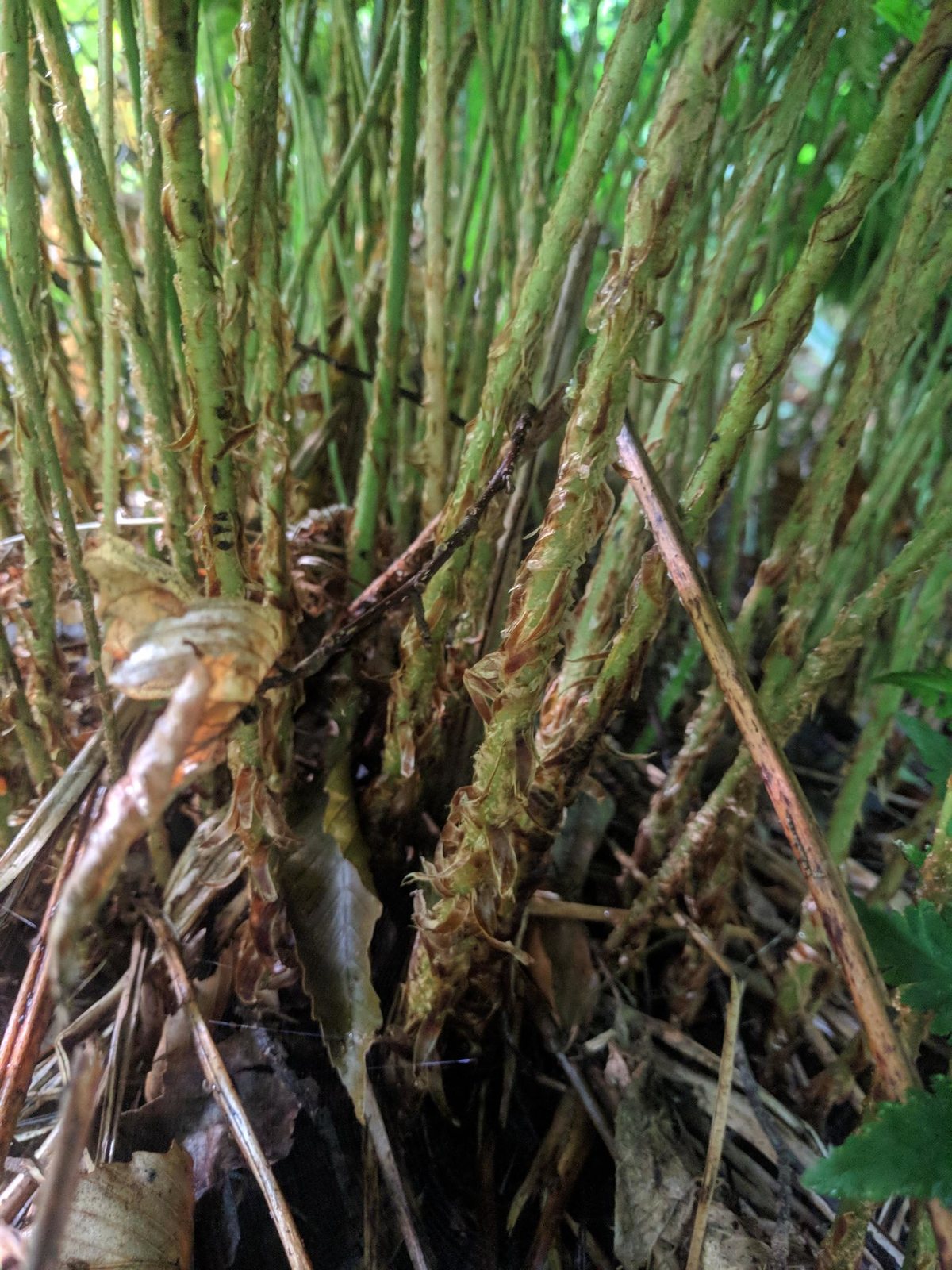
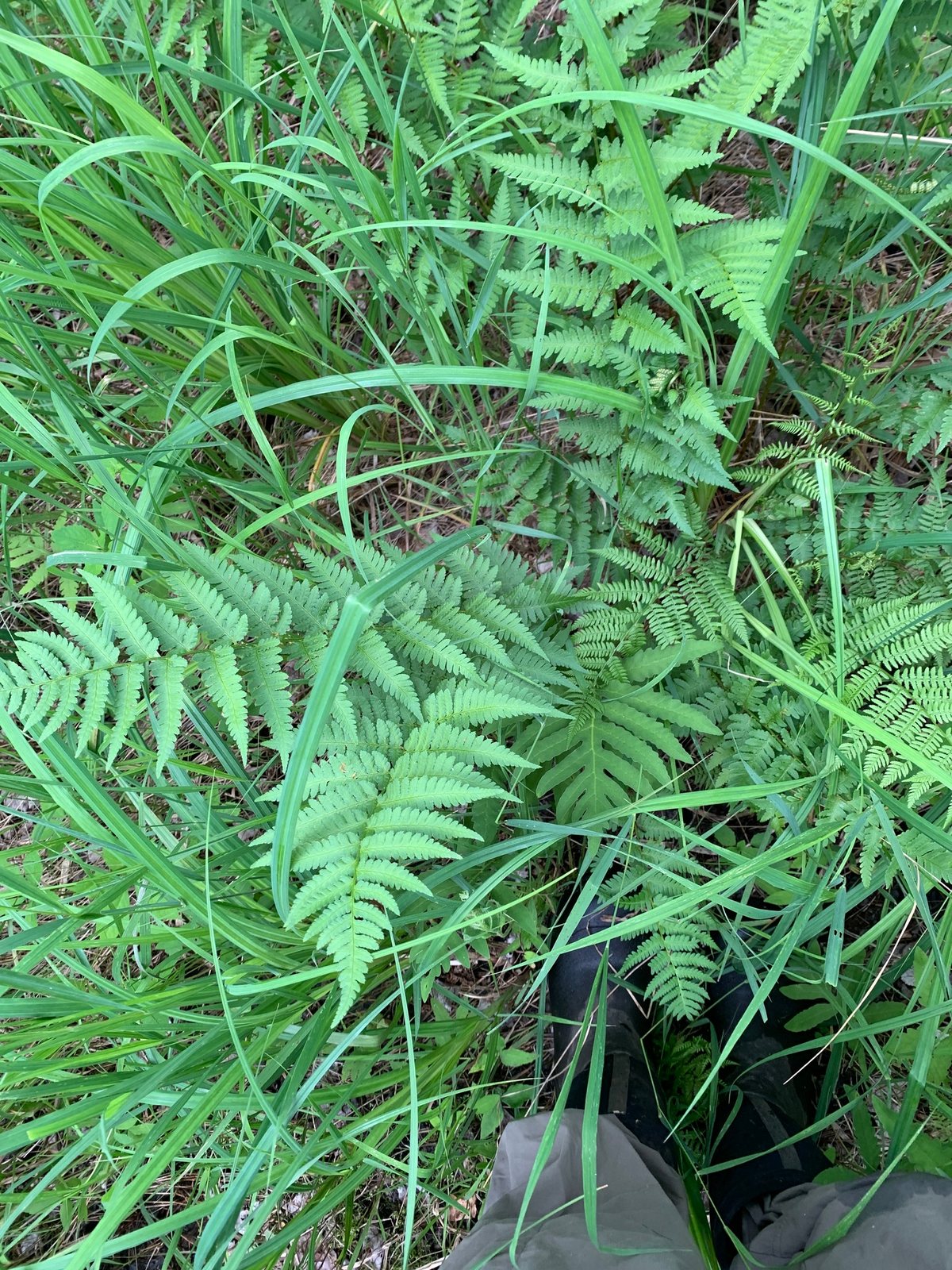
- Broad, arching, twice-divided green fronds with a somewhat golden-green cast when young. Small, round spore clusters develop beneath mature fronds.
- Growth
- Slow to moderate; takes several years to form a substantial clump.
- Care needed
- Low
The year at a glance
- Deer resistant
- Cold hardy
- Wildlife
| J | F | M | A | M | J | J | A | S | O | N | D | |
|---|---|---|---|---|---|---|---|---|---|---|---|---|
| Plant |
Northern hemisphere months. In Australia, shift them by six.
- Difficulty
- Easy
- Toughness
- Fairly tough
Will it suit your garden?
Pick your zone, country, light and whether you have pets.
Full sun is 6 or more hours of direct sun a day, part shade 3 to 6 hours, shade under 3.
How it grows
Planting day
1 ft (0.3 m)
After 1 year
1.6 ft (0.49 m)
After 2 years
2.2 ft (0.68 m)
After 3 years
2.9 ft (0.88 m)
After 5 years
3 ft (1.1 m)
full size
About 4 years to full size.
From a typical nursery size, at an average rate for this kind of plant. A rule of thumb, not a forecast.
Good to know
- Cats and dogs
- Mildly toxic: may upset a stomach
- Growth rate
- Slow
Care
Jobs through the year
- WaterApr–May, Sep–Oct, every 7 days
- For established plants, water deeply if rain has not kept soil moist; check new plants more often.
- WaterJun–Aug, every 4 days
- Water established clumps during dry weather to keep roots evenly moist, never waterlogged.
- PruneFeb–Mar
- Remove dead fronds near ground level before new growth emerges.
- MulchMar–Apr
- Apply 5-8 cm of leaf mould or compost, keeping the crown uncovered.
- DivideMar–Apr
- Divide only if needed, before fronds unfurl; otherwise leave clumps undisturbed.
- Water deeply during dry spells so the root zone stays moist.
- Apply leaf mould or well-rotted compost each spring; routine fertilizer is usually unnecessary.
- Maintain a 2-3 in (5-8 cm) organic mulch, keeping it clear of the crown.
- Shelter from drying winds and strong afternoon sun.
- Divide only when necessary, in early spring before the fronds unfurl.
Pruning. Cut dead fronds back near ground level in late winter or early spring before new growth emerges. Leave healthy green fronds intact through the growing season.
Through the year
- Late winter
- Remove collapsed, dead fronds before new growth begins.
- Early spring
- Plant or divide while dormant, keeping the crown at its previous soil level.
- Spring
- Top-dress with leaf mould or compost and renew mulch without burying the crown.
- Late spring
- Check emerging fronds for slug and snail damage.
- Summer
- Water during dry periods and watch for scorched or wilting fronds.
- Autumn
- Leave healthy fronds to die back naturally and retain a loose layer of fallen leaves around the clump.
In the garden
- Use as a large foliage anchor beneath deciduous trees where soil remains moist.
- Group with smaller ferns and woodland groundcovers to create layers of contrasting foliage.
- Plant behind hostas or foamflowers in a shaded border for height and texture.
- Place beside a shaded path or seating area where its arching fronds have room to spread.
Garden styles it suits: Woodland, Green on green, Secret garden, English country and Wildlife garden.
Plant it with: Hostas, Foamflowers, Solomon's seal, Wild ginger, Astilbes and Japanese painted fern.
Wildlife: Dense clumps and surrounding leaf litter provide shelter for small woodland animals and invertebrates. It has no flowers or nectar and is generally little browsed by deer, though not deer-proof.
Problems to watch for
- Dry soil or hot sun causes brown edges and early dieback: water deeply, mulch and provide more shade.
- Slugs and snails can damage emerging fronds: inspect at dusk, remove pests and use a labelled iron-phosphate bait if needed.
- Persistent waterlogging can rot the crown: improve drainage or move the plant to moist but aerated soil.
- Drying winds can shred or scorch fronds: provide shelter and maintain soil moisture.
Safety
Toxicity to cats, dogs, horses and people is not well established for this species. Related wood ferns contain toxins, especially in their rhizomes, so do not eat the fronds or underground parts or allow animals to graze them; the severity of poisoning from this species is uncertain.
Easily confused with
Male fern (Dryopteris filix-mas)
Usually has narrower, more lance-shaped fronds; Goldie's wood fern has notably broad, oval fronds with large lower leaflets.
Marginal wood fern (Dryopteris marginalis)
Has leathery, evergreen fronds and spore clusters close to the leaflet margins; Goldie's is deciduous, with spore clusters farther inward.
Ostrich fern (Matteuccia struthiopteris)
Has strongly tapered, feather-shaped fronds and separate, narrow brown fertile fronds. Goldie's bears spores beneath its ordinary green fronds and forms a more restrained clump.
The name
The names goldiana and Goldie's fern honour Scottish botanist John Goldie, while Dryopteris comes from Greek words associated with oak and fern.
Propagation. Divide established clumps in early spring, retaining healthy roots and growing points on each piece. It can also be raised from spores, but this is slow and requires clean, consistently humid conditions.
Checked against open data
- Accepted botanical name
- Dryopteris goeldiana Dryopteris goldiana is an older name for Dryopteris goeldiana.
Sources: GBIF (CC BY 4.0) and Trefle (CC BY 4.0). The care and design notes are LandscapeGPT's own.
See it in your own yard.
Upload a photo of your yard and see it redesigned with plants that suit your climate, each checked against your zone.