Good King Henry
Blitum bonus-henricus. Family Amaranthaceae. Perennial.
Also called Lincolnshire spinach, Poor man's asparagus, Perennial goosefoot.
Good King Henry is a hardy, clump-forming perennial vegetable grown for its young shoots and spinach-like leaves. It suits a permanent kitchen-garden bed, returning each spring with little attention once established. It grows best where summers are not excessively hot or dry.
At a glance
- Sun
- Full sun to partial shade; light afternoon shade helps in hot summers.
- Water
- Keep the soil evenly moist during establishment and leaf production; established plants tolerate brief dry spells but produce tougher leaves.
- Soil
- Fertile, moisture-retentive, well-drained soil; tolerates clay if it does not remain waterlogged.
- Height
- 1.5-3 ft (0.45-0.9 m)
- Spread
- 1-2 ft (0.3-0.6 m)
- Flowers
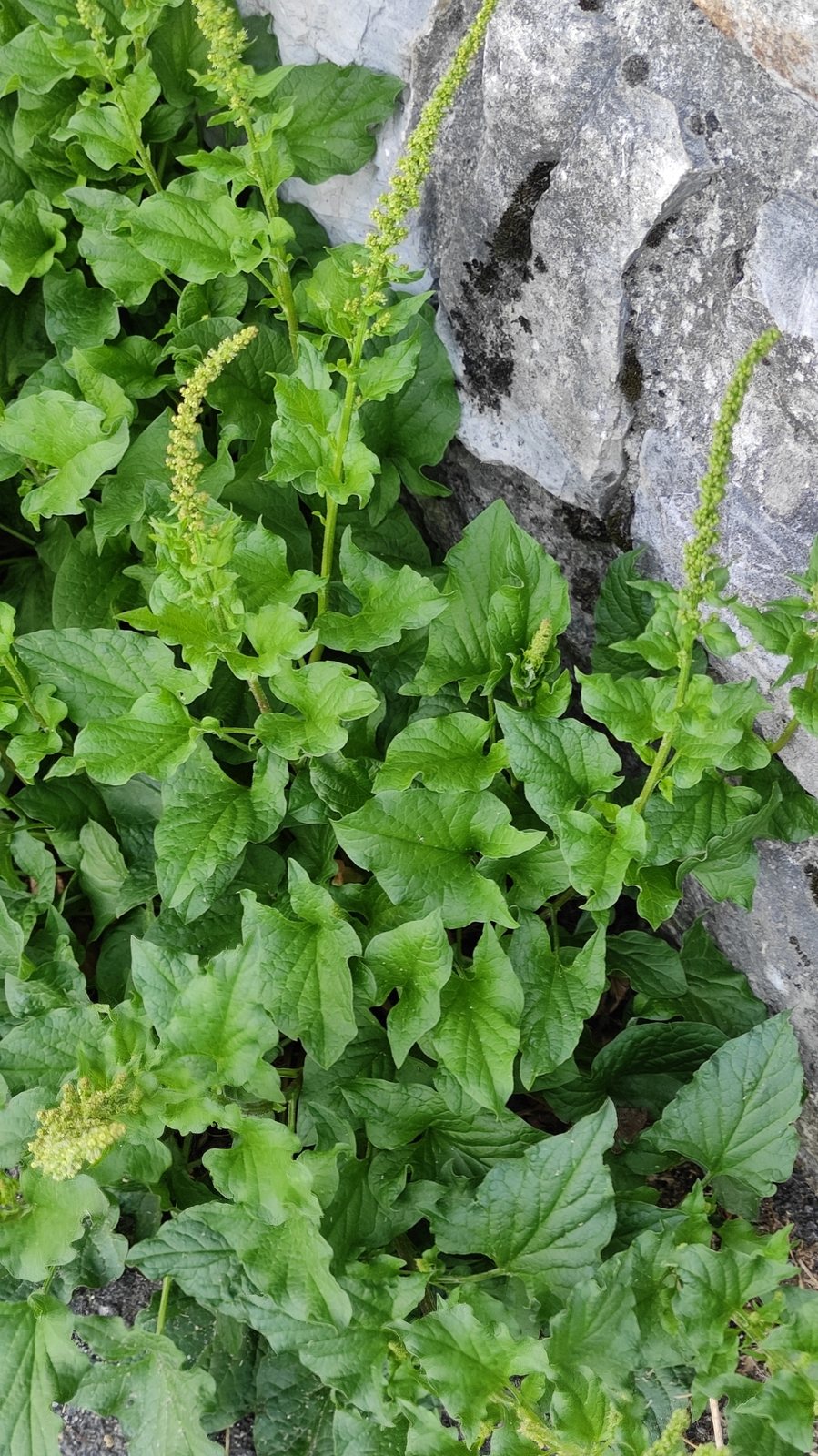
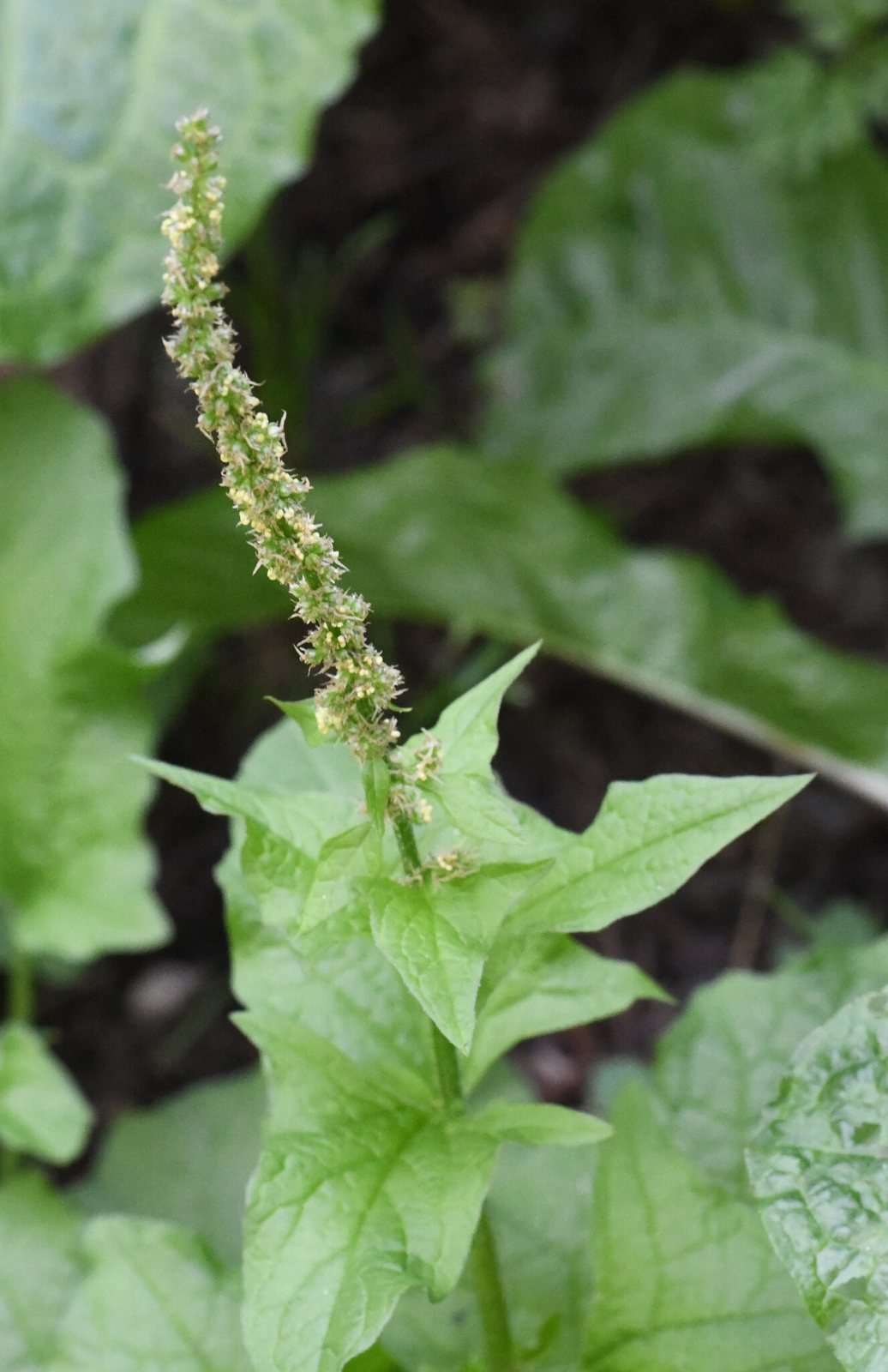
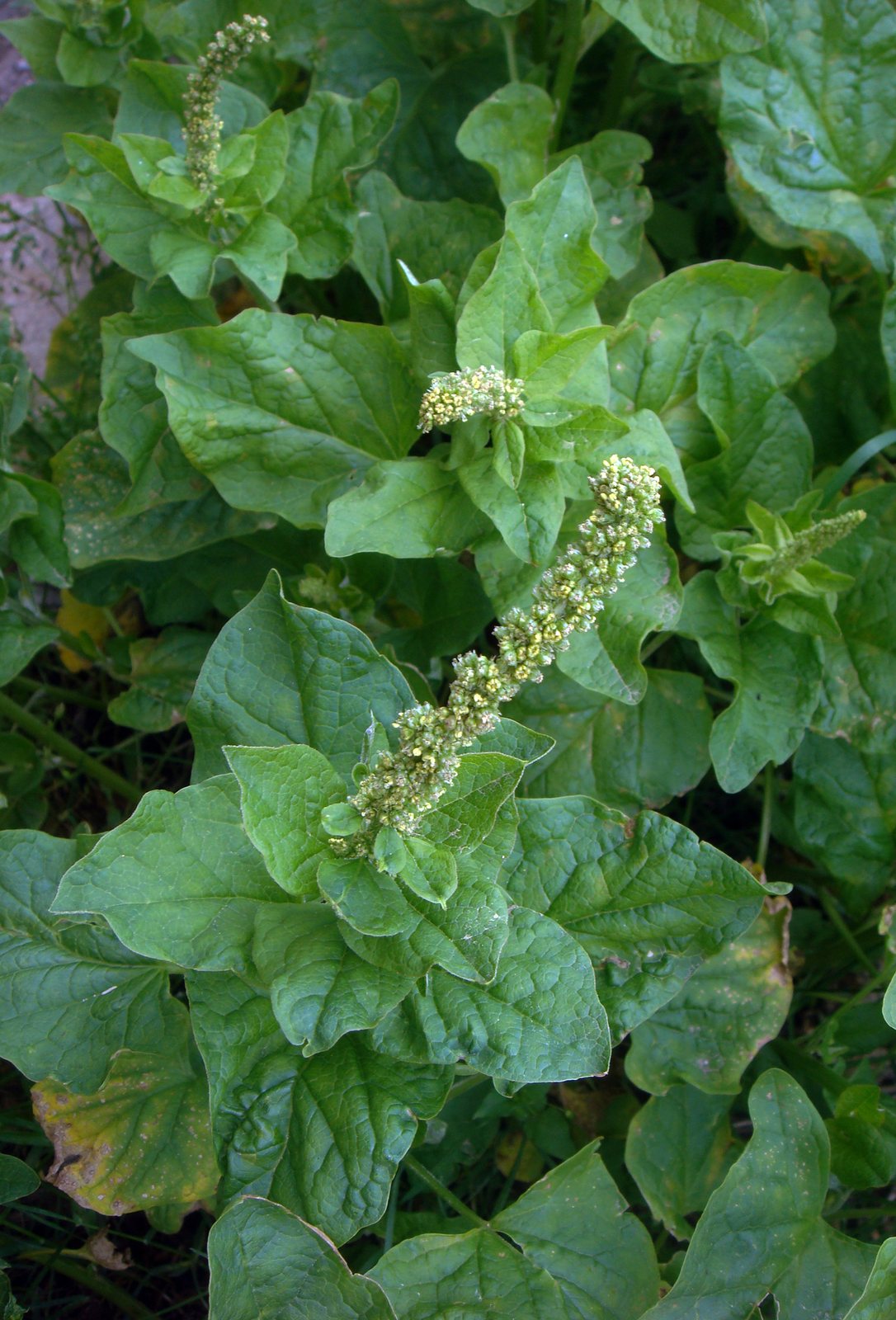
- Small greenish flowers in narrow upright clusters from late spring through summer.
- Foliage
- Broad, triangular to arrow-shaped green leaves, often with a slightly mealy coating on young growth; dies back in winter.
- Growth
- Moderate once established; seedlings are often slow in their first year.
- Care needed
- Low
The year at a glance
- Cold hardy
- Edible
| J | F | M | A | M | J | J | A | S | O | N | D | |
|---|---|---|---|---|---|---|---|---|---|---|---|---|
| Flowers | ||||||||||||
| Fruit | ||||||||||||
| Plant |
Northern hemisphere months. In Australia, shift them by six.
- Difficulty
- Easy
- Toughness
- Very tough
Will it suit your garden?
Pick your zone, country, light and whether you have pets.
Full sun is 6 or more hours of direct sun a day, part shade 3 to 6 hours, shade under 3.
How it grows
Planting day
1 ft (0.3 m)
After 1 year
1.3 ft (0.4 m)
After 2 years
1.6 ft (0.49 m)
After 3 years
1.9 ft (0.59 m)
After 5 years
2.2 ft (0.68 m)
full size
About 4 years to full size.
From a typical nursery size, at an average rate for this kind of plant. A rule of thumb, not a forecast.
Good to know
- Cats and dogs
- Toxic
- Growth rate
- Slow
Care
Jobs through the year
- WaterApr–May, Sep, every 14 days
- Water established plants during dry weather; young plants need more frequent watering.
- WaterJun–Aug, every 7 days
- Water during dry spells to maintain tender leaves; reduce harvesting if plants become stressed.
- MulchMar–Apr
- Spread garden compost around clumps to feed and conserve moisture, leaving crowns uncovered.
- DivideMar–Apr
- Divide crowded clumps in spring if leaf production declines.
- HarvestApr–Jun, every 7 days
- From the second year, pick tender shoots and young leaves sparingly; cook and discard cooking water.
- PruneJun–Aug, every 21 days
- Remove flower stems before seed ripens to limit self-sowing and favour leaf growth.
- PruneNov
- Cut dead growth to ground level and clear debris from the crowns.
- Water young plants regularly and established clumps during prolonged dry weather.
- Apply a layer of garden compost around the crowns each spring.
- Mulch to conserve moisture, keeping the crown itself uncovered.
- Weed carefully while plants are young; established clumps compete better.
- Divide crowded clumps in spring if leaf production declines.
Pruning. Remove flower stems before seed ripens if you want to limit self-sowing or favour leaf production. Cut dead stems and foliage to ground level in late autumn or before new spring growth.
Harvest
Leave plants largely unpicked in their first year, then harvest tender spring shoots when about 6-8 in (15-20 cm) tall, cutting above the crown. Pick young, fully opened leaves through spring and early summer, leaving plenty of foliage to replenish the plant. Cook shoots and leaves and discard the cooking water; older leaves become coarse and bitter.
Through the year
- Late winter
- Cold-stratify seed for spring sowing, or check autumn-sown pots for emerging seedlings.
- Spring
- Plant out or divide clumps, spacing them about 1-2 ft (0.3-0.6 m) apart.
- Spring
- Top-dress with compost and begin light shoot harvests from established plants.
- Early summer
- Pick young leaves and remove unwanted flower stems.
- Summer
- Water during dry spells and reduce harvesting if growth becomes coarse or stressed.
- Autumn
- Sow fresh seed outdoors in pots and remove unwanted seedlings around mature plants.
- Late autumn
- Cut down dead growth and clear debris from around the crowns.
In the garden
- Plant in a permanent vegetable bed with sorrel and chives for dependable spring harvests.
- Use in a cottage-style potager, where its broad leaves contrast with finer herb foliage.
- Place along a lightly shaded edible border, keeping the plants within easy reach for picking.
- Grow at a sunny woodland-garden edge as part of a perennial food planting.
Garden styles it suits: Potager (kitchen garden), Cottage garden, Edible landscape, Homestead, Food forest and Low-maintenance.
Plant it with: Sorrel, Chives, Welsh onion, Rhubarb and Lovage.
Wildlife: The small, mainly wind-pollinated flowers are not a major nectar source. Dense clumps provide shelter for small garden invertebrates.
Problems to watch for
- Slugs and snails damage emerging shoots: inspect after dark, remove hiding places and use wildlife-conscious controls where needed.
- Aphids cluster on tender growth: wash them off with water and preserve ladybirds and other predators.
- Poor seed germination: use fresh seed and provide a period of moist winter chilling; emergence can be slow and uneven.
- Crown rot in saturated soil: improve drainage or move plants to a raised bed, keeping mulch away from the crown.
Safety
Leaves and shoots contain oxalates and saponins, so eat them cooked and in moderation rather than raw or in large quantities. People with kidney disease or a history of calcium-oxalate stones should seek medical advice before eating them. Species-specific poisoning information for cats, dogs and horses is limited; do not treat it as safe pet food or livestock forage, since substantial consumption of oxalate-rich foliage can be harmful.
Easily confused with
Fat hen (Chenopodium album)
Fat hen is an annual with more branched stems and usually toothed, diamond-shaped upper leaves. Good King Henry returns from a perennial crown and has broader, mostly untoothed, arrow-shaped leaves.
Lords-and-ladies (Arum maculatum)
This poisonous plant also has arrow-shaped leaves, but they are usually glossy, sometimes dark-spotted, and emerge separately from the ground.
The name
The Latin epithet bonus-henricus means 'good Henry', matching the English common name.
Propagation. Divide established clumps in spring, retaining roots and growing buds on each piece. Alternatively, sow fresh seed outdoors in autumn or cold-stratify spring-sown seed; germination is often slow and irregular.
Checked against open data
- Accepted botanical name
- Blitum bonus-henricus
- Native range
- Albania, Austria, Belarus, Belgium, Bulgaria, Central European Rus, Corse, Czechoslovakia, France, Germany, Greece and Hungary.
- Measured
- Soil pH 7 to 7.5. Average height 35 cm.
Sources: GBIF (CC BY 4.0) and Trefle (CC BY 4.0). The care and design notes are LandscapeGPT's own.
See it in your own yard.
Upload a photo of your yard and see it redesigned with plants that suit your climate, each checked against your zone.