Goumi
Elaeagnus multiflora. Family Elaeagnaceae. Shrub.
Also called Gumi, Cherry silverberry.
Goumi is a deciduous shrub grown for its fragrant spring flowers and small, red, silver-speckled fruits. It suits informal edible gardens and hedges, tolerates relatively poor soil, and fixes nitrogen through bacteria associated with its roots.
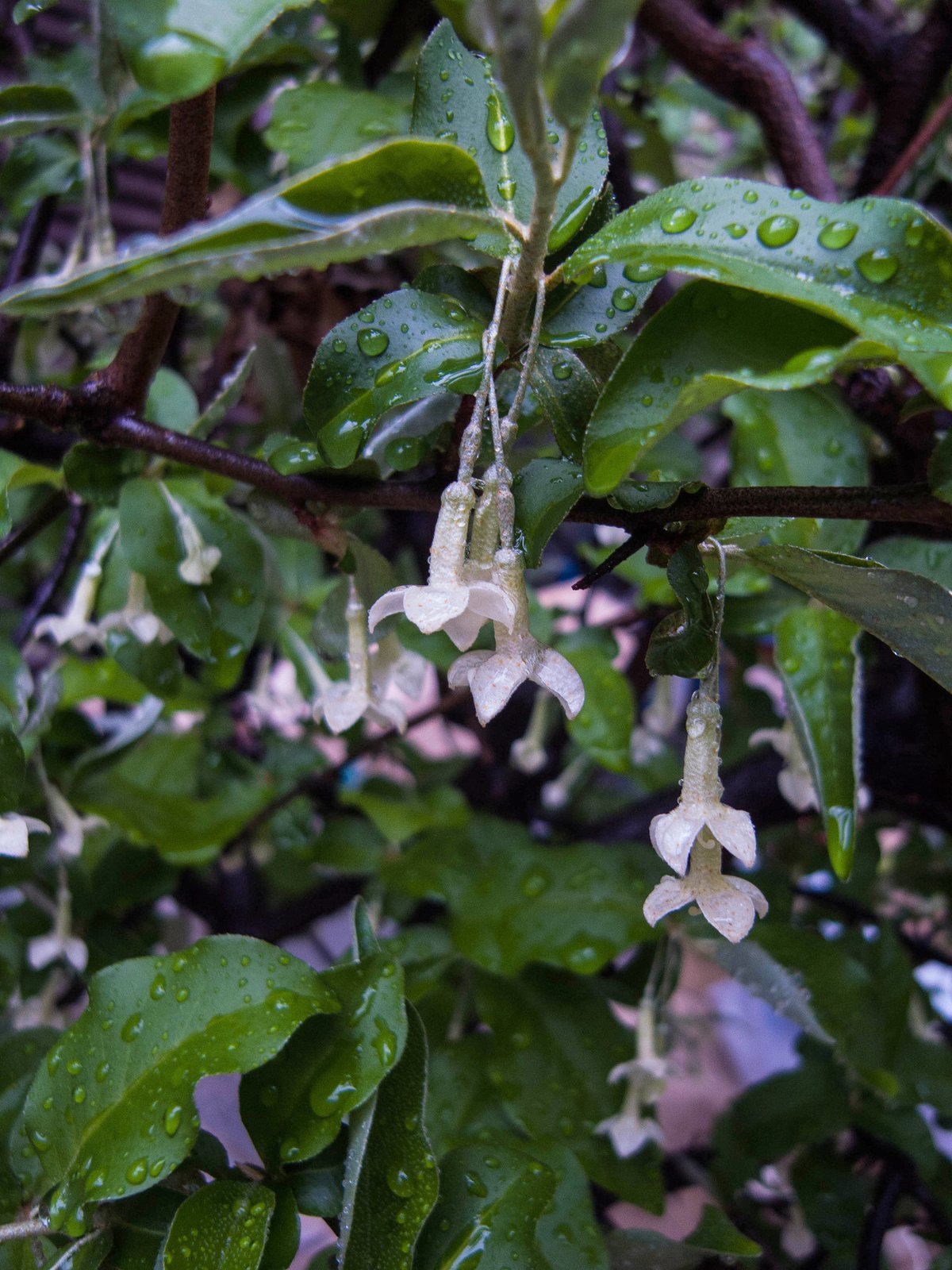
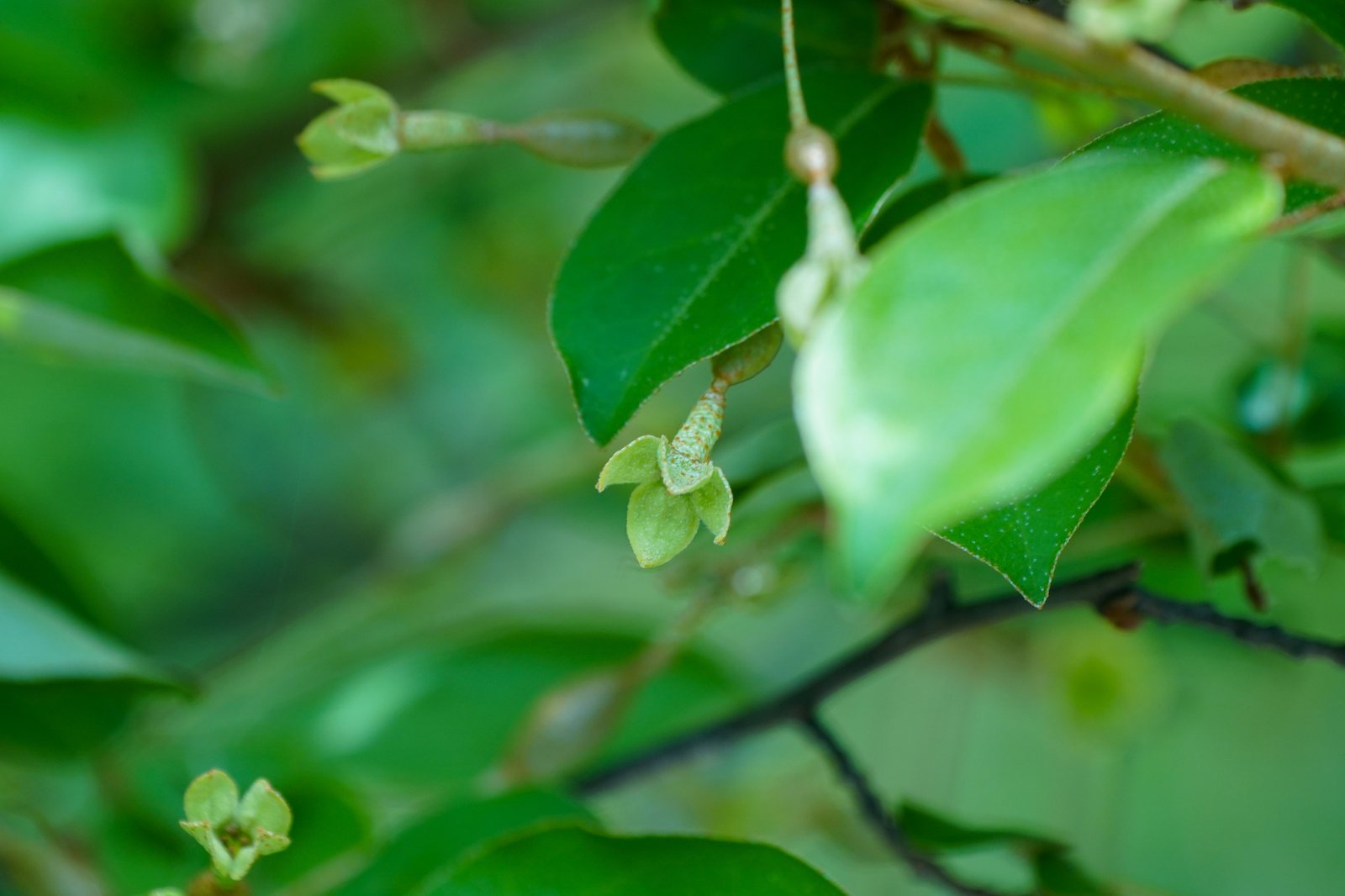
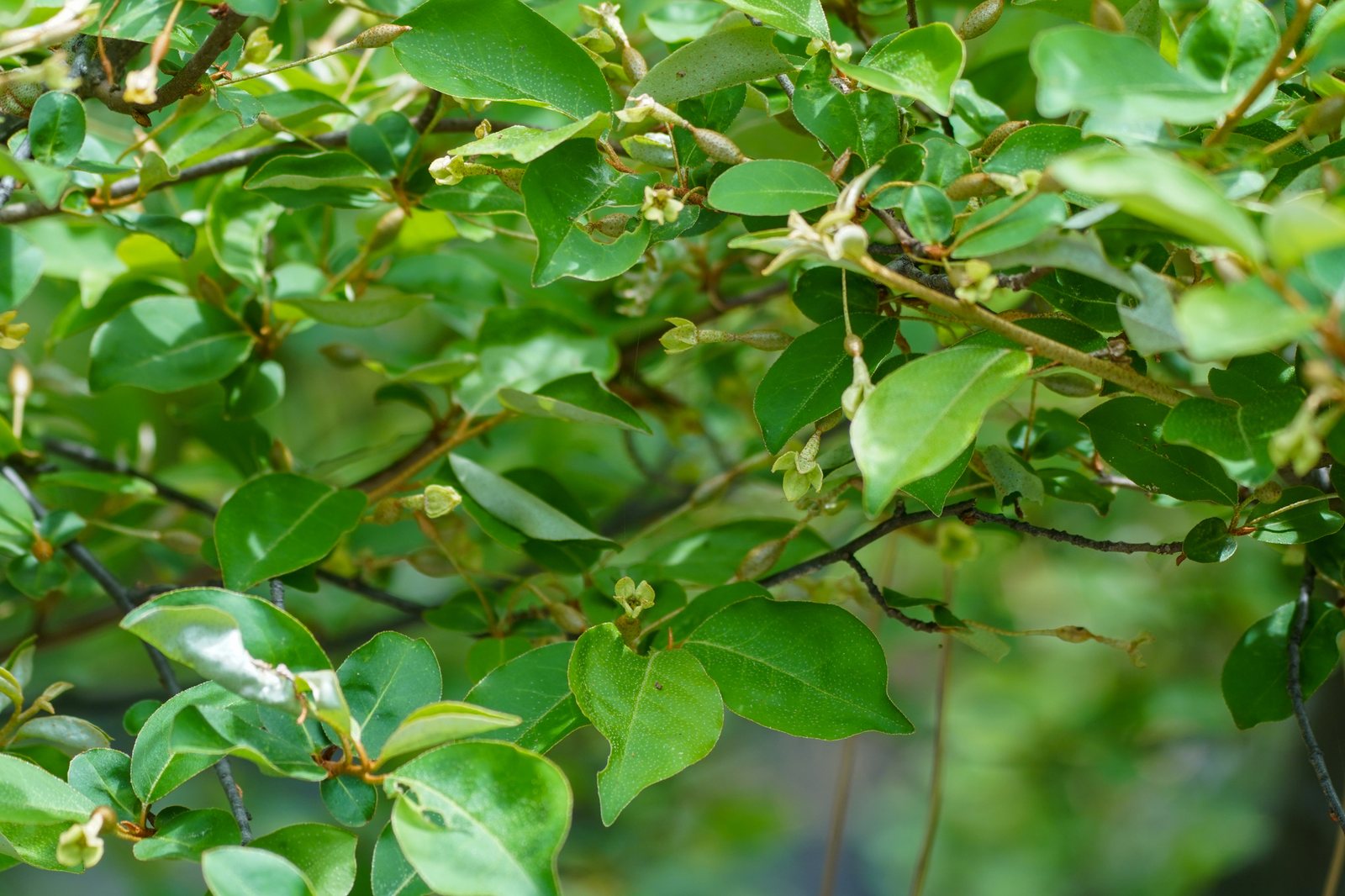
At a glance
- Sun
- Full sun for the best crop; tolerates partial shade but fruits less heavily.
- Water
- Water regularly while establishing and during dry spells as fruit develops. Established plants tolerate some drought.
- Soil
- Well-drained soil, from sandy to clay loam; tolerates low fertility and a fairly wide pH range. Avoid waterlogged ground.
- Height
- 6-10 ft (1.8-3 m)
- Spread
- 6-10 ft (1.8-3 m)
- Flowers
- Small, fragrant, creamy-white to pale yellow flowers in mid- to late spring.
- Foliage
- Oval green leaves with silvery undersides; young shoots are dotted with silvery or brown scales.
- Growth
- Moderate to fast
- Care needed
- Low
The year at a glance
- Pollinators
- Drought tolerant
- Cold hardy
- Heat tolerant
- Wildlife
- Low allergen
- Fragrant
- Edible
| J | F | M | A | M | J | J | A | S | O | N | D | |
|---|---|---|---|---|---|---|---|---|---|---|---|---|
| Flowers | ||||||||||||
| Fruit | ||||||||||||
| Plant |
Northern hemisphere months. In Australia, shift them by six.
- Difficulty
- Easy
- Toughness
- Very tough
Will it suit your garden?
Pick your zone, country, light and whether you have pets.
Full sun is 6 or more hours of direct sun a day, part shade 3 to 6 hours, shade under 3.
How it grows
Planting day
1.6 ft (0.5 m)
After 1 year
3 ft (0.98 m)
After 2 years
5 ft (1.5 m)
After 3 years
6 ft (1.9 m)
After 5 years
8 ft (2.4 m)
full size
About 4 years to full size.
From a typical nursery size, at an average rate for this kind of plant. A rule of thumb, not a forecast.
Good to know
- Cats and dogs
- Safe
- Invasive in
- the US
- Growth rate
- Fast
Care
Jobs through the year
- WaterApr–May, Sep–Oct, every 14 days
- Water established bushes during dry spells; young plants need more frequent watering.
- WaterJun–Aug, every 7 days
- Water deeply in dry weather, especially while fruit swells; avoid saturated soil.
- MulchMar–Apr
- Maintain 5–8 cm of organic mulch, leaving the stems clear.
- ProtectJun–Jul
- If birds take berries, fit taut wildlife-safe netting over a frame and check it regularly.
- HarvestJun–Jul
- Pick fully red, slightly soft berries that release easily.
- PruneJul–Aug
- After harvest, remove damaged or crossing wood and a few old stems if crowded.
- Water deeply during dry weather for the first two growing seasons.
- Keep a 2-3 in (5-8 cm) mulch layer over the root area, clear of the stems.
- Avoid routine nitrogen fertiliser; feed only if a soil test shows a deficiency.
- Plant two genetically different plants for more reliable pollination and heavier crops; self-fertility varies.
- If birds take the crop, use taut, wildlife-safe netting supported on a frame.
Pruning. Prune lightly just after harvest, removing dead, damaged and crossing branches. On crowded mature bushes, remove a few of the oldest stems at ground level; hard annual clipping reduces flowering and fruiting.
Harvest
Pick the red berries in early to midsummer when they are fully coloured, slightly soft and release easily; underripe fruit is strongly astringent. Harvest in several passes for fresh eating, sauces or preserves. A first worthwhile crop usually comes 2-4 years after planting, depending on plant size and growing conditions.
Through the year
- Autumn
- Plant container-grown bushes while the soil is workable; in cold climates, wait until spring.
- Late winter
- Check for damaged branches and plan space for a second, genetically different plant if crops have been poor.
- Spring
- Renew mulch and water new plants during dry spells.
- Late spring
- Keep flowering plants free from insecticide sprays to protect visiting pollinators.
- Early summer
- Protect ripening berries from birds if needed and keep the root area evenly moist.
- Summer
- Harvest ripe berries in several passes, then thin crowded branches.
In the garden
- Use as an informal fruiting hedge, allowing room for its broad, arching growth.
- Place at the sunny edge of an edible woodland garden, clear of taller trees' shade.
- Mix with currants and gooseberries in a loose fruit-shrub border.
- Pair its silver-backed foliage with lavender and catmint in a sunny, well-drained edible border.
Garden styles it suits: Edible landscape, Food forest, Homestead, Native hedgerow, Cottage garden and Potager (kitchen garden).
Plant it with: Redcurrant, Gooseberry, Chives, Catmint, Lavender and Yarrow.
Wildlife: Fragrant flowers attract bees and other pollinating insects. Birds eat the berries and can carry seed beyond the garden; dense branches also provide shelter.
Problems to watch for
- Birds remove ripe berries: harvest promptly or protect the bush with properly fitted wildlife-safe netting.
- Poor fruit set: provide full sun and add a genetically different goumi for cross-pollination.
- Root decline in wet soil: improve drainage or replant on raised ground; do not keep the root area saturated.
- Aphids on young shoots: wash them off with water and encourage natural predators rather than spraying routinely.
Safety
Not known to be toxic to people, cats, dogs or horses, although species-specific veterinary information is limited. Ripe fruit is edible; the seed is also eaten, but is hard. Some bushes have thorny shoots that can scratch skin.
Where it spreads. Has escaped cultivation in parts of the eastern United States through bird-dispersed seed, though its invasive status is less consistent than that of autumn olive. Check local invasive-plant guidance before planting, particularly near natural areas, and remove unwanted seedlings.
Easily confused with
Autumn olive (Elaeagnus umbellata)
Usually has smaller, rounder berries on shorter stalks that ripen in autumn; goumi has larger, often elongated berries on conspicuous slender stalks in early summer.
Russian olive (Elaeagnus angustifolia)
Usually grows into a small tree with narrow, silvery leaves and yellowish, mealy fruits rather than juicy red berries.
Thorny olive (Elaeagnus pungens)
Has evergreen, leathery leaves, often with wavy margins, and flowers in autumn rather than spring.
The name
Goumi comes from the Japanese name gumi, while multiflora means many-flowered.
Propagation. Sow fresh, cleaned seed outdoors in a protected pot; germination can be slow and may take more than one seasonal cycle. Semi-ripe cuttings in summer can preserve a selected plant's characteristics, but rooting is variable.
Checked against open data
- Accepted botanical name
- Elaeagnus multiflora
- In the US and Canada
- Introduced in the lower 48 states.
- Native range
- China North-Central, China South-Central, China Southeast, Japan, Korea and Kuril Is..
- Measured
- Average height 300 cm.
Sources: GBIF (CC BY 4.0), USDA PLANTS and Trefle (CC BY 4.0). The care and design notes are LandscapeGPT's own.
See it in your own yard.
Upload a photo of your yard and see it redesigned with plants that suit your climate, each checked against your zone.