Redcurrant
Ribes rubrum. Family Grossulariaceae. Shrub.
Also called Red currant, Garden redcurrant.
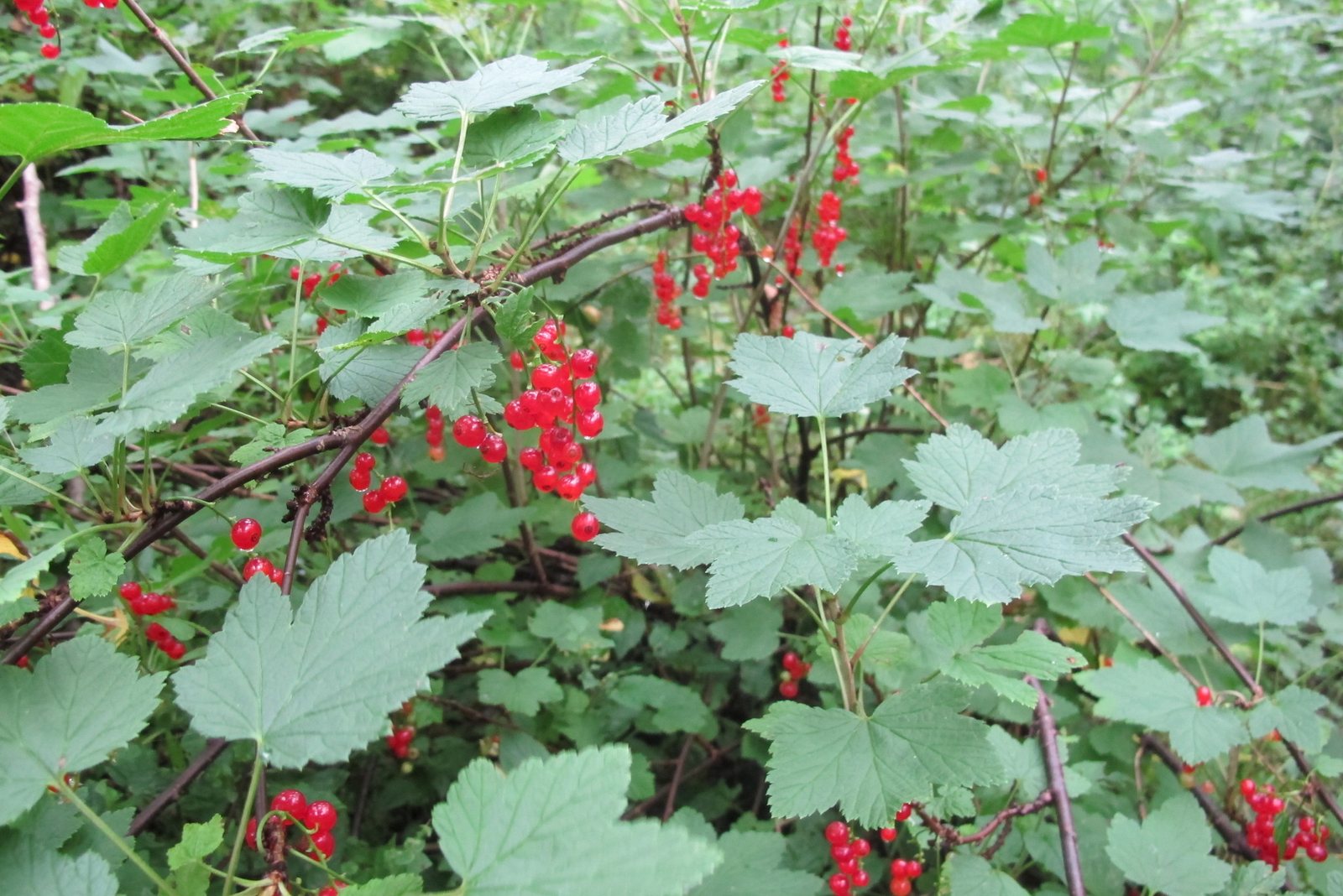
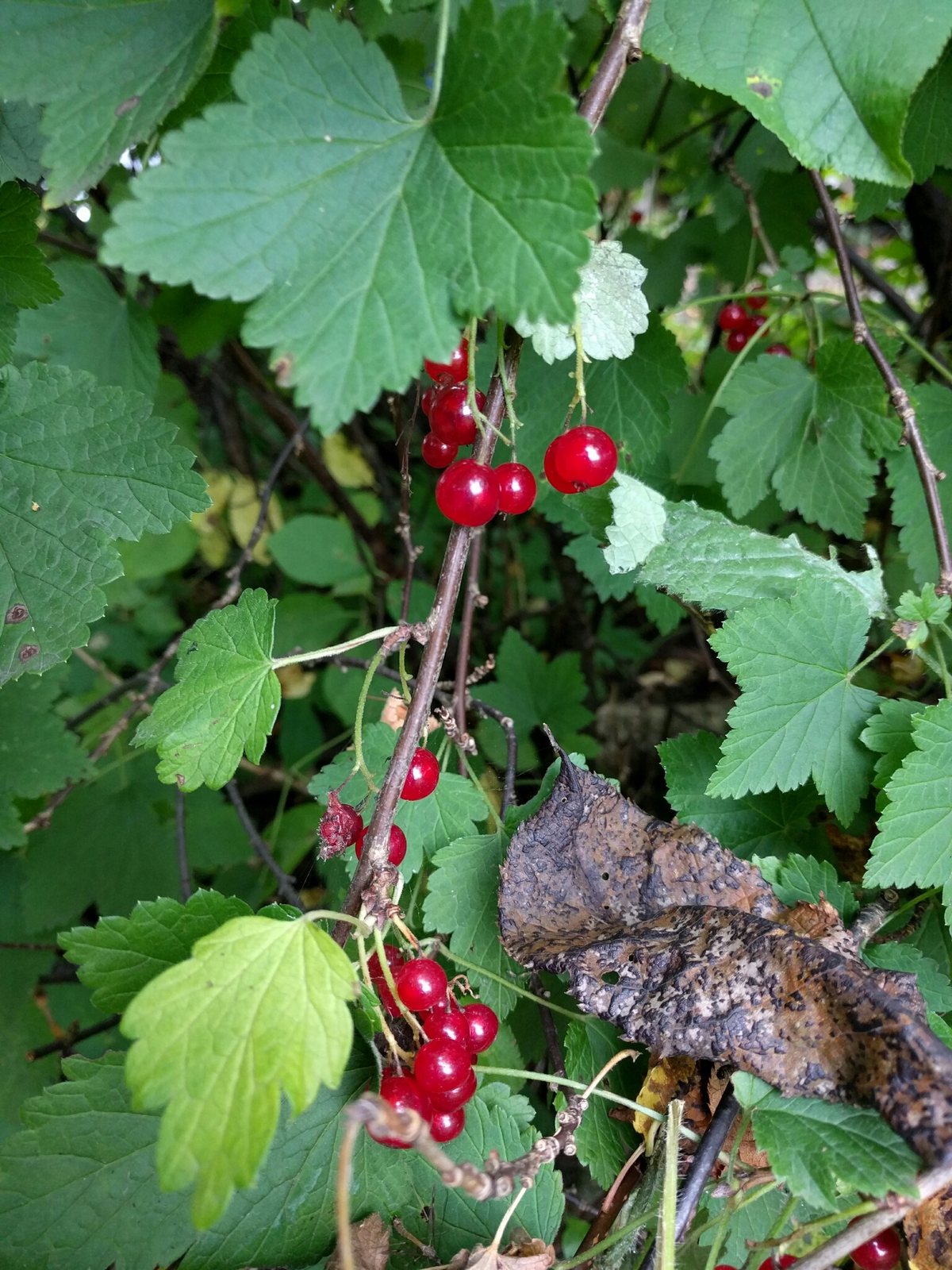
Redcurrant is a deciduous fruit bush grown for hanging strings of tart, translucent red berries used in jelly, sauces and desserts. It suits cool-temperate gardens, tolerates partial shade and can be trained against wires where space is limited. Hot summers and insufficient winter chilling can reduce cropping.
At a glance
- Sun
- Full sun to partial shade; give afternoon shade in warmer districts. Deep shade reduces fruiting.
- Water
- Keep the root zone evenly moist, especially during flowering and fruit swelling; avoid waterlogged soil.
- Soil
- Fertile, moisture-retentive but well-drained soil, ideally around pH 6.0-7.0.
- Height
- 3-5 ft (0.9-1.5 m)
- Spread
- 3-5 ft (0.9-1.5 m)
- Flowers
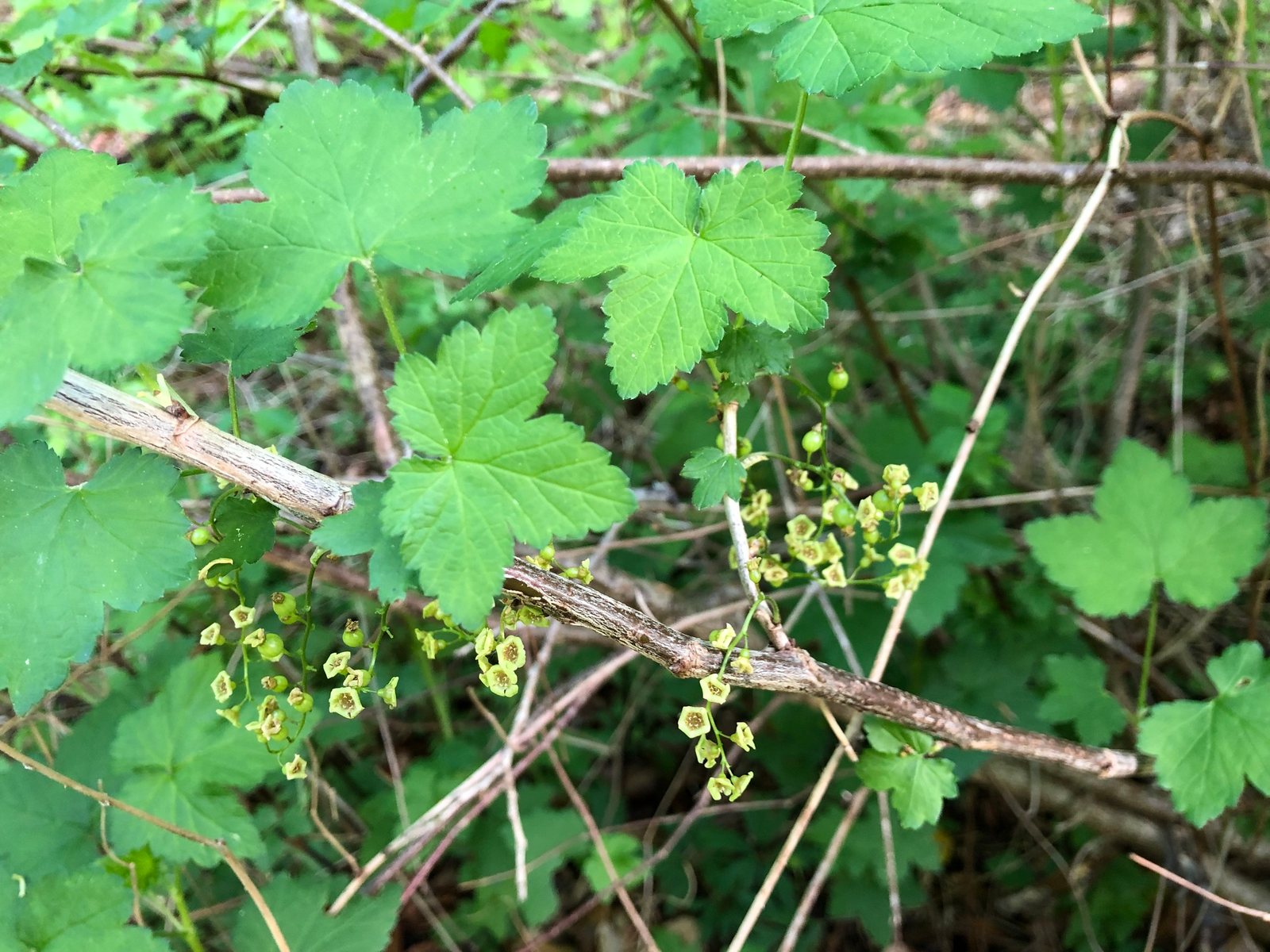
- Small, greenish-yellow flowers in hanging clusters in spring.
- Foliage
- Green, three- to five-lobed leaves with toothed edges; leaves fall in autumn.
- Growth
- Moderate
- Care needed
- Medium
The year at a glance
- Pollinators
- Cold hardy
- Wildlife
- Low allergen
- Edible
| J | F | M | A | M | J | J | A | S | O | N | D | |
|---|---|---|---|---|---|---|---|---|---|---|---|---|
| Flowers | ||||||||||||
| Fruit | ||||||||||||
| Plant |
Northern hemisphere months. In Australia, shift them by six.
- Difficulty
- Easy
- Toughness
- Fairly tough
Will it suit your garden?
Pick your zone, country, light and whether you have pets.
Full sun is 6 or more hours of direct sun a day, part shade 3 to 6 hours, shade under 3.
How it grows
Planting day
1.6 ft (0.5 m)
After 1 year
2.1 ft (0.64 m)
After 2 years
2.6 ft (0.78 m)
After 3 years
3 ft (0.92 m)
After 5 years
4 ft (1.2 m)
full size
About 5 years to full size.
From a typical nursery size, at an average rate for this kind of plant. A rule of thumb, not a forecast.
Good to know
- Cats and dogs
- Safe
- Native to
- the UK
- Growth rate
- Moderate
Care
Jobs through the year
- WaterApr, Aug–Oct, every 14 days
- Water established bushes deeply during dry spells; young plants need more frequent watering.
- WaterMay–Jul, every 7 days
- Water if rainfall is insufficient, keeping roots evenly moist while berries swell.
- FeedMar
- Apply a light balanced feed only if growth is weak; avoid excess nitrogen.
- MulchMar–Apr
- Spread 5-8 cm of compost or organic mulch, keeping it clear of stems.
- PruneJan–Feb
- Remove damaged wood and up to a quarter of the oldest stems; retain productive wood and shorten established side shoots to 1-3 buds.
- ProtectApr–May
- Cover open flowers if a hard frost is forecast; uncover by day.
- ProtectJun–Jul
- Fit taut wildlife-safe netting before berries colour, check daily and remove after picking.
- HarvestJun–Jul
- Taste for ripeness, then snip whole strings of fully red, translucent berries.
- Water deeply during dry spells, particularly while berries are developing.
- Apply a 2-3 in (5-8 cm) layer of compost or organic mulch in spring, keeping it clear of the stems.
- Feed lightly with a balanced fertilizer in early spring if growth is weak; avoid heavy nitrogen feeding.
- Keep grass and weeds away from the shallow roots; weed by hand rather than hoeing deeply.
- Support cordon-trained plants on wires and protect ripening fruit with taut, wildlife-safe netting.
- Before buying in the United States, check state restrictions on Ribes because of white pine blister rust.
Pruning. In winter, remove dead, damaged and crossing branches, then cut out up to a quarter of the oldest stems at ground level to maintain an open bush. Retain productive two- and three-year-old wood and shorten established side shoots to one to three buds.
Harvest
Pick in early to midsummer when berries are fully red, translucent and juicy; taste a few because they remain naturally tart when ripe. Snip off whole strings rather than pulling individual berries, then strip them from their stalks indoors. Expect a first worthwhile crop about 2-3 years after planting.
Through the year
- Autumn
- Plant dormant bushes once leaves have fallen, provided the ground is workable; water thoroughly.
- Winter
- Prune established bushes and take hardwood cuttings from healthy plants.
- Early spring
- Apply compost or mulch and feed lightly if needed.
- Spring
- Check leaf undersides for sawfly larvae and aphids; protect open flowers if a hard frost is forecast.
- Early summer
- Water during dry weather and fit wildlife-safe netting before berries colour.
- Midsummer
- Harvest ripe strings of berries and remove netting promptly after picking.
In the garden
- Plant in rows beside paths in a kitchen garden for easy picking.
- Train as cordons against wires or a fence to fit fruit into a narrow space.
- Mix with gooseberries and culinary herbs in an edible border.
- Use as a loose, productive boundary around a vegetable plot, allowing access on both sides.
Garden styles it suits: Potager (kitchen garden), Cottage garden, Edible landscape, Homestead, Food forest and English country.
Plant it with: Gooseberry, Chives, Parsley, Calendula and Alpine strawberry.
Wildlife: Spring flowers provide nectar and pollen for bees and other insects. Birds eat the berries, and the branches offer cover for small garden wildlife.
Problems to watch for
- Currant sawfly: larvae can strip leaves quickly; inspect bushes from spring onward and hand-pick larvae while infestations are small.
- Currant blister aphid: raised red blisters appear on leaves; established bushes usually tolerate light damage, so encourage predators and avoid unnecessary spraying.
- Powdery mildew: white fungal growth affects leaves or shoots; improve airflow, avoid excessive nitrogen and remove badly affected shoot tips.
- Bird damage: birds take berries as they ripen; use a fruit cage or taut wildlife-safe netting, checking it daily.
Safety
Redcurrant is not known to be toxic to people, cats, dogs or horses. The ripe berries are edible; large quantities may cause digestive upset. Unlike dried 'currants' made from grapes, these berries are true Ribes fruit.
Easily confused with
Blackcurrant (Ribes nigrum)
Crushed blackcurrant leaves have a strong, distinctive currant smell, and ripe berries are black rather than translucent red.
Gooseberry (Ribes uva-crispa)
Usually has conspicuous spines and larger berries borne singly or in small groups, rather than long hanging strings.
The name
The botanical epithet rubrum means 'red' in Latin and refers to the fruit.
Propagation. Take pencil-thick hardwood cuttings from healthy one-year-old shoots after leaf fall and insert them into well-drained soil with a few buds above the surface. Low branches can also be layered; named cultivars should be propagated vegetatively to retain their characteristics.
Checked against open data
- Accepted botanical name
- Ribes rubrum
- In the US and Canada
- Introduced in Canada and the lower 48 states.
- Native range
- Belgium, France, Germany, Great Britain, Netherlands and Spain.
- Measured
- Soil pH 6.5 to 7. Average height 126 cm.
Sources: GBIF (CC BY 4.0), USDA PLANTS and Trefle (CC BY 4.0). The care and design notes are LandscapeGPT's own.
See it in your own yard.
Upload a photo of your yard and see it redesigned with plants that suit your climate, each checked against your zone.