Great bougainvillea
Bougainvillea spectabilis. Family Nyctaginaceae. Climber.
Also called Bougainvillea, Paperflower.
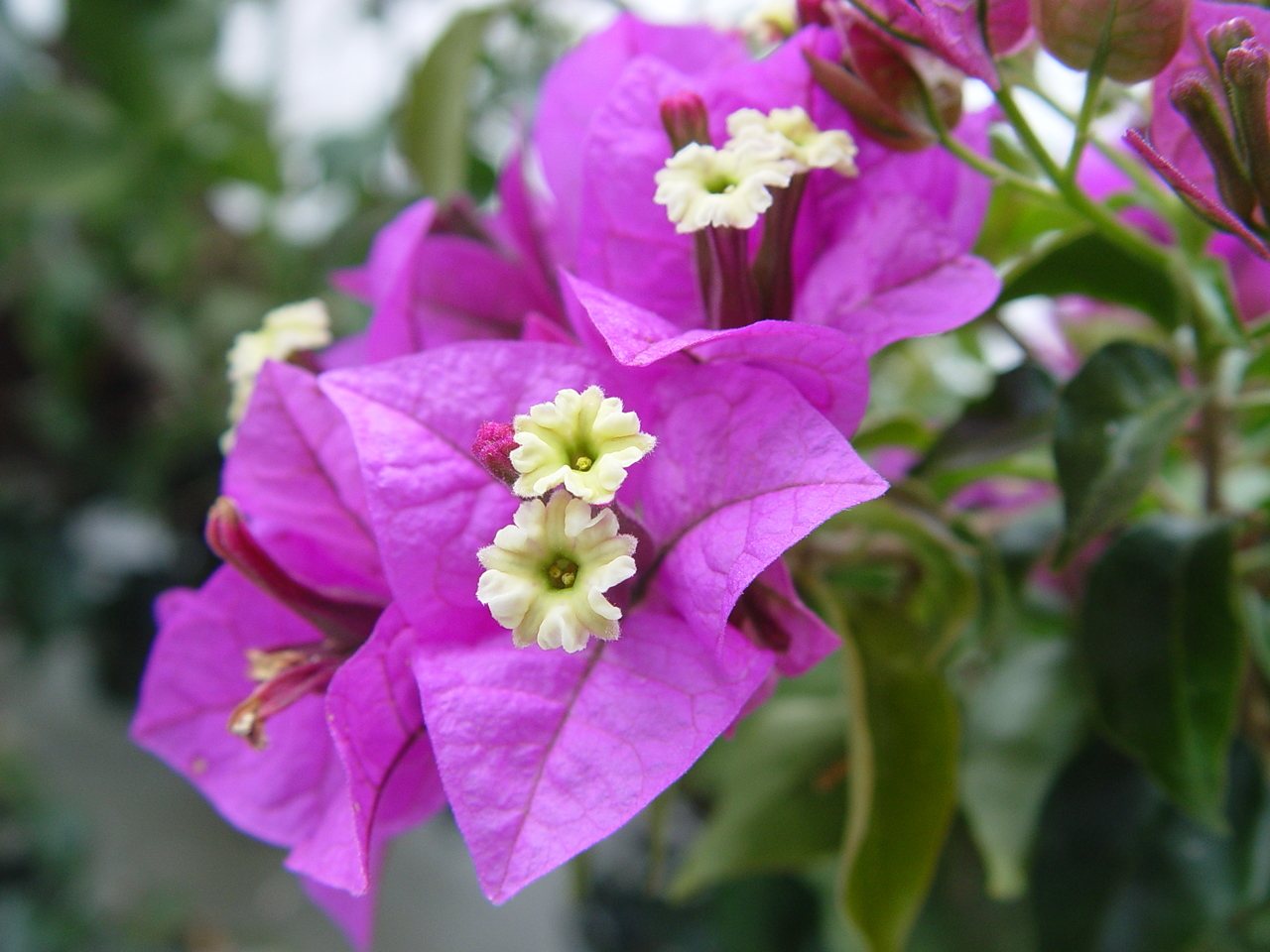
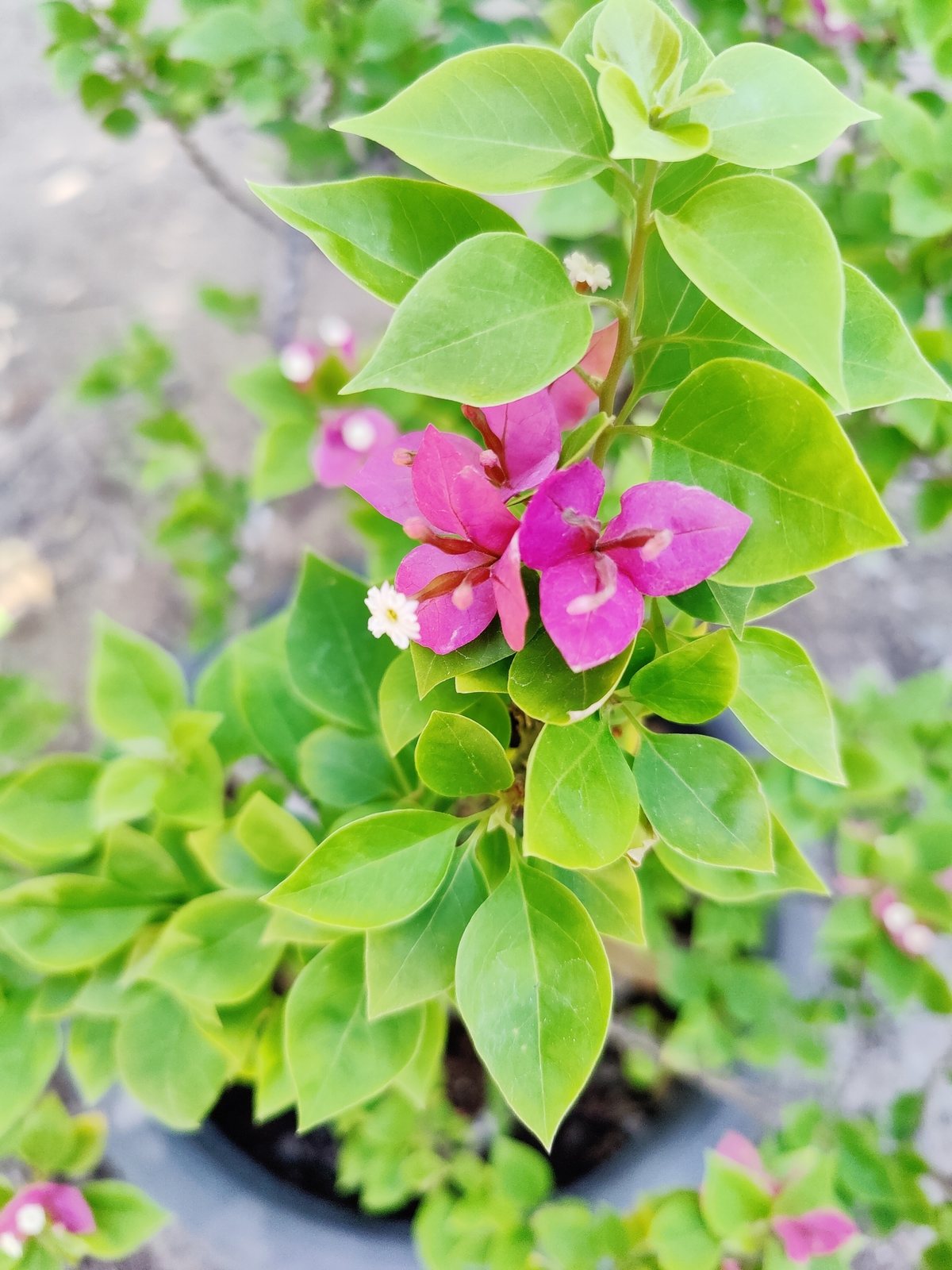
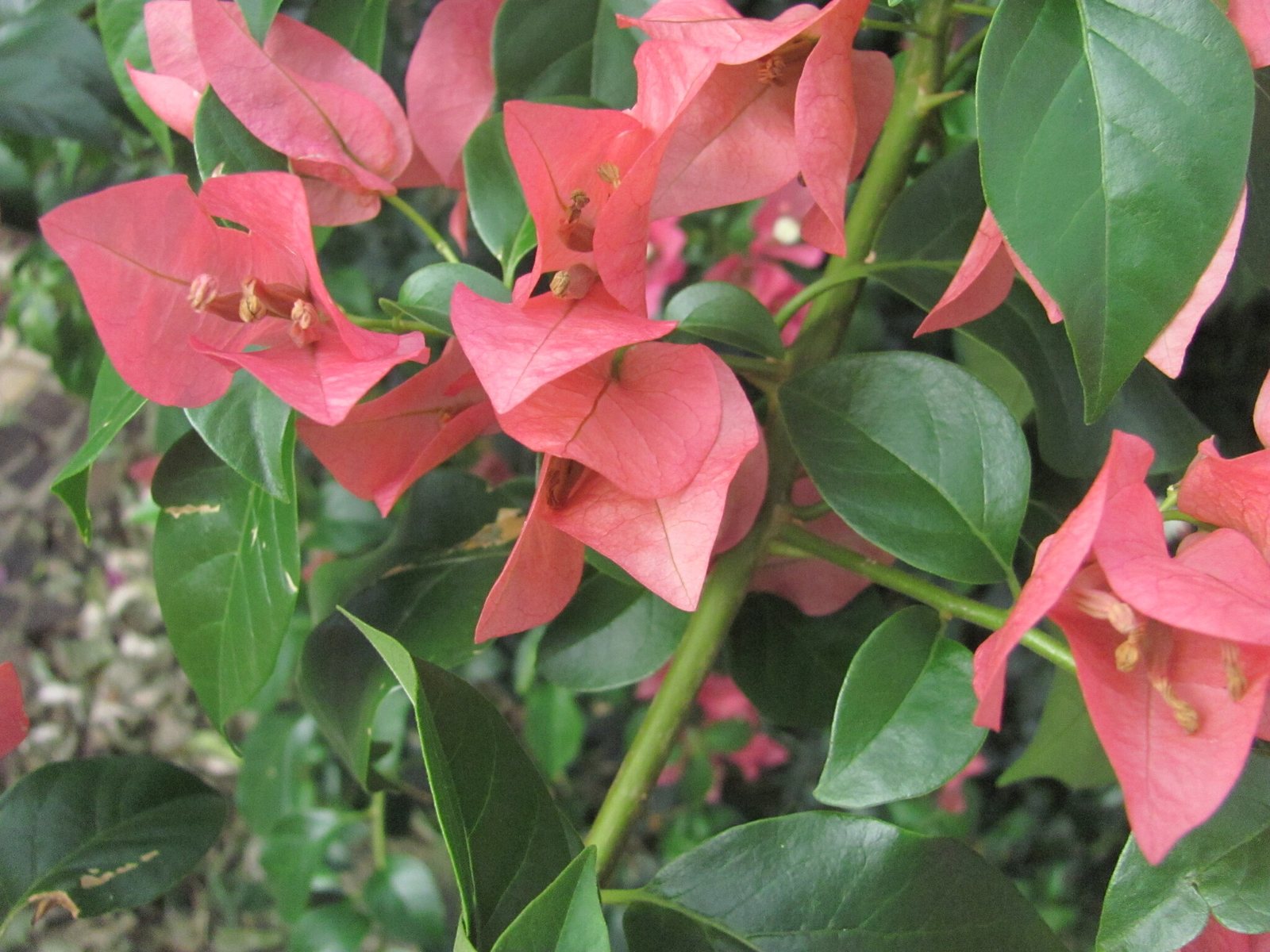
Great bougainvillea is a vigorous, thorny, woody climber grown for its masses of papery, brightly coloured bracts surrounding small flowers. It covers sunny walls and sturdy pergolas in frost-free gardens; in colder parts of the United States, Canada and the United Kingdom, grow it in a container and overwinter it under glass.
At a glance
- Sun
- Full sun; allow at least six hours of direct sunlight daily for good flowering.
- Water
- Water regularly while establishing. Once established in the ground, water deeply during prolonged dry spells; let container compost partly dry between waterings.
- Soil
- Well-drained sandy or loamy soil; avoid waterlogged ground. Use a free-draining potting mix in containers.
- Height
- 15-40 ft (4.5-12 m) with support
- Spread
- 10-30 ft (3-9 m), depending on training and pruning
- Flowers
- Repeated flushes from spring to autumn, potentially year-round in tropical conditions; typically purple, magenta or pink papery bracts surround small cream-white flowers.
- Foliage
- Evergreen. Broad, pointed, green leaves with noticeably hairy surfaces and young stems.
- Growth
- Fast in warm weather
- Care needed
- Medium
The year at a glance
- Pollinators
- Deer resistant
- Drought tolerant
- Heat tolerant
- Wildlife
- Low allergen
| J | F | M | A | M | J | J | A | S | O | N | D | |
|---|---|---|---|---|---|---|---|---|---|---|---|---|
| Flowers | ||||||||||||
| Plant |
Northern hemisphere months. In Australia, shift them by six.
- Difficulty
- Hard
- Toughness
- Needs looking after
Will it suit your garden?
Pick your zone, country, light and whether you have pets.
Full sun is 6 or more hours of direct sun a day, part shade 3 to 6 hours, shade under 3.
How it grows
Planting day
2 ft (0.6 m)
After 1 year
3 ft (1.1 m)
After 2 years
5 ft (1.5 m)
After 3 years
6 ft (1.8 m)
full size
About 3 years to full size.
From a typical nursery size, at an average rate for this kind of plant. A rule of thumb, not a forecast.
Good to know
- Cats and dogs
- Mildly toxic: may upset a stomach
- Invasive in
- the US
- In the garden
- Spreads vigorously: plan to contain it.
- Growth rate
- Fast
Care
Jobs through the year
- WaterMay, Sep, every 10 days
- Established ground plants need water only in dry spells; frost-free container culture is necessary locally.
- WaterJun–Aug, every 7 days
- Water established ground plants only when dry; containers may need water much sooner as compost partly dries.
- WaterJan–Apr, Oct–Dec, every 21 days
- Overwinter frost-free containers almost dry; water sparingly only when compost has partly dried.
- FeedMay–Aug, every 28 days
- Feed containers lightly with a flowering-plant fertilizer; avoid excess nitrogen.
- PruneApr–May
- As growth resumes under frost-free conditions, remove dead wood and shorten overlong shoots; wear gloves.
- PruneJul–Aug
- Lightly trim finished flowering shoots, avoiding repeated hard cuts.
- ProtectSep–Oct
- Bring containers into bright, frost-free shelter before cold nights; it cannot overwinter outdoors locally.
- ProtectMay–Jun
- After frost risk passes, acclimatize gradually to full sun and tie stems to a sturdy support.
- Plant in a warm, sheltered position after frost risk has passed, disturbing the roots as little as possible.
- Provide a strong trellis, wires or pergola and tie stems in; it does not attach itself to walls.
- Let the soil surface dry between waterings, but do not leave a potted plant severely wilted.
- Feed container plants lightly during active growth; avoid heavy nitrogen feeding, which encourages leaves rather than flowers.
- Move containers into bright, frost-free shelter before cold weather and water sparingly through winter.
- Wear thick gloves and long sleeves when handling thorny stems.
Pruning. In late winter or early spring, once frost risk has passed, remove dead wood and shorten overlong shoots to fit the support. Lightly trim after a flowering flush to encourage branching, but avoid repeated hard pruning that removes developing flowering growth.
Through the year
- Late winter
- Check overwintering plants for pests and remove dead stems; postpone outdoor pruning where frost remains possible.
- Spring
- Prune and tie in stems as growth resumes; repot only when roots have filled the container.
- Late spring
- Plant outdoors or gradually acclimatise overwintered containers to full sun after frost risk has passed.
- Summer
- Water containers thoroughly when partly dry and feed lightly during active growth.
- Late summer
- Lightly trim finished flowering shoots and secure new growth to its support.
- Autumn
- Bring containers into bright, frost-free shelter before cold nights and reduce watering as growth slows.
In the garden
- Train over a sturdy pergola to create a bright canopy in a warm courtyard.
- Cover a sunny boundary wall with flowering stems supported on wires.
- Grow in a large container against a sheltered wall where winter protection is practical.
- Combine with agaves and rosemary for contrasting foliage in a dry, sunny border.
Garden styles it suits: Mediterranean, Tropical, Modern courtyard, Spanish courtyard, Mexican hacienda and Luxury resort.
Plant it with: Agave, Aloe, Rosemary, Lavender and Lantana.
Wildlife: The small flowers attract butterflies and other nectar-feeding insects in warm climates. Dense established growth can provide shelter for small birds.
Problems to watch for
- Poor flowering: increase direct sun, reduce nitrogen feeding and avoid constantly wet compost or frequent hard pruning.
- Root rot: improve drainage, empty standing water from saucers and let compost partly dry before watering again.
- Mealybugs and scale insects: inspect stems and leaf undersides, remove small colonies by hand and use a labelled insecticidal soap where suitable.
- Frost damage and leaf drop: shelter before cold weather; wait until growth resumes before cutting back damaged stems.
Safety
Not known to be poisonous to cats, dogs, horses or people. Sap can irritate skin, and chewing plant material may irritate the mouth or stomach; sharp thorns can cause painful punctures.
Where it spreads. Reported as invasive in Hawaii and parts of the tropical Pacific. In warm regions, contain vigorous growth and dispose of cut stems responsibly, as they may root under suitable conditions.
Easily confused with
Lesser bougainvillea (Bougainvillea glabra)
Usually has smoother, less hairy leaves and stems and a less vigorous habit; great bougainvillea has conspicuously hairy leaves and young growth.
Hybrid bougainvillea (Bougainvillea × buttiana)
Many garden bougainvilleas belong to this hybrid group and have intermediate features. Bract colour alone cannot identify them; a reliable nursery label is often needed.
The name
Bougainvillea honours the French explorer Louis Antoine de Bougainville, while spectabilis means showy or remarkable, referring to its conspicuous floral display.
Propagation. Take semi-ripe cuttings during warm weather and root them in a free-draining medium with warmth and humidity. Layering a low stem is another option; rooting success varies.
Checked against open data
- Accepted botanical name
- Bougainvillea spectabilis
- In the US and Canada
- Introduced in Pacific Basin and Puerto Rico.
- Native range
- Brazil Northeast, Brazil South and Brazil Southeast.
Sources: GBIF (CC BY 4.0), USDA PLANTS and Trefle (CC BY 4.0). The care and design notes are LandscapeGPT's own.
See it in your own yard.
Upload a photo of your yard and see it redesigned with plants that suit your climate, each checked against your zone.