Greater periwinkle
Vinca major. Family Apocynaceae. Groundcover.
Also called Bigleaf periwinkle, Large periwinkle.
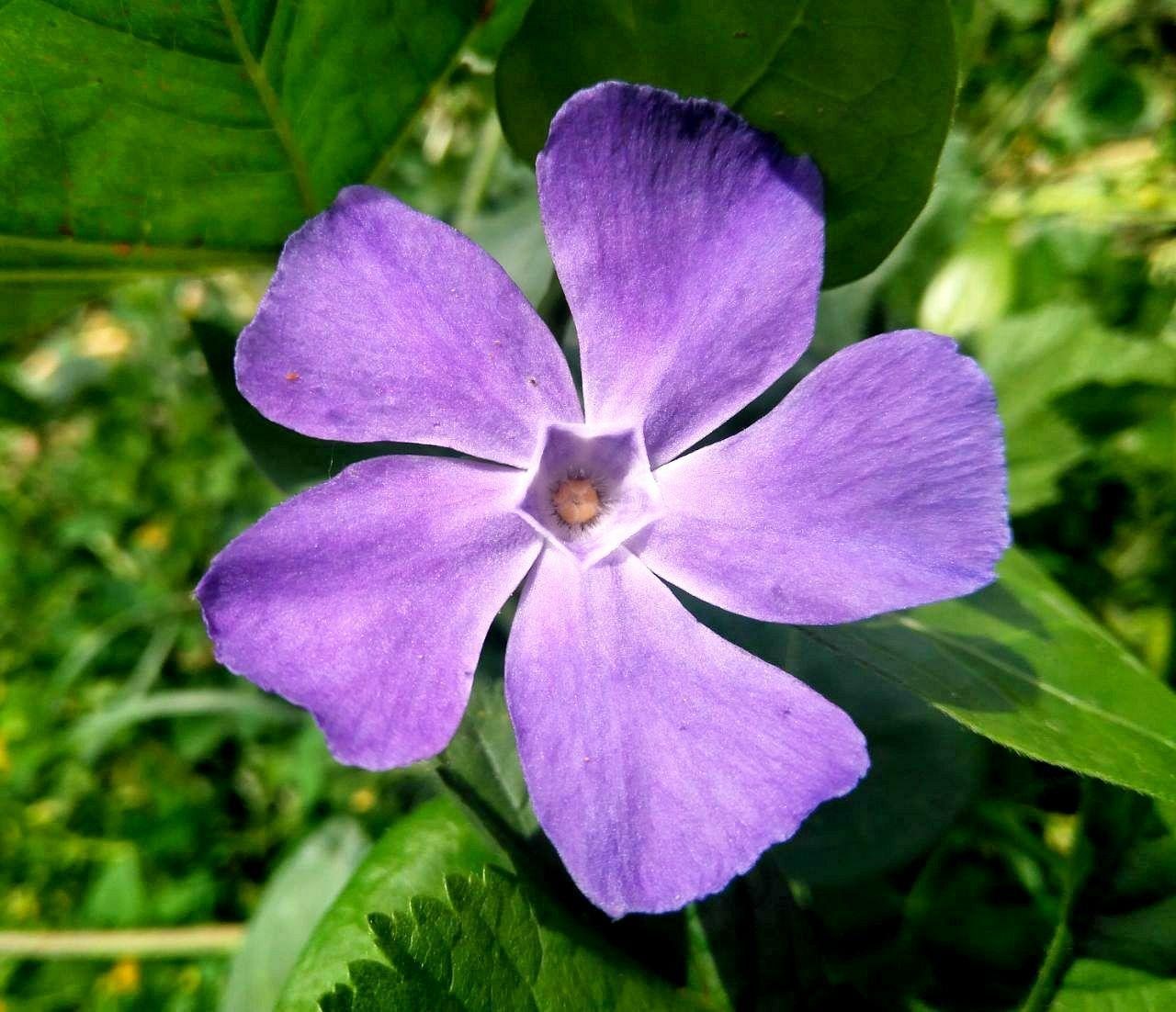
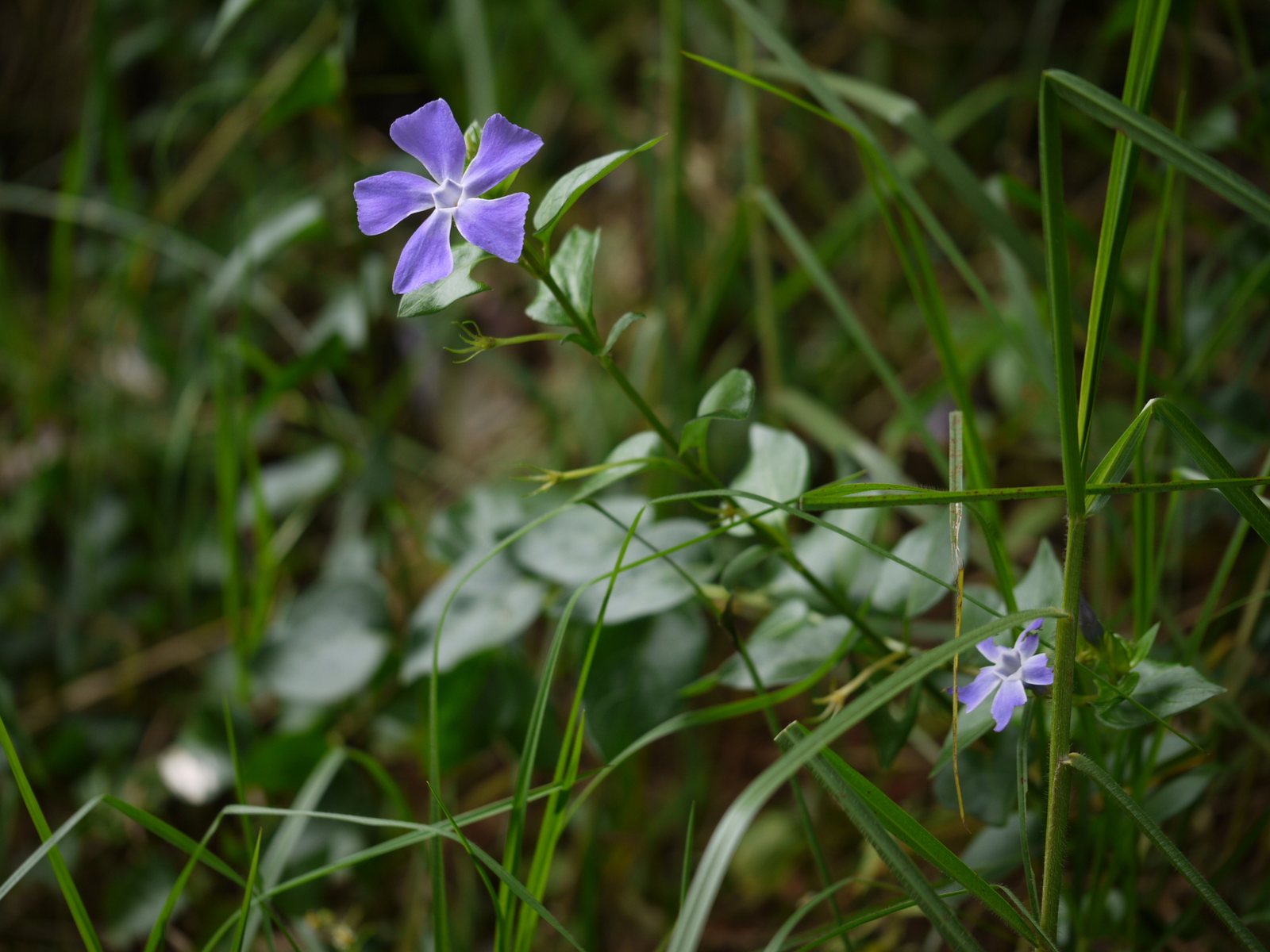
Greater periwinkle is an evergreen groundcover with trailing, rooting stems, glossy leaves and violet-blue flowers. Gardeners grow it to cover shaded ground, but it can overwhelm smaller plants and escape into woodland; avoid planting it where it is invasive.
At a glance
- Sun
- Partial shade to full shade; tolerates full sun where the soil stays moist.
- Water
- Water regularly while establishing. Established plants tolerate some drought in shade, but prolonged dryness can scorch leaves and reduce flowering.
- Soil
- Adaptable to most well-drained soils, including clay, loam and sandy soil improved with organic matter. Avoid persistently waterlogged ground.
- Height
- 0.5-1.5 ft (0.15-0.45 m)
- Spread
- 3-8 ft (0.9-2.4 m), eventually wider wherever stems can root
- Flowers
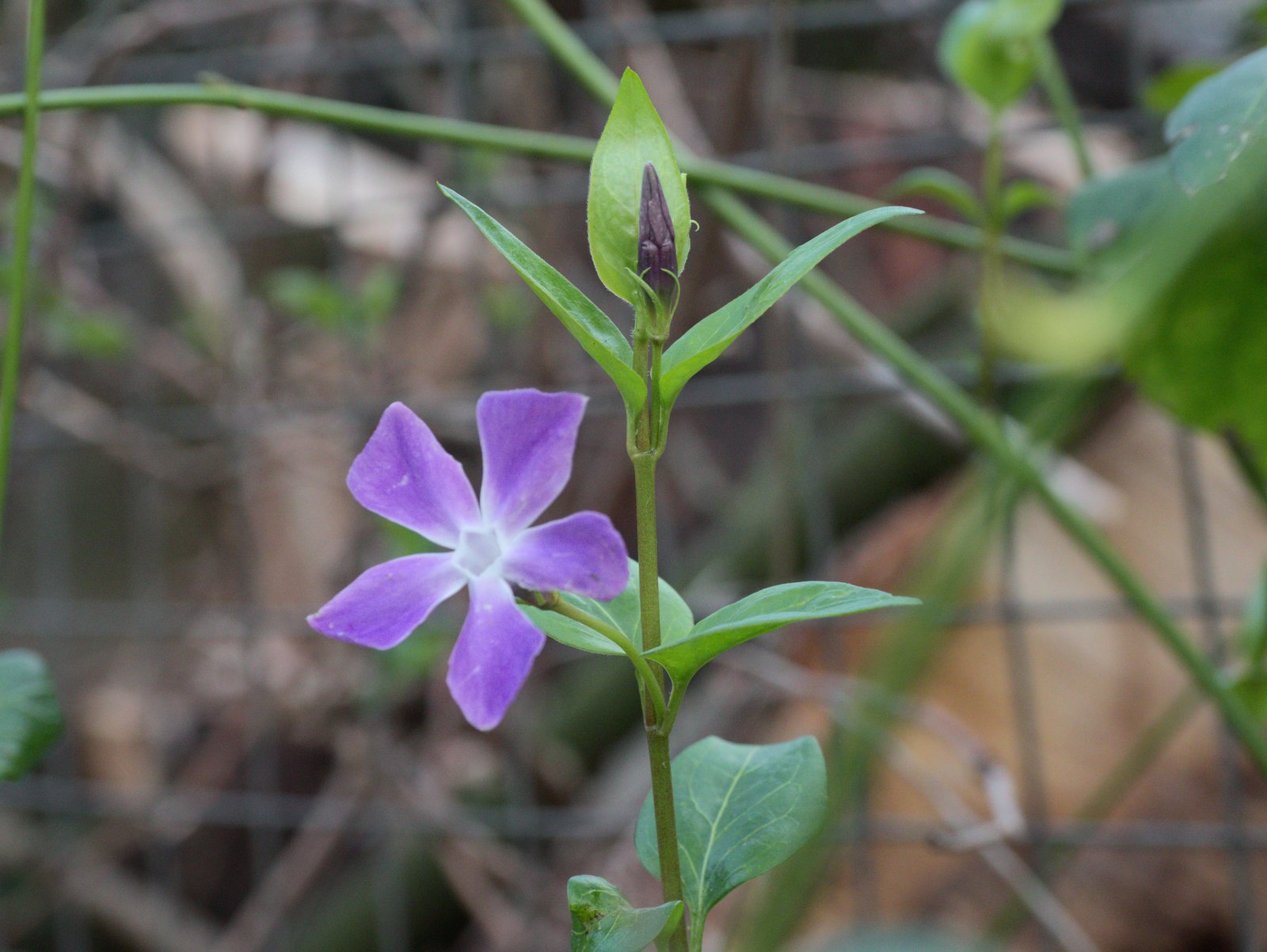
- Violet-blue, five-lobed flowers mainly in spring, with scattered flowers into summer and sometimes autumn.
- Foliage
- Evergreen. Opposite, glossy, dark green, broadly oval leaves with fine hairs along their edges. Variegated forms have cream or yellow markings.
- Growth
- Fast
- Care needed
- High
The year at a glance
- Pollinators
- Deer resistant
- Drought tolerant
- Heat tolerant
- Low allergen
| J | F | M | A | M | J | J | A | S | O | N | D | |
|---|---|---|---|---|---|---|---|---|---|---|---|---|
| Flowers | ||||||||||||
| Plant |
Northern hemisphere months. In Australia, shift them by six.
- Difficulty
- Moderate
- Toughness
- Very tough
Will it suit your garden?
Pick your zone, country, light and whether you have pets.
Full sun is 6 or more hours of direct sun a day, part shade 3 to 6 hours, shade under 3.
How it grows
Planting day
0.2 ft (0.08 m)
After 1 year
0.7 ft (0.21 m)
After 2 years
1 ft (0.3 m)
full size
About 2 years to full size.
From a typical nursery size, at an average rate for this kind of plant. A rule of thumb, not a forecast.
Good to know
- Cats and dogs
- Toxic
- Invasive in
- the US and Australia
- In the garden
- Spreads vigorously: plan to contain it.
- Growth rate
- Fast
Care
Jobs through the year
- ProtectApr–May, Sep
- Check local invasive-plant advice before planting; avoid sites where escape is likely.
- WaterApr–May, Sep–Oct, every 21 days
- Water established plants only if dry; water new plants regularly through their first season.
- WaterJun–Aug, every 14 days
- Water deeply during prolonged dry spells, letting the soil surface dry between waterings.
- PruneMar–Apr
- Remove winter-damaged stems once severe frost has passed.
- PruneMay–Jun
- Shear straggly growth after the main flowering flush and collect every cutting.
- PruneMar–Oct, every 14 days
- Remove escaping stems with every rooted node; use an approved weed-waste disposal route.
- ProtectJan–Feb, Nov–Dec
- In zone 6, shelter from cold winds and mulch roots lightly; severe winters may kill plants.
- Check local invasive-plant advice before planting; choose a different groundcover where escape is a concern.
- Water during dry spells through the first growing season, allowing the surface soil to dry slightly between waterings.
- Apply a thin layer of compost in spring if growth is weak; routine fertiliser is usually unnecessary.
- Inspect bed edges regularly and remove runners before they root beyond the intended area.
- Keep stems and cuttings out of garden-waste piles near natural areas; dispose of them through an approved local weed-waste route.
Pruning. After the main spring flowering, shear back straggly growth to encourage fresh shoots. Throughout the growing season, lift and remove escaping stems together with every rooted node.
Through the year
- Early spring
- Remove winter-damaged stems and check for runners spreading beyond the bed.
- Spring
- Where planting is appropriate, plant into moist soil and water thoroughly.
- Late spring
- Trim after the main flowering flush and collect all cut stems.
- Summer
- Check edges frequently, lift rooted runners and water during prolonged drought.
- Autumn
- Remove growth advancing into neighbouring beds, hedges or natural vegetation.
- Winter
- Check that containers drain freely and keep trailing stems from touching surrounding soil.
In the garden
- Use in a contained shaded bed beside paving, where its evergreen leaves provide a continuous green surface.
- Grow in a raised container for trailing foliage, keeping stems clear of soil where they could root.
- Combine with substantial ferns and shrubs in an enclosed courtyard; avoid small woodland plants that it can smother.
- Use beneath established shrubs in formal, regularly inspected beds, only where local invasive guidance permits.
Garden styles it suits: Traditional, Modern courtyard, Green on green and Winter interest.
Plant it with: Hart's-tongue fern, Soft shield fern, Japanese aucuba and Camellia.
Wildlife: Flowers provide some nectar and pollen for visiting insects. Escaped mats can displace native ground flora and reduce habitat diversity, outweighing that limited benefit.
Problems to watch for
- Uncontrolled spread: stems root wherever nodes touch soil; remove rooted sections promptly and replace the plant if containment becomes impractical.
- Stem blight or leaf spots: cut out affected growth, remove debris and improve airflow; avoid wetting foliage when watering.
- Root rot in wet soil: improve drainage and reduce watering; remove badly affected plants.
- Winter scorch: cold wind and frozen soil can brown leaves; use a sheltered position and trim damaged growth in spring.
Safety
All parts contain toxic alkaloids and are poisonous if eaten by people, cats, dogs or horses. Ingestion can cause vomiting, diarrhoea and potentially serious effects on blood pressure, the heart or nervous system; seek medical or veterinary advice promptly after suspected ingestion.
Where it spreads. Spreads aggressively through rooting stems and dumped garden waste. Recognised as invasive in California and parts of the southeastern United States, and escapes in western Oregon. It is also an environmental weed in parts of Australia, including New South Wales, Victoria, South Australia and Tasmania. It can spread outside gardens in southwestern British Columbia and in the UK;
Easily confused with
Lesser periwinkle (Vinca minor)
Has smaller, narrower leaves with hairless margins, smaller flowers and generally lower growth; greater periwinkle has broader leaves with finely hairy edges.
Madagascar periwinkle (Catharanthus roseus)
An upright, frost-tender bedding plant with conspicuously pale leaf midribs and commonly pink or white flowers, rather than long, rooting evergreen runners.
The name
The epithet major means 'larger', distinguishing its larger leaves and flowers from those of lesser periwinkle.
Propagation. Rooted stems can be lifted and divided in spring or autumn, and non-flowering stem cuttings root readily. Propagate only where cultivation is permitted and containment is practical.
Checked against open data
- Accepted botanical name
- Vinca major
- In the US and Canada
- Introduced in Canada and the lower 48 states.
- Native range
- Albania, Bulgaria, East Aegean Is., France, Italy, Kriti, Lebanon-Syria, North Caucasus, Sardegna, Sicilia, Transcaucasus and Turkey.
- Measured
- Average height 40 cm.
Sources: GBIF (CC BY 4.0), USDA PLANTS and Trefle (CC BY 4.0). The care and design notes are LandscapeGPT's own.
See it in your own yard.
Upload a photo of your yard and see it redesigned with plants that suit your climate, each checked against your zone.