Green and gold
Chrysogonum virginianum. Family Asteraceae. Groundcover.
Also called Goldenstar, Golden-knee.
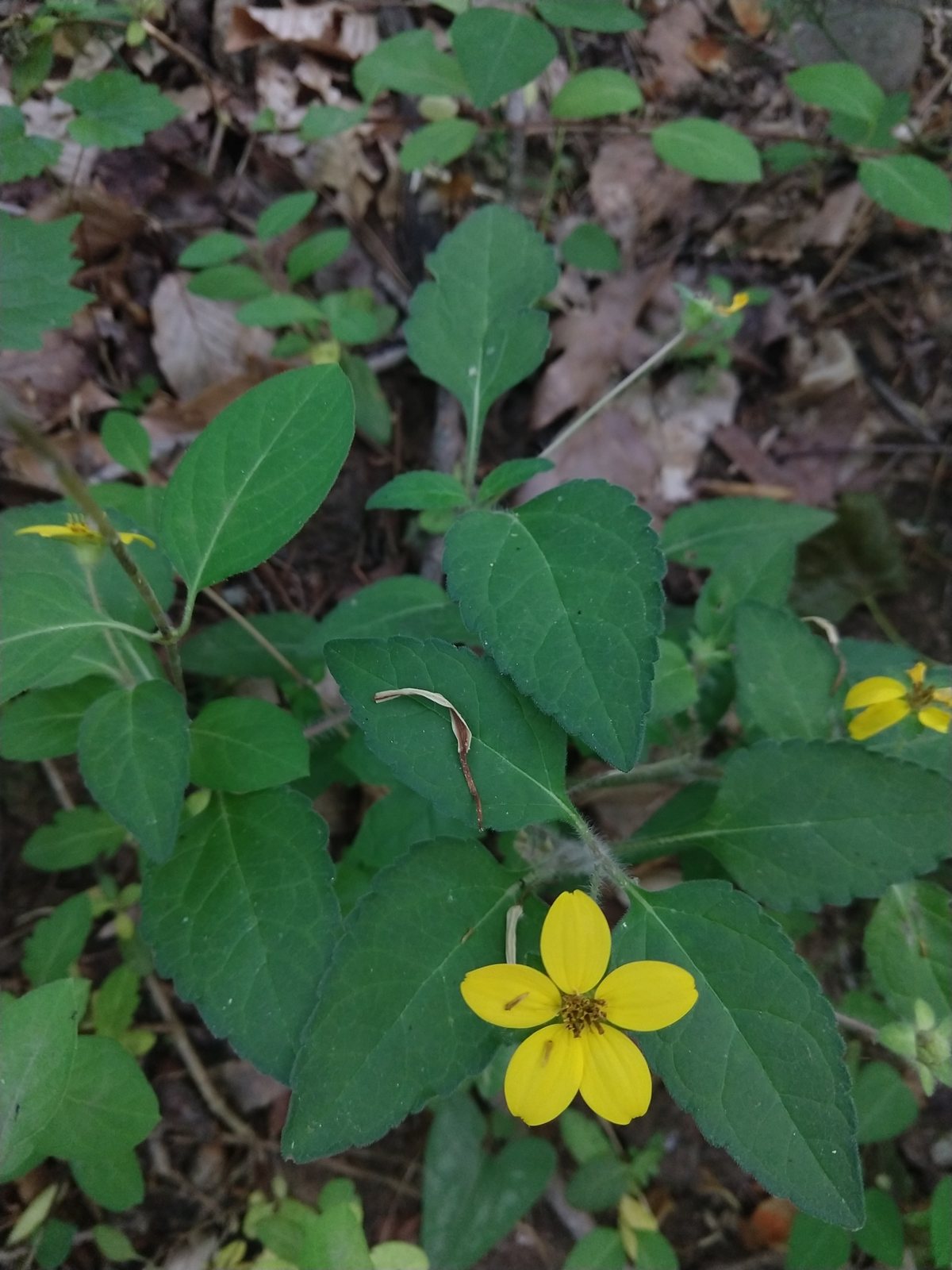
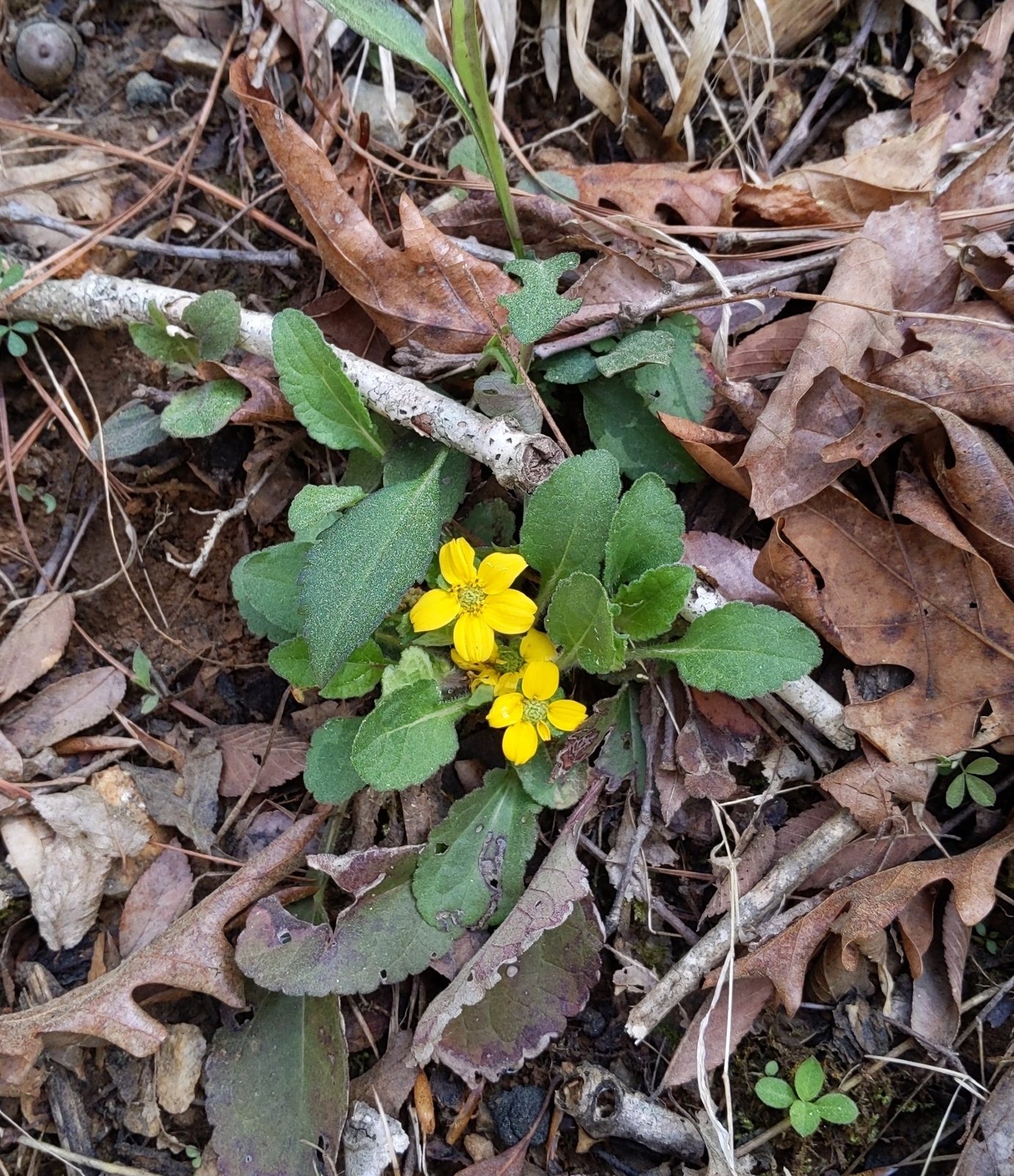
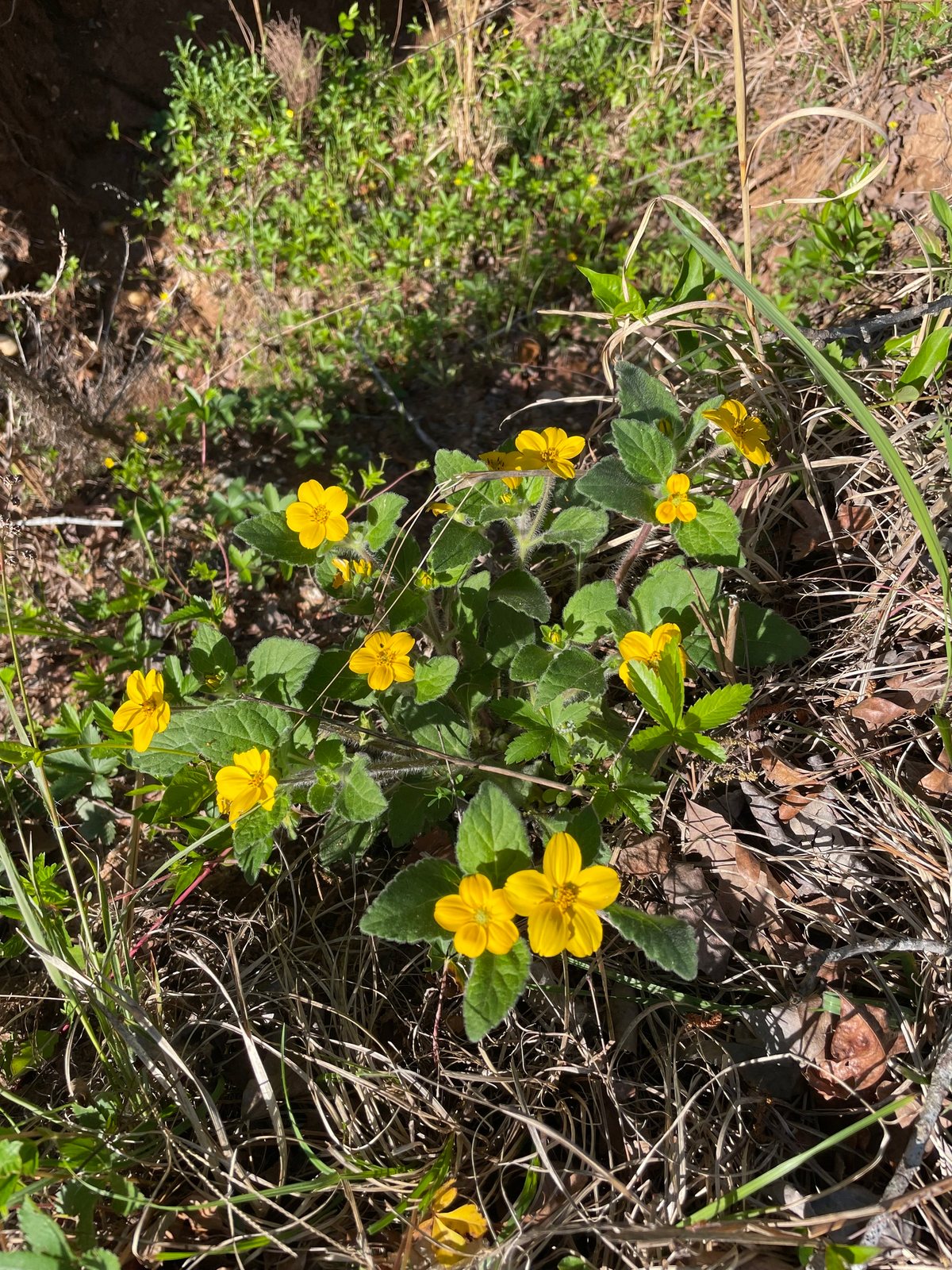
Green and gold is a low, spreading perennial native to the eastern United States, grown for its yellow, daisy-like flowers and leafy ground cover. It suits partly shaded borders and woodland edges, where it gradually forms patches without climbing over taller plants.
At a glance
- Sun
- Partial shade is best. It tolerates full sun with consistently moist soil, but benefits from afternoon shade in hot climates.
- Water
- Keep evenly moist while establishing. Established plants tolerate brief dry spells, but prolonged drought can cause thinning and leaf loss.
- Soil
- Humus-rich, well-drained soil, preferably slightly acidic to neutral. Avoid sites that stay waterlogged.
- Height
- 0.5-1 ft (0.15-0.3 m)
- Spread
- 1-2 ft (0.3-0.6 m), gradually spreading farther where stems root
- Flowers
- Bright yellow flowers mainly in spring and early summer, with scattered repeat flowers into autumn in favourable conditions.
- Foliage
- Opposite, hairy, oval leaves with toothed edges form low green patches. Semi-evergreen in mild climates; foliage may die back in cold winters.
- Growth
- Moderate; spreading habit varies among forms and growing conditions.
- Care needed
- Low
The year at a glance
- Pollinators
- Heat tolerant
- Wildlife
- Low allergen
| J | F | M | A | M | J | J | A | S | O | N | D | |
|---|---|---|---|---|---|---|---|---|---|---|---|---|
| Flowers | ||||||||||||
| Plant |
Northern hemisphere months. In Australia, shift them by six.
- Difficulty
- Easy
- Toughness
- Fairly tough
Will it suit your garden?
Pick your zone, country, light and whether you have pets.
Full sun is 6 or more hours of direct sun a day, part shade 3 to 6 hours, shade under 3.
How it grows
Planting day
0.2 ft (0.06 m)
After 1 year
0.4 ft (0.12 m)
After 2 years
0.6 ft (0.19 m)
After 3 years
0.7 ft (0.22 m)
full size
About 3 years to full size.
From a typical nursery size, at an average rate for this kind of plant. A rule of thumb, not a forecast.
Good to know
- Cats and dogs
- Safe
- Native to
- the US
- Growth rate
- Moderate
Care
Jobs through the year
- WaterApr–May, Sep–Oct, every 14 days
- Water established patches if soil is drying; new plants need watering whenever the upper soil dries.
- WaterJun–Aug, every 7 days
- Water established patches deeply during extended dry spells, especially beneath trees; water new plants more often.
- MulchMar–Apr
- Apply a thin layer of leaf mould or compost, keeping crowns and rooting stems uncovered.
- PruneMar
- Remove winter-damaged leaves without cutting into crowns.
- PruneJun–Jul
- After the main flowering flush, trim untidy stems and growth crossing bed edges.
- DivideMar–Apr, Sep
- Divide crowded or thinning patches and water replanted sections thoroughly.
- ProtectJan–Feb, Nov–Dec
- Clear dense, sodden leaf cover and avoid walking on wet patches.
- Water during the first growing season whenever the upper soil begins to dry.
- Water established patches during prolonged dry weather, especially beneath trees.
- Apply a thin layer of leaf mould or compost in spring; routine fertiliser is usually unnecessary.
- Keep heavy mulch away from crowns and rooting stems.
- Divide crowded or thinning patches in spring or early autumn.
Pruning. Remove winter-damaged leaves in early spring without cutting into the crowns. After the main flowering period, trim untidy stems or unwanted spread; deadheading is optional.
Through the year
- Early spring
- Remove dead foliage and check that crowns are not buried under wet leaves.
- Spring
- Plant or divide patches, water thoroughly and top-dress lightly with compost.
- Late spring
- Weed between plants while patches are filling in.
- Summer
- Water during extended dry spells and trim back stems that cross paths or edging.
- Early autumn
- Divide or transplant rooted sections while the soil is still warm and moist.
- Winter
- Avoid walking on wet patches and clear any dense, sodden leaf cover.
In the garden
- Plant beneath deciduous shrubs to provide spring flowers before the canopy becomes dense.
- Use along a shaded path as a low flowering edge, keeping it out of regular foot traffic.
- Combine with ferns, sedges and woodland perennials for contrasting leaf shapes.
- Use between larger perennials to cover bare soil in a partly shaded border.
Garden styles it suits: Woodland, Wildlife garden, Pollinator garden, Cottage garden and Low-maintenance.
Plant it with: Christmas fern, Foamflower, Wild geranium, Woodland phlox, Coral bells and Pennsylvania sedge.
Wildlife: The flowers provide pollen and nectar for small bees and other insects. Dense foliage offers shelter for small ground-dwelling invertebrates.
Problems to watch for
- Slugs and snails may chew young foliage; remove hiding places and use traps or a locally approved iron-phosphate bait if needed.
- Powdery mildew can affect crowded plants; improve airflow, divide dense patches and avoid drought stress.
- Crown or root rot can develop in waterlogged soil; improve drainage and remove badly affected plants.
- Hot, dry conditions can scorch leaves and thin the patch; provide afternoon shade and water deeply during drought.
Safety
Not known to be toxic to people, cats, dogs or horses. Species-specific safety information is limited, so do not treat the leaves, flowers or roots as edible.
Easily confused with
Barren strawberry (Geum fragarioides)
Also known as Waldsteinia fragarioides, it has leaves divided into three leaflets and five rounded yellow petals; green and gold has simple, opposite leaves and daisy-like flower heads with a central disc.
Creeping buttercup (Ranunculus repens)
Creeping buttercup has divided leaves, long runners and glossy yellow petals. Green and gold has undivided, hairy leaves and less glossy, daisy-like flower heads.
The name
Chrysogonum comes from Greek words meaning 'gold' and 'knee', referring to the yellow flowers and jointed stems, while virginianum means 'of Virginia'.
Propagation. Divide established patches in spring or early autumn, or lift rooted stems and replant them. Seed can also be used, but seedlings may differ from named cultivars.
Checked against open data
- Accepted botanical name
- Chrysogonum virginianum
- In the US and Canada
- Native in the lower 48 states.
- Native range
- District of Columbia, Kentucky, Maryland, New York, North Carolina, Ohio, Pennsylvania, South Carolina, Virginia and West Virginia.
Sources: GBIF (CC BY 4.0), USDA PLANTS and Trefle (CC BY 4.0). The care and design notes are LandscapeGPT's own.
See it in your own yard.
Upload a photo of your yard and see it redesigned with plants that suit your climate, each checked against your zone.