Grevillea Moonlight
Grevillea 'Moonlight'. Family Proteaceae. Shrub.
Also called Grevillea 'Moonlight', Moonlight grevillea.
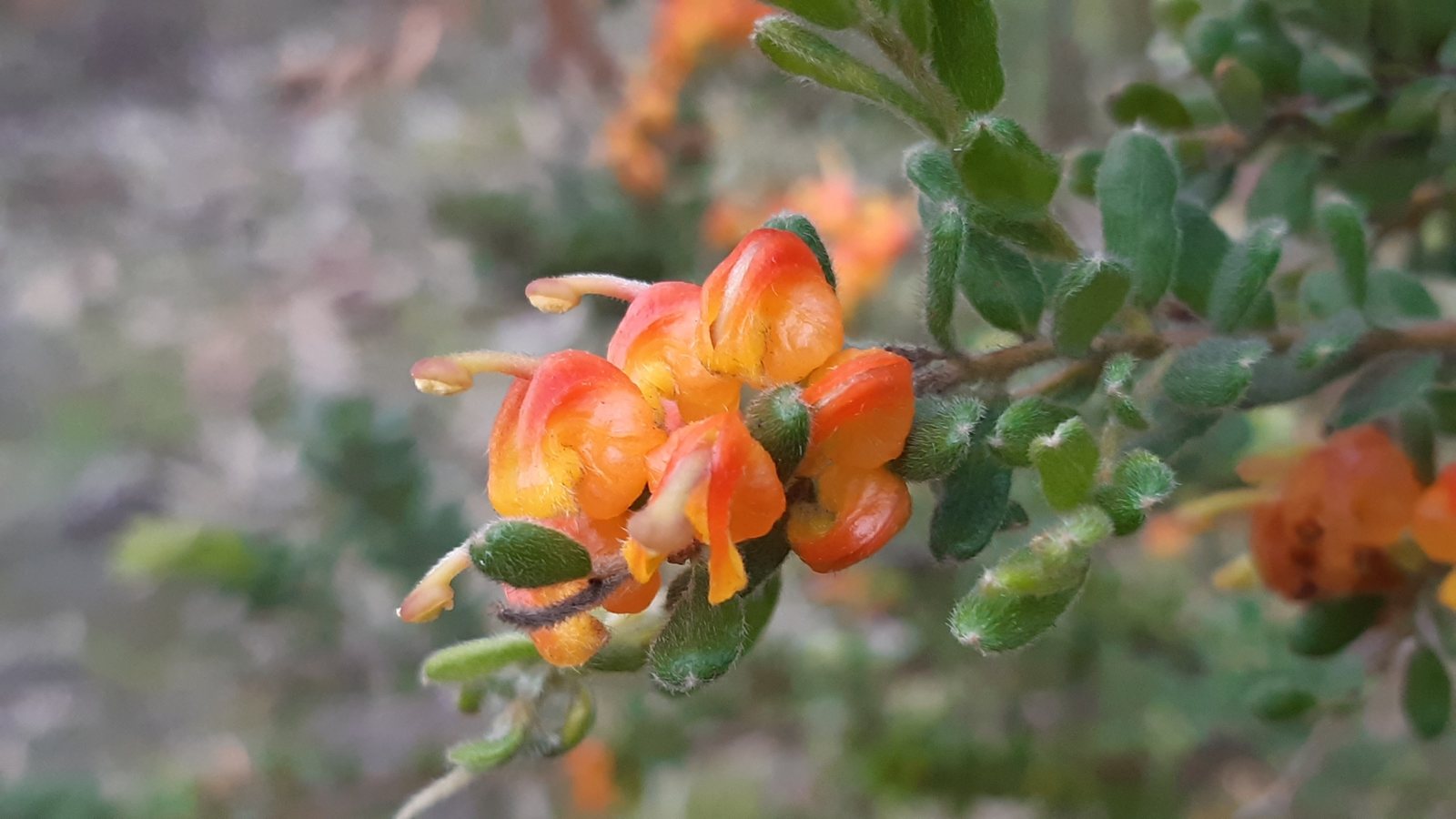
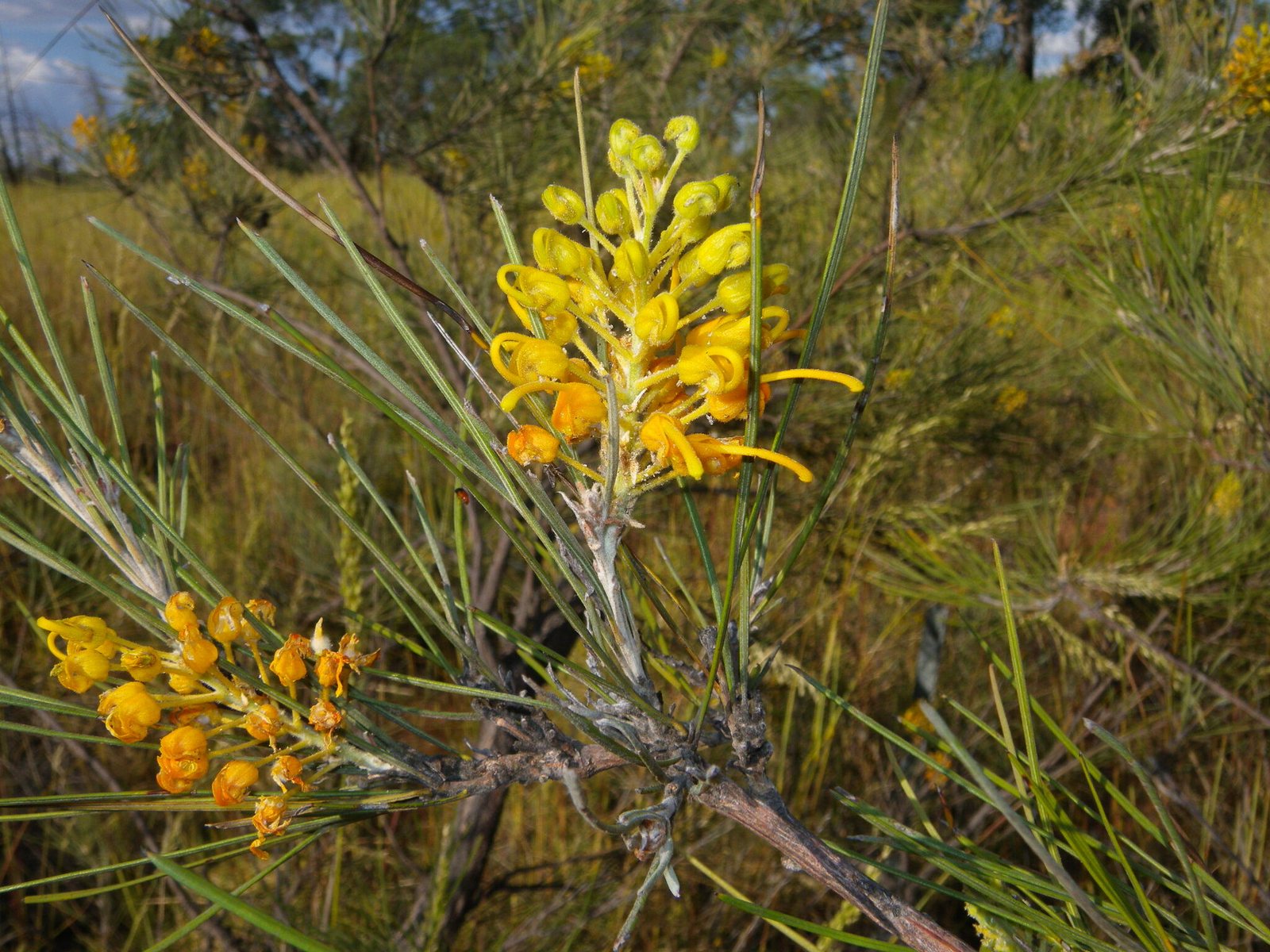
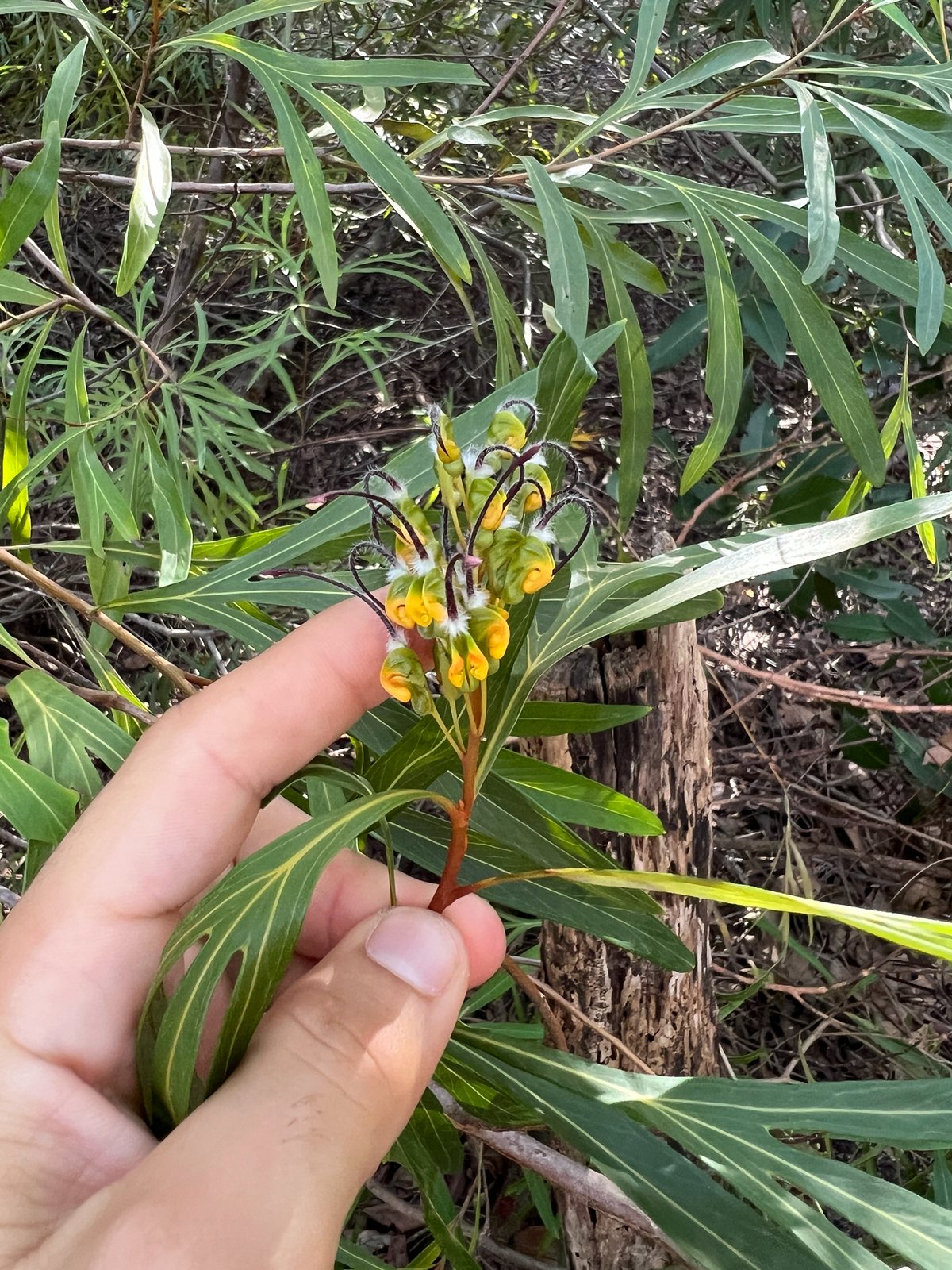
A fast-growing Australian evergreen shrub or small tree with deeply divided leaves and large, creamy-white flower clusters. Gardeners grow it for its long flowering season, screening foliage and nectar-feeding birds; it needs a warm position with excellent drainage and protection from hard frost.
At a glance
- Sun
- Full sun gives the best flowering; tolerates light partial shade. Shelter from cold, drying winds.
- Water
- Water regularly while establishing, allowing the soil surface to dry between waterings. Established plants tolerate dry spells but flower better with occasional deep watering during prolonged drought.
- Soil
- Well-drained, mildly acidic to neutral soil with low phosphorus levels. Avoid waterlogged ground, strongly alkaline soil and heavily enriched planting holes.
- Height
- 12-20 ft (3.7-6 m)
- Spread
- 8-15 ft (2.4-4.6 m)
- Flowers
- Large, creamy-white to pale ivory, toothbrush-like flower clusters; flowers through much of the year in warm, frost-free climates, with stronger flushes from spring into autumn.
- Foliage
- Evergreen. Long, deeply divided green leaves with paler, slightly silky undersides.
- Growth
- Fast in warm conditions
- Care needed
- Medium
The year at a glance
- Pollinators
- Drought tolerant
- Heat tolerant
- Wildlife
- Low allergen
| J | F | M | A | M | J | J | A | S | O | N | D | |
|---|---|---|---|---|---|---|---|---|---|---|---|---|
| Flowers | ||||||||||||
| Plant |
Northern hemisphere months. In Australia, shift them by six.
- Difficulty
- Hard
- Toughness
- Fairly tough
Will it suit your garden?
Pick your zone, country, light and whether you have pets.
Full sun is 6 or more hours of direct sun a day, part shade 3 to 6 hours, shade under 3.
How it grows
Planting day
1.9 ft (0.58 m)
After 1 year
6 ft (1.9 m)
After 2 years
11 ft (3.2 m)
After 3 years
15 ft (4.5 m)
After 5 years
16 ft (4.9 m)
full size
About 3 years to full size.
From a typical nursery size, at an average rate for this kind of plant. A rule of thumb, not a forecast.
Good to know
- Cats and dogs
- Safe
- Growth rate
- Fast
Care
Jobs through the year
- WaterApr–May, Sep–Oct, every 21 days
- For established ground shrubs in mild climates, soak during dry spells; young or container plants need more frequent checks.
- WaterJun–Aug, every 14 days
- Deep-water established ground shrubs during prolonged drought for better flowering; let soil dry between soakings.
- FeedApr–May
- Only if growth is weak, feed lightly with a low-phosphorus fertilizer labelled for Australian native plants.
- PruneMay–Jul
- After a flowering flush, tip-prune or shorten leafy shoots; never cut hard into bare old wood.
- MulchApr, Oct
- Maintain an organic mulch over shallow roots, keeping it clear of the trunk.
- ProtectJan–Apr, Oct–Dec
- In zones 6–7, grow in a movable container and overwinter under bright, frost-free cover.
- Water deeply during the first growing season, then reduce watering as roots establish.
- Use only a low-phosphorus fertiliser labelled for Australian native plants, and feed lightly if growth is weak.
- Apply an organic mulch over the root zone, keeping it clear of the trunk.
- Avoid digging or cultivating around the shallow roots.
- Protect young plants from frost; outside mild coastal districts in the UK and the warmest parts of Canada, provide frost-free winter shelter.
Pruning. Tip-prune young plants to encourage branching, then shorten leafy shoots after a main flowering flush in spring or summer. Avoid cutting hard into bare old wood, and remove dead or damaged branches back to healthy growth.
Through the year
- Spring
- Plant after frost risk has passed, in a sunny position with freely draining soil.
- Spring
- Check growth and apply a light dressing of low-phosphorus native-plant fertiliser only if needed.
- Early summer
- Tip-prune young growth or lightly shape after a flowering flush.
- Summer
- Water newly planted shrubs deeply; give established plants occasional deep watering during extended dry weather.
- Autumn
- Refresh mulch and check that water drains away from the root zone.
- Winter
- Protect young plants during frost warnings and keep container-grown plants under bright, frost-free cover where winters are cold.
In the garden
- Use as a tall, informal screen where its full mature width can be accommodated.
- Plant as a small specimen tree in a warm courtyard, allowing room for its broad crown.
- Combine with kangaroo paws and mat rushes in an Australian native planting.
- Use pale flowers against dark evergreen foliage in a white or moon garden.
- Place near, but not directly beside, a sitting area to watch nectar-feeding birds.
Garden styles it suits: Australian native, Wildlife garden, Mediterranean, Coastal, White garden and Moon garden.
Plant it with: Kangaroo paw, Coastal rosemary, Mat rush, Geraldton wax and Bottlebrush.
Wildlife: Nectar attracts honeyeaters and other nectar-feeding birds in Australia, hummingbirds where they occur, and visiting insects. Dense foliage also offers shelter for small birds.
Problems to watch for
- Root rot in wet soil: improve drainage, reduce watering and avoid planting in low, waterlogged spots.
- Yellow leaves in alkaline soil: check soil pH and drainage; use a suitable chelated iron treatment if iron deficiency is confirmed.
- Phosphorus toxicity from unsuitable fertiliser: stop feeding with general-purpose or high-phosphorus products and use only low-phosphorus native-plant fertiliser.
- Frost damage to leaves and shoot tips: protect young plants and wait until spring growth begins before removing damaged wood.
Safety
Not known to be a common cause of poisoning in cats, dogs or horses, but cultivar-specific safety information is limited. Leaves and sap can cause contact dermatitis in sensitive people, so wear gloves when pruning. Do not eat the flowers, nectar or other parts: some grevilleas contain cyanogenic compounds, and this cultivar should not be treated as edible.
Easily confused with
Honey Gem grevillea (Grevillea 'Honey Gem')
Has a similar tall habit and divided foliage, but its flower clusters are golden-orange rather than creamy white.
Misty Pink grevillea (Grevillea 'Misty Pink')
Produces pink-and-cream flower clusters rather than the predominantly ivory flowers of 'Moonlight'.
Silky oak (Grevillea robusta)
Becomes a much larger tree and bears golden-orange flowers, usually in a more distinct seasonal flush.
The name
Grevillea honours Charles Francis Greville, an English plant collector and patron of botany.
Propagation. Take semi-ripe cuttings from healthy, non-flowering shoots in summer and root them in a free-draining propagation mix with gentle humidity. Cuttings preserve the cultivar; seedlings will not reliably resemble the parent.
Checked against open data
- Accepted botanical name
- Grevillea
Sources: GBIF (CC BY 4.0). The care and design notes are LandscapeGPT's own.
See it in your own yard.
Upload a photo of your yard and see it redesigned with plants that suit your climate, each checked against your zone.