Ground cherry
Physalis pruinosa. Family Solanaceae. Annual.
Also called Husk cherry, Strawberry ground cherry, Dwarf Cape gooseberry.
Ground cherry is a frost-tender plant grown as an annual for small, sweet, yellow-gold fruits enclosed in papery husks. Its low, branching stems suit vegetable beds and large containers, but it needs a warm growing season to ripen a useful crop.
At a glance
- Sun
- Full sun; choose a warm, sheltered position in cooler climates.
- Water
- Water regularly while plants establish, then whenever the upper soil begins to dry. Keep moisture reasonably even during flowering and fruiting without leaving the roots waterlogged.
- Soil
- Well-drained loam or sandy soil enriched with modest amounts of compost; tolerates poorer soil but dislikes wet, heavy ground.
- Height
- 1-3 ft (0.3-0.9 m)
- Spread
- 2-3 ft (0.6-0.9 m)
- Flowers
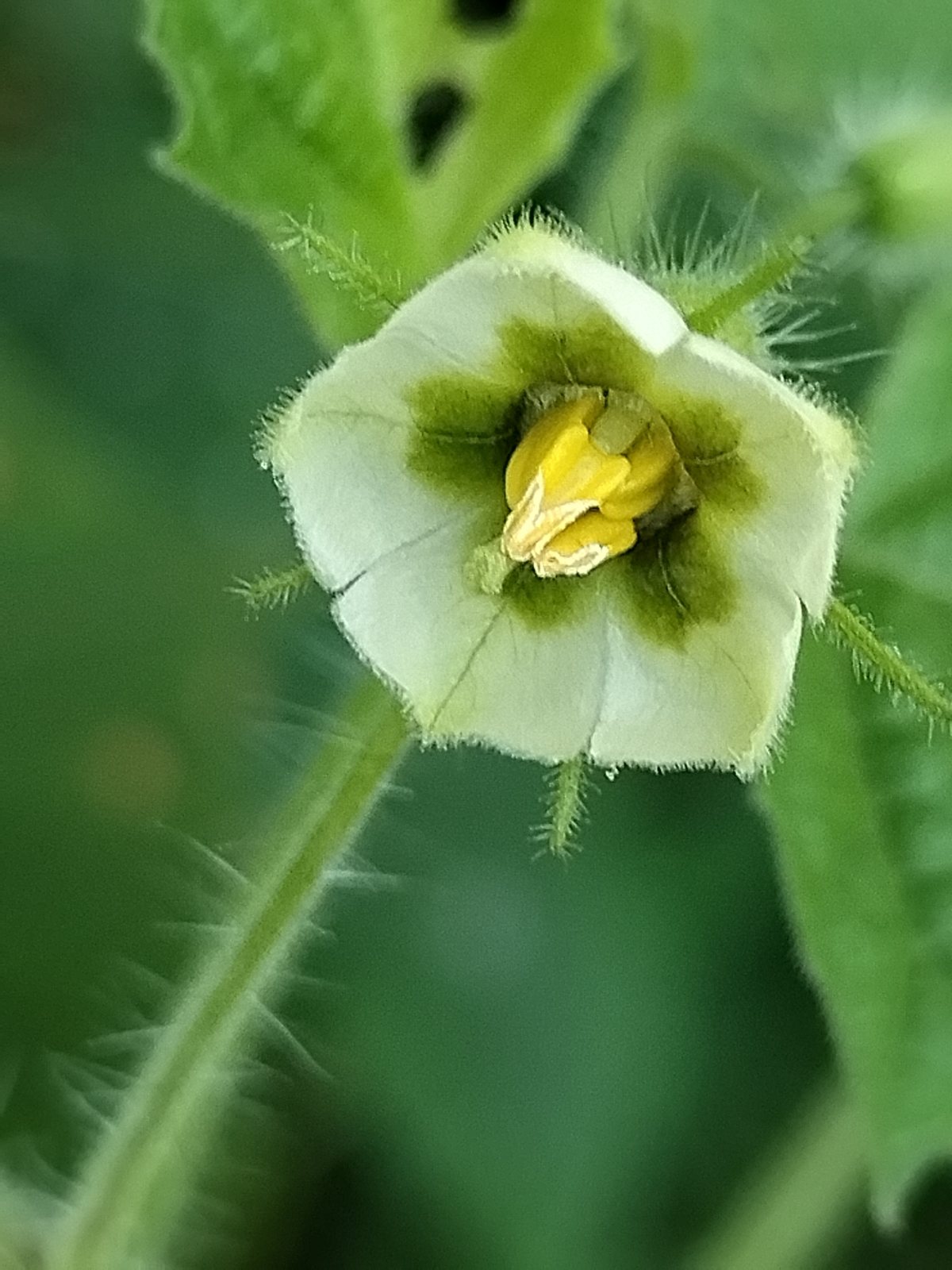
- Small, nodding yellow flowers with dark centres from summer into autumn.
- Foliage
- Soft, slightly hairy green leaves, broadly oval with irregularly toothed or wavy edges.
- Growth
- Fast in warm weather.
- Care needed
- Medium
The year at a glance
- Pollinators
- Low allergen
- Edible
| J | F | M | A | M | J | J | A | S | O | N | D | |
|---|---|---|---|---|---|---|---|---|---|---|---|---|
| Flowers | ||||||||||||
| Fruit | ||||||||||||
| Plant |
Northern hemisphere months. In Australia, shift them by six.
- Difficulty
- Moderate
- Toughness
- Fairly tough
Will it suit your garden?
Pick your zone, country, light and whether you have pets.
Full sun is 6 or more hours of direct sun a day, part shade 3 to 6 hours, shade under 3.
How it grows
Planting day
0.5 ft (0.15 m)
After 1 year
2 ft (0.6 m)
full size
Full size in one season.
From a typical nursery size, at an average rate for this kind of plant. A rule of thumb, not a forecast.
Good to know
- Cats and dogs
- Toxic
- In the garden
- Spreads vigorously: plan to contain it.
- Growth rate
- Fast
Care
Jobs through the year
- WaterMay–Jun, Sep–Oct, every 7 days
- Water established ground-grown plants when the upper soil dries; water young transplants more often.
- WaterJul–Aug, every 4 days
- Water at soil level as the upper soil dries, keeping flowering and fruiting plants evenly moist.
- FeedMay–Jun
- Incorporate modest amounts of compost before planting; avoid heavy nitrogen feeding.
- MulchJun
- Spread clean straw beneath plants to conserve moisture and keep fallen fruit clean.
- ProtectMay–Jun
- Harden off and plant after frost; use insect mesh against flea beetles only until flowering.
- HarvestJul–Oct
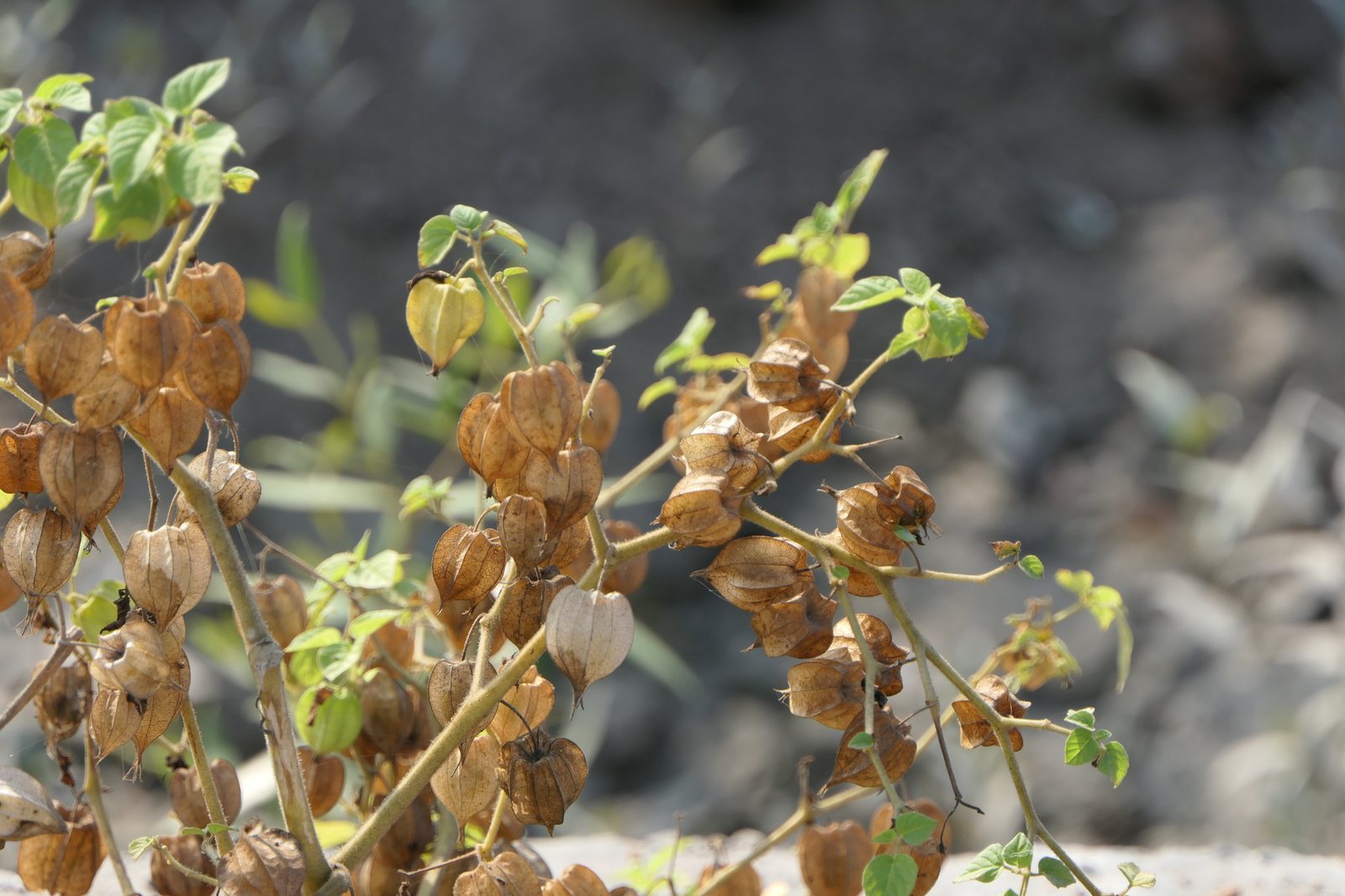
- Collect naturally fallen fruit in dry tan husks; eat only ripe yellow-gold fruit, never green fruit.
- Plant out after frost danger has passed and the soil has warmed, spacing plants 2-3 ft (0.6-0.9 m) apart.
- Water at soil level during dry spells; avoid repeatedly soaking the foliage.
- Apply a clean straw mulch to conserve moisture and keep fallen fruit off bare soil.
- Use compost before planting; avoid heavy nitrogen feeding, which encourages leafy growth at the expense of fruit.
- Use a low cage or a few short supports if sprawling stems obstruct paths.
- Collect fallen fruit regularly and remove unwanted seedlings the following season.
Pruning. Routine pruning is unnecessary; do not remove side shoots as you would on a cordon tomato. During the growing season, trim only damaged stems or growth that blocks access.
Harvest
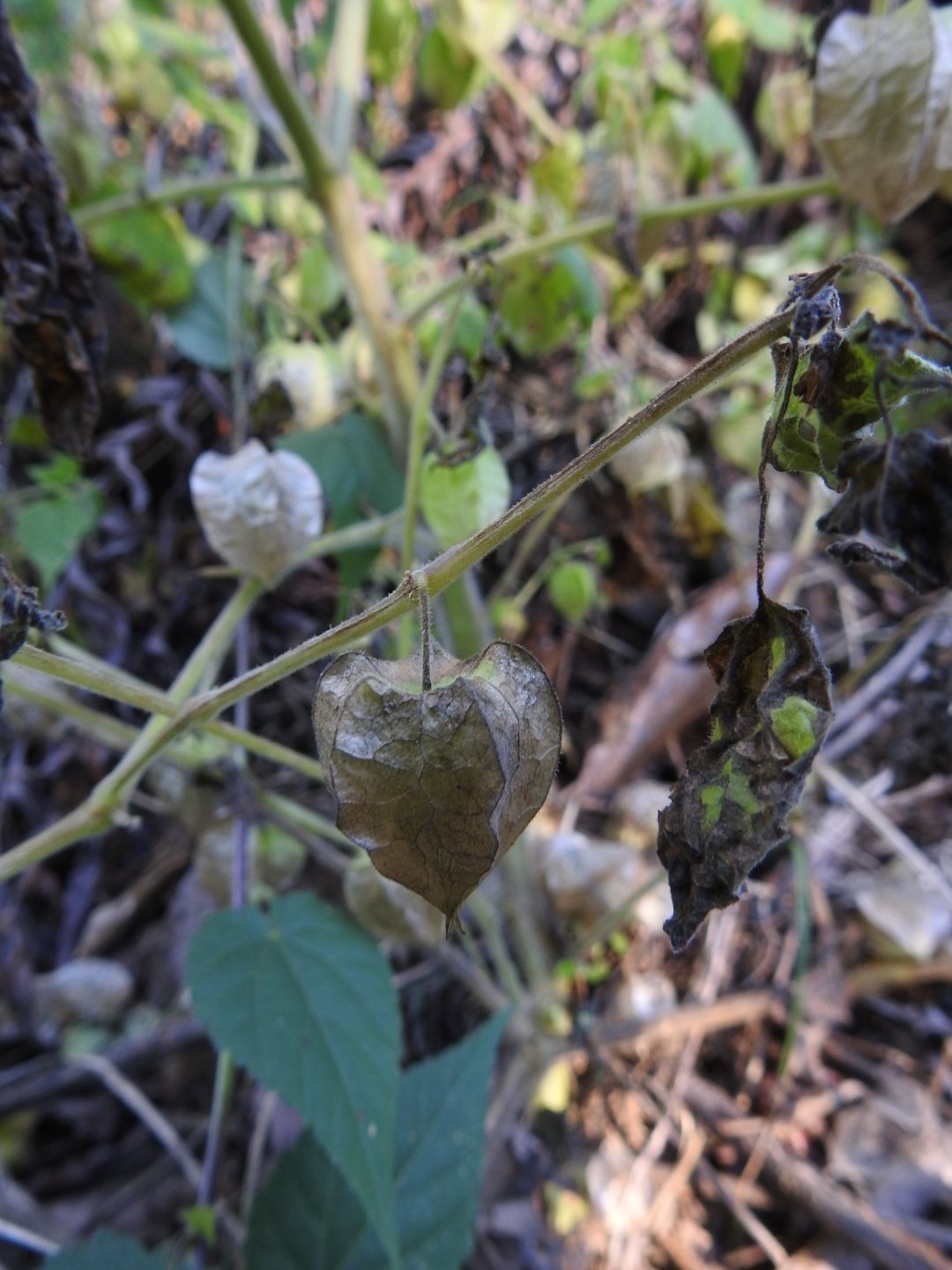
Collect fruits when their husks become dry and tan and the fruits fall naturally to the ground, usually from midsummer until frost. Peel back the husk and eat only fully ripe yellow-gold fruit; discard green, damaged or mouldy fruit.
Through the year
- Late winter to early spring
- Sow indoors 6-8 weeks before your expected last frost, using gentle warmth and bright light.
- Spring
- Pot seedlings on as needed and gradually harden them off before planting outside.
- Late spring
- Plant after frost danger has passed; water in and add low supports where needed.
- Early summer
- Mulch beneath the plants and water during dry periods.
- Summer to autumn
- Collect fallen, ripe fruit frequently and check plants for chewing insects.
- Late autumn
- Remove frost-killed plants and leftover fruit to limit volunteer seedlings.
In the garden
- Plant along the sunny edge of a vegetable bed, allowing room for stems to spread.
- Grow in large containers on a warm patio, where fallen fruit is easy to collect.
- Use in a potager with basil, marigolds and other compact summer crops.
- Place in an informal edible border where its papery fruit husks add late-season interest.
Garden styles it suits: Potager (kitchen garden), Cottage garden, Farmhouse, Edible landscape, Homestead and Modern courtyard.
Plant it with: Basil, French marigold, Sweet alyssum, Nasturtium and Lettuce.
Wildlife: Flowers provide pollen for bees. Fallen ripe fruit may attract birds and small mammals.
Problems to watch for
- Flea beetles chew small holes in young leaves: protect seedlings with insect mesh, removing it when flowering begins.
- Aphids cluster on tender shoots: wash them off with water and encourage ladybirds and other predators.
- Leaf spots develop in damp, crowded growth: space plants well, water at soil level and remove badly affected leaves.
- Little ripe fruit in cool or short summers: start seedlings indoors and use the warmest sunny position or an unheated greenhouse.
Safety
Fully ripe fruit is edible for people. Leaves, stems and unripe fruit contain potentially toxic nightshade compounds and should not be eaten by people, cats, dogs or horses; ingestion may cause digestive upset and potentially more serious poisoning. Species-specific toxicity information for pets and horses is limited, so keep them from chewing the plants.
Easily confused with
Cape gooseberry (Physalis peruviana)
Usually taller and more upright, with larger, softly hairy leaves and larger fruit; it is a tender perennial rather than a true annual.
Tomatillo (Physalis philadelphica)
Usually bears much larger fruit that fills or splits the husk and is commonly harvested green for cooking.
Chinese lantern (Alkekengi officinarum)
A spreading perennial grown for conspicuous orange-red husks, rather than the dry tan husks of ripe ground cherries; do not treat it as an interchangeable edible crop.
The name
Physalis comes from the Greek word for a bladder, referring to the inflated husk, while pruinosa means frosted or covered with a fine bloom.
Propagation. Grow from seed, sown indoors 6-8 weeks before the last frost. Sow shallowly and keep at about 70-80°F (21-27°C); germination commonly takes 1-3 weeks. Self-sown seedlings may appear where fruit was left on the ground.
Checked against open data
- Accepted botanical name
- Physalis pruinosa
- Native range
- Argentina Northeast, Argentina Northwest, Costa Rica, El Salvador, Guatemala, Honduras, Mexico Central, Mexico Gulf, Mexico Northeast, Mexico Northwest, Mexico Southeast and Mexico Southwest.
Sources: GBIF (CC BY 4.0) and Trefle (CC BY 4.0). The care and design notes are LandscapeGPT's own.
See it in your own yard.
Upload a photo of your yard and see it redesigned with plants that suit your climate, each checked against your zone.