Hartweg's sundrops
Oenothera hartwegii. Family Onagraceae. Perennial.
Also called Hartweg's evening primrose, Calylophus hartwegii.
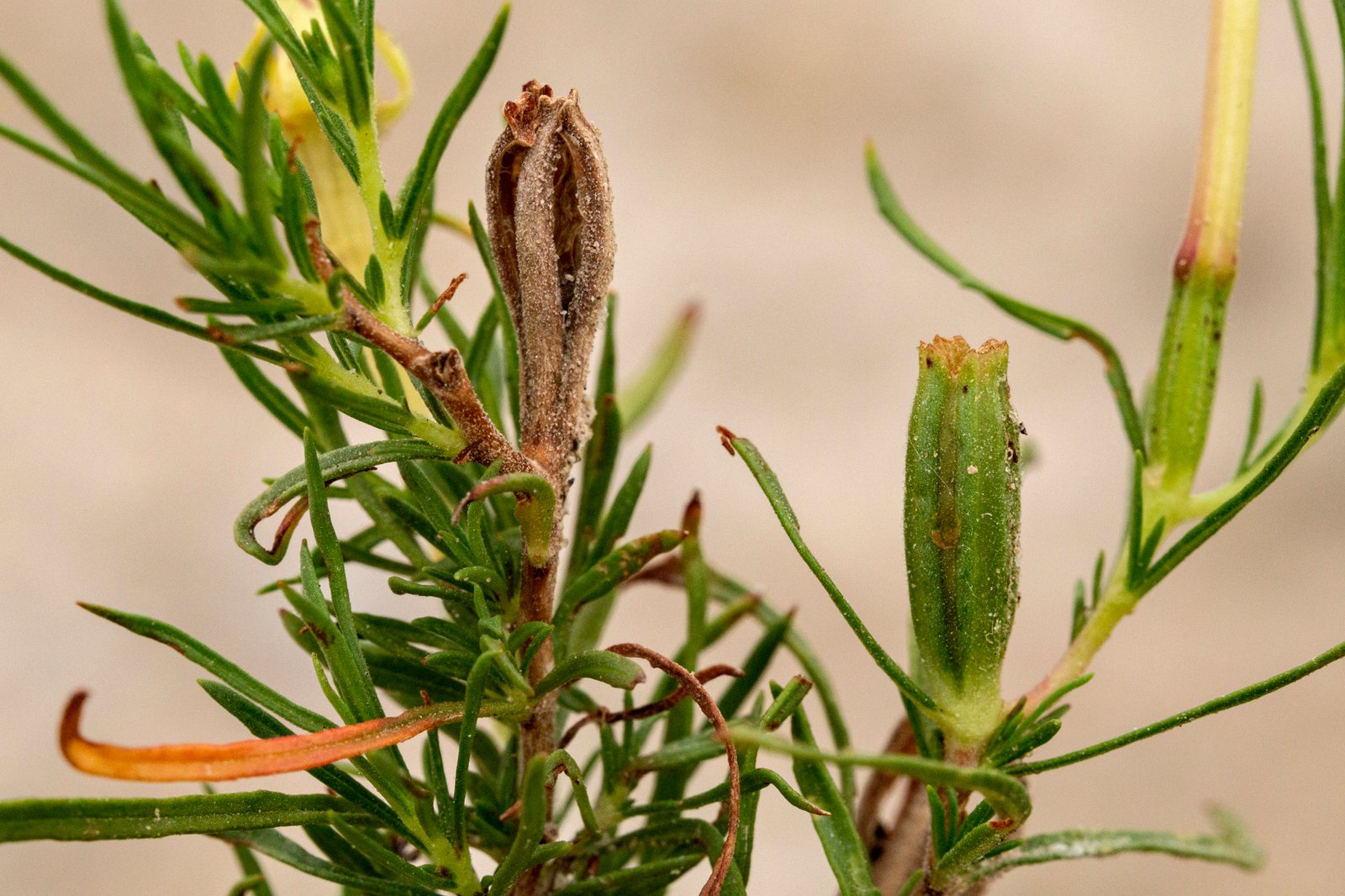
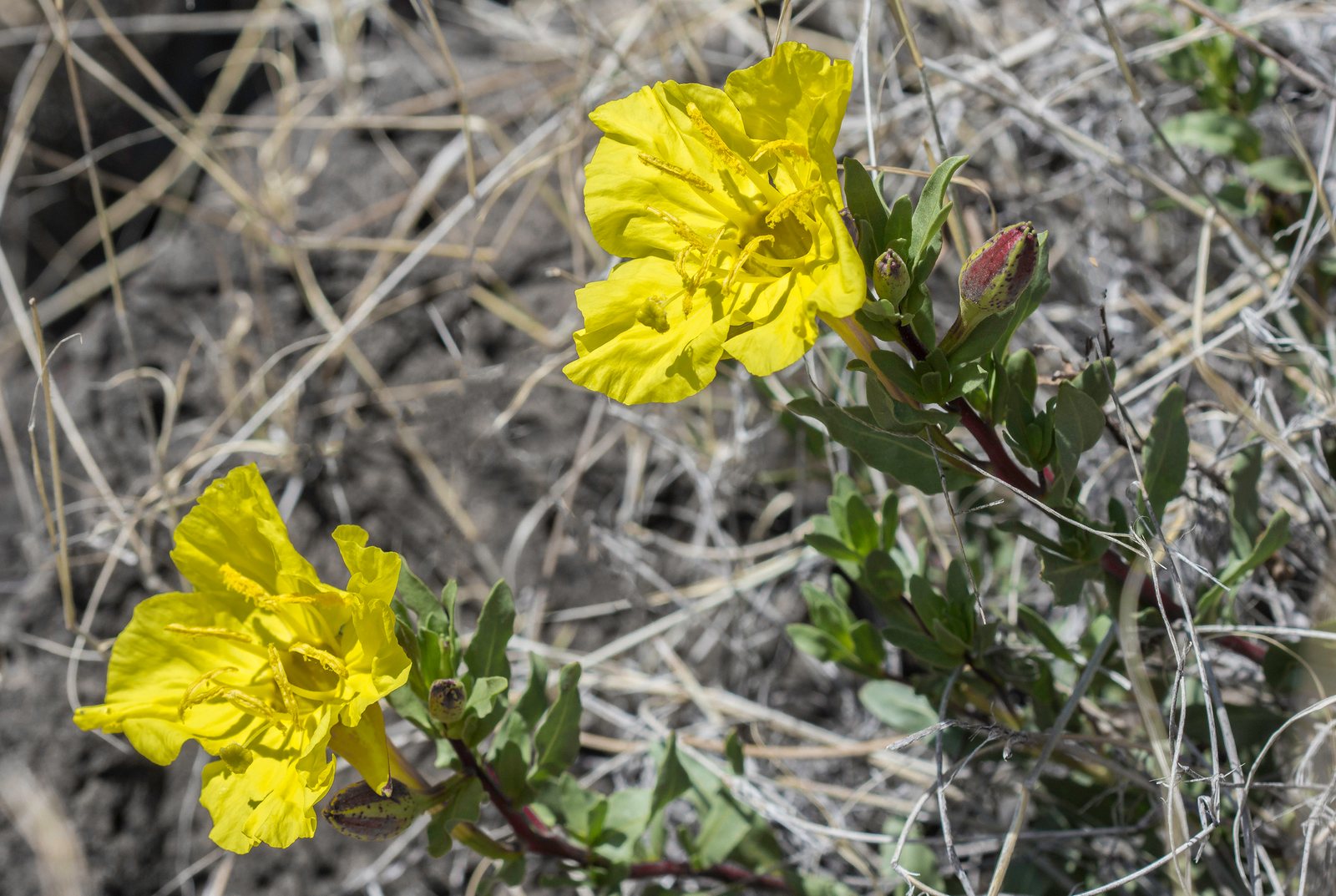
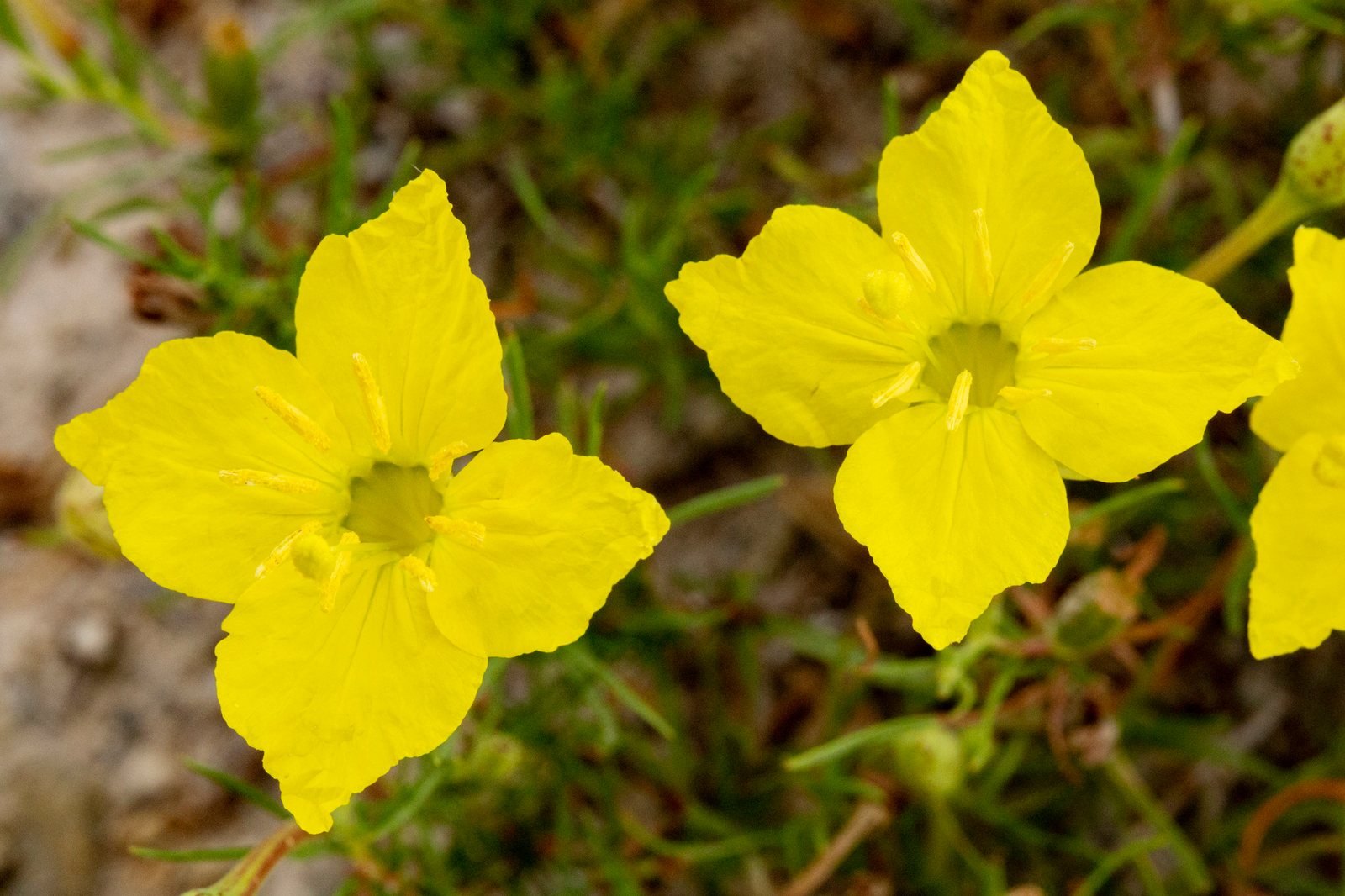
Hartweg's sundrops is a low, bushy perennial with a woody base, narrow leaves and clear yellow, four-petalled flowers. Native to the southwestern and south-central United States and northern Mexico, it suits sunny, dry gardens where drainage is good, especially in winter.
At a glance
- Sun
- Full sun; tolerates light afternoon shade in very hot climates.
- Water
- Low once established; water regularly during establishment, then during prolonged dry spells.
- Soil
- Well-drained sandy, gravelly or rocky soil; tolerates lean and alkaline soils but dislikes wet, heavy ground.
- Height
- 0.5-1.5 ft (0.15-0.45 m)
- Spread
- 1-2 ft (0.3-0.6 m)
- Flowers
- Yellow flowers from late spring through summer, sometimes continuing intermittently into early autumn in warm climates.
- Foliage
- Narrow green to grey-green leaves on branching stems; foliage may persist in mild winters.
- Growth
- Moderate
- Care needed
- Low
The year at a glance
- Pollinators
- Drought tolerant
- Heat tolerant
- Low allergen
| J | F | M | A | M | J | J | A | S | O | N | D | |
|---|---|---|---|---|---|---|---|---|---|---|---|---|
| Flowers | ||||||||||||
| Fruit | ||||||||||||
| Plant |
Northern hemisphere months. In Australia, shift them by six.
- Difficulty
- Easy
- Toughness
- Very tough
Will it suit your garden?
Pick your zone, country, light and whether you have pets.
Full sun is 6 or more hours of direct sun a day, part shade 3 to 6 hours, shade under 3.
How it grows
Planting day
1 ft (0.3 m)
full size
About 3 years to full size.
From a typical nursery size, at an average rate for this kind of plant. A rule of thumb, not a forecast.
Good to know
- Cats and dogs
- Safe
- Native to
- the US
- In the garden
- Spreads vigorously: plan to contain it.
- Growth rate
- Moderate
Care
Jobs through the year
- WaterApr–May, Sep, every 28 days
- Water established plants only during prolonged drought; water new plants more often while rooting.
- WaterJun–Aug, every 21 days
- During extended drought, water deeply and allow the root zone to dry between soakings.
- PruneMar
- Remove dead stems and lightly shorten surviving growth without removing live basal shoots.
- PruneJul–Aug
- Lightly trim sprawling stems after the main flowering flush if needed.
- MulchApr
- Apply a thin gravel mulch, keeping the crown exposed.
- ProtectJan–Feb, Oct–Dec
- Clear fallen leaves from the crown and prevent standing water around roots.
- Plant in full sun with the crown at soil level and sharp drainage around the roots.
- Water deeply during the first growing season, allowing the soil to dry between waterings.
- Once established, water during extended drought rather than keeping the soil constantly moist.
- Avoid routine feeding; rich soil and excess nitrogen encourage loose growth and fewer flowers.
- Use a light gravel mulch rather than moisture-holding mulch against the crown.
Pruning. In early spring, remove dead stems and lightly shorten surviving growth to encourage a compact shape, retaining live leafy shoots. After the main flowering flush, trim straggly stems lightly if needed.
Through the year
- Early spring
- Remove winter-damaged growth and check that water drains freely around the crown.
- Spring
- Plant after the soil begins to warm; water new plants thoroughly.
- Late spring
- Check establishing plants for dry soil and keep surrounding weeds down.
- Summer
- Water established plants only during prolonged dry spells; lightly trim sprawling stems after the main flush.
- Autumn
- Collect ripe seed if wanted, and remove fallen leaves that trap moisture around the crown.
- Winter
- Keep containers out of standing water and protect plants from persistent winter wet.
In the garden
- Plant along sunny border edges for a low band of yellow flowers.
- Combine with small ornamental grasses and upright salvias for contrasting shapes.
- Use among rocks and gravel where its loose mound softens hard edges.
- Group on a sunny, well-drained bank with other drought-tolerant perennials.
Garden styles it suits: Dry gravel garden, Desert / xeriscape, Southwestern, Pollinator garden, Low-maintenance and Cottage garden.
Plant it with: Blue grama, Prairie dropseed, Purple coneflower, Blanket flower, Autumn sage and Catmint.
Wildlife: Flowers provide pollen and nectar for visiting bees and other insects.
Problems to watch for
- Crown or root rot in wet soil: improve drainage or move the plant to a raised, gravelly position; avoid frequent watering.
- Leggy growth and poor flowering: provide more sun and stop nitrogen-rich feeding.
- Winter losses in poorly drained sites: keep the crown free of wet organic mulch and choose a sheltered, freely draining position.
Safety
Not known to be toxic to people, cats, dogs or horses, but species-specific toxicity information is limited. No particular part is established as poisonous; it is not a food plant.
Easily confused with
Missouri evening primrose (Oenothera macrocarpa)
Usually has larger yellow flowers, broader leaves and a more trailing habit; its seed capsules have conspicuous wings.
Narrowleaf sundrops (Oenothera fruticosa)
Generally grows more upright, with broader leaves and flowers grouped toward the tops of the stems, rather than forming a finely branched, narrow-leaved mound.
The name
The species name hartwegii honours Karl Theodor Hartweg, a nineteenth-century German plant collector.
Propagation. Sow seed in spring, covering it lightly, or take softwood cuttings from non-flowering shoots in late spring or early summer. Seed-grown plants can vary in habit and flowering.
Checked against open data
- Accepted botanical name
- Oenothera hartwegii
- In the US and Canada
- Native in the lower 48 states.
- Native range
- Arizona, Colorado, Kansas, Mexico Northeast, Mexico Northwest, Mexico Southwest, New Mexico, Oklahoma and Texas.
Sources: GBIF (CC BY 4.0), USDA PLANTS and Trefle (CC BY 4.0). The care and design notes are LandscapeGPT's own.
See it in your own yard.
Upload a photo of your yard and see it redesigned with plants that suit your climate, each checked against your zone.