Havard's agave
Agave havardiana. Family Asparagaceae. Succulent.
Also called Chisos agave.
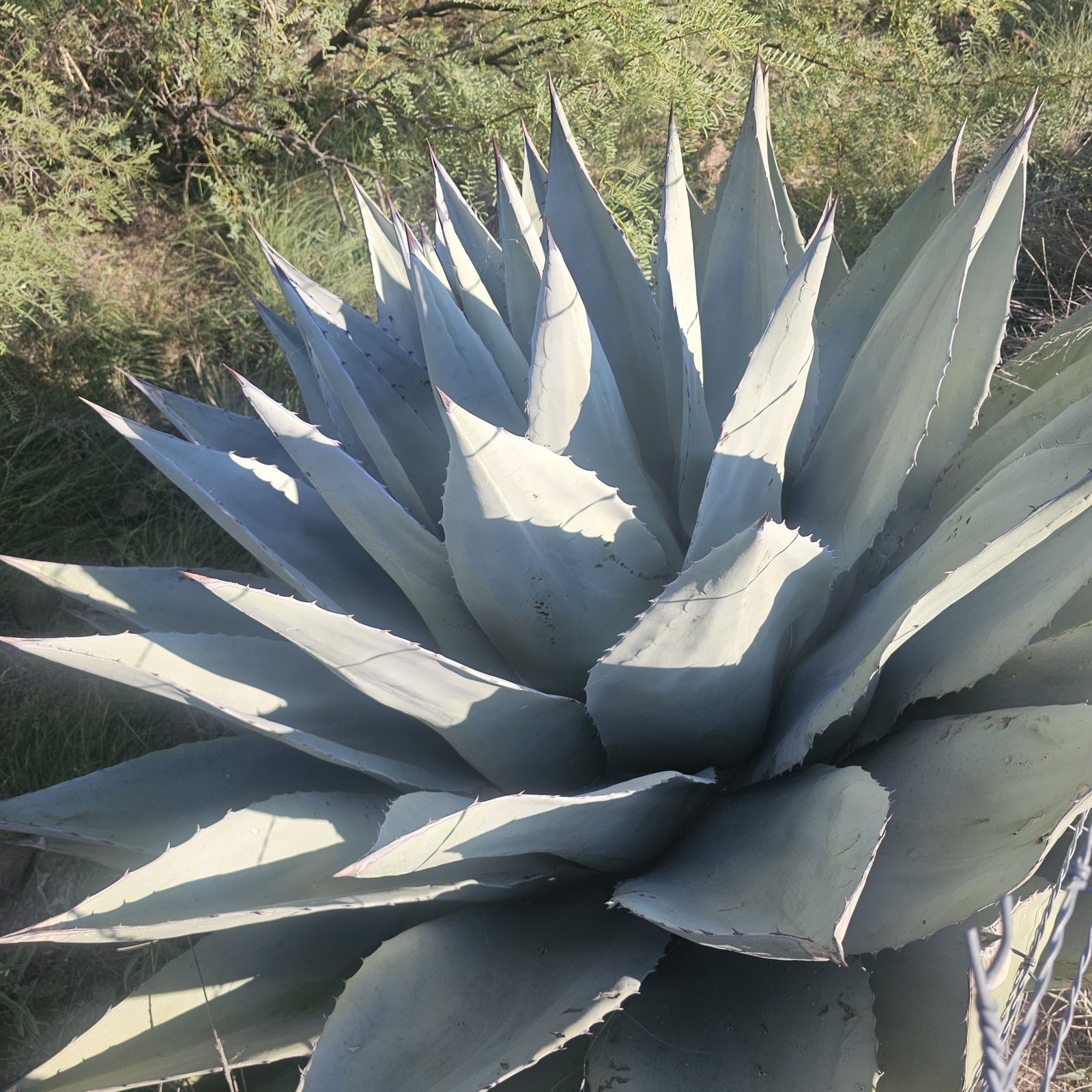
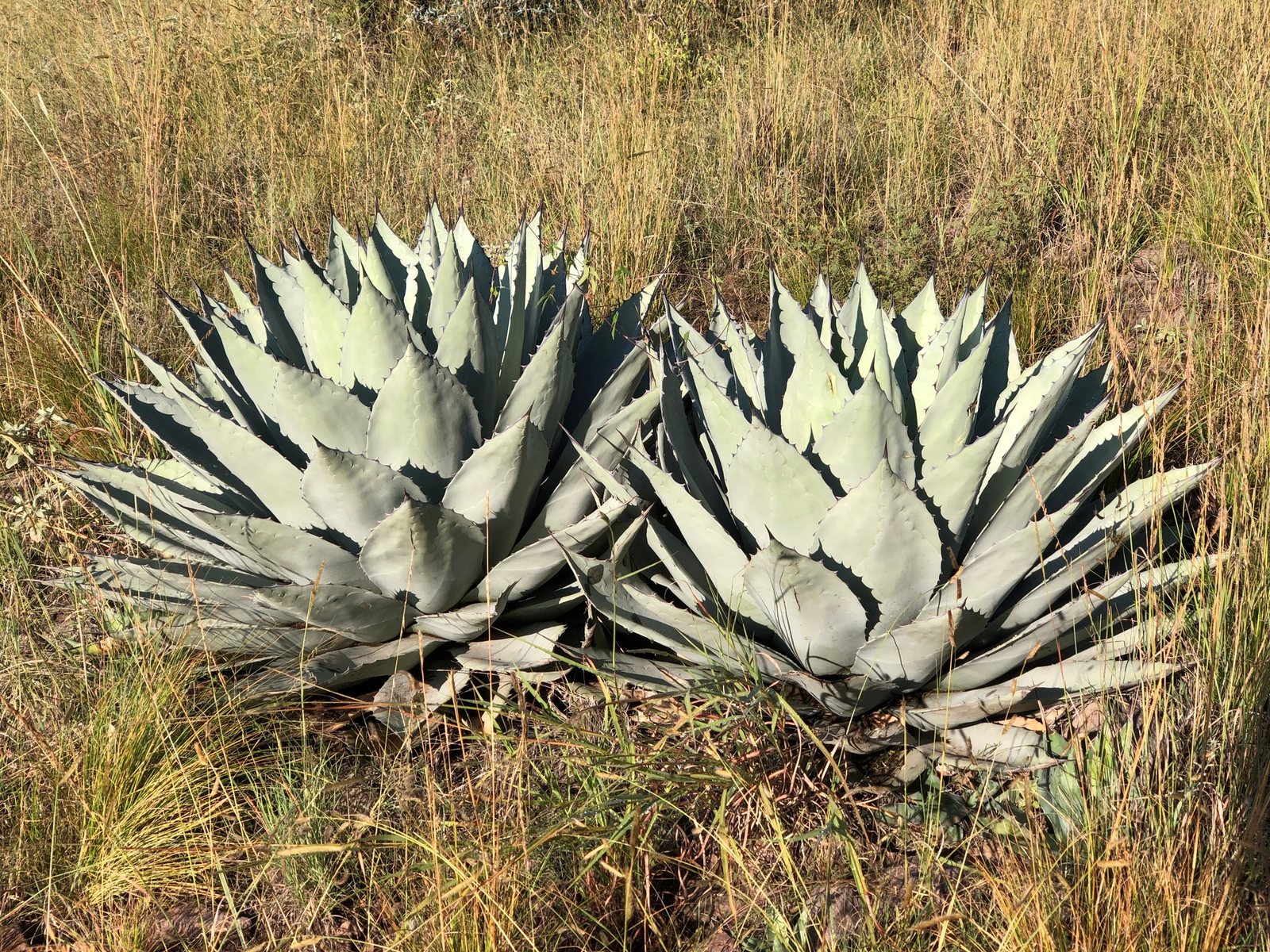
Havard's agave forms a broad, evergreen rosette of blue-grey leaves edged with strong teeth and tipped with sharp spines. Gardeners grow this slow-growing southwestern desert plant for its sculptural shape and drought tolerance; its considerable cold hardiness depends on excellent drainage and a dry crown in winter.
At a glance
- Sun
- Full sun; some afternoon shade is useful in exceptionally hot desert gardens.
- Water
- Low once established. Water young plants during prolonged dry spells, but let the soil dry between waterings; keep nearly dry in winter.
- Soil
- Sharply drained, sandy, gravelly or rocky soil, including alkaline soil. Avoid heavy clay, low spots and moisture-retentive potting compost.
- Height
- 2-3 ft (0.6-0.9 m); flower stalk approximately 10-15 ft (3-4.6 m)
- Spread
- 3-4 ft (0.9-1.2 m)
- Flowers
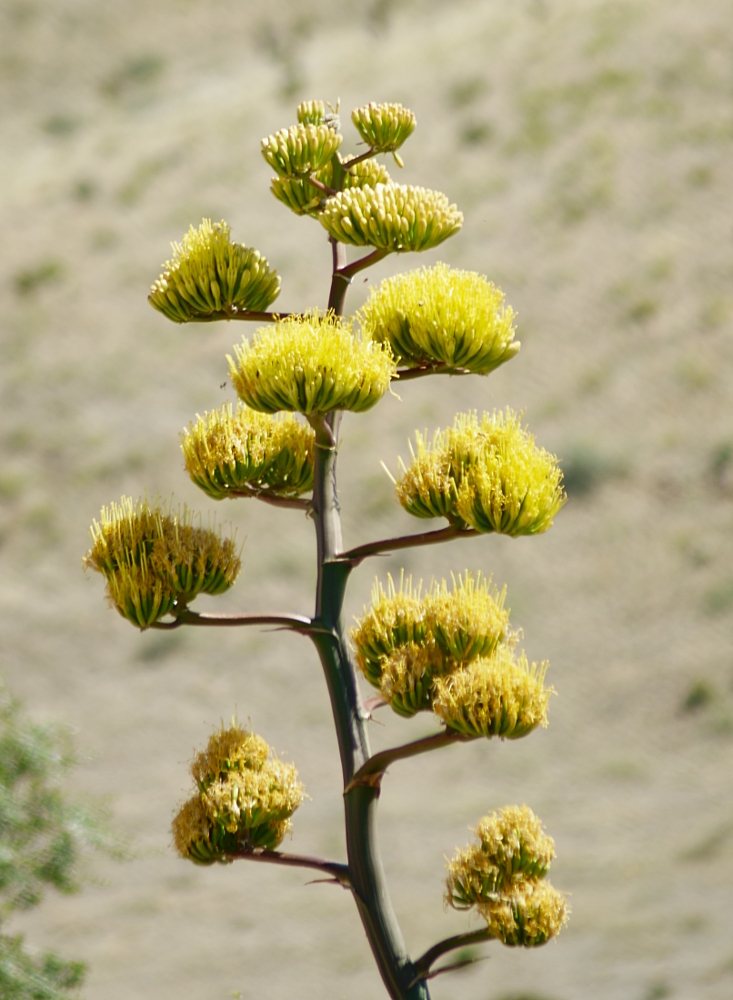
- A mature rosette produces a tall, branched stalk of yellow to yellow-green flowers in late spring or summer, usually after many years. The flowering rosette then dies.
- Foliage
- Evergreen. Thick, broad, blue-grey leaves form a tight rosette, with dark marginal teeth and a strong terminal spine.
- Growth
- Slow
- Care needed
- Low
The year at a glance
- Pollinators
- Deer resistant
- Drought tolerant
- Heat tolerant
- Low allergen
| J | F | M | A | M | J | J | A | S | O | N | D | |
|---|---|---|---|---|---|---|---|---|---|---|---|---|
| Flowers | ||||||||||||
| Plant |
Northern hemisphere months. In Australia, shift them by six.
- Difficulty
- Moderate
- Toughness
- Fairly tough
Will it suit your garden?
Pick your zone, country, light and whether you have pets.
Full sun is 6 or more hours of direct sun a day, part shade 3 to 6 hours, shade under 3.
How it grows
Planting day
0.8 ft (0.25 m)
After 1 year
1 ft (0.3 m)
After 2 years
1.2 ft (0.35 m)
After 3 years
1.3 ft (0.41 m)
After 5 years
1.7 ft (0.51 m)
About 10 years to full size.
From a typical nursery size, at an average rate for this kind of plant. A rule of thumb, not a forecast.
Good to know
- Cats and dogs
- Mildly toxic: may upset a stomach
- Native to
- the US
- Growth rate
- Slow
Care
Jobs through the year
- WaterApr–May, Sep, every 30 days
- Water established plants only if thoroughly dry; young plants need more frequent checks.
- WaterJun–Aug, every 21 days
- Soak at soil level only during prolonged drought, allowing soil to dry fully.
- MulchApr–May
- Refresh gravel mulch without covering the crown or leaf bases.
- PruneApr–May
- Remove only fully dead leaves; wear thick gloves and eye protection.
- ProtectJan–Mar, Oct–Dec
- Use an open-sided rain shelter in wet winters and keep the crown clear of debris.
- Plant in spring on a raised gravel bed or slope, keeping the crown above the surrounding soil.
- Water at soil level during establishment, allowing the root zone to dry between soakings.
- Use gravel mulch rather than bark, and keep mulch clear of the leaf bases.
- Avoid routine feeding; rich soil and excess fertiliser encourage softer growth.
- In wet-winter climates, provide an open-sided rain shelter or move a container plant under cover.
- Wear thick gloves and eye protection, and leave ample clearance from paths, play areas and pets.
Pruning. In spring, remove only completely dead lower leaves, cutting close to their bases without damaging the crown. After flowering, remove the dead rosette once any offsets are established, using protective clothing and tools suited to the heavy, spiny growth.
Through the year
- Spring
- Plant or repot once severe frost has passed, using a sharply drained mineral-rich growing mix.
- Late spring
- Check for winter damage and remove fully dead leaves without cutting healthy tissue.
- Summer
- Water newly planted specimens during extended drought, letting the soil dry thoroughly between applications.
- Late summer
- Check the crown and leaf bases for weevil damage, soft tissue or trapped debris.
- Autumn
- Reduce watering and arrange rain protection where winters are wet.
- Winter
- Keep the crown free of fallen leaves and avoid watering dormant plants unless a sheltered container becomes excessively dry.
In the garden
- Use as a single architectural focal point in a sunny gravel courtyard, set well back from circulation routes.
- Plant on a raised, rocky slope with hardy yuccas and drought-tolerant grasses for contrasting forms.
- Repeat widely spaced rosettes through a dry border to create a strong rhythm without crowding the leaves.
- Grow in a large, frost-resistant container where winter rain protection is easier to provide.
Garden styles it suits: Desert modern, Architectural minimal, Desert / xeriscape, Dry gravel garden, Southwestern and Modern Mediterranean.
Plant it with: Red yucca, Banana yucca, Blue grama grass, Prairie dropseed, Ice plant and Lavender.
Wildlife: The flowers provide nectar and pollen for visiting insects. Flowering is infrequent, so this is not a dependable annual source of food for pollinators.
Problems to watch for
- Crown and root rot: prevent standing water, improve drainage and keep winter rain out of the crown; badly rotted plants usually cannot be saved.
- Agave snout weevil in regions where it occurs: watch for sudden collapse, loose central leaves and a foul smell; remove infested plants and larvae promptly.
- Winter injury in wet soil: use a raised mineral bed and rain shelter; do not assume dry-climate cold tolerance applies to damp gardens.
- Scorch after moving a sheltered plant outdoors: introduce it to strong sun gradually over several weeks.
Safety
Agave sap can cause marked skin and eye irritation, and chewing the leaves may irritate the mouth and digestive tract of people, cats and dogs. Specific poisoning information for Agave havardiana, particularly in horses, is limited; do not allow grazing or chewing. The sharp leaf teeth and terminal spines can also cause serious puncture injuries.
Easily confused with
Parry's agave (Agave parryi)
Usually forms a smaller, more compact rosette with shorter leaves; Havard's agave generally has a larger, more open rosette. Forms overlap, so identification from foliage alone can be difficult.
Century plant (Agave americana)
Usually becomes much larger, with longer, more arching leaves and more abundant offsets; it is also substantially less cold-hardy.
New Mexico agave (Agave neomexicana)
Generally has a smaller rosette with narrower, more upright leaves, compared with the broad leaves of Havard's agave.
The name
The name honours Valery Havard, a French-born US Army surgeon and botanist who studied plants of the southwestern United States.
Propagation. Raise from seed in a warm, freely draining medium. Some plants produce a few offsets; separate these in spring when they have roots, let cut surfaces dry, then pot into a gritty mix and water sparingly.
Checked against open data
- Accepted botanical name
- Agave havardiana
- In the US and Canada
- Native in the lower 48 states.
- Native range
- Mexico Northeast and Texas.
Sources: GBIF (CC BY 4.0), USDA PLANTS and Trefle (CC BY 4.0). The care and design notes are LandscapeGPT's own.
See it in your own yard.
Upload a photo of your yard and see it redesigned with plants that suit your climate, each checked against your zone.