Banana yucca
Yucca baccata. Family Asparagaceae. Succulent.
Also called Datil yucca, Blue yucca.
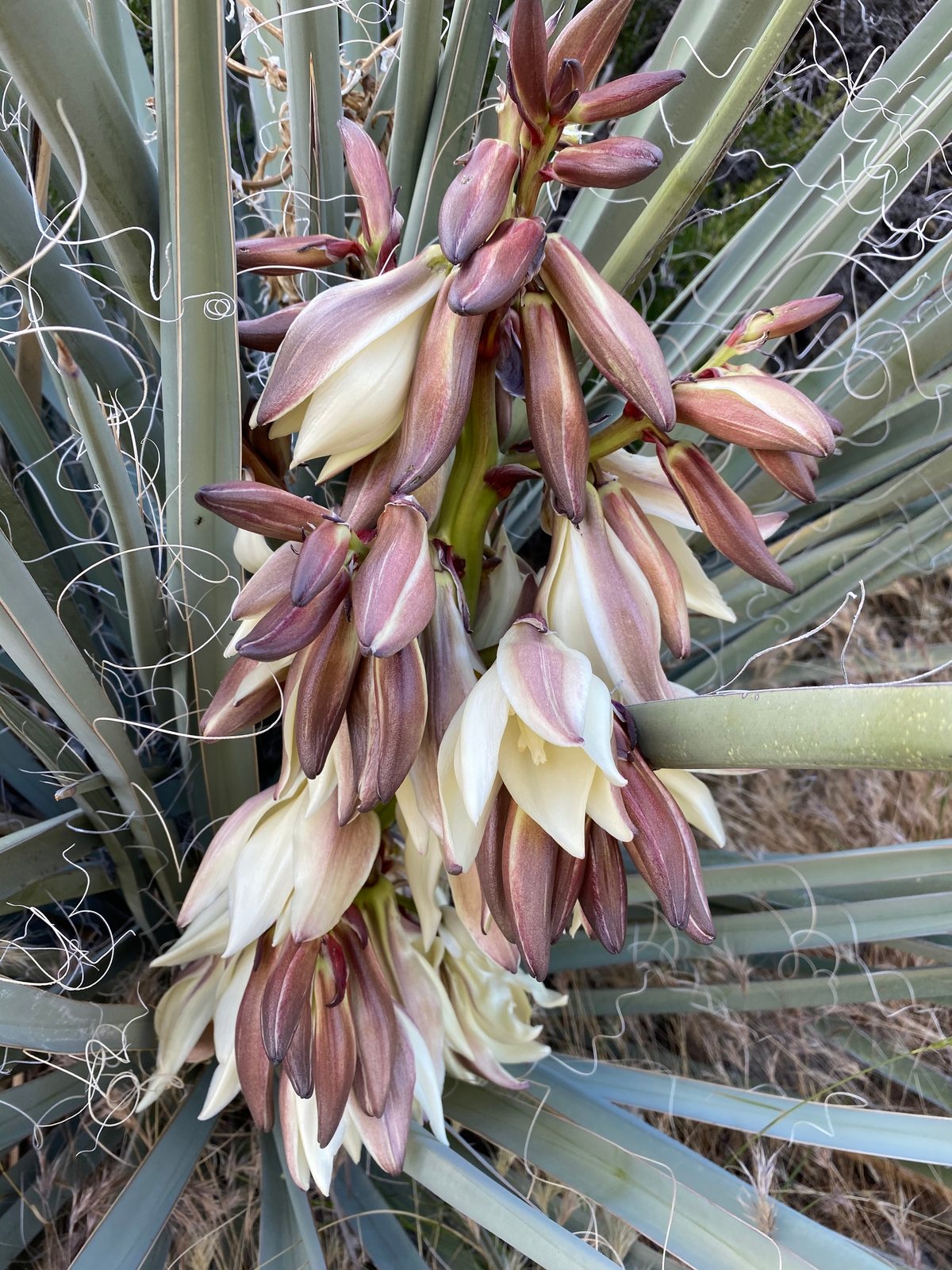
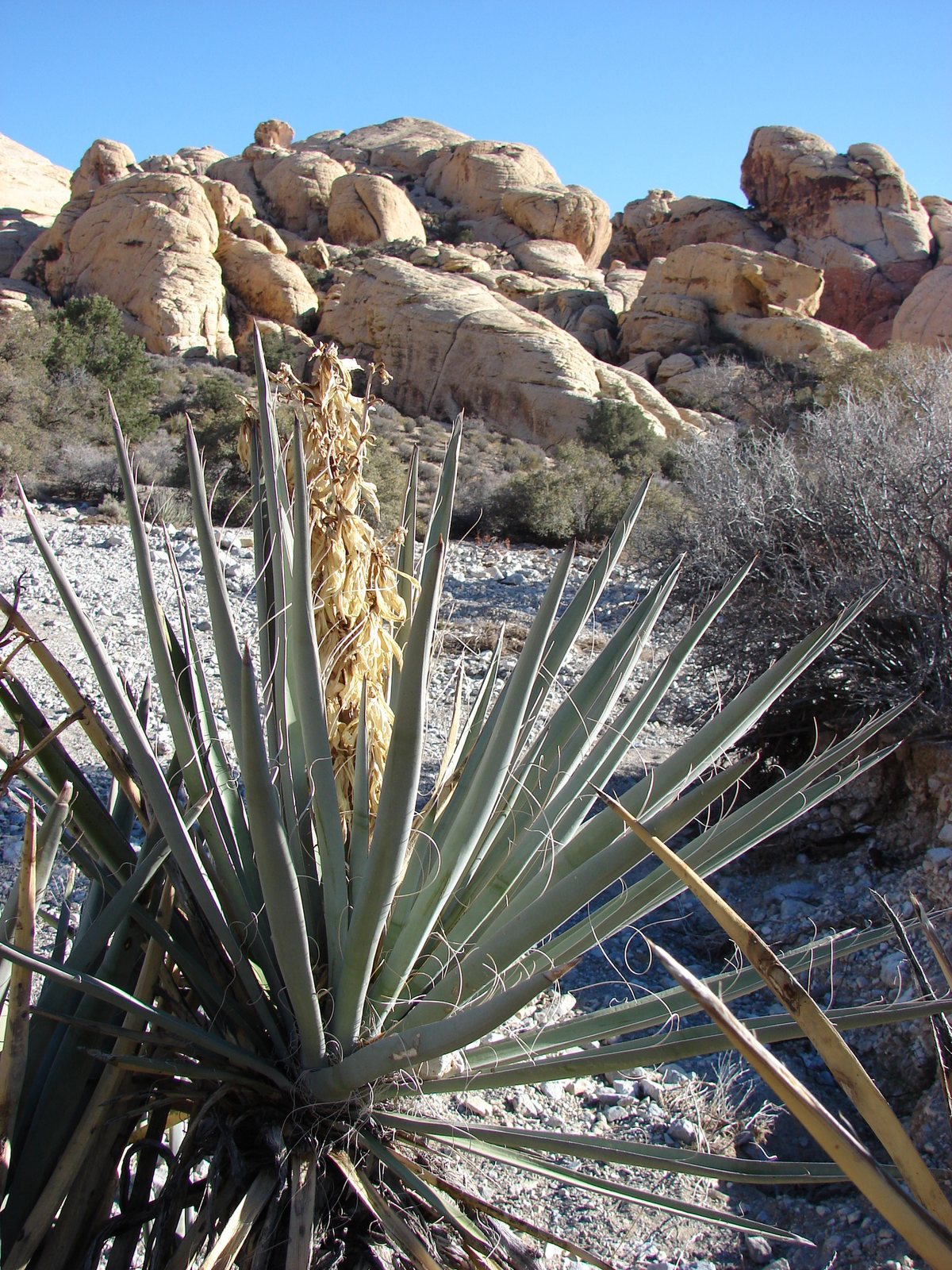
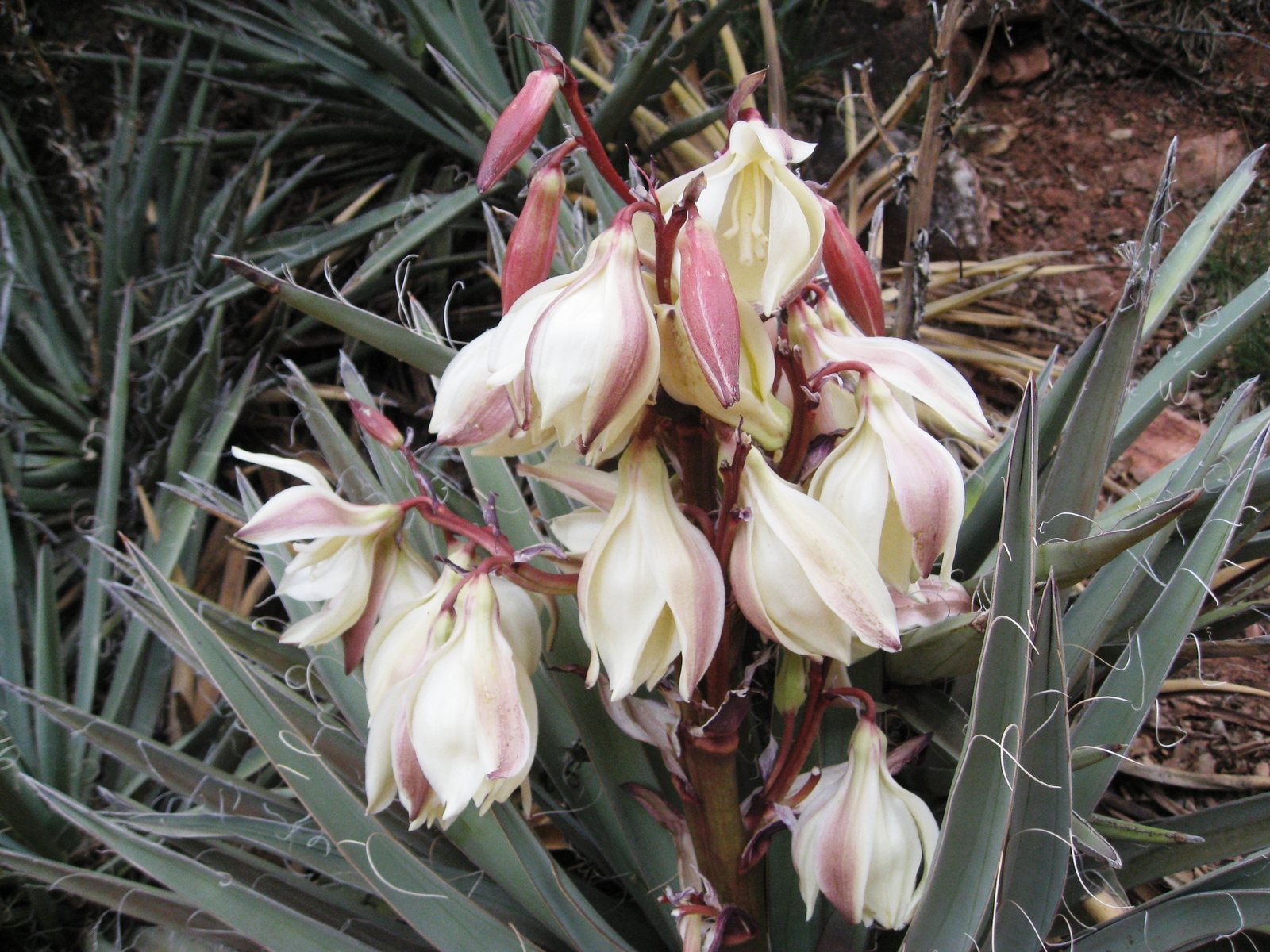
Banana yucca is a slow-growing evergreen from the southwestern United States and northern Mexico, forming stout rosettes of rigid, blue-green leaves. Gardeners grow it for its strong outline, drought tolerance and hanging cream flowers; its fleshy, banana-shaped fruits usually develop only where suitable yucca moth pollinators occur.
At a glance
- Sun
- Full sun; tolerates light shade but flowers less freely.
- Water
- Low once established. Water young plants during prolonged dry spells; established plants need little supplementary water except in extended drought.
- Soil
- Sharply drained sandy, gravelly or rocky soil, from slightly acidic to alkaline. Avoid heavy, wet ground, particularly in winter.
- Height
- 2-4 ft (0.6-1.2 m); flower stalks may reach 4-6 ft (1.2-1.8 m)
- Spread
- 3-6 ft (0.9-1.8 m), eventually wider where offsets form a colony
- Flowers
- Spring to early summer; large, hanging creamy-white flowers, sometimes flushed purple, on stout stalks. Flowering can be irregular.
- Foliage
- Evergreen. Thick, rigid, blue-green sword-shaped leaves with curling white threads along the edges and a sharp terminal spine.
- Growth
- Slow
- Care needed
- Low
The year at a glance
- Pollinators
- Deer resistant
- Drought tolerant
- Heat tolerant
- Wildlife
- Low allergen
| J | F | M | A | M | J | J | A | S | O | N | D | |
|---|---|---|---|---|---|---|---|---|---|---|---|---|
| Flowers | ||||||||||||
| Fruit | ||||||||||||
| Plant |
Northern hemisphere months. In Australia, shift them by six.
- Difficulty
- Easy
- Toughness
- Very tough
Will it suit your garden?
Pick your zone, country, light and whether you have pets.
Full sun is 6 or more hours of direct sun a day, part shade 3 to 6 hours, shade under 3.
How it grows
Planting day
0.8 ft (0.25 m)
After 1 year
1 ft (0.32 m)
After 2 years
1.3 ft (0.39 m)
After 3 years
1.5 ft (0.45 m)
After 5 years
1.9 ft (0.59 m)
About 10 years to full size.
From a typical nursery size, at an average rate for this kind of plant. A rule of thumb, not a forecast.
Good to know
- Cats and dogs
- Toxic
- Native to
- the US
- Growth rate
- Slow
Care
Jobs through the year
- WaterApr–May, Sep, every 30 days
- Established plants need water only in exceptional drought; water young plants more often, letting soil dry.
- WaterJun–Aug, every 21 days
- Water established plants deeply only during extended drought; allow soil to dry between soakings.
- MulchApr
- Use a thin gravel mulch and keep the raised crown clear of soil, mulch and fallen leaves.
- PruneMar–Apr
- Remove completely dead lower leaves only, wearing gloves and eye protection.
- DivideMay–Jun
- If wanted, separate rooted offsets and let cut surfaces dry before replanting.
- PruneJul–Aug
- Remove finished stalks unless retaining fruit; fruit set usually requires native yucca moths.
- ProtectOct–Nov
- Clear crown debris and maintain excellent drainage against persistent winter rain.
- Plant with the crown above surrounding soil level, using a raised bed or mound where drainage is doubtful.
- Water deeply after planting, then let the soil dry before watering again; reduce watering as roots establish.
- Use a thin gravel mulch, keeping the crown clear of mulch and fallen leaves.
- Do not feed routinely; rich soil and heavy feeding are unnecessary.
- Keep the pointed leaves well away from paths, play areas and places where pets pass.
Pruning. Cut spent flower stalks near their base once flowering finishes, unless you want to retain developing fruit. In spring, remove only completely dead lower leaves, wearing gloves and eye protection; do not cut back the living rosette.
Through the year
- Spring
- Remove dead leaves and check that gravel, debris or soil has not collected around the crown.
- Spring
- Plant into free-draining ground after severe frost has passed, allowing room for the full leaf spread.
- Late spring
- Separate rooted offsets if needed, allowing any cut surfaces to dry before replanting.
- Summer
- Water recently planted specimens during dry spells; let the soil dry between soakings.
- Late summer
- Remove finished flower stalks if no fruit is developing or wanted.
- Winter
- Keep container plants sheltered from persistent rain and make sure drainage holes remain clear.
In the garden
- Use as a sculptural focal point in a gravel garden, with open space around the rosette.
- Combine with low drought-tolerant grasses and flowering perennials for contrasting leaf shapes and softer edges.
- Plant on a sunny, freely drained bank where a developing colony can help fill difficult dry ground.
- Grow in a large, frost-resistant container with a gritty potting mix for an architectural courtyard accent.
Garden styles it suits: Desert modern, Architectural minimal, Dry gravel garden, Desert / xeriscape, Southwestern and Winter interest.
Plant it with: Blue grama, Prairie dropseed, Firecracker penstemon, Desert marigold, Blanket flower and Prickly pear.
Wildlife: Specialist yucca moths pollinate the flowers and lay eggs in them; their larvae consume some developing seeds. Fruits provide food for wildlife in its native range. Plants outside the moths' range may flower without setting fruit.
Problems to watch for
- Root or crown rot in wet soil: improve drainage, stop unnecessary watering and replace badly rotted plants in a drier position.
- Yucca weevils in regions where they occur: watch for collapsing crowns and larval tunnelling; remove and dispose of badly infested plants.
- Scale insects: inspect leaf bases and remove small infestations by hand; use a labelled treatment if persistent, testing it on a small area first.
- Brown leaf tips or spotting after prolonged damp weather: improve airflow, keep irrigation off the foliage and remove dead leaves once conditions dry.
Safety
Yucca contains saponins and is toxic if eaten by cats, dogs or horses; roots and other vegetative parts should not be chewed. Ingestion can cause vomiting or diarrhoea, and substantial amounts may cause more serious illness. For people, the ripe fruit has a history of use as food, usually cooked, but roots and leaves should not be eaten; sap may irritate skin. The sharp leaf tips can cause serious puncture or eye injuries to people and animals.
Easily confused with
Narrowleaf yucca (Yucca angustissima)
Has much narrower, grasslike leaves and dry seed capsules rather than banana yucca's fleshy fruits.
Soaptree yucca (Yucca elata)
Develops a conspicuous trunk with narrow, flexible leaves and tall, airy flower stalks; banana yucca usually stays low and has broader, stouter leaves.
Adam's needle (Yucca filamentosa)
Also has thread-edged leaves, but they are generally flatter and less rigid; its flower stalk rises well above the foliage and its fruit is a dry capsule.
The name
The species name baccata means berry-bearing, while banana yucca refers to the shape of its fleshy fruits.
Propagation. Separate rooted offsets in spring and replant into sharply drained soil, letting cut surfaces dry first. Seed can be sown in warmth, but seedlings develop slowly and may take many years to flower.
Checked against open data
- Accepted botanical name
- Yucca baccata
- In the US and Canada
- Native in the lower 48 states.
- Native range
- Arizona, California, Colorado, Mexico Northeast, Mexico Northwest, Nevada, New Mexico, Texas and Utah.
- Measured
- Soil pH 7 to 8.5. Average height 122 cm.
Sources: GBIF (CC BY 4.0), USDA PLANTS and Trefle (CC BY 4.0). The care and design notes are LandscapeGPT's own.
See it in your own yard.
Upload a photo of your yard and see it redesigned with plants that suit your climate, each checked against your zone.