Desert marigold
Baileya multiradiata. Family Asteraceae. Perennial.
Also called Showy desert marigold, Paper daisy.
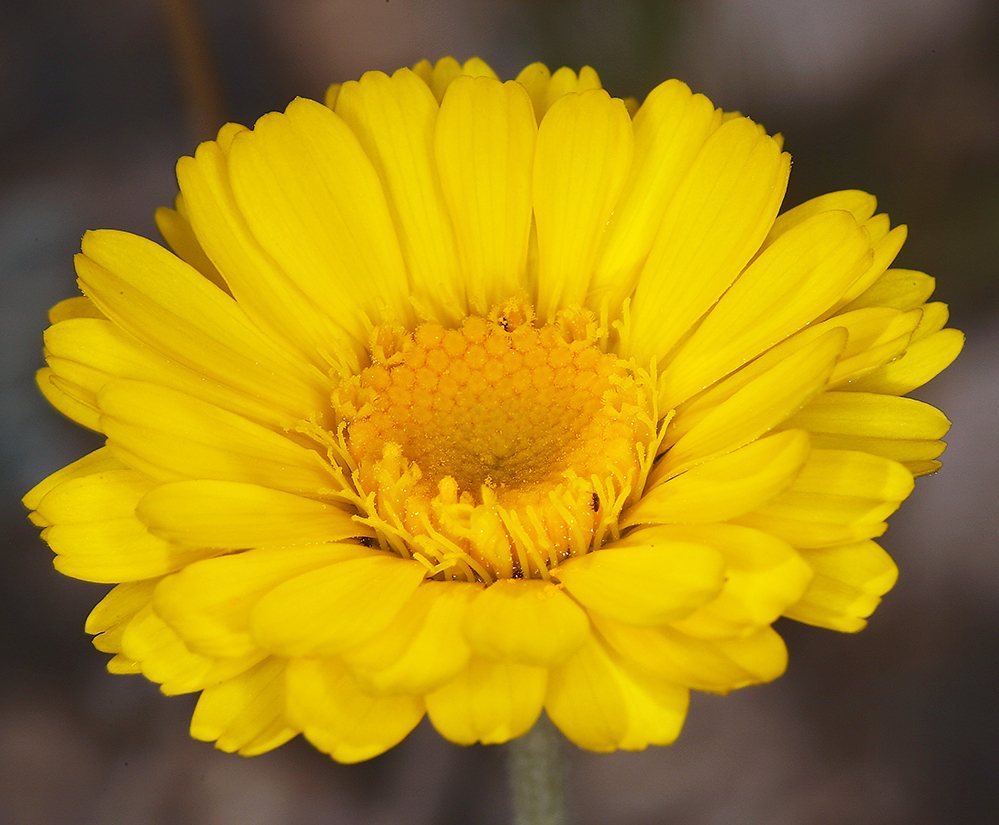
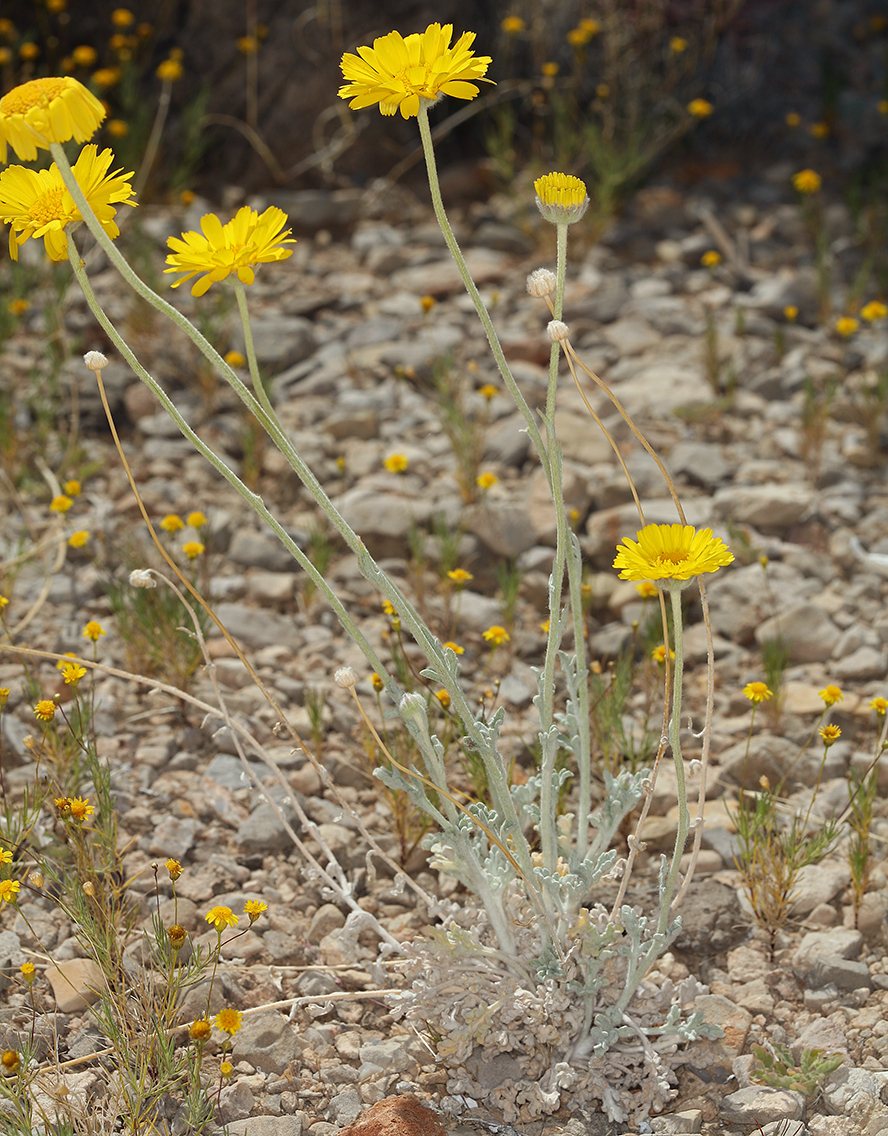
Desert marigold is a short-lived perennial native to the southwestern United States and northern Mexico, grown for its woolly silver foliage and bright yellow daisies. It suits sunny, dry gardens with excellent drainage; in colder climates it is grown as an annual, and wet winters can kill it even where temperatures are otherwise suitable.
At a glance
- Sun
- Full sun; flowering and compact growth are best with at least six hours of direct sun.
- Water
- Low once established. Water young plants while they root, then allow the soil to dry thoroughly between waterings.
- Soil
- Lean, sandy or gravelly soil with excellent drainage; tolerates alkaline conditions. Avoid heavy clay and moisture-retentive, richly amended beds.
- Height
- 1-2 ft (0.3-0.6 m)
- Spread
- 1-2 ft (0.3-0.6 m)
- Flowers
- Bright yellow daisies from spring into autumn, often in flushes after rain; flowering may pause during severe drought or extreme heat.
- Foliage
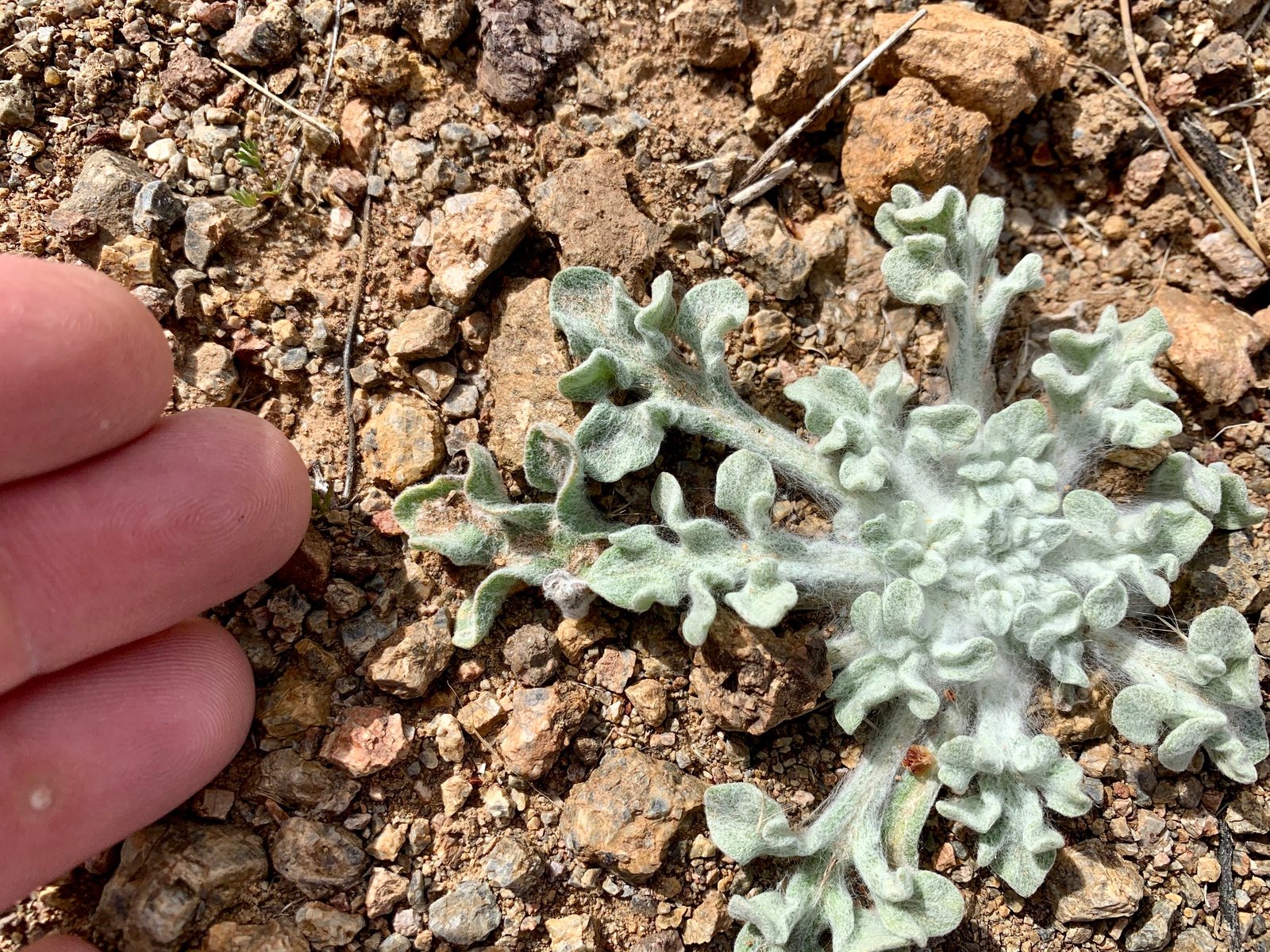
- Evergreen. Soft, woolly, silver-grey leaves, often lobed, clustered mainly near the base beneath slender flower stems.
- Growth
- Fast; can flower in its first year from seed.
- Care needed
- Low
The year at a glance
- Pollinators
- Deer resistant
- Drought tolerant
- Heat tolerant
- Low allergen
| J | F | M | A | M | J | J | A | S | O | N | D | |
|---|---|---|---|---|---|---|---|---|---|---|---|---|
| Flowers | ||||||||||||
| Fruit | ||||||||||||
| Plant |
Northern hemisphere months. In Australia, shift them by six.
- Difficulty
- Moderate
- Toughness
- Fairly tough
Will it suit your garden?
Pick your zone, country, light and whether you have pets.
Full sun is 6 or more hours of direct sun a day, part shade 3 to 6 hours, shade under 3.
How it grows
Planting day
1 ft (0.3 m)
After 1 year
1.2 ft (0.38 m)
After 2 years
1.5 ft (0.45 m)
full size
About 2 years to full size.
From a typical nursery size, at an average rate for this kind of plant. A rule of thumb, not a forecast.
Good to know
- Cats and dogs
- Toxic
- Growth rate
- Fast
Care
Jobs through the year
- WaterApr–May, Sep, every 28 days
- For established plants, water only if soil is thoroughly dry; water young plants more often.
- WaterJun–Aug, every 21 days
- Water established plants deeply only during prolonged drought; skip if soil remains moist.
- PruneMar–Apr
- Remove winter-killed leaves and stems without cutting healthy basal growth.
- MulchApr–May
- Apply a thin gravel mulch, keeping the crown uncovered.
- DeadheadMay–Oct, every 14 days
- Remove spent stems near the base; leave a few to produce replacement seedlings.
- ProtectJan–Mar, Nov–Dec
- Keep the crown dry under ventilated rain shelter; overwinter containers under cover in zone 6.
- Plant in a sunny gravel bed, raised bed or sharply drained container.
- Water at soil level during establishment; reduce watering once new growth is strong.
- Skip routine feeding and rich compost, which encourage weak growth.
- Use gravel rather than moisture-holding organic mulch around the crown.
- Keep the crown dry in winter; foliage may die back in cold weather or prolonged drought.
Pruning. Remove spent flower stems near the base to tidy the plant and encourage further flowering, leaving some seed heads if you want seedlings. In spring, remove dead foliage and stems without cutting into healthy basal growth.
Through the year
- Early spring
- Remove winter-damaged foliage and check that water drains freely around the crown.
- Spring
- Sow seed or plant young plants after severe frost has passed; water regularly only while roots establish.
- Late spring
- Thin crowded seedlings and remove early spent flower stems if you want a tidier display.
- Summer
- Water established plants only during prolonged dry spells, allowing the soil to dry between soakings.
- Autumn
- Leave a few seed heads to ripen; in mild, dry-winter climates, sow seed for spring flowers.
- Winter
- Keep irrigation off unless conditions are unusually dry, and protect container plants from persistent rain.
In the garden
- Plant loose groups through a gravel garden, where yellow flowers contrast with pale stone and silver foliage.
- Use along the sunny front of a dry border with red yucca and blue grama for contrasting shapes.
- Scatter among widely spaced agaves and boulders in a southwestern planting.
- Grow in sharply drained pots on a sunny patio where winter rainfall can be controlled.
Garden styles it suits: Desert modern, Southwestern, Desert / xeriscape, Dry gravel garden, Pollinator garden and Low-maintenance.
Plant it with: Red yucca, Parry's agave, Blue grama, Blackfoot daisy, Desert penstemon and Brittlebush.
Wildlife: Flowers provide pollen and nectar for bees and other visiting insects. Leaving some flowers to set seed also supports natural renewal of the planting.
Problems to watch for
- Root or crown rot in wet soil: improve drainage, keep mulch away from the crown and reduce watering; replace badly rotted plants.
- Weak, sprawling growth in shade or rich soil: move to full sun and stop feeding.
- Poor survival in humid or wet-winter climates: use a sheltered, sharply drained container or grow as a seasonal annual.
- Short lifespan: allow a few seedlings to establish or collect seed regularly to replace older plants.
Safety
Known to cause serious poisoning in grazing livestock, particularly sheep and goats; dried plant material can remain hazardous. Keep all parts out of horse pasture and hay. Reliable toxicity information for horses, cats, dogs and people is limited, so prevent ingestion and do not use the flowers as edible marigolds.
Easily confused with
Desert sunflower (Geraea canescens)
Usually a larger annual with broader leaves carried along leafy stems; desert marigold has a more distinct basal clump of woolly, often lobed leaves and relatively leafless flower stalks.
Stemless four-nerve daisy (Tetraneuris acaulis)
Forms a low tuft of narrow, mostly unlobed leaves and generally has fewer yellow ray florets; desert marigold has broader, often deeply lobed silver leaves and fuller-looking flower heads.
Pot marigold (Calendula officinalis)
Has greener, broader leaves on leafy stems and yellow or orange flowers; it lacks desert marigold's woolly silver basal foliage.
The name
Baileya honours American microscopist Jacob Whitman Bailey, while multiradiata means many-rayed, referring to the numerous yellow ray florets.
Propagation. Grow from seed, sown in spring or in autumn where winters are mild. Press seed onto a freely draining seed mix, cover very lightly and keep lightly moist until germination. Transplant seedlings while small; established plants may self-seed in open gravel.
Checked against open data
- Accepted botanical name
- Baileya multiradiata
- Native range
- Arizona, California, Mexico Northeast, Mexico Northwest, Mexico Southwest, Nevada, New Mexico, Texas and Utah.
- Measured
- Average height 12 cm.
Sources: GBIF (CC BY 4.0) and Trefle (CC BY 4.0). The care and design notes are LandscapeGPT's own.
See it in your own yard.
Upload a photo of your yard and see it redesigned with plants that suit your climate, each checked against your zone.