Blackfoot daisy
Melampodium leucanthum. Family Asteraceae. Perennial.
Also called Plains blackfoot, Rock daisy.
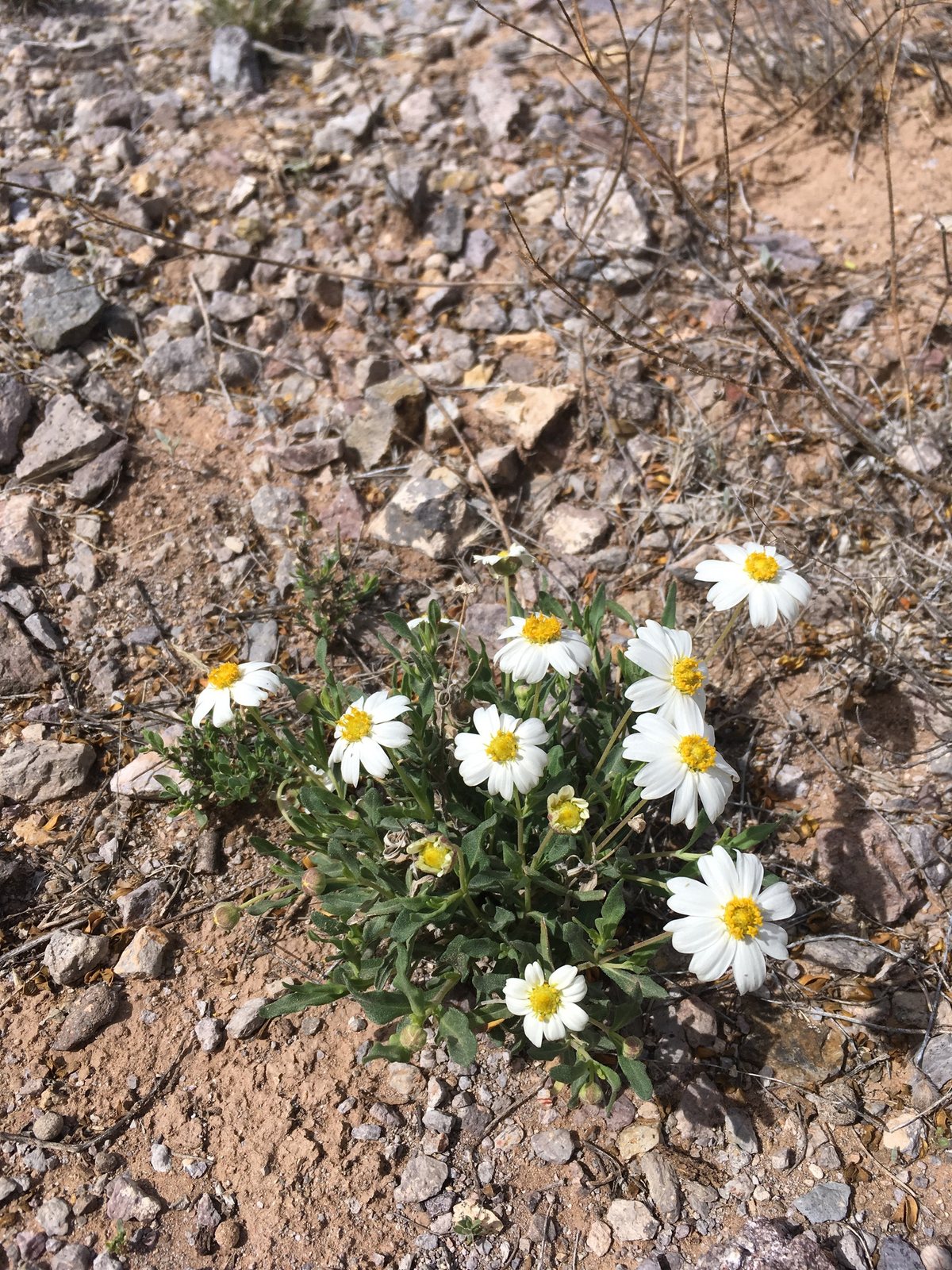
Blackfoot daisy is a low, mounding perennial native to the southwestern and south-central United States and northern Mexico. Gardeners grow it for its white, yellow-centred daisies, long flowering season and tolerance of heat, drought and lean, rocky soil. Excellent drainage is essential, especially in climates with wet winters.
At a glance
- Sun
- Full sun; tolerates light afternoon shade in very hot climates, but flowers less in shade.
- Water
- Low once established. Water new plants regularly while they root, then let the soil dry between deep waterings.
- Soil
- Lean, sharply drained sandy, gravelly or rocky soil; tolerates limestone and alkaline conditions. Avoid heavy clay and persistently damp soil.
- Height
- 0.5-1 ft (0.15-0.3 m)
- Spread
- 1-2 ft (0.3-0.6 m)
- Flowers
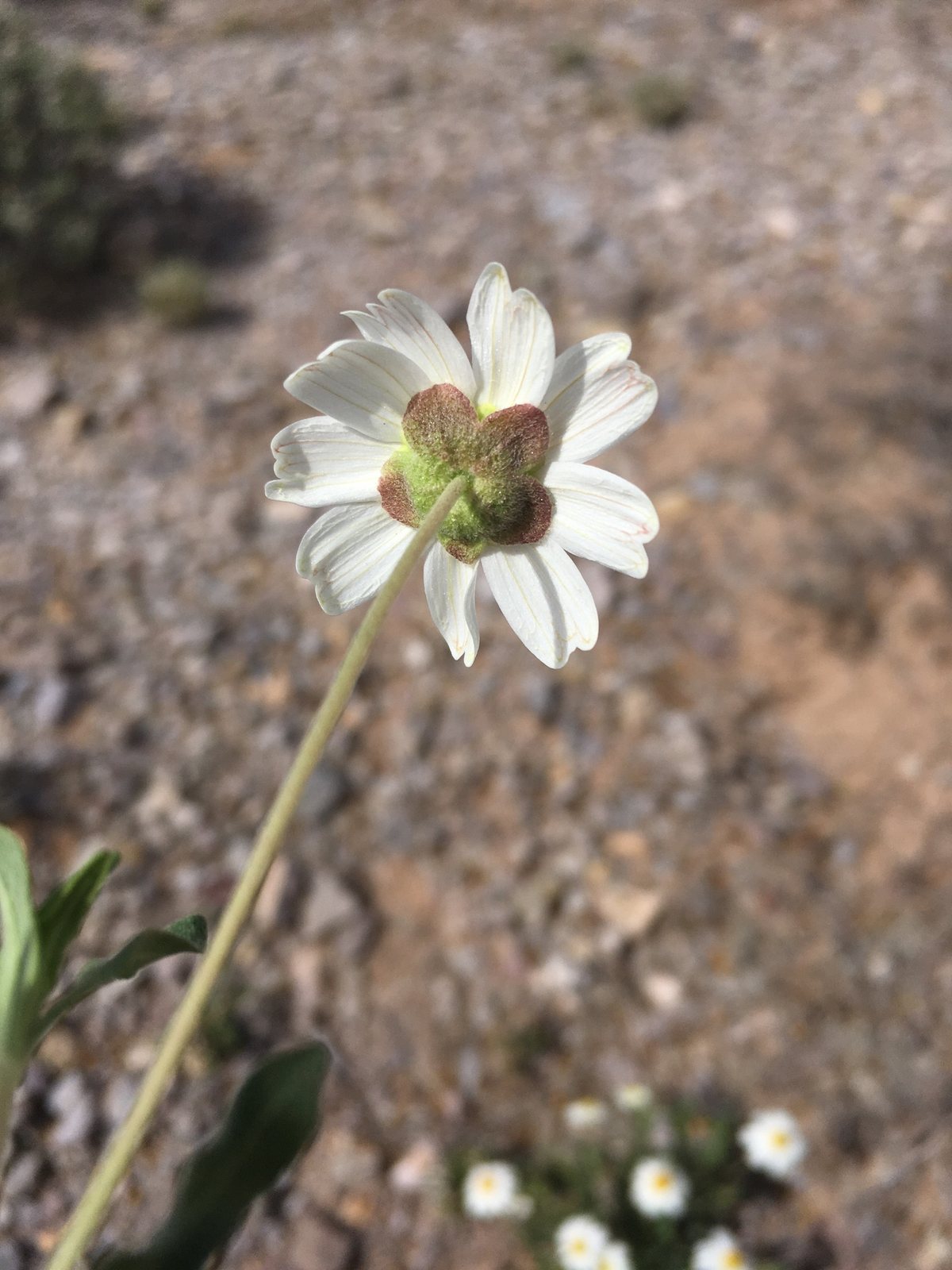
- White daisies with yellow centres from spring to autumn in warm climates; mainly late spring through summer in colder areas. Flowering may pause during severe drought.
- Foliage
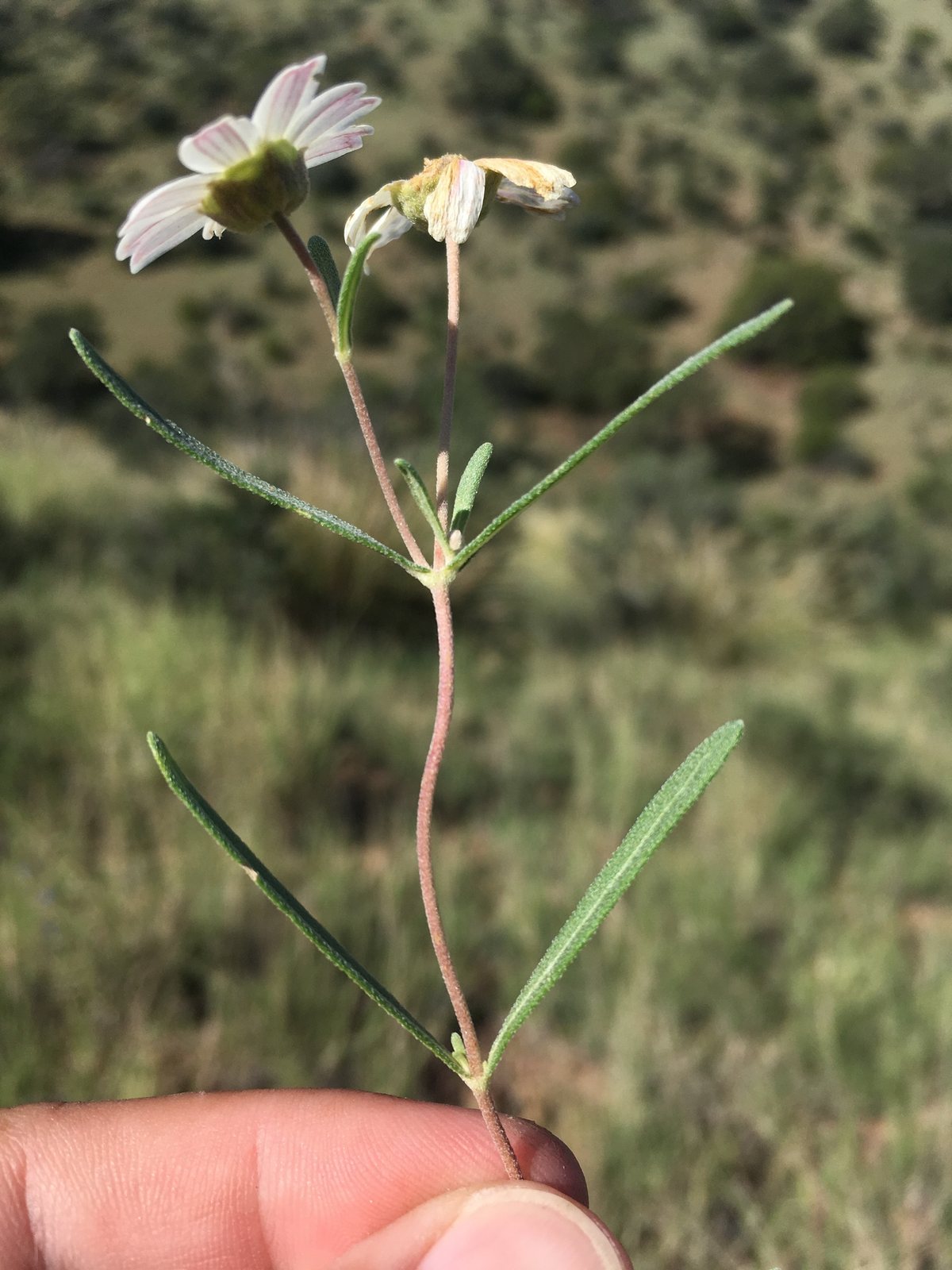
- Narrow, slightly hairy, grey-green leaves on branching stems; evergreen in mild climates, but foliage may die back in cold winters.
- Growth
- Moderate; often reaches a useful flowering size in its first growing season.
- Care needed
- Low
The year at a glance
- Pollinators
- Deer resistant
- Drought tolerant
- Heat tolerant
- Low allergen
| J | F | M | A | M | J | J | A | S | O | N | D | |
|---|---|---|---|---|---|---|---|---|---|---|---|---|
| Flowers | ||||||||||||
| Fruit | ||||||||||||
| Plant |
Northern hemisphere months. In Australia, shift them by six.
- Difficulty
- Moderate
- Toughness
- Fairly tough
Will it suit your garden?
Pick your zone, country, light and whether you have pets.
Full sun is 6 or more hours of direct sun a day, part shade 3 to 6 hours, shade under 3.
How it grows
Planting day
0.7 ft (0.22 m)
full size
About 3 years to full size.
From a typical nursery size, at an average rate for this kind of plant. A rule of thumb, not a forecast.
Good to know
- Cats and dogs
- Safe
- Native to
- the US
- Growth rate
- Moderate
Care
Jobs through the year
- WaterApr–May, Sep, every 21 days
- Water established ground plants only if thoroughly dry; water new plants more often while rooting.
- WaterJun–Aug, every 14 days
- Give established ground plants a deep soak only during extended dry spells; skip when soil is moist.
- PruneMar–Apr
- Remove winter damage and lightly shape the mound without cutting into bare old stems.
- PruneJul–Aug
- Lightly trim sprawling growth after a flowering flush only if needed.
- MulchApr–May
- Use a thin gravel mulch and leave the crown uncovered.
- ProtectJan–Mar, Oct–Dec
- Keep wet leaves off the crown and maintain sharp drainage; winter wet is the main risk.
- Plant with the crown at soil level in a sunny spot with excellent drainage.
- Water during establishment, then water deeply only when the soil has dried; avoid frequent lawn irrigation.
- Skip routine feeding; rich soil and heavy fertilising encourage loose growth and fewer flowers.
- Use a thin gravel mulch rather than moisture-holding organic mulch, keeping the crown uncovered.
- In wet climates, use a raised gravel bed or a container with unobstructed drainage holes.
Pruning. In early spring, remove dead or winter-damaged stems and lightly trim the remaining growth to maintain a compact mound. A light trim after a flowering flush can tidy the plant; avoid cutting hard into old, leafless stems.
Through the year
- Spring
- Plant after severe frosts have passed, using a sharply drained bed or container.
- Early spring
- Remove winter damage and lightly shape established plants as new growth begins.
- Late spring
- Check that new plants are rooting well, then gradually lengthen the interval between waterings.
- Summer
- Water established plants only during extended dry spells; lightly trim sprawling growth after a flowering flush.
- Autumn
- Collect ripe, dry seed heads if you want to raise replacement plants.
- Winter
- Keep the crown free of wet leaves and check that rain drains away promptly.
In the garden
- Edge sunny gravel paths with low mounds of white flowers.
- Plant among rocks and small boulders, where its soft outline contrasts with stone.
- Combine with red yucca, agaves and small ornamental grasses in a dry border.
- Use in a well-drained patio container where garden soil stays too wet.
- Repeat small groups through a southwestern native planting to provide flowers near ground level.
Garden styles it suits: Desert / xeriscape, Southwestern, Dry gravel garden, Pollinator garden, Texas Hill Country and White garden.
Plant it with: Red yucca, Autumn sage, Damianita, Blue grama, Purple prairie clover and Parry's agave.
Wildlife: Flowers provide nectar and pollen for native bees, small butterflies and other visiting insects.
Problems to watch for
- Root and crown rot in wet soil: improve drainage or move the plant to a raised gravel bed; replace badly rotted plants.
- Loose, floppy growth with fewer flowers: provide more sun, stop fertilising and reduce unnecessary watering.
- Winter losses in damp climates: keep the crown dry and exposed, avoid thick organic mulch and use a freely draining container if necessary.
- Sparse growth during prolonged drought: give an occasional deep watering once the soil is dry rather than frequent shallow irrigation.
Safety
Not known to be toxic to people, cats, dogs or horses, and no particular plant part is recognised as poisonous. Species-specific toxicity information is limited, so do not treat it as edible or allow pets or livestock to eat large quantities.
Easily confused with
Oxeye daisy (Leucanthemum vulgare)
Oxeye daisy grows much taller, with larger flower heads and broad, toothed lower leaves. Blackfoot daisy forms a low mound with narrow, grey-green leaves.
Engelmann daisy (Engelmannia peristenia)
Engelmann daisy has yellow ray petals, deeply lobed leaves and taller flower stems. Blackfoot daisy has white ray petals and narrow, mostly unlobed leaves.
The name
The species name leucanthum means 'white-flowered', referring to the white ray petals.
Propagation. Sow seed in a freely draining mix in spring, covering it lightly. Seedlings can vary in vigour, and germination may be uneven. Softwood cuttings taken during active growth are another option.
Checked against open data
- Accepted botanical name
- Melampodium leucanthum
- In the US and Canada
- Native in the lower 48 states.
- Native range
- Arizona, Colorado, Kansas, Mexico Northeast, Mexico Northwest, New Mexico, Oklahoma and Texas.
Sources: GBIF (CC BY 4.0), USDA PLANTS and Trefle (CC BY 4.0). The care and design notes are LandscapeGPT's own.
See it in your own yard.
Upload a photo of your yard and see it redesigned with plants that suit your climate, each checked against your zone.