Brittlebush
Encelia farinosa. Family Asteraceae. Shrub.
Also called Brittlebrush, Incienso.
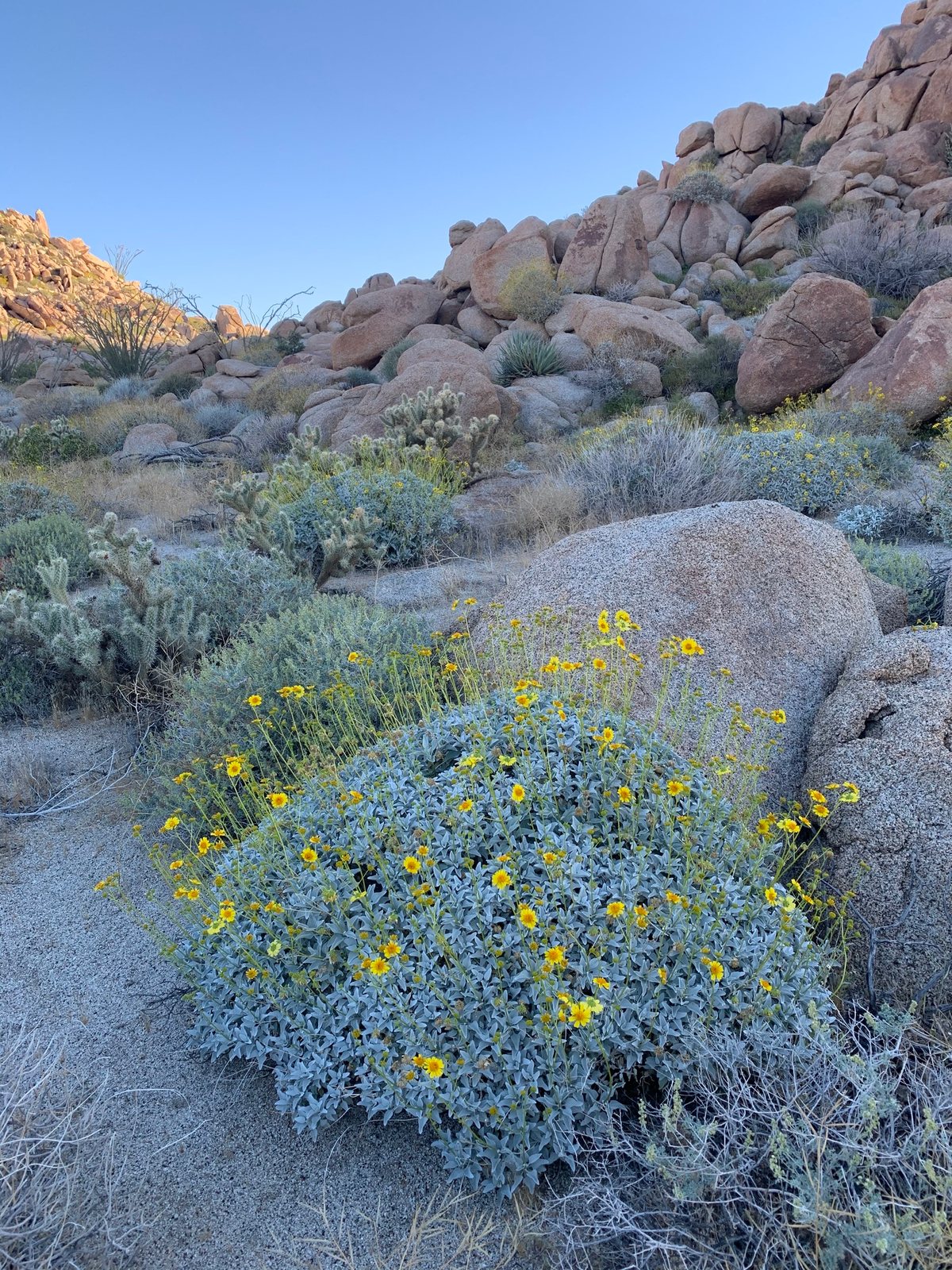
Brittlebush is a rounded desert shrub native to the southwestern United States and northwestern Mexico, grown for its silvery leaves and yellow daisies. It suits hot, dry gardens with sharply drained soil, but tolerates neither prolonged freezing nor wet winters well. In most of the United Kingdom and Canada, it is better treated as a container plant overwintered under cover.
At a glance
- Sun
- Full sun; flowering and silver leaf colour are best with at least six hours of direct sunlight.
- Water
- Low once established. Water young plants deeply, then let the soil dry before watering again; established plants need only occasional watering during prolonged drought.
- Soil
- Lean, sharply drained sandy, gravelly or rocky soil. Avoid heavy clay and sites that stay wet, especially in winter.
- Height
- 2-4 ft (0.6-1.2 m)
- Spread
- 3-5 ft (0.9-1.5 m)
- Flowers
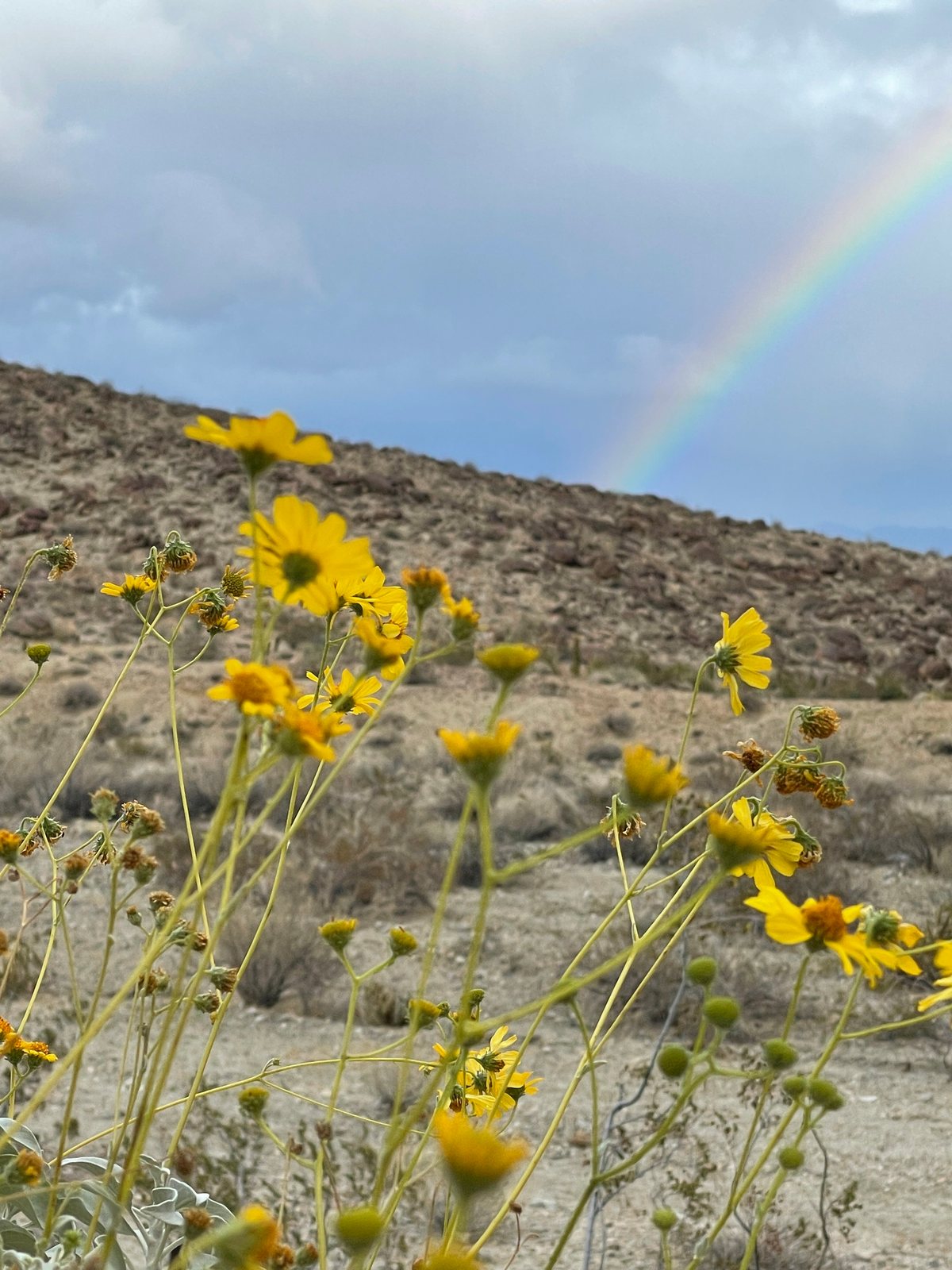
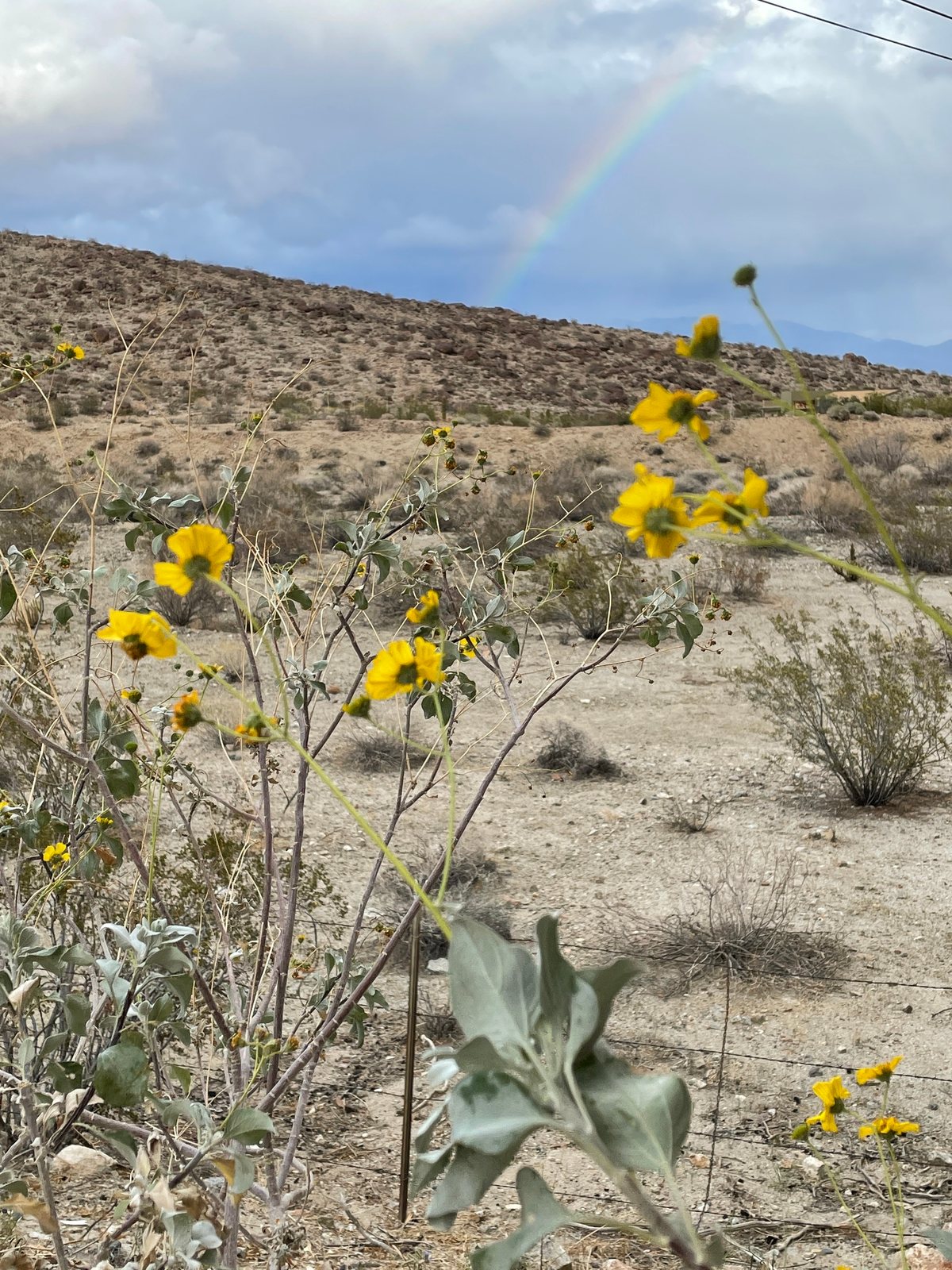
- Bright yellow daisies on branching stems above the leaves, mainly in late winter and spring; occasional flowers at other times after rain.
- Foliage
- Broad, oval to triangular leaves covered in pale hairs, giving a silver-grey appearance. Leaves may drop during severe summer drought or cold weather.
- Growth
- Fast in suitable warm, dry conditions; often relatively short-lived.
- Care needed
- Low
The year at a glance
- Pollinators
- Deer resistant
- Drought tolerant
- Heat tolerant
- Wildlife
- Low allergen
| J | F | M | A | M | J | J | A | S | O | N | D | |
|---|---|---|---|---|---|---|---|---|---|---|---|---|
| Flowers | ||||||||||||
| Fruit | ||||||||||||
| Plant |
Northern hemisphere months. In Australia, shift them by six.
- Difficulty
- Moderate
- Toughness
- Fairly tough
Will it suit your garden?
Pick your zone, country, light and whether you have pets.
Full sun is 6 or more hours of direct sun a day, part shade 3 to 6 hours, shade under 3.
How it grows
Planting day
1.6 ft (0.5 m)
After 1 year
2 ft (0.62 m)
After 2 years
2.4 ft (0.75 m)
After 3 years
2.9 ft (0.87 m)
After 5 years
3 ft (0.9 m)
full size
About 3 years to full size.
From a typical nursery size, at an average rate for this kind of plant. A rule of thumb, not a forecast.
Good to know
- Cats and dogs
- Safe
- Growth rate
- Fast
Care
Jobs through the year
- WaterMar–May, Sep–Oct, every 21 days
- Water established ground plants in suitable climates only when dry; young plants and pots need closer checks.
- WaterJun–Aug, every 30 days
- Water established ground plants only during extended drought; summer leaf loss can be normal dormancy.
- PruneApr–May
- Remove frost-damaged stems once surviving growth is clear; avoid cutting into bare old wood.
- PruneMay–Jun
- After the main flowering flush, trim spent stems and lightly shorten leafy shoots.
- MulchMay
- Apply a thin gravel mulch without covering the crown.
- ProtectJan–Apr, Oct–Dec
- Requires bright, frost-free winter shelter in zones 6–7; flowering depends on sufficient winter light and warmth.
- Plant on a raised mound if drainage is doubtful; do not plant the crown below soil level.
- Water regularly during establishment, allowing the root zone to dry between soakings.
- Reduce watering once established; summer leaf loss can be normal drought dormancy.
- Avoid routine feeding, which encourages soft, sprawling growth.
- Use gravel mulch and keep it clear of the woody crown.
- Move containers into a bright, frost-free place for winter where outdoor conditions are cold or persistently wet.
Pruning. After the main flowering flush, remove spent flower stems and lightly shorten leafy shoots to maintain a rounded shape. Remove dead or frost-damaged stems once new growth shows what has survived; avoid cutting hard into bare old wood.
Through the year
- Autumn
- Plant in mild, dry-winter climates so roots can establish before summer heat.
- Winter
- Keep the crown well drained and protect container plants from frost and prolonged rain.
- Late winter
- Watch for the first flowers and leave flowering stems intact for visiting insects.
- Spring
- Plant after frost risk has passed in cooler regions; water new plants deeply.
- Late spring
- Trim spent flower stems after the main display, leaving some seed heads if you want seedlings.
- Summer
- Allow established plants to dry between occasional deep waterings; do not try to prevent all drought-related leaf loss.
In the garden
- Mass on sunny, gravelly slopes for a broad silver backdrop and a strong spring display of yellow flowers.
- Combine with agaves and other bold succulents, using its rounded form to soften their pointed outlines.
- Plant beside a dry path or patio where its pale foliage contrasts with dark paving or stone.
- Use in a desert wildlife border with other drought-adapted flowering plants.
Garden styles it suits: Desert modern, Southwestern, Desert / xeriscape, Dry gravel garden, California native and Pollinator garden.
Plant it with: Desert marigold, Blackfoot daisy, Red yucca, Desert lavender, Parry's agave and Blue grama.
Wildlife: Flowers attract native bees and other pollinating insects. Seed-eating birds may visit mature seed heads.
Problems to watch for
- Root or crown rot in wet soil: improve drainage, keep mulch away from the crown and reduce watering; replace badly affected plants.
- Frost damage: choose a sheltered, sunny site and protect young plants during brief freezes; prune damaged growth after frost risk passes.
- Leggy, floppy growth: provide full sun, stop feeding and reduce excessive irrigation; trim lightly after flowering.
- Aphids on tender shoots: rinse off with water and encourage natural predators; avoid spraying open flowers.
Safety
Not known to be toxic to people, cats, dogs or horses, but species-specific safety information is limited. No particular plant part is established as poisonous; it is not a food plant, and deliberate consumption should be avoided.
Easily confused with
California brittlebush (Encelia californica)
Usually has greener, less densely white-haired leaves and flower heads with dark brown centres; brittlebush typically has silvery leaves and yellow centres.
Virgin River brittlebush (Encelia virginensis)
Also has pale leaves, but usually bears individual flower heads on unbranched stalks rather than the branched flowering stems typical of brittlebush.
Desert marigold (Baileya multiradiata)
Has deeply lobed leaves clustered near the ground and flowers on mostly leafless stalks, rather than broad leaves on a woody shrub.
The name
The common name refers to its brittle stems, while farinosa means floury or mealy, describing the pale covering of hairs on the leaves.
Propagation. Sow ripe seed in a free-draining mix, covering it lightly and keeping it just moist until germination. Young, non-flowering shoots can also be tried as cuttings; avoid keeping them constantly wet.
Checked against open data
- Accepted botanical name
- Encelia farinosa
- Native range
- Arizona, California, Mexico Northeast, Mexico Northwest and Nevada.
- Measured
- Soil pH 7 to 8.5. Average height 50 cm.
Sources: GBIF (CC BY 4.0) and Trefle (CC BY 4.0). The care and design notes are LandscapeGPT's own.
See it in your own yard.
Upload a photo of your yard and see it redesigned with plants that suit your climate, each checked against your zone.