Desert penstemon
Penstemon pseudospectabilis. Family Plantaginaceae. Perennial.
Also called Desert beardtongue.
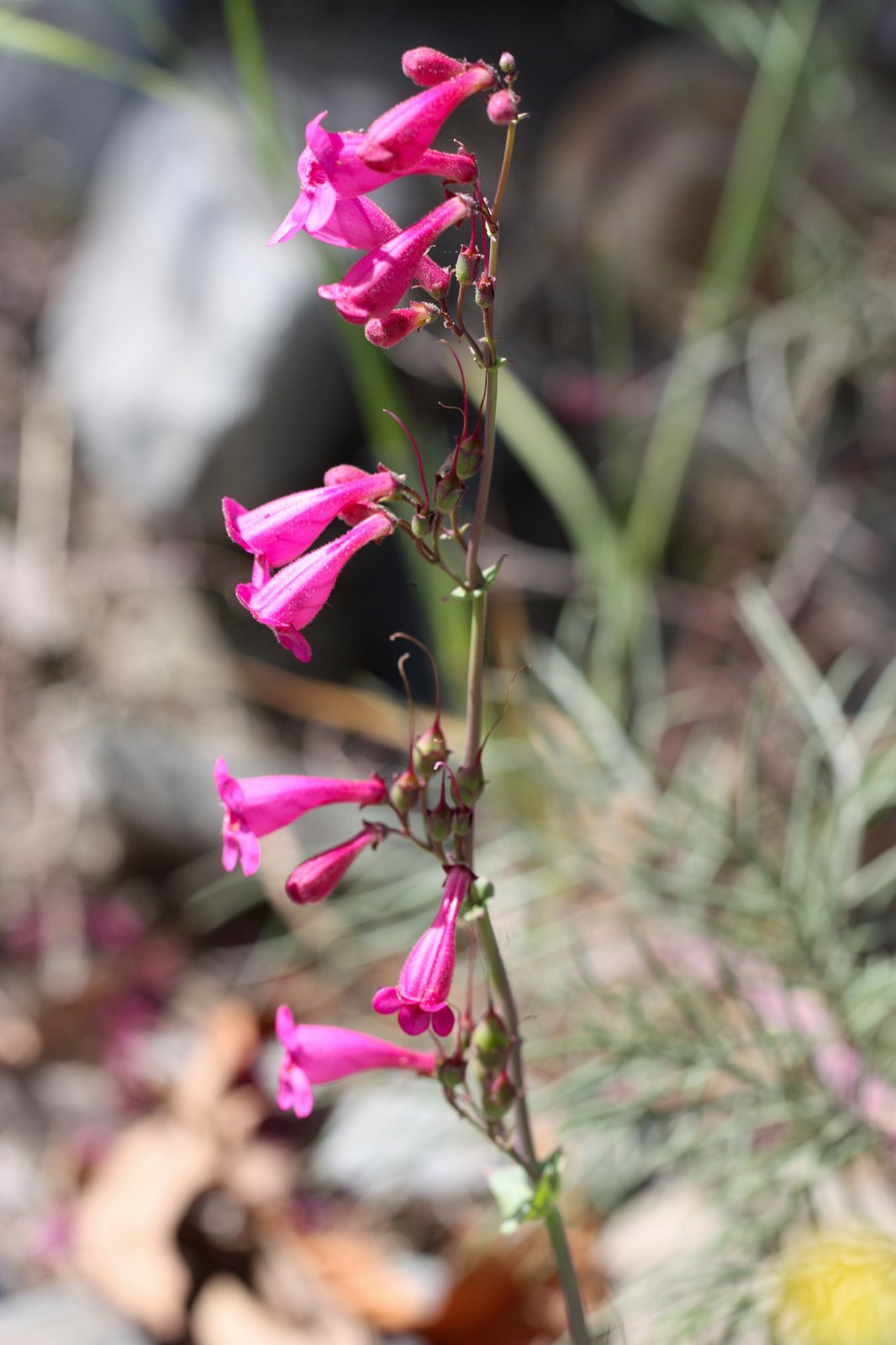
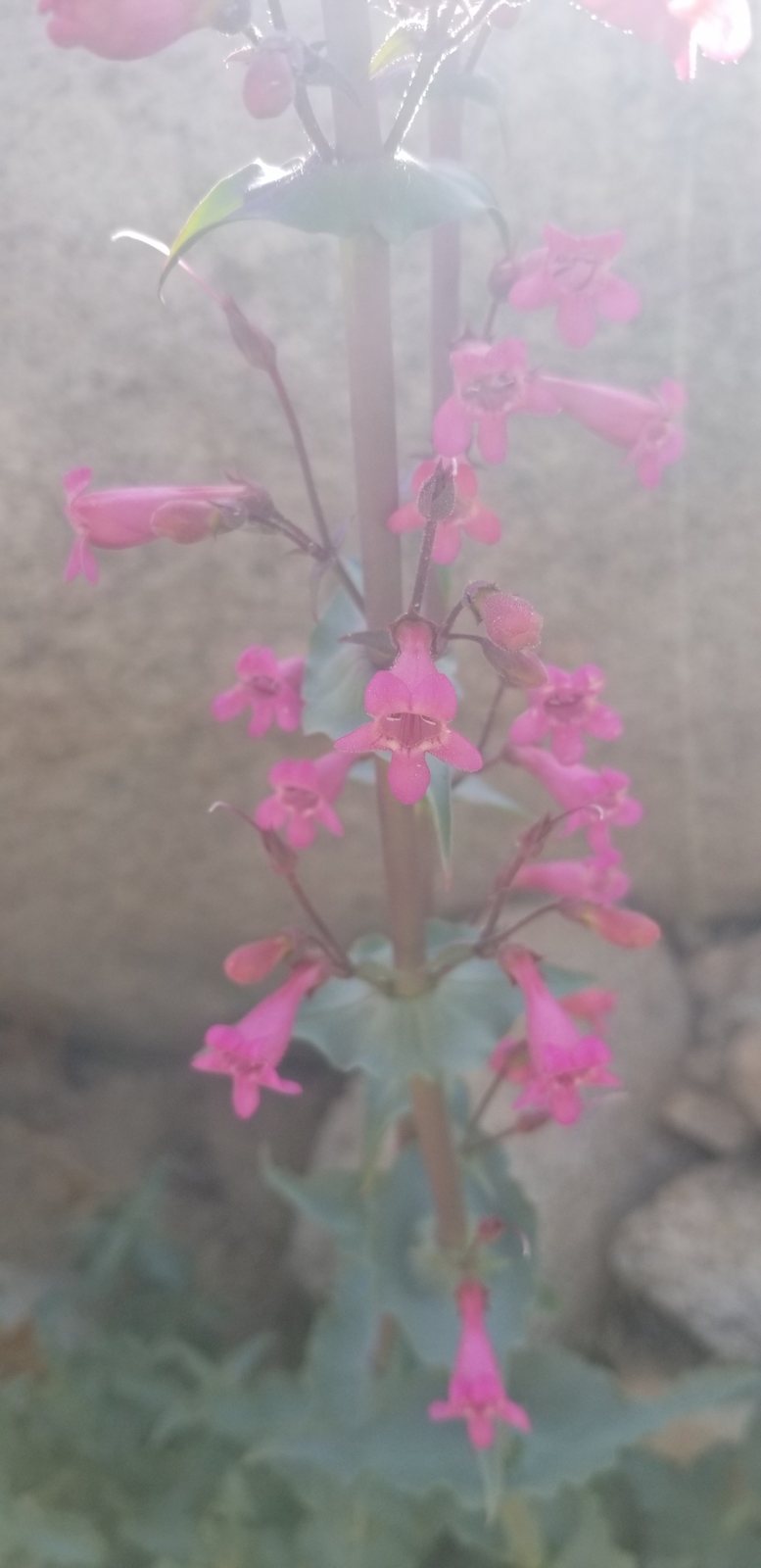
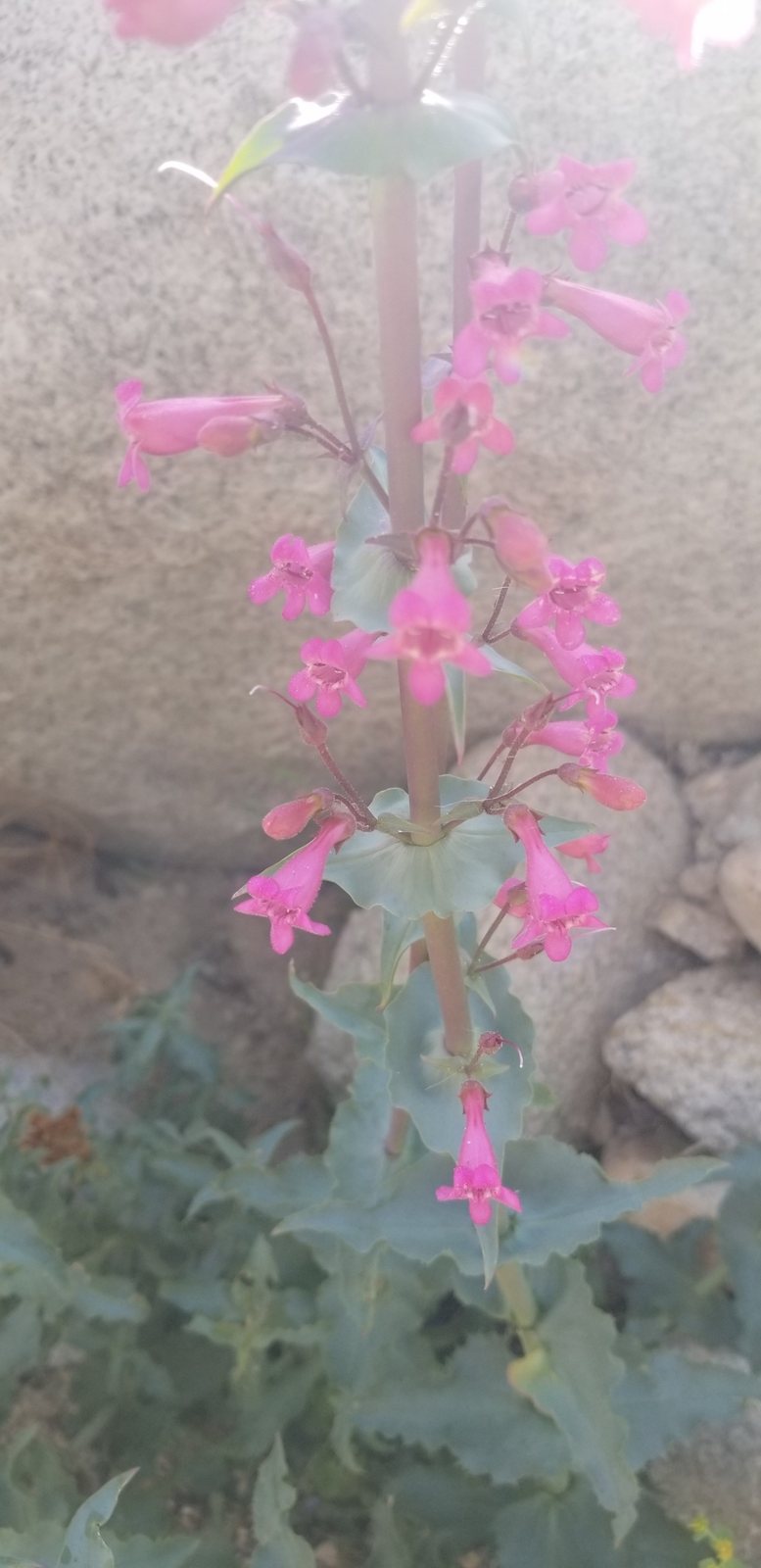
Desert penstemon is a short-lived perennial native to the southwestern United States and northwestern Mexico, with blue-green leaves and tall stems of rose-pink tubular flowers. It brings spring colour and hummingbird food to dry, sunny gardens, but needs excellent drainage, especially through winter.
At a glance
- Sun
- Full sun; light afternoon shade is useful in very hot desert gardens.
- Water
- Low once established. Water during establishment, then allow the soil to dry between occasional deep waterings.
- Soil
- Lean, sharply drained sandy, gravelly or rocky soil. Tolerates alkaline soil; struggles in wet clay and rich, moisture-retentive beds.
- Height
- 2-3 ft (0.6-0.9 m)
- Spread
- 1-2 ft (0.3-0.6 m)
- Flowers
- Rose-pink to magenta tubular flowers in spring and early summer; occasional repeat flowering after summer rain.
- Foliage
- Blue-green, broadly oval leaves with toothed edges; upper leaves clasp the flowering stems. Usually evergreen in mild climates, but may lose foliage in cold winters.
- Growth
- Moderate
- Care needed
- Low
The year at a glance
- Pollinators
- Deer resistant
- Drought tolerant
- Heat tolerant
- Low allergen
| J | F | M | A | M | J | J | A | S | O | N | D | |
|---|---|---|---|---|---|---|---|---|---|---|---|---|
| Flowers | ||||||||||||
| Fruit | ||||||||||||
| Plant |
Northern hemisphere months. In Australia, shift them by six.
- Difficulty
- Moderate
- Toughness
- Fairly tough
Will it suit your garden?
Pick your zone, country, light and whether you have pets.
Full sun is 6 or more hours of direct sun a day, part shade 3 to 6 hours, shade under 3.
How it grows
Planting day
1 ft (0.3 m)
After 1 year
1.5 ft (0.45 m)
After 2 years
2 ft (0.6 m)
After 3 years
2.5 ft (0.75 m)
full size
About 3 years to full size.
From a typical nursery size, at an average rate for this kind of plant. A rule of thumb, not a forecast.
Good to know
- Cats and dogs
- Safe
- Native to
- the US
- Growth rate
- Moderate
Care
Jobs through the year
- WaterApr–May, Sep, every 21 days
- Water established plants only if soil is dry during prolonged drought; water new plants more frequently.
- WaterJun–Aug, every 14 days
- During prolonged drought, water established plants deeply and let soil dry between soakings.
- MulchApr
- Apply a light gravel mulch clear of the crown; avoid moisture-retentive organic mulch.
- PruneMar–Apr
- Remove dead or winter-damaged stems without cutting hard into bare woody bases.
- DeadheadJun–Jul
- Trim spent flowering stems to leafy growth, leaving a few for seed if desired.
- ProtectOct–Nov
- Clear wet leaf litter and keep winter rain draining freely away from the crown.
- Plant with the crown at soil level in a sharply drained bed; use a raised mound where winter rainfall is high.
- Water new plants when the root zone dries, reducing frequency as roots establish.
- Give established plants occasional deep water during prolonged drought rather than frequent light irrigation.
- Avoid routine feeding and rich compost, which encourage weak growth.
- Use a light gravel mulch and keep it clear of the crown; avoid moisture-holding organic mulch.
Pruning. After the main flowering flush, cut spent stems back to healthy leafy growth, leaving a few if you want seed. In spring, remove dead or winter-damaged stems without cutting hard into bare woody bases.
Through the year
- Late winter
- Check that water drains away from the crown and clear away wet leaf litter.
- Spring
- Remove dead growth and plant out in a sunny, sharply drained position once the soil is workable.
- Late spring
- Enjoy the main flowering display and mark a few stems to keep for seed.
- Early summer
- Trim finished flower stems back to leafy growth to tidy the plant and encourage possible repeat bloom.
- Summer
- Water deeply only when needed during extended drought, allowing the soil to dry between waterings.
- Autumn
- Collect dry seed capsules and sow outdoors in pots protected from excessive rain.
In the garden
- Plant in small groups through a gravel garden for upright pink flowers above low, blue-green foliage.
- Combine with agaves, yuccas and small ornamental grasses in a dry border.
- Use on sunny slopes or raised beds where drainage is better than in surrounding ground.
- Place beside a patio or path where visiting hummingbirds can be watched in North American gardens.
Garden styles it suits: Desert modern, Southwestern, Desert / xeriscape, Dry gravel garden, Pollinator garden and Wildlife garden.
Plant it with: Desert marigold, Blackfoot daisy, Red yucca, Blue grama, Indian ricegrass and Banana yucca.
Wildlife: The tubular flowers attract hummingbirds within their native range and are also visited by bees. Leaving some flower stems to set seed supports natural reseeding.
Problems to watch for
- Root and crown rot in wet soil: improve drainage or move to a raised gravelly bed, and reduce irrigation.
- Floppy stems in shade or rich soil: provide more sun and stop feeding.
- Aphids on tender shoots: dislodge with a firm spray of water and preserve beneficial insects.
- Declining older plants: replace short-lived clumps with seedlings or cuttings rather than relying on heavy pruning.
Safety
Not known to be toxic to people, cats, dogs or horses. Species-specific safety information is limited, and no part should be treated as food.
Easily confused with
Showy penstemon (Penstemon spectabilis)
Also has broad, toothed, clasping leaves, but its flowers are generally lavender to blue-purple rather than the predominantly rose-pink flowers of desert penstemon.
Parry's penstemon (Penstemon parryi)
Has pink flowers too, but its leaves are narrower and usually smooth-edged, giving the plant a finer, more open appearance.
Firecracker penstemon (Penstemon eatonii)
Usually has scarlet-red flowers and narrower, smooth-edged leaves, unlike the pink flowers and broad, toothed leaves of desert penstemon.
The name
The epithet pseudospectabilis means 'false spectabilis', referring to its resemblance to showy penstemon, Penstemon spectabilis.
Propagation. Grow from seed sown outdoors in autumn; winter chilling can help germination, which may be uneven. Take non-flowering shoot cuttings in late spring or early summer and root them in a free-draining medium.
Checked against open data
- Accepted botanical name
- Penstemon pseudospectabilis
- In the US and Canada
- Native in the lower 48 states.
- Native range
- Arizona, California, Mexico Northwest, New Mexico and Utah.
Sources: GBIF (CC BY 4.0), USDA PLANTS and Trefle (CC BY 4.0). The care and design notes are LandscapeGPT's own.
See it in your own yard.
Upload a photo of your yard and see it redesigned with plants that suit your climate, each checked against your zone.