Heliotrope
Heliotropium arborescens. Family Heliotropiaceae. Shrub.
Also called Garden heliotrope, Cherry pie plant, Peruvian heliotrope.
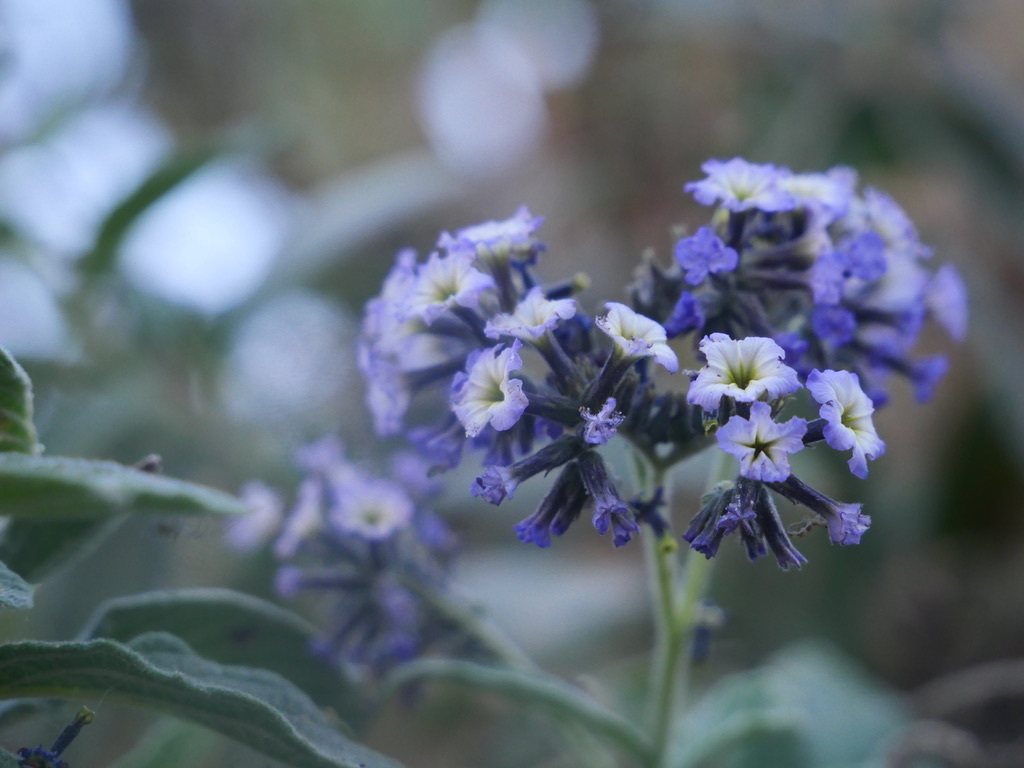
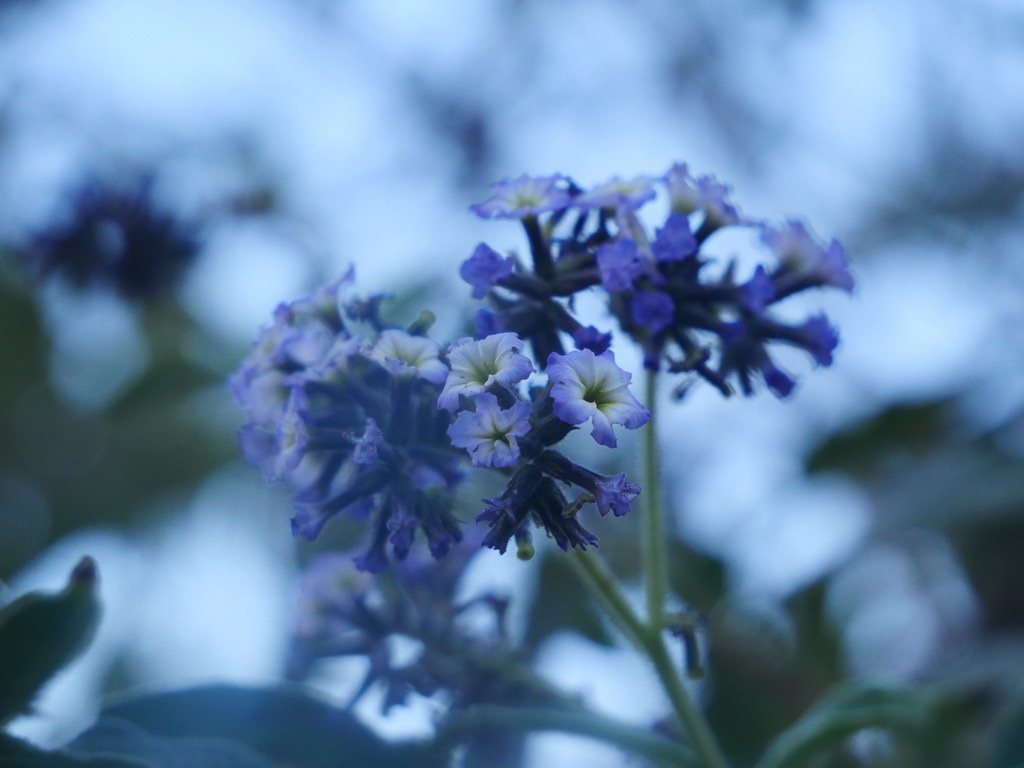
Heliotrope is a tender evergreen shrub grown for clusters of violet-purple flowers with a sweet scent often compared to vanilla or cherry pie. It is grown as an annual in colder climates and works well in containers and summer borders; flower colour and fragrance vary between cultivars.
At a glance
- Sun
- Full sun in cool climates; afternoon shade in hot climates.
- Water
- Keep evenly moist but not waterlogged. Container plants may need daily watering in hot weather.
- Soil
- Fertile, moisture-retentive soil with good drainage; use a free-draining potting mix in containers.
- Height
- 1-3 ft (0.3-0.9 m) in seasonal plantings; up to 6 ft (1.8 m) as a mature frost-free shrub
- Spread
- 1-3 ft (0.3-0.9 m)
- Flowers
- Late spring to autumn, usually until frost; violet-purple, lavender or white flowers in dense, rounded clusters.
- Foliage
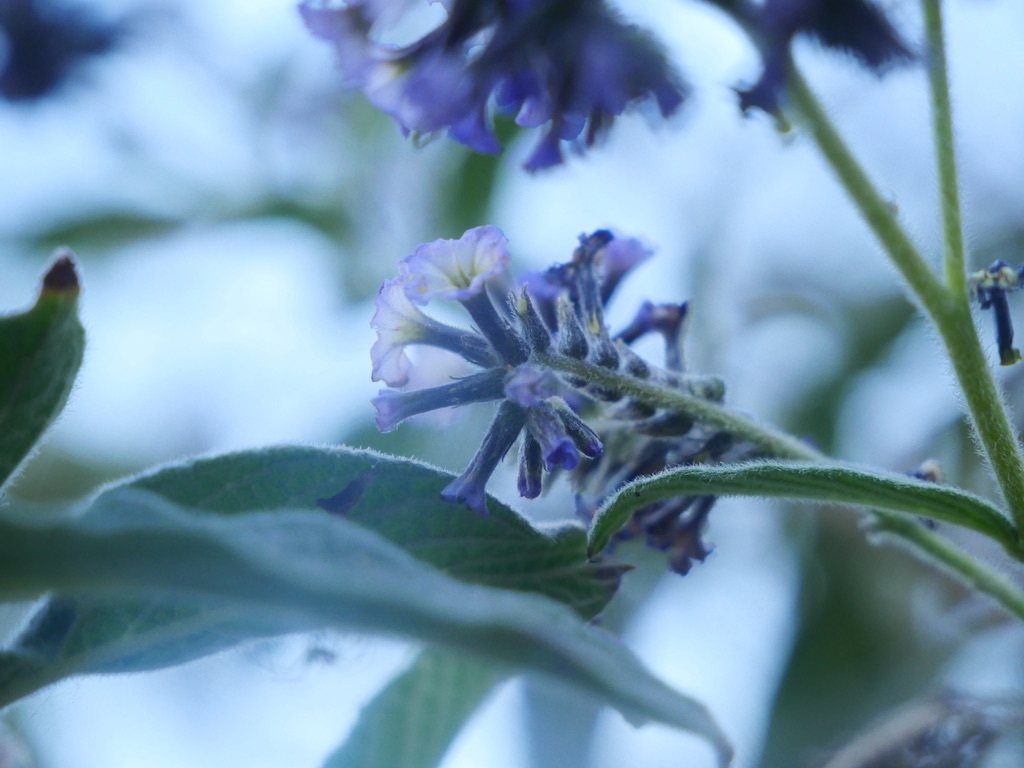
- Evergreen. Dark green, oval leaves with prominent veins and a wrinkled, slightly hairy surface.
- Growth
- Moderate
- Care needed
- Medium
The year at a glance
- Pollinators
- Low allergen
- Fragrant
| J | F | M | A | M | J | J | A | S | O | N | D | |
|---|---|---|---|---|---|---|---|---|---|---|---|---|
| Flowers | ||||||||||||
| Plant |
Northern hemisphere months. In Australia, shift them by six.
- Difficulty
- Moderate
- Toughness
- Needs looking after
Will it suit your garden?
Pick your zone, country, light and whether you have pets.
Full sun is 6 or more hours of direct sun a day, part shade 3 to 6 hours, shade under 3.
How it grows
Planting day
1.6 ft (0.5 m)
After 1 year
1.7 ft (0.52 m)
After 2 years
1.8 ft (0.54 m)
After 3 years
1.8 ft (0.56 m)
After 5 years
2 ft (0.6 m)
full size
About 5 years to full size.
From a typical nursery size, at an average rate for this kind of plant. A rule of thumb, not a forecast.
Good to know
- Cats and dogs
- Toxic
- Growth rate
- Moderate
Care
Jobs through the year
- WaterMay, Sep–Oct, every 5 days
- Water established border plants when the surface dries; new plants need closer checks.
- WaterJun–Aug, every 3 days
- Keep border soil evenly moist in dry weather; containers may need daily watering.
- FeedMay
- Incorporate compost before planting; avoid heavy feeding in fertile garden soil.
- FeedJun–Sep, every 21 days
- For container-grown plants only, apply balanced liquid fertilizer at the label rate.
- MulchJun
- Apply a light organic mulch around border plants, clear of the stems.
- PruneMar–May
- Lightly shorten overwintered leafy shoots and pinch young tips to encourage branching.
- DeadheadJun–Oct, every 7 days
- Remove faded flower clusters to encourage further bloom.
- ProtectJan–Apr, Oct–Dec
- Before frost, move retained plants into bright, frost-free shelter; keep slightly moist.
- ProtectMay
- Harden off gradually and plant outdoors only after frost risk and cold nights have passed.
- Plant outside only after frost risk has passed and nights are reliably mild.
- Water at soil level when the surface begins to dry; avoid letting the root ball dry out completely.
- Feed container plants every two to four weeks during active growth with a balanced liquid fertiliser at the label rate.
- Apply a light organic mulch around border plants, keeping it clear of the stems.
- Move plants you want to keep into a bright, frost-free place before cold weather; water less in winter without allowing complete drying.
Pruning. Pinch young shoot tips in spring to encourage branching, and remove faded flower clusters throughout summer. Lightly shorten overwintered plants in early spring, cutting back to healthy leafy growth.
Through the year
- Late winter
- Sow seed indoors with warmth and light, or check overwintered plants for whitefly and aphids.
- Spring
- Pinch young plants and gradually acclimatise indoor-grown plants to outdoor conditions.
- Late spring
- Plant out after the last frost, allowing room for air circulation and mature spread.
- Summer
- Water regularly, feed container plants and remove spent flower clusters.
- Late summer
- Take non-flowering softwood or semi-ripe cuttings if you want to keep a particular plant.
- Autumn
- Bring retained plants under frost-free cover before cold nights; remove frost-killed bedding plants.
In the garden
- Place containers near seating areas where the flower scent can be appreciated, but away from pets that chew plants.
- Use compact forms along the front of summer borders with silver foliage and white flowers.
- Repeat purple-flowered plants through cottage borders to link pink, blue and cream planting.
- Grow as seasonal bedding within low clipped hedges for a traditional formal display.
Garden styles it suits: Cottage garden, Traditional, Victorian, Sensory garden, Modern courtyard and Pollinator garden.
Plant it with: Petunias, Sweet alyssum, Salvias, Dusty miller, Pelargoniums and Cosmos.
Wildlife: Flowers attract butterflies and other nectar-feeding insects. Avoid spraying open flowers or visiting pollinators.
Problems to watch for
- Whitefly and aphids: inspect shoot tips and leaf undersides, especially under cover; use insecticidal soap labelled for the pest and plant if needed.
- Spider mites in hot, dry conditions: look for fine webbing and speckled leaves; rinse leaf undersides and prevent drought stress.
- Root rot in wet soil: improve drainage, empty standing water from saucers and avoid watering an already wet root ball.
- Brown leaf edges, wilting or poor flowering: prevent repeated drying, provide afternoon shade in strong heat and ensure adequate light in cool climates.
Safety
All parts should be treated as toxic to people, cats, dogs and horses if eaten. Heliotrope contains pyrrolizidine alkaloids that can cause serious liver damage, particularly with repeated ingestion; do not use the flowers or leaves as food. Seek medical or veterinary advice after ingestion.
Easily confused with
Lantana (Lantana camara)
Lantana has rough, toothed leaves and often multicoloured flower heads that change colour with age. Heliotrope usually has more uniformly coloured flower clusters and a sweet floral scent.
Floss flower (Ageratum houstonianum)
Floss flower has fuzzy, threadlike flower heads rather than heliotrope's tiny flowers with visible five-lobed faces.
The name
Heliotropium comes from Greek words meaning sun and turning, referring to an old belief that these plants turned towards the sun, while arborescens means becoming tree-like.
Propagation. Sow seed indoors in late winter or early spring, pressing it onto the surface and keeping it warm and moist; germination can be slow and uneven. Take non-flowering softwood or semi-ripe cuttings in summer to preserve a cultivar's characteristics.
Checked against open data
- Accepted botanical name
- Heliotropium arborescens
- In the US and Canada
- Introduced in the lower 48 states and Puerto Rico.
- Native range
- Bolivia, Colombia and Peru.
Sources: GBIF (CC BY 4.0), USDA PLANTS and Trefle (CC BY 4.0). The care and design notes are LandscapeGPT's own.
See it in your own yard.
Upload a photo of your yard and see it redesigned with plants that suit your climate, each checked against your zone.