Heritage river birch
Betula nigra 'Cully'. Family Betulaceae. Tree.
Also called Betula nigra 'Cully', Heritage birch.
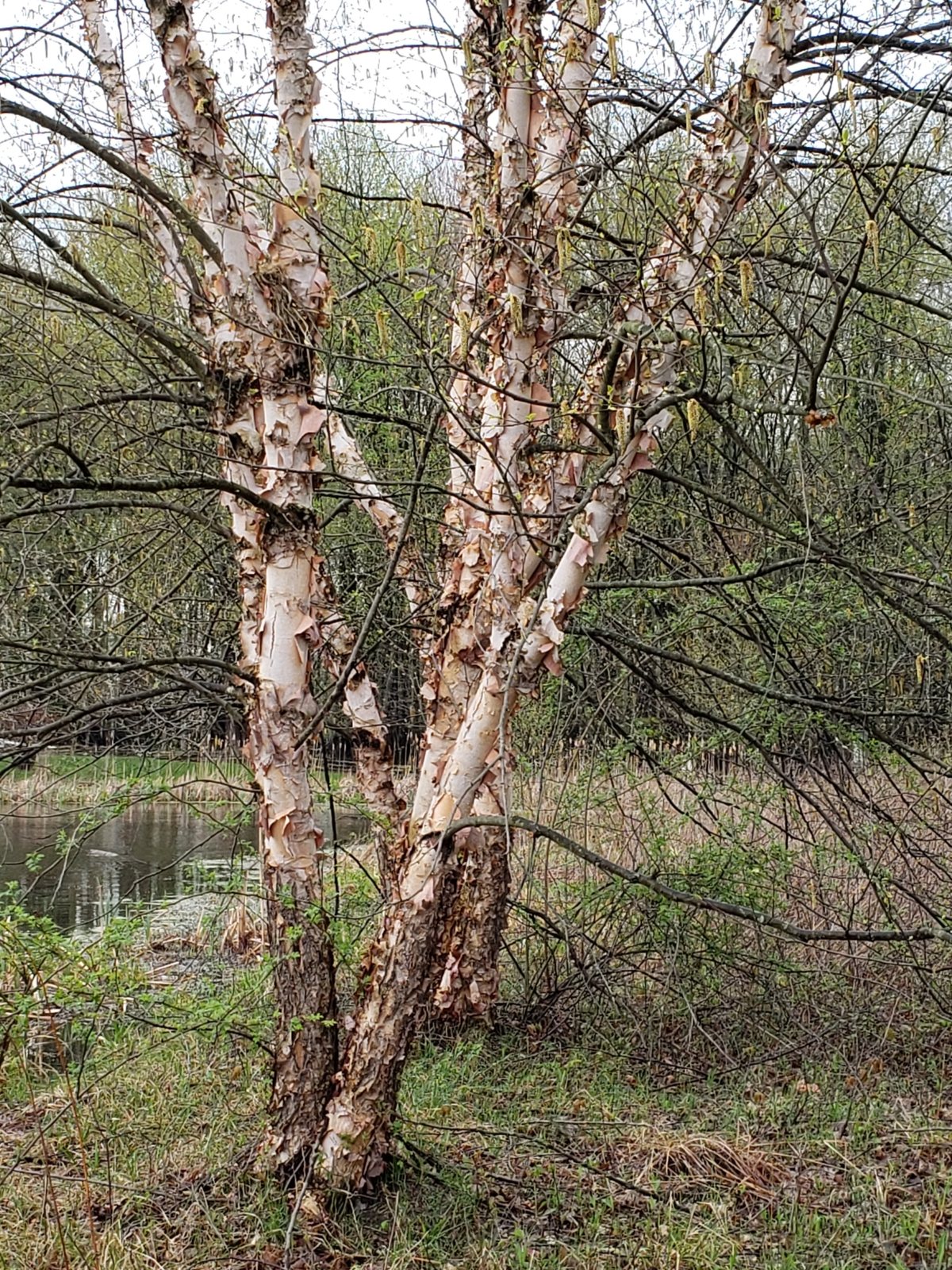
Heritage river birch is a large deciduous tree grown for its peeling cream, salmon and cinnamon bark, often displayed on several trunks. It grows quickly in moist soil and tolerates heat better than many white-barked birches, but needs plenty of root space and is poorly suited to dry or alkaline sites.
At a glance
- Sun
- Full sun to partial shade; best bark development and crown shape in good light.
- Water
- Moderate to high; keep the root zone consistently moist, especially during establishment and hot weather. Tolerates occasional flooding but not prolonged drought.
- Soil
- Moist, acidic soil, ideally well-drained loam; also tolerates clay and periodically wet ground. Alkaline soil can cause persistent yellowing.
- Height
- 40-70 ft (12-21 m)
- Spread
- 40-60 ft (12-18 m)
- Flowers
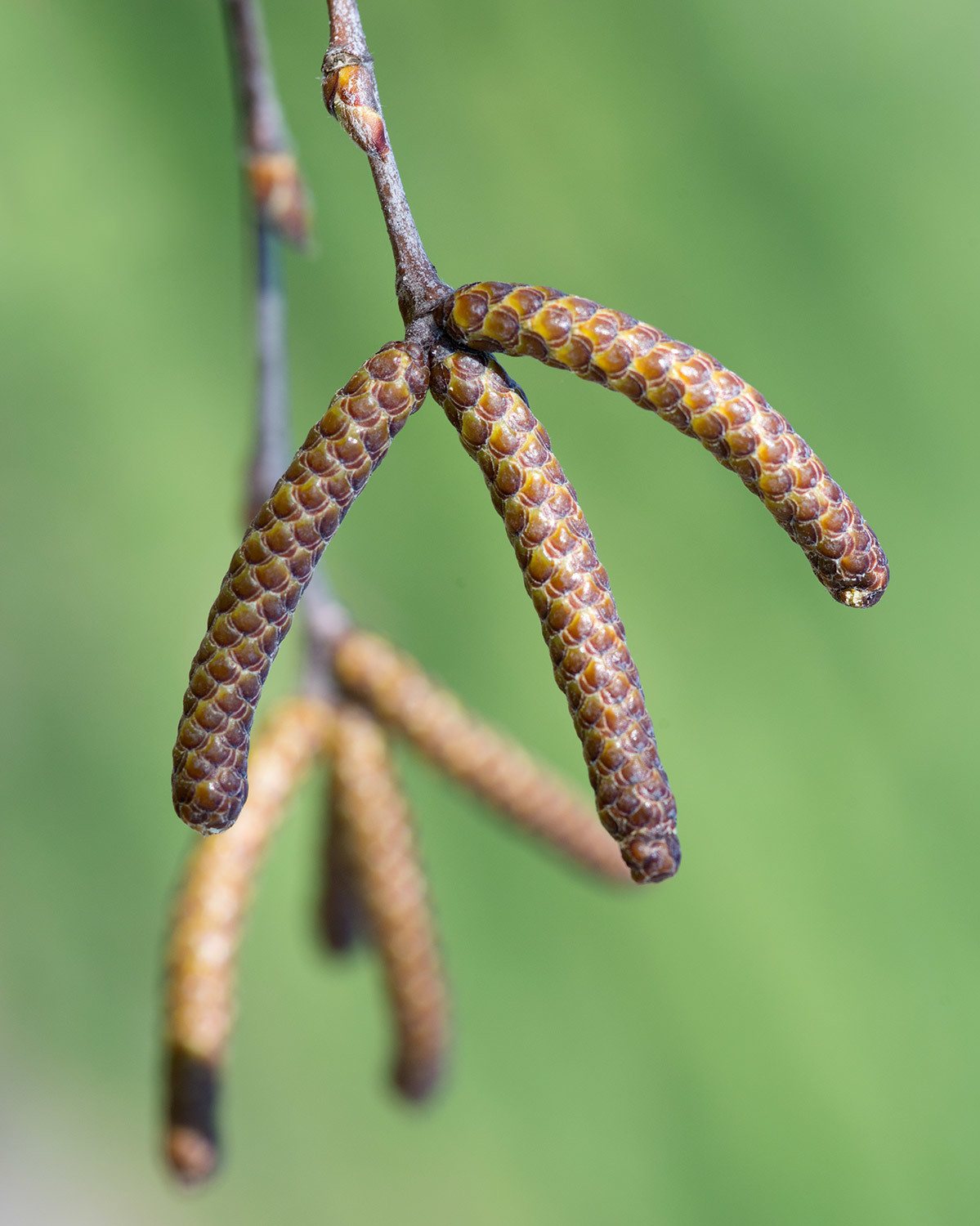
- Yellow-brown male catkins and small green female catkins in spring; not a showy flowering tree.
- Foliage
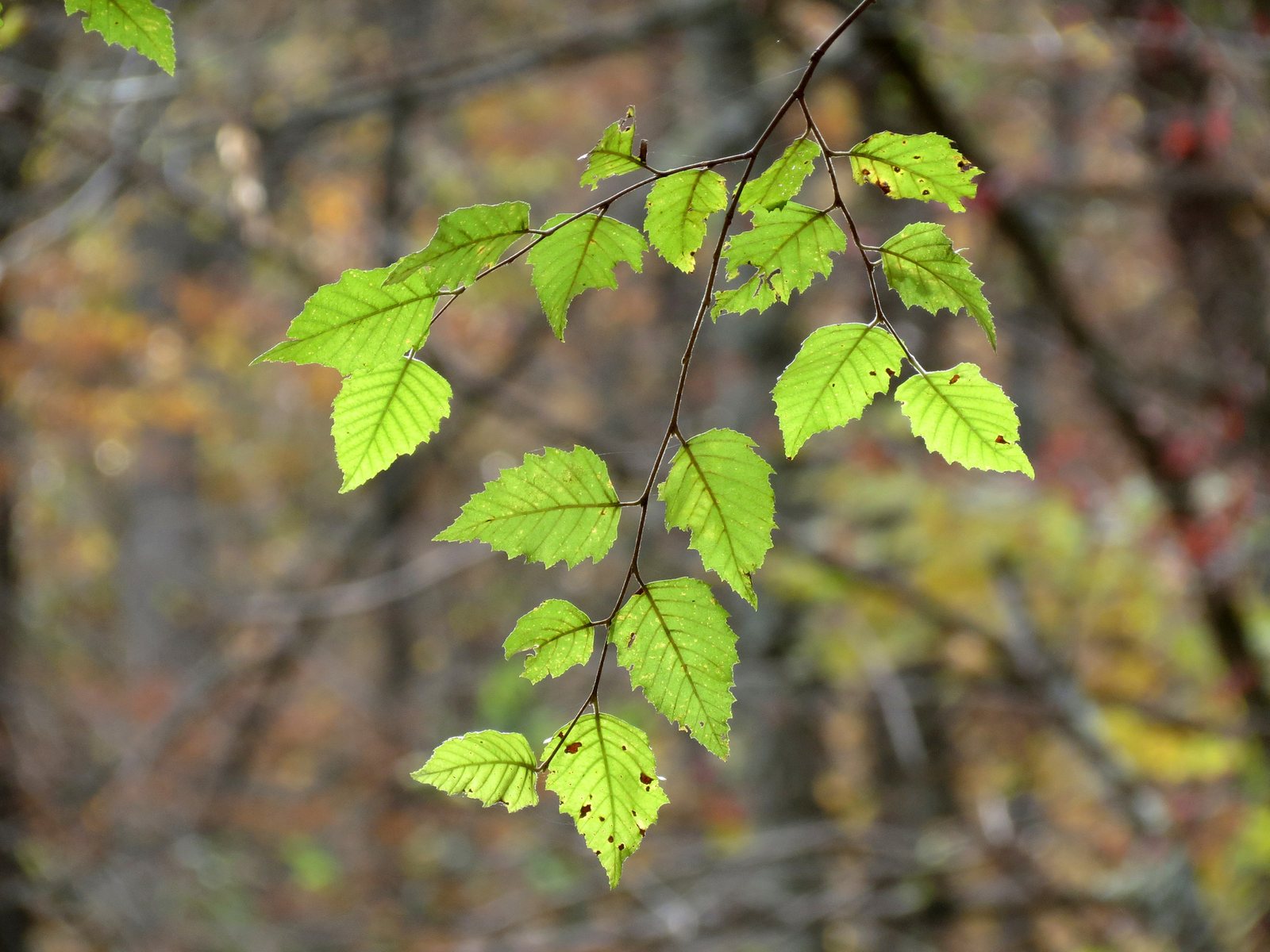
- Diamond-shaped to oval green leaves with toothed edges and paler undersides; usually yellow in autumn.
- Growth
- Fast when young, often 1-3 ft (0.3-0.9 m) a year with adequate moisture.
- Care needed
- Medium
The year at a glance
- Cold hardy
- Heat tolerant
- Disease resistant
- Wildlife
| J | F | M | A | M | J | J | A | S | O | N | D | |
|---|---|---|---|---|---|---|---|---|---|---|---|---|
| Flowers | ||||||||||||
| Fruit | ||||||||||||
| Plant |
Northern hemisphere months. In Australia, shift them by six.
- Difficulty
- Moderate
- Toughness
- Fairly tough
Will it suit your garden?
Pick your zone, country, light and whether you have pets.
Full sun is 6 or more hours of direct sun a day, part shade 3 to 6 hours, shade under 3.
How it grows
Planting day
7 ft (2 m)
After 1 year
10 ft (3.1 m)
After 2 years
14 ft (4.2 m)
After 3 years
18 ft (5.3 m)
After 5 years
25 ft (7.6 m)
About 13 years to full size.
From a typical nursery size, at an average rate for this kind of plant. A rule of thumb, not a forecast.
Good to know
- Cats and dogs
- Safe
- Native to
- the US
- Growth rate
- Fast
Care
Jobs through the year
- WaterApr–May, Sep–Oct, every 14 days
- Deeply water established trees when rainfall is insufficient; keep young root balls consistently moist.
- WaterJun–Aug, every 7 days
- Soak the established root zone during dry weather; young trees and hot sites may need more frequent watering.
- MulchMar–Apr
- Maintain 5–8 cm of organic mulch over a broad root zone, keeping trunks and root flares clear.
- FeedMar–Apr
- Feed only when poor growth and a soil test indicate a nutrient deficiency.
- PruneAug–Sep
- Remove dead, damaged or rubbing branches lightly; avoid topping and late-winter or early-spring cuts.
- ProtectJan–Feb, Nov–Dec
- Check young-tree ties and guards for rubbing; remove supports once the tree is firmly anchored.
- Water deeply during dry spells for the first two or three growing seasons; continue during prolonged drought once established.
- Spread 2-3 in (5-8 cm) of organic mulch over the root zone, keeping it clear of the trunks.
- Check soil pH before planting; choose another tree if the site is strongly alkaline.
- Keep lawn and competing plants away from the immediate base, and avoid digging through its shallow roots.
- Feed only if growth is poor and a soil test indicates a nutrient shortage.
Pruning. Prune lightly in late summer, removing dead, damaged or rubbing branches and retaining a sound single- or multi-stem framework. Avoid late-winter and early-spring pruning, when cuts bleed sap heavily, and never top the tree.
Through the year
- Autumn
- Plant while the soil is workable and water thoroughly; spring planting is often preferable in very cold regions.
- Early spring
- Renew mulch without burying the root flare or piling it against the bark.
- Late spring
- Check new leaves for yellowing between green veins; test soil pH before treating suspected iron deficiency.
- Summer
- Water deeply during dry weather, particularly if leaves begin yellowing and dropping early.
- Late summer
- Make any necessary light structural pruning and remove damaged branches.
- Winter
- Check young trees for loose ties and guards rubbing the bark; remove supports once the roots anchor the tree.
In the garden
- Use as a specimen in a large lawn, with a broad mulched area rather than grass against the trunks.
- Plant beside a pond or seasonally wet garden, above permanently submerged ground.
- Set a multi-stem tree against dark evergreen shrubs to highlight its pale peeling bark.
- Combine with moisture-loving perennials and sedges in a spacious woodland-edge planting.
Garden styles it suits: Woodland, Winter interest, Wildlife garden, Modern, Bog garden and Grand estate.
Plant it with: Virginia sweetspire, Summersweet, Red-twig dogwood, Cinnamon fern, Tussock sedge and Astilbe.
Wildlife: Supports moth and butterfly caterpillars in its native eastern North American range. Small birds eat the seeds, and the canopy provides shelter and nesting sites.
Problems to watch for
- Iron chlorosis: yellow leaves with green veins are common on alkaline soil. Test the soil; iron chelate suitable for the measured pH may help temporarily, but replacing the tree is often more practical on strongly alkaline sites.
- Drought stress: scorched leaves and early leaf drop indicate a dry root zone. Water deeply, widen the mulched area and reduce competition from lawn.
- Aphids: colonies can leave sticky honeydew beneath the canopy. Tolerate light infestations and encourage predators; rinse reachable shoots with water if needed.
- Leaf spots: fungal spotting may occur in humid weather. Collect fallen leaves, avoid wetting foliage unnecessarily and maintain tree vigour; routine fungicide treatment is rarely needed.
Safety
Not known to be toxic to cats, dogs, horses or people. Birch pollen can trigger allergies in susceptible people.
Easily confused with
Paper birch (Betula papyrifera)
Mature bark is usually much whiter and peels in papery sheets; Heritage has conspicuous salmon, cream and cinnamon layers and handles summer heat better.
Silver birch (Betula pendula)
Usually has more pendulous branchlets and white bark with dark fissures rather than the shaggy, salmon-toned peeling bark of Heritage.
Yellow birch (Betula alleghaniensis)
Bark is yellowish-bronze and peels in finer curls; scratched young twigs have a wintergreen scent.
The name
River birch refers to its natural streamside habitat, while the Latin nigra means black and refers to the dark bark of older trunks.
Propagation. Named plants must be propagated vegetatively to retain 'Cully' characteristics. Nurseries use softwood cuttings under mist or grafting; seed-grown offspring are not Heritage river birch.
Checked against open data
- Accepted botanical name
- Betula nigra
- In the US and Canada
- Native in the lower 48 states.
- Native range
- Alabama, Arkansas, Connecticut, Delaware, District of Columbia, Florida, Georgia, Illinois, Indiana, Iowa, Kansas and Kentucky.
- Measured
- Soil pH 3 to 6.5. Average height 2438 cm.
Sources: GBIF (CC BY 4.0), USDA PLANTS and Trefle (CC BY 4.0). The care and design notes are LandscapeGPT's own.
See it in your own yard.
Upload a photo of your yard and see it redesigned with plants that suit your climate, each checked against your zone.