Himalayan honeysuckle
Leycesteria formosa. Family Caprifoliaceae. Shrub.
Also called Pheasant berry, Flowering nutmeg.
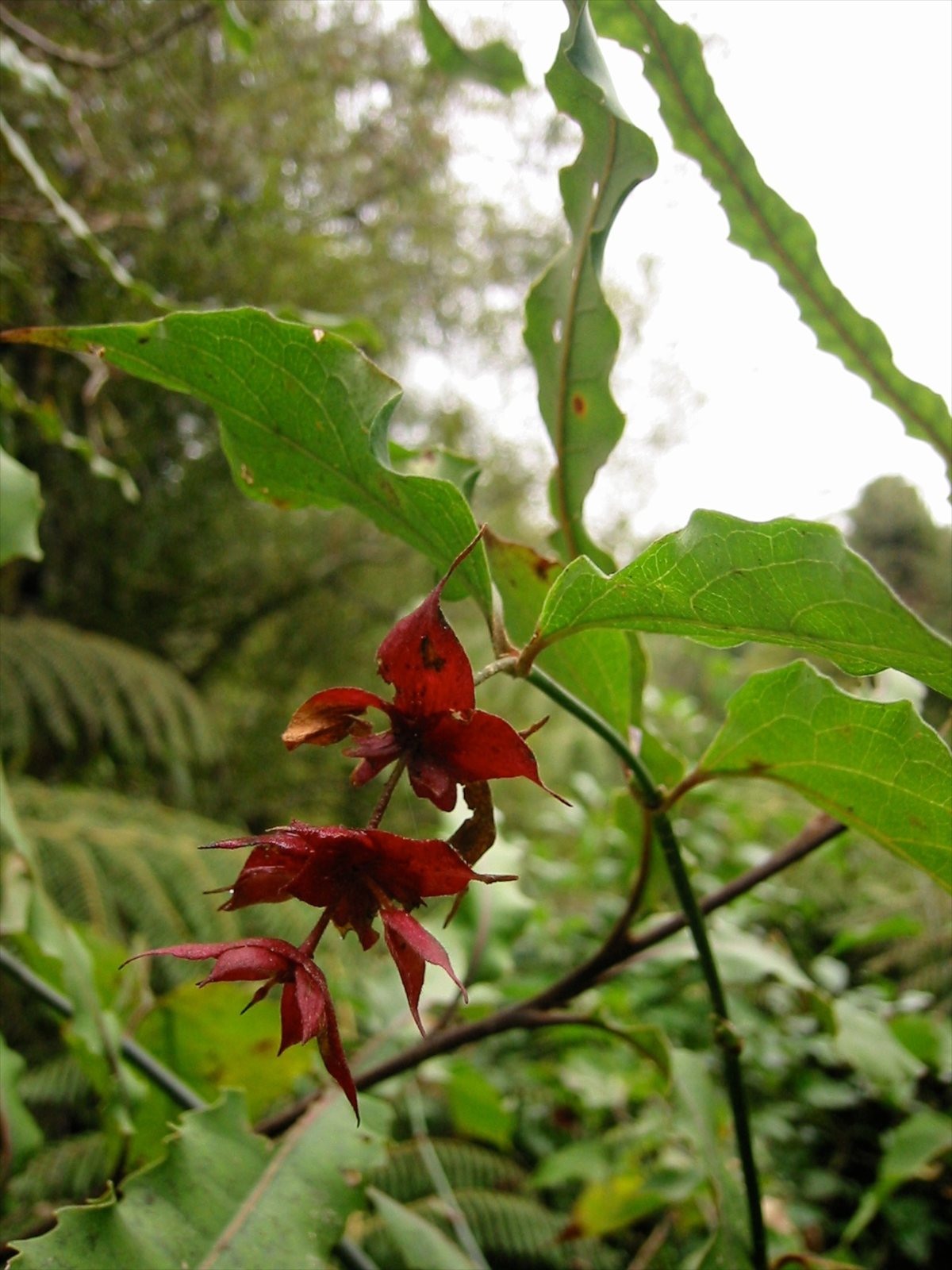
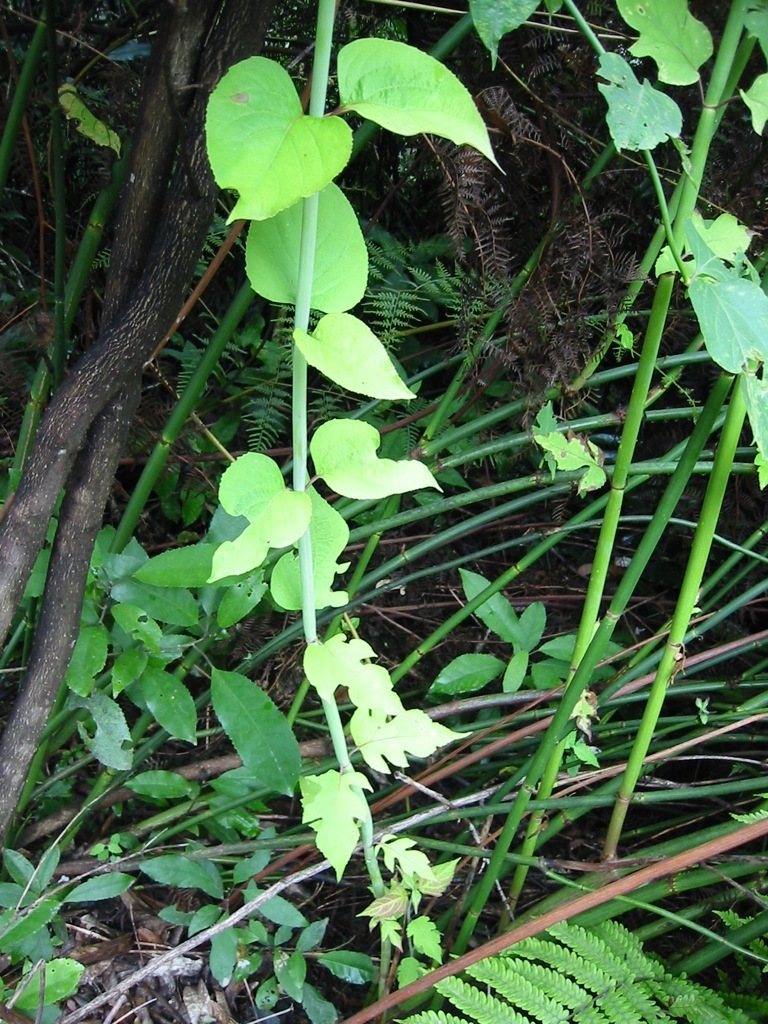
A deciduous shrub with upright, hollow stems and hanging clusters of white flowers surrounded by deep burgundy bracts, followed by purple-black berries. Gardeners grow it for its long summer-to-autumn display and loose, leafy shape, but it can self-seed freely and should not be planted where it is invasive.
At a glance
- Sun
- Full sun to partial shade; afternoon shade helps in hot climates.
- Water
- Keep the soil evenly moist while establishing. Once established, water during prolonged dry spells, especially in sunny sites.
- Soil
- Moist but well-drained soil, including clay improved for drainage; tolerates acidic, neutral and alkaline conditions.
- Height
- 4-8 ft (1.2-2.4 m)
- Spread
- 4-8 ft (1.2-2.4 m)
- Flowers
- Summer to autumn; small white tubular flowers hang beneath persistent burgundy-purple bracts.
- Foliage
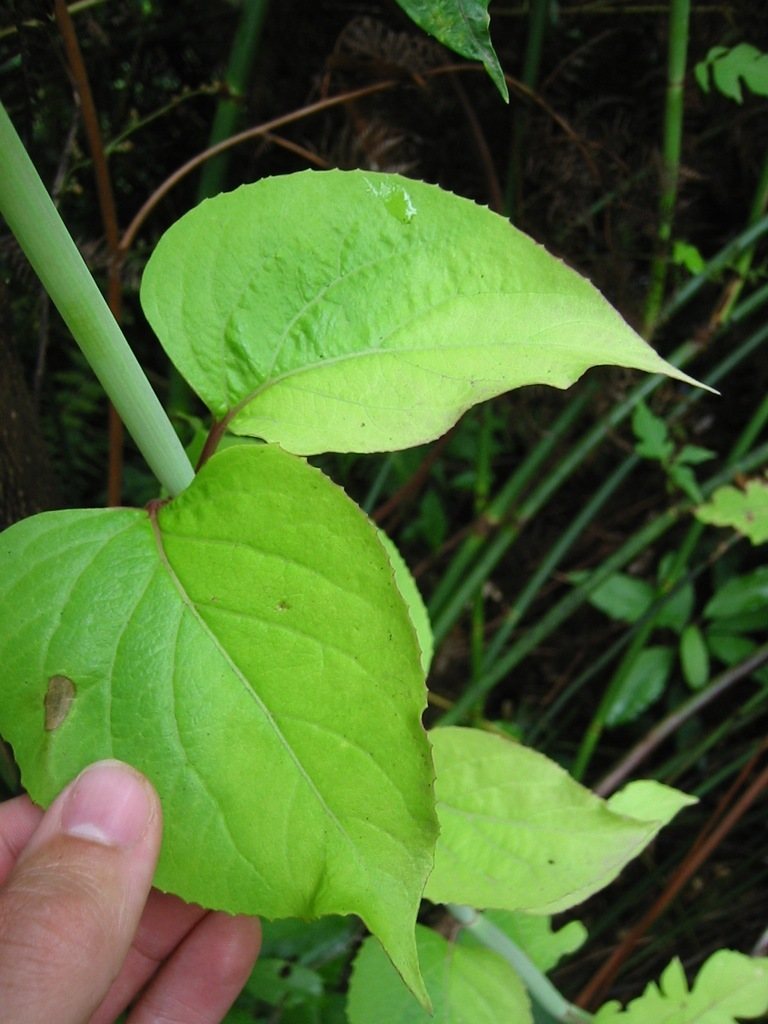
- Large, pointed, heart-shaped green leaves on green, hollow stems; leaves usually fall in autumn.
- Growth
- Fast
- Care needed
- Low
The year at a glance
- Pollinators
- Wildlife
- Low allergen
| J | F | M | A | M | J | J | A | S | O | N | D | |
|---|---|---|---|---|---|---|---|---|---|---|---|---|
| Flowers | ||||||||||||
| Fruit | ||||||||||||
| Plant |
Northern hemisphere months. In Australia, shift them by six.
- Difficulty
- Easy
- Toughness
- Fairly tough
Will it suit your garden?
Pick your zone, country, light and whether you have pets.
Full sun is 6 or more hours of direct sun a day, part shade 3 to 6 hours, shade under 3.
How it grows
Planting day
1.6 ft (0.5 m)
After 1 year
3 ft (0.9 m)
After 2 years
4 ft (1.3 m)
After 3 years
6 ft (1.7 m)
After 5 years
6 ft (1.8 m)
full size
About 3 years to full size.
From a typical nursery size, at an average rate for this kind of plant. A rule of thumb, not a forecast.
Good to know
- Cats and dogs
- Safe
- Invasive in
- Australia
- In the garden
- Spreads vigorously: plan to contain it.
- Growth rate
- Fast
Care
Jobs through the year
- WaterApr–May, Sep–Oct, every 14 days
- Water established shrubs if the root zone is dry; keep new plants evenly moist.
- WaterJun–Aug, every 7 days
- Deep-water established shrubs during dry spells, especially in sunny positions.
- PruneMar
- Remove dead and old stems, or cut all stems to 15–30 cm for compact new growth.
- MulchMar–Apr
- Apply compost and organic mulch around roots, keeping stem bases clear.
- FeedApr
- Feed lightly only if growth is weak; omit feeding in fertile soil.
- DeadheadJul–Oct, every 7 days
- Where spread is a concern, remove fading clusters before berries ripen.
- ProtectNov
- Refresh root-zone mulch in colder gardens; zone 6 plants need a particularly sheltered site.
- Water deeply through the first growing season whenever the root zone begins to dry.
- Apply compost and a mulch layer in spring, keeping mulch clear of the stems.
- Feed lightly in spring only if growth is weak; rich soil usually needs no additional fertiliser.
- Choose a position sheltered from strong winds, which can break the soft stems.
- Remove spent clusters before berries ripen where self-seeding is a concern, and pull seedlings promptly.
Pruning. In late winter or early spring, remove dead or frost-damaged stems and cut out some of the oldest stems at ground level. For a compact shrub, cut all stems back to 6-12 in (15-30 cm); flowers develop on the new growth.
Through the year
- Early spring
- Prune before vigorous new growth begins, removing winter damage or cutting back hard to control size.
- Spring
- Plant when the soil is workable, water thoroughly and mulch around the root zone.
- Early summer
- Check newly planted shrubs regularly and water during dry weather.
- Summer
- Remove fading flower clusters before fruit develops if seedlings or bird-dispersed spread would be a problem.
- Autumn
- Pull unwanted seedlings and check nearby beds for plants established from dropped or bird-carried seed.
- Late autumn
- Refresh mulch in colder gardens to protect the root zone, without covering the stem bases.
In the garden
- Place toward the back of a mixed border, where its arching stems rise above lower perennials.
- Use at a lightly shaded woodland edge with ferns and hostas for contrasting leaf shapes.
- Plant beside a path or seating area where the hanging flowers and coloured bracts can be seen close up.
- Include in an informal shrub border with hydrangeas and hardy fuchsias for a long late-season display, where invasive status permits.
Garden styles it suits: Cottage garden, Woodland, English country, Romantic rose garden, Wildlife garden and Pacific Northwest woodland.
Plant it with: Hardy fuchsia, Hydrangea, Hosta, Japanese anemone, Soft shield fern and Hardy geranium.
Wildlife: Flowers attract bees and other pollinating insects. Birds eat the berries and disperse the seeds, which contributes to its spread outside gardens.
Problems to watch for
- Frost-damaged stems: wait until early spring, then cut back to live wood; established plants often regrow strongly from the base.
- Wilting or scorched leaves in dry heat: water deeply, mulch and provide afternoon shade in hot gardens.
- Poor growth or root rot in waterlogged soil: improve drainage or move the shrub to a better-drained position.
- Unwanted seedlings: remove fruiting clusters before ripening and pull seedlings while small.
Safety
Not known to be toxic to people, cats, dogs or horses; no specific poisonous part is established. Animal safety information is limited, so discourage pets and livestock from eating it. The berries are sometimes described as edible, but this shrub is normally grown as an ornamental.
Where it spreads. Invasive in New Zealand and parts of southeastern Australia, notably Victoria and Tasmania. It also escapes cultivation in the United Kingdom and parts of the Pacific Northwest of North America. Birds spread its seeds into woodland and disturbed ground; check local invasive-plant guidance before planting.
Easily confused with
Hardy fuchsia (Fuchsia magellanica)
Both have hanging flowers, but hardy fuchsia has conspicuous red or pink sepals, usually purple petals and long projecting stamens. Himalayan honeysuckle has small white flowers tucked beneath broad burgundy bracts.
Twinberry honeysuckle (Lonicera involucrata)
Twinberry bears paired yellow tubular flowers followed by paired black berries framed by reddish bracts. Himalayan honeysuckle carries its flowers and berries in longer, hanging clusters.
The name
Leycesteria honours William Leycester, a British judge and horticultural patron in Bengal, while formosa means beautiful and Himalayan refers to the plant's native region.
Propagation. Take softwood cuttings in late spring or early summer, or hardwood cuttings during dormancy. It also grows readily from seed, but avoid seed propagation where escape is a concern.
Checked against open data
- Accepted botanical name
- Leycesteria formosa
- In the US and Canada
- Introduced in the lower 48 states.
- Native range
- Assam, China South-Central, East Himalaya, Myanmar, Nepal, Pakistan, Tibet and West Himalaya.
- Measured
- Average height 250 cm.
Sources: GBIF (CC BY 4.0), USDA PLANTS and Trefle (CC BY 4.0). The care and design notes are LandscapeGPT's own.
See it in your own yard.
Upload a photo of your yard and see it redesigned with plants that suit your climate, each checked against your zone.