Holly 'Golden King'
Ilex × altaclerensis 'Golden King'. Family Aquifoliaceae. Shrub.
Also called Highclere holly 'Golden King', Golden King holly.
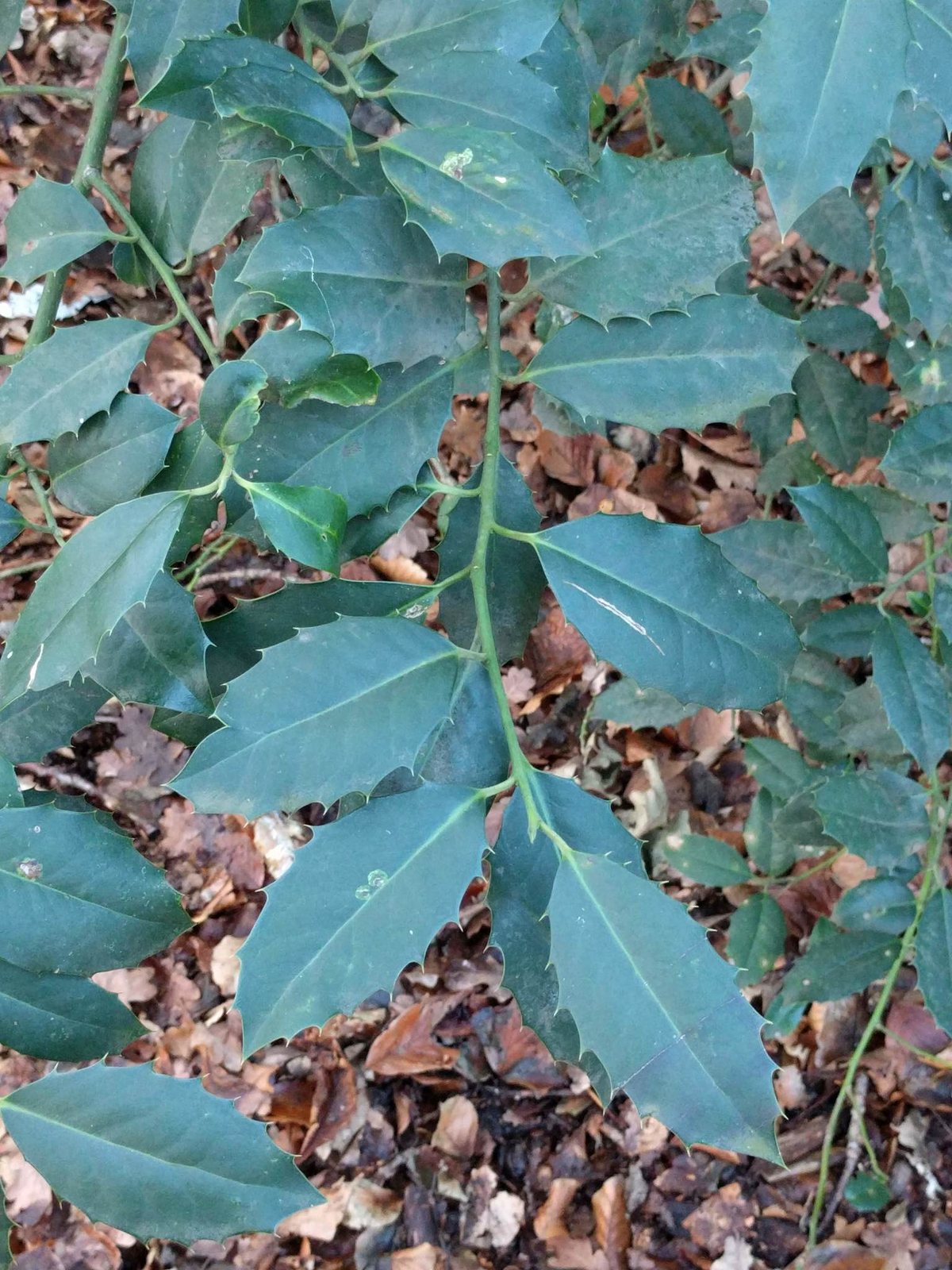
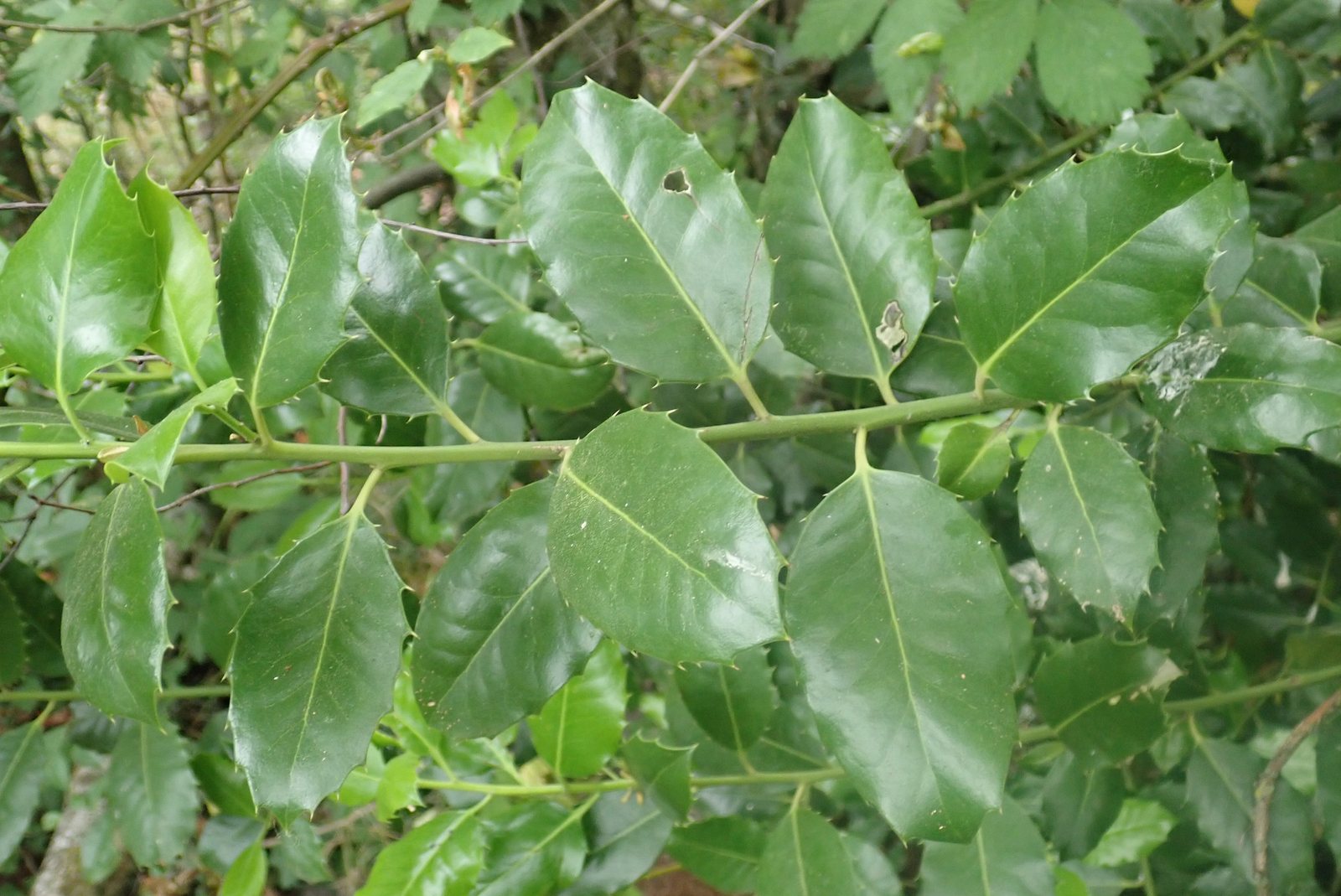
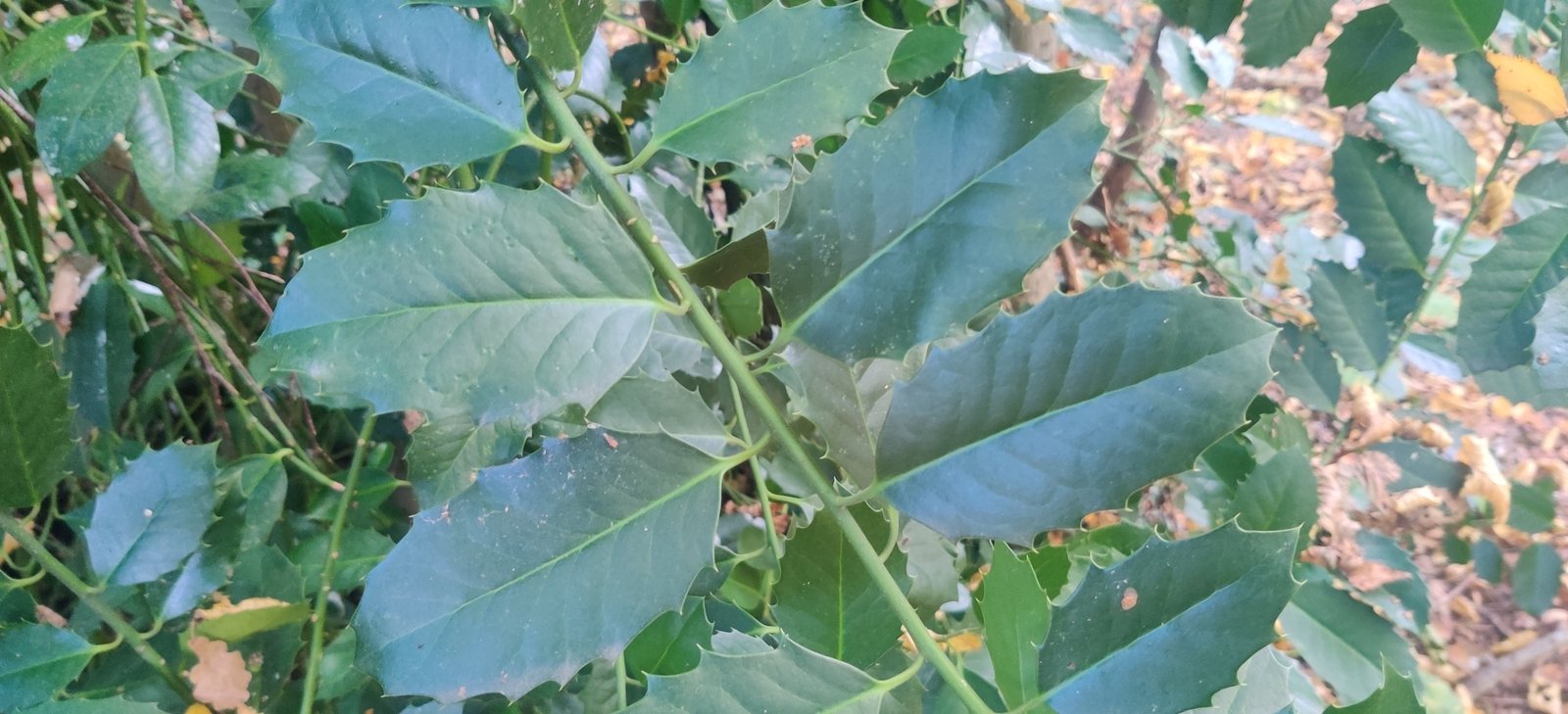
A large evergreen shrub or small tree grown for glossy green leaves with broad golden-yellow margins. Despite its name, 'Golden King' is female and can carry red winter berries when a compatible male holly flowers nearby. It makes a substantial hedge, screen or specimen, so allow room for its mature size.
At a glance
- Sun
- Full sun to partial shade; good light gives stronger leaf colour. Shelter from drying winter winds, especially near its cold limit.
- Water
- Water regularly during establishment, keeping the root zone moist but not waterlogged. Established plants tolerate short dry spells but benefit from deep watering during prolonged drought.
- Soil
- Moist, well-drained soil, preferably slightly acidic to neutral. Tolerates clay if drainage is adequate; avoid persistently wet ground.
- Height
- 15-25 ft (4.5-7.5 m)
- Spread
- 10-15 ft (3-4.5 m)
- Flowers
- Small white flowers in late spring; inconspicuous but useful to visiting insects.
- Foliage
- Evergreen. Glossy, leathery, dark green leaves with broad, irregular golden-yellow margins; leaves are usually only lightly spined or nearly spineless.
- Growth
- Moderate; takes many years to reach full size.
- Care needed
- Low
The year at a glance
- Pollinators
- Wildlife
- Low allergen
| J | F | M | A | M | J | J | A | S | O | N | D | |
|---|---|---|---|---|---|---|---|---|---|---|---|---|
| Flowers | ||||||||||||
| Fruit | ||||||||||||
| Plant |
Northern hemisphere months. In Australia, shift them by six.
- Difficulty
- Easy
- Toughness
- Very tough
Will it suit your garden?
Pick your zone, country, light and whether you have pets.
Full sun is 6 or more hours of direct sun a day, part shade 3 to 6 hours, shade under 3.
How it grows
Planting day
2.4 ft (0.72 m)
After 1 year
6 ft (1.8 m)
After 2 years
9 ft (2.8 m)
After 3 years
13 ft (3.9 m)
After 5 years
20 ft (6 m)
full size
About 5 years to full size.
From a typical nursery size, at an average rate for this kind of plant. A rule of thumb, not a forecast.
Good to know
- Cats and dogs
- Toxic
- Growth rate
- Moderate
Care
Jobs through the year
- WaterApr–May, Sep–Oct, every 14 days
- Water established shrubs only when soil is dry; keep young plants moist for two growing seasons.
- WaterJun–Aug, every 14 days
- Water established shrubs deeply during prolonged drought; young plants need more frequent watering.
- WaterJan–Mar, Nov–Dec, every 21 days
- Water only during frost-free dry spells when the root zone is dry.
- MulchMar–Apr
- Apply 5–8 cm of organic mulch without covering the trunk.
- FeedMar–Apr
- Feed lightly only on poor soil or where growth is weak.
- PruneFeb–Mar
- Remove damaged branches and shape lightly; heavy pruning reduces flowers and berries.
- PruneJun
- If needed, trim hedges lightly after checking for nests; remove wholly green shoots at their origin.
- ProtectJan–Feb, Nov–Dec
- Shelter exposed young plants from drying winter winds, especially near their cold limit.
- Water deeply during dry weather for the first two growing seasons.
- Apply 2-3 in (5-8 cm) of organic mulch over the root area, keeping it clear of the trunk.
- Feed lightly in spring only if growth is weak or the soil is poor; avoid heavy nitrogen feeding.
- For berries, provide a male English or Highclere holly that flowers at the same time; another female plant will not pollinate it.
- Remove wholly green shoots at their point of origin before they outgrow the variegated growth.
Pruning. Prune in late winter or early spring to remove damaged wood and lightly shape the plant; established hedges can be trimmed in early summer after checking for nesting birds. Heavy or repeated clipping reduces flowering and berries.
Through the year
- Early spring
- Plant where the soil is workable, water thoroughly and mulch the root area.
- Late winter
- Remove damaged branches and make any necessary structural cuts.
- Late spring
- Check that a nearby male holly flowers at the same time if berries are wanted.
- Early summer
- Lightly trim hedges after checking for nesting birds; remove any all-green shoots.
- Summer
- Water young plants deeply during dry spells and inspect leaves for scale insects.
- Autumn
- Plant in mild regions while the soil is still warm; replenish mulch without covering the trunk.
- Winter
- Check exposed young plants for wind damage and water during frost-free dry spells if the ground is dry.
In the garden
- Use as a broad evergreen screen or hedge where there is room for its eventual width.
- Plant as a specimen against dark evergreens to make the yellow leaf margins stand out.
- Train as a small standard tree to give height and year-round structure to a formal garden.
- Use behind hellebores, ferns and spring bulbs in a partially shaded border.
Garden styles it suits: Formal, English country, Traditional, Woodland, Winter interest and English manor.
Plant it with: Hellebores, Japanese skimmia, Sweet box, Japanese forest grass, Snowdrops and Soft shield fern.
Wildlife: Flowers provide nectar and pollen for insects. Berries feed birds, and dense evergreen growth offers shelter and nesting cover.
Problems to watch for
- All-green reversions can overwhelm the variegated growth: remove each shoot completely at its origin.
- Scale insects can cause sticky honeydew and sooty mould: inspect stems and leaf undersides, remove small infestations by hand and use a locally approved horticultural oil if needed.
- Yellowing leaves and dieback in wet soil can indicate root damage or root rot: improve drainage and avoid frequent watering of already damp soil.
- Few or no berries usually reflect missing male pollination, frost-damaged flowers or heavy trimming: provide a compatible male and retain flowering shoots.
Safety
Berries and leaves are harmful if eaten by people, cats, dogs or horses. Berries are the main household concern and can cause nausea, vomiting, abdominal pain and diarrhoea; larger amounts may cause more serious illness. Keep children and pets from eating them and seek medical or veterinary advice after ingestion.
Where it spreads. This cultivar is not generally listed separately as invasive. Its English holly parent is invasive in the Pacific Northwest of the United States and southwestern British Columbia, and bird-sown seedlings from fruiting hollies warrant monitoring there. Remove unwanted seedlings and check local guidance before planting near woodland.
Easily confused with
Holly 'Golden Queen' (Ilex aquifolium 'Golden Queen')
Also has yellow-edged leaves, but these are generally more strongly spined. Despite its name, 'Golden Queen' is male and does not produce berries.
Holly 'Golden van Tol' (Ilex aquifolium 'Golden van Tol')
Has similar golden-edged, relatively smooth leaves, so foliage alone can be difficult to distinguish. It is self-fertile, unlike 'Golden King'; a reliable nursery label is the safest identification.
Holly 'Lawsoniana' (Ilex × altaclerensis 'Lawsoniana')
Its yellow variegation is mainly in the centre of the leaf, rather than forming the broad yellow margin of 'Golden King'.
The name
The hybrid name altaclerensis refers to Highclere in England, where this group of hollies originated, while 'Golden King' refers to the cultivar's golden variegation rather than its sex.
Propagation. Take semi-ripe cuttings in late summer or early autumn; rooting can be slow. Seed does not reproduce the cultivar reliably.
Checked against open data
- Accepted botanical name
- Ilex altaclerensis
Sources: GBIF (CC BY 4.0). The care and design notes are LandscapeGPT's own.
See it in your own yard.
Upload a photo of your yard and see it redesigned with plants that suit your climate, each checked against your zone.