Honey Gem grevillea
Grevillea 'Honey Gem'. Family Proteaceae. Shrub.
Also called Grevillea 'Honey Gem'.
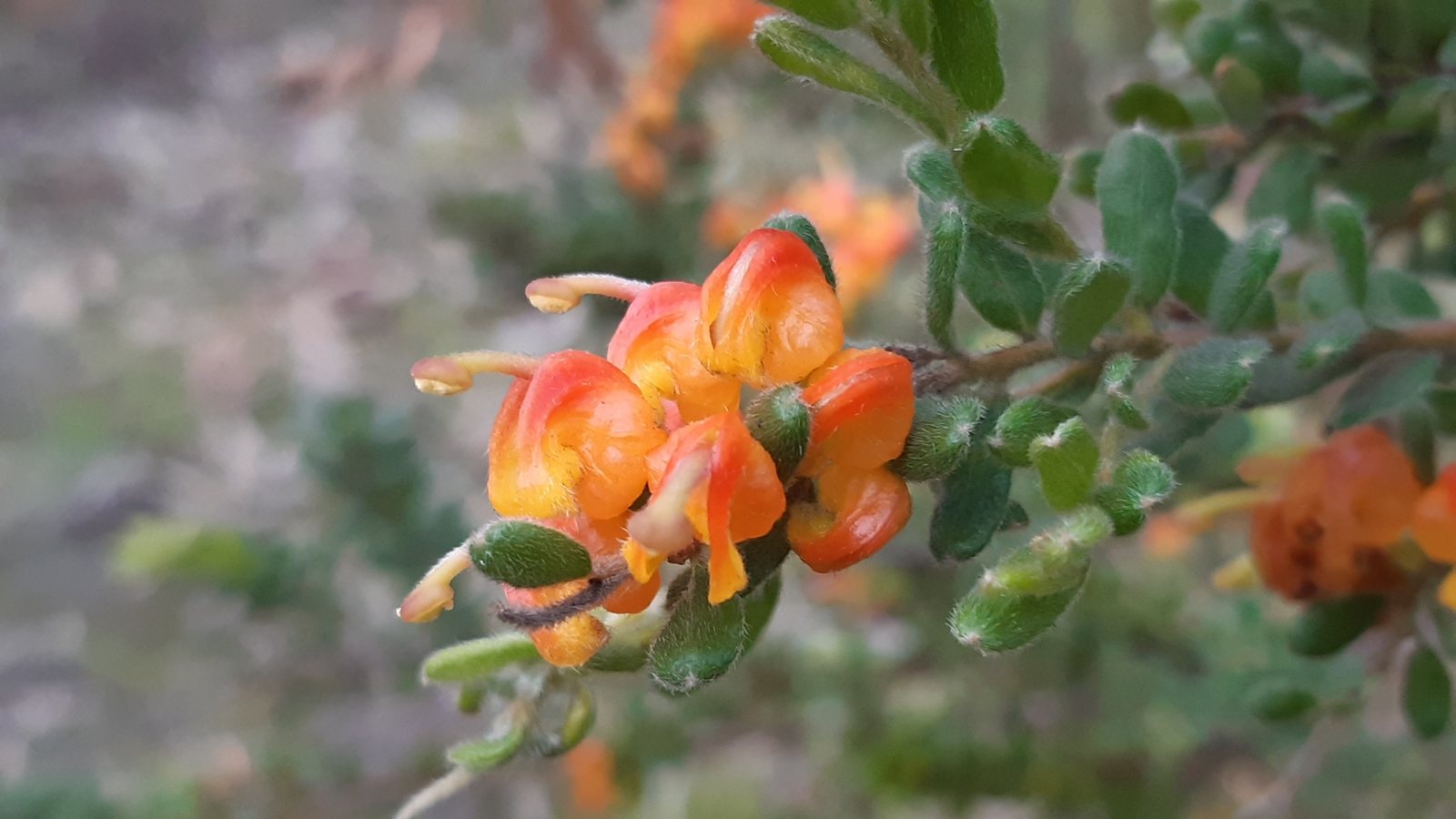
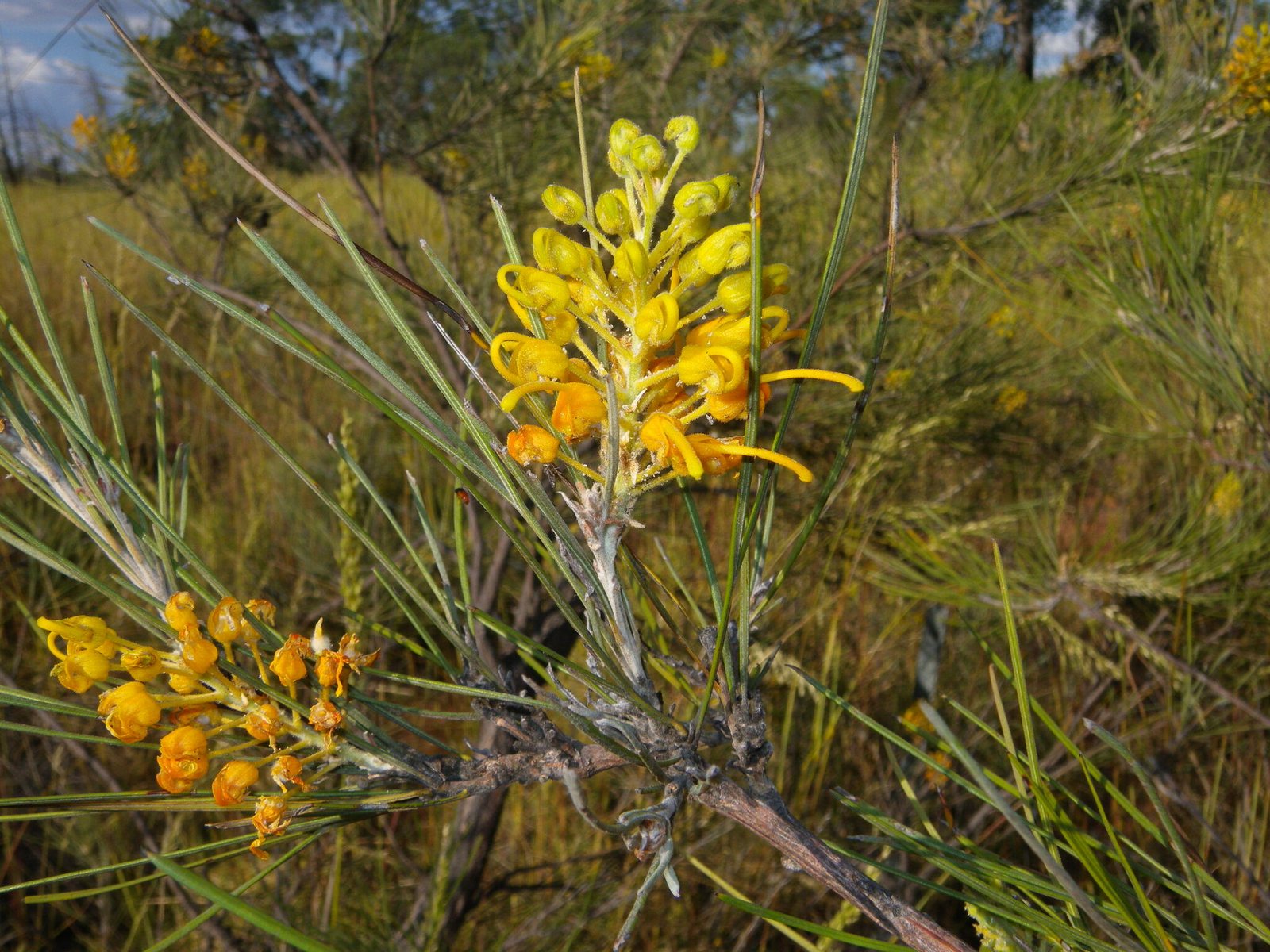
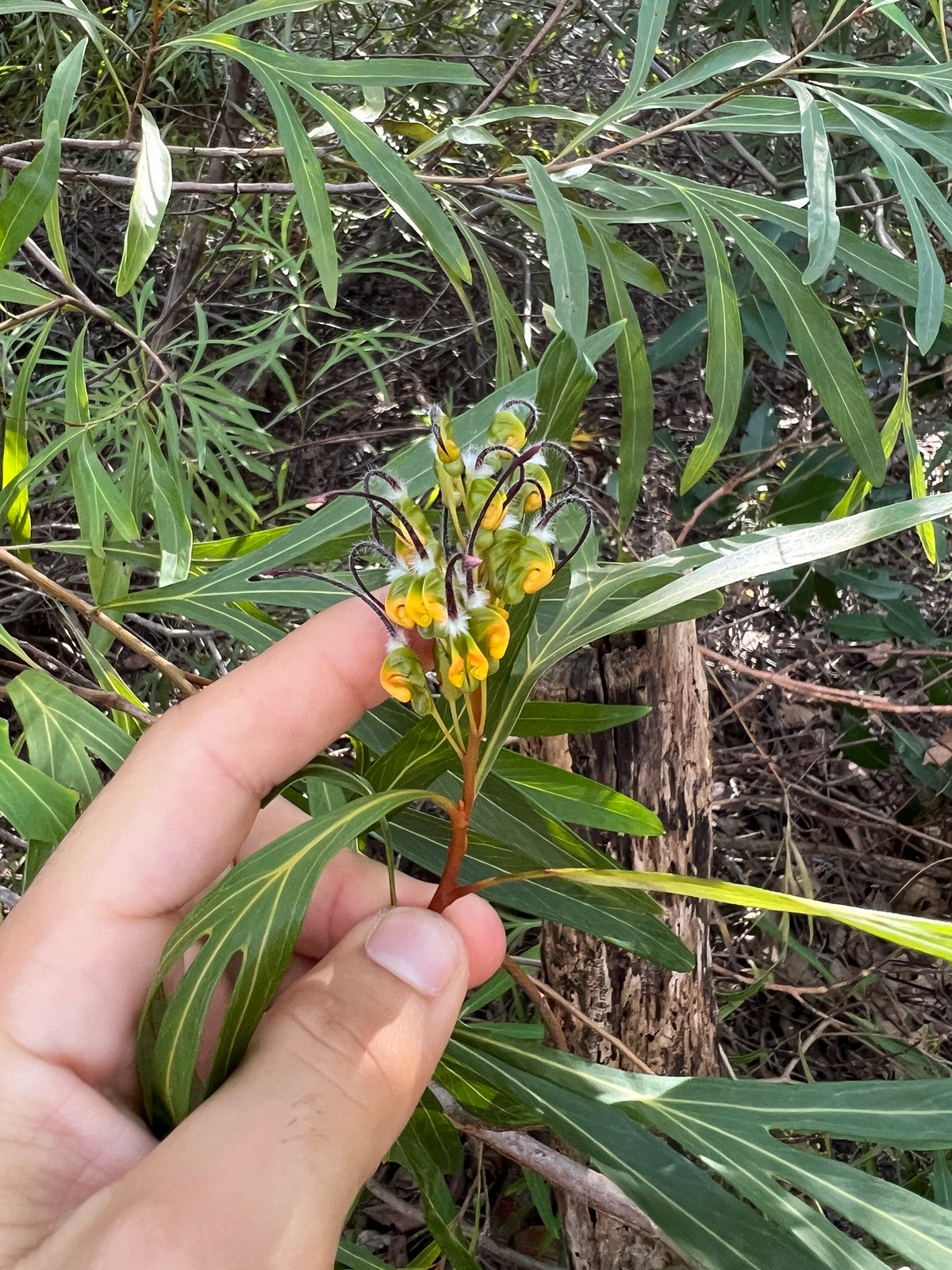
A large, fast-growing evergreen shrub with finely divided foliage and long, golden-orange flower clusters that attract nectar-feeding birds. This Australian hybrid is grown for its long flowering season and informal screening, but needs excellent drainage and a warm site sheltered from hard frost.
At a glance
- Sun
- Full sun gives the best flowering; tolerates light partial shade.
- Water
- Water regularly during establishment, then deeply during prolonged dry spells. Allow the soil to drain and partly dry between waterings; avoid constantly wet roots.
- Soil
- Well-drained sandy or loamy soil, preferably slightly acidic to neutral. Avoid waterlogged ground, strongly alkaline soil and phosphorus-rich fertilizers.
- Height
- 10-16 ft (3-5 m)
- Spread
- 6-13 ft (2-4 m)
- Flowers
- Golden-orange, toothbrush-like flower clusters through much of the year in frost-free climates, often heaviest from winter into spring.
- Foliage
- Evergreen. Deeply divided, fern-like green leaves with paler undersides.
- Growth
- Fast in warm conditions.
- Care needed
- Medium
The year at a glance
- Pollinators
- Drought tolerant
- Heat tolerant
- Wildlife
- Low allergen
| J | F | M | A | M | J | J | A | S | O | N | D | |
|---|---|---|---|---|---|---|---|---|---|---|---|---|
| Flowers | ||||||||||||
| Plant |
Northern hemisphere months. In Australia, shift them by six.
- Difficulty
- Hard
- Toughness
- Needs looking after
Will it suit your garden?
Pick your zone, country, light and whether you have pets.
Full sun is 6 or more hours of direct sun a day, part shade 3 to 6 hours, shade under 3.
How it grows
Planting day
1.6 ft (0.5 m)
After 1 year
5 ft (1.6 m)
After 2 years
9 ft (2.7 m)
After 3 years
12 ft (3.7 m)
After 5 years
13 ft (4 m)
full size
About 3 years to full size.
From a typical nursery size, at an average rate for this kind of plant. A rule of thumb, not a forecast.
Good to know
- Cats and dogs
- Safe
- Growth rate
- Fast
Care
Jobs through the year
- ProtectSep–Oct
- Not reliably hardy outdoors in zones 6-7; grow in a movable container and bring into bright, frost-free shelter before frost.
- ProtectJan–Apr, Nov–Dec
- Keep frost-free in strong light; year-round flowering requires warm, bright conditions and is not assured locally.
- ProtectMay
- Acclimatize gradually to outdoor sun after all frost risk has passed.
- WaterApr–May, Sep–Oct, every 14 days
- For established plants in frost-free ground, water only if dry; locally check containers more often and let the mix partly dry.
- WaterJun–Aug, every 7 days
- In frost-free ground, water deeply during drought; containers and young plants need more frequent checks, never saturated roots.
- WaterJan–Mar, Nov–Dec, every 14 days
- Check sheltered containers and water sparingly only when the mix has partly dried.
- FeedApr–May
- Feed only if needed, using a low-phosphorus fertilizer specifically suitable for grevilleas.
- MulchMay
- Apply a light organic mulch without covering the trunk base.
- PruneMay–Jun
- After the main flowering flush, lightly shorten leafy shoots; never cut hard into bare old wood.
- Water deeply through the first growing season, allowing excess water to drain away.
- If feeding is needed, use a low-phosphorus fertilizer specifically suitable for Australian native plants.
- Apply a light organic mulch, keeping it clear of the trunk.
- Keep root disturbance to a minimum once established.
- Protect young plants from frost and cold, drying winds; use a sheltered position near its cold limit.
Pruning. Tip-prune young plants to encourage branching, then lightly shorten leafy shoots after the main flowering flush. Avoid severe cuts into old, bare wood, which may not regrow reliably.
Through the year
- Spring
- Plant after frost risk has passed; water thoroughly and mulch without covering the trunk base.
- Late spring
- After the main flowering flush, lightly shorten long shoots and remove dead or damaged growth.
- Summer
- Check soil moisture during hot spells and water establishing plants deeply rather than little and often.
- Autumn
- Check that drainage is clear before wetter weather; avoid hard pruning before winter.
- Winter
- Cover young plants during forecast frosts and avoid watering already wet soil.
In the garden
- Use as an informal flowering screen where its full mature width can develop.
- Plant as a focal shrub in a sunny Australian-native border with kangaroo paws and lomandras.
- Place toward the back of a wildlife border, where visiting birds can feed without brushing against people.
- Combine with fine grasses and gravel mulch for a loose, drought-tolerant planting in a mild climate.
Garden styles it suits: Australian native, Wildlife garden, Mediterranean, Coastal, Dry gravel garden and Desert / xeriscape.
Plant it with: Kangaroo paw, Lomandra, Coastal rosemary, Bottlebrush and Geraldton wax.
Wildlife: Nectar attracts honeyeaters and other nectar-feeding birds in Australia, and hummingbirds where grown in the Americas. Bees and other insects also visit the flowers; dense growth provides shelter for small birds.
Problems to watch for
- Root rot in wet or poorly drained ground: improve drainage before planting, use a raised mound where appropriate and avoid frequent watering.
- Phosphorus toxicity, causing leaf yellowing, browning and decline: stop unsuitable fertilizers and use only low-phosphorus feeds appropriate for grevilleas.
- Yellow leaves in alkaline soil: check soil pH and use an iron chelate suitable for the measured pH; a better-suited planting site may be necessary.
- Frost damage to leaves and shoot tips: protect young plants and wait until spring growth begins before removing damaged wood.
Safety
Not known to be poisonous to cats, dogs or horses, but safety information specific to this cultivar is limited. Grevillea foliage and sap can cause contact dermatitis in susceptible people; wear gloves when pruning. Do not treat the flowers or nectar as food.
Easily confused with
Moonlight grevillea (Grevillea 'Moonlight')
Has similarly divided foliage and large flower clusters, but the flowers are creamy white rather than golden orange.
Sylvia grevillea (Grevillea 'Sylvia')
Another large shrub with divided foliage, but its flower clusters are deep pink rather than golden orange.
The name
Grevillea honours Charles Francis Greville, a British plant collector, while 'Honey Gem' refers to the flowers' honey-gold colouring.
Propagation. Take semi-ripe cuttings from healthy, non-flowering shoots in late summer, using a free-draining propagation mix. Cuttings preserve the cultivar; seedlings will not reliably come true.
Checked against open data
- Accepted botanical name
- Grevillea
Sources: GBIF (CC BY 4.0). The care and design notes are LandscapeGPT's own.
See it in your own yard.
Upload a photo of your yard and see it redesigned with plants that suit your climate, each checked against your zone.