Hophornbeam
Ostrya virginiana. Family Betulaceae. Tree.
Also called Eastern hophornbeam, American hophornbeam, Ironwood.
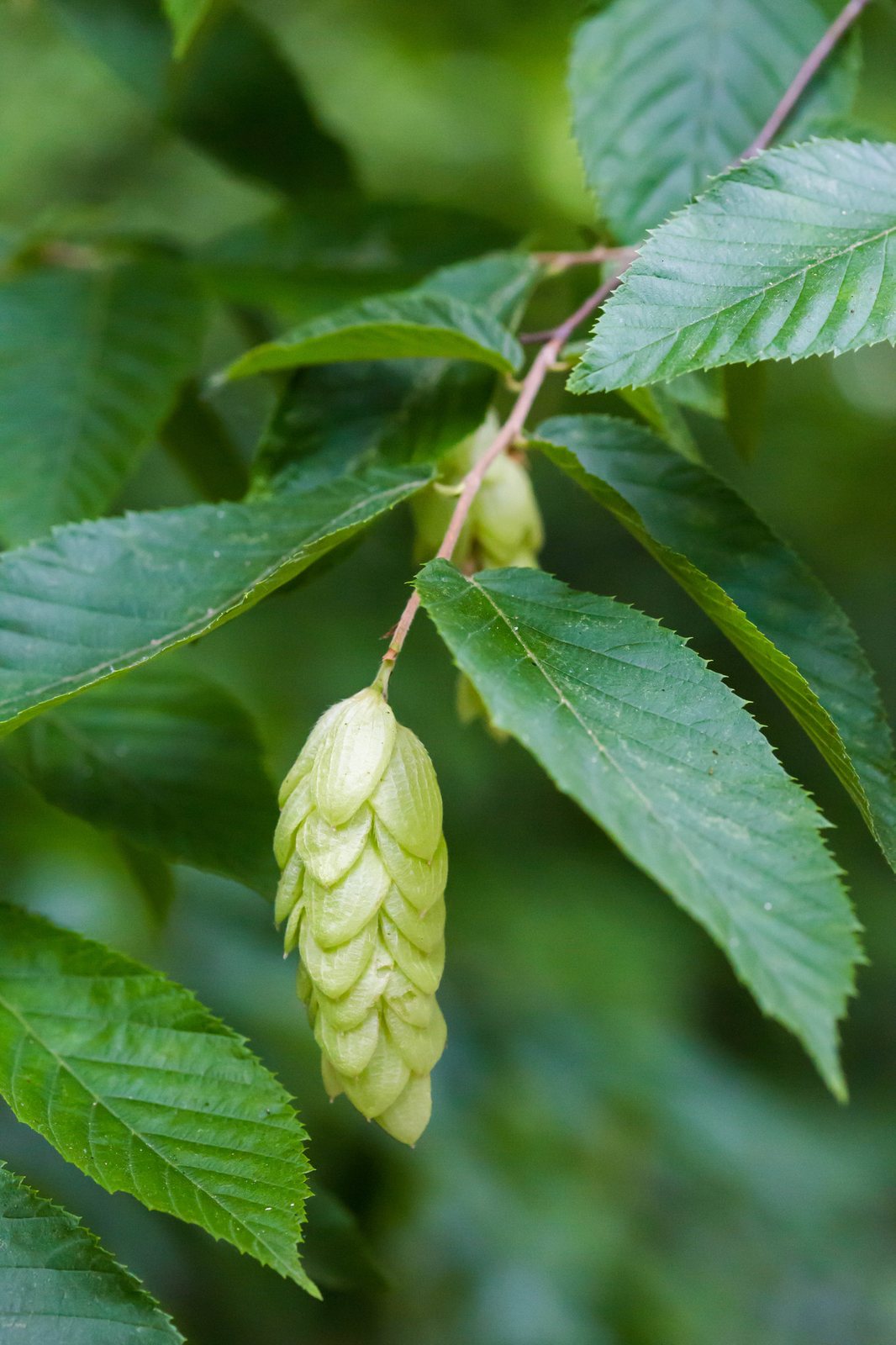
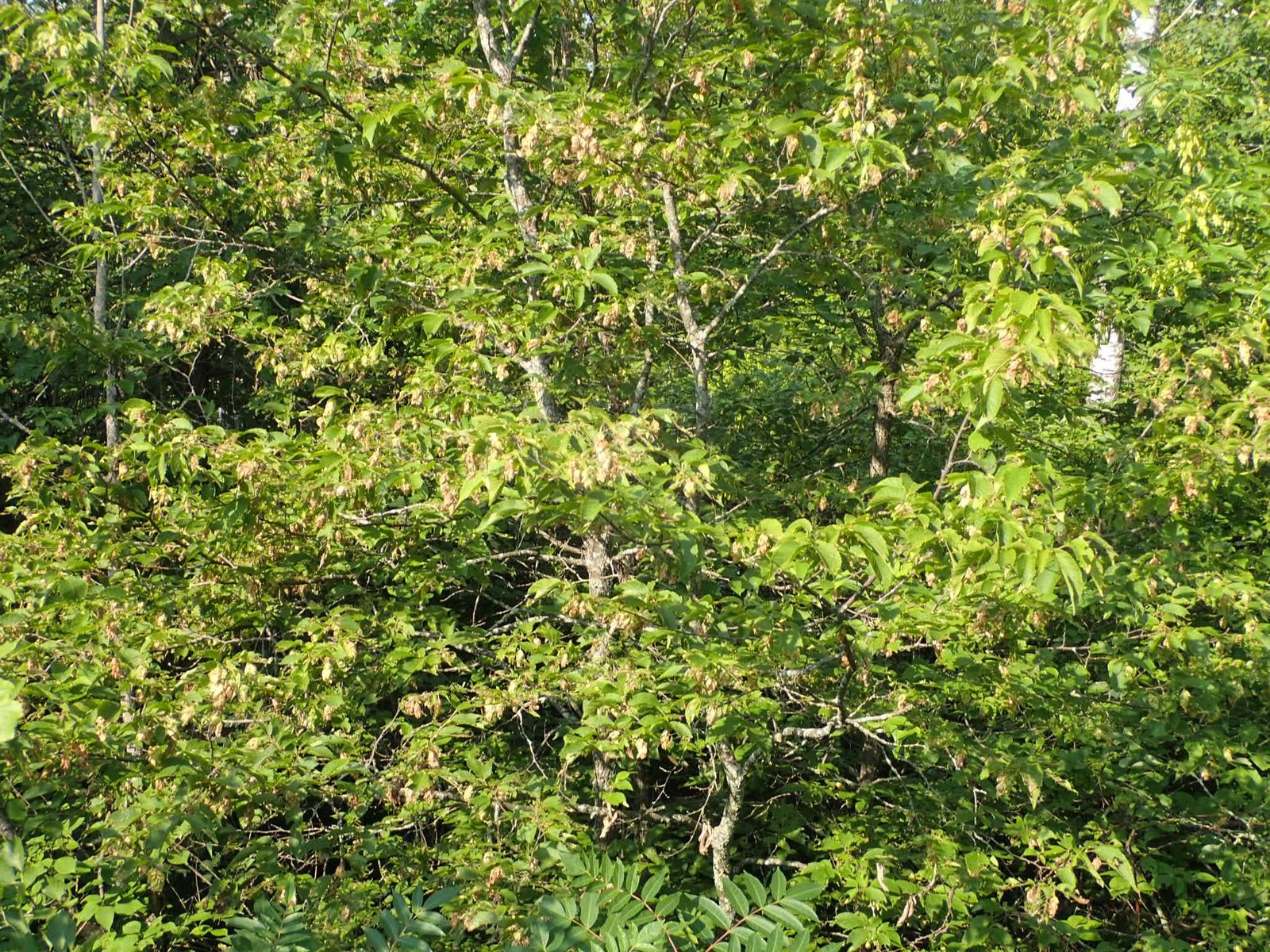
Hophornbeam is a slow-growing deciduous tree native to eastern North America, valued for its finely textured crown, shaggy bark and hanging clusters of hop-like seed cases. It makes a durable shade or woodland tree where the soil drains well, although it establishes slowly and dislikes being moved once settled.
At a glance
- Sun
- Full sun to partial shade; tolerates woodland shade but develops a fuller crown with more light.
- Water
- Water regularly while establishing. Established trees tolerate moderate drought, but benefit from deep watering during prolonged dry spells.
- Soil
- Well-drained loam, sandy soil or clay; tolerates acidic to alkaline conditions and rocky ground. Avoid waterlogged or heavily compacted soil.
- Height
- 25-40 ft (7.6-12.2 m)
- Spread
- 20-30 ft (6.1-9.1 m)
- Flowers
- Spring: slender yellow-brown male catkins and small, inconspicuous female flowers appear as the leaves emerge.
- Foliage
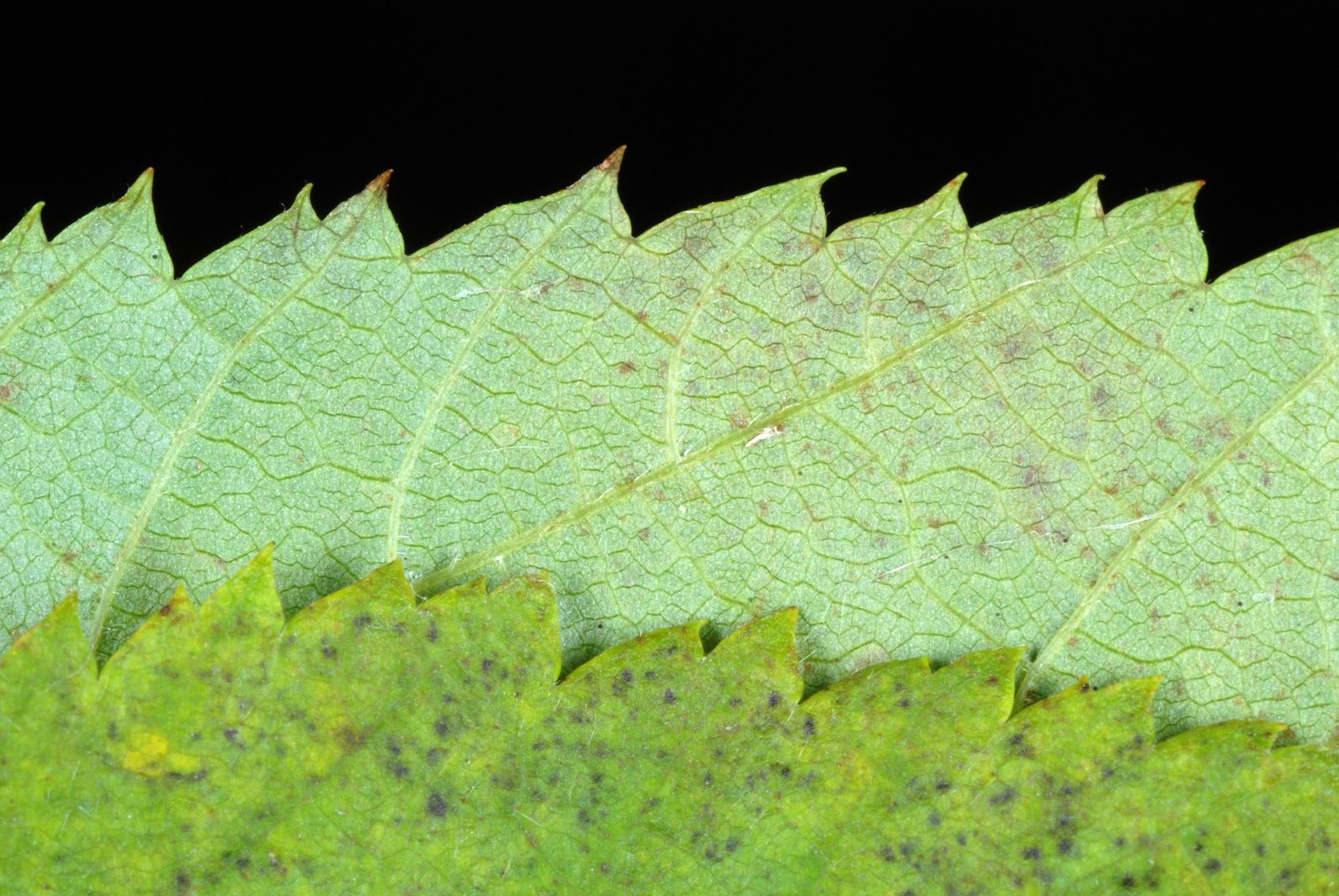
- Oval, pointed green leaves with sharply double-toothed edges and prominent veins; usually yellow in autumn, sometimes turning brown and lingering into winter.
- Growth
- Slow, often less than 12 in (30 cm) per year.
- Care needed
- Low
The year at a glance
- Drought tolerant
- Cold hardy
- Heat tolerant
- Disease resistant
- Wildlife
| J | F | M | A | M | J | J | A | S | O | N | D | |
|---|---|---|---|---|---|---|---|---|---|---|---|---|
| Flowers | ||||||||||||
| Fruit | ||||||||||||
| Plant |
Northern hemisphere months. In Australia, shift them by six.
- Difficulty
- Easy
- Toughness
- Very tough
Will it suit your garden?
Pick your zone, country, light and whether you have pets.
Full sun is 6 or more hours of direct sun a day, part shade 3 to 6 hours, shade under 3.
How it grows
Planting day
7 ft (2 m)
After 1 year
7 ft (2.2 m)
After 2 years
8 ft (2.5 m)
After 3 years
9 ft (2.7 m)
After 5 years
11 ft (3.2 m)
About 32 years to full size.
From a typical nursery size, at an average rate for this kind of plant. A rule of thumb, not a forecast.
Good to know
- Cats and dogs
- Safe
- Native to
- the US and Canada
- Growth rate
- Slow
Care
Jobs through the year
- WaterApr–May, Sep–Oct, every 21 days
- Deep-water established trees only during prolonged dry spells; water young trees more frequently for two years.
- WaterJun–Aug, every 14 days
- Water deeply in prolonged drought, allowing the surface to dry slightly between waterings.
- MulchMar–Apr
- Maintain 5–8 cm of organic mulch over the roots, leaving the trunk base exposed.
- PruneFeb
- Prune lightly if needed to remove damaged or crossing branches and correct competing young leaders.
- ProtectMar, Nov
- Check young-tree guards and ties; prevent mower damage and root-zone compaction.
- Plant a small nursery-grown tree in its permanent position; established trees are difficult to transplant.
- Water deeply through the first two growing seasons, allowing the soil surface to dry slightly between waterings.
- Spread 2-3 in (5-8 cm) of organic mulch over the root area, keeping it clear of the trunk.
- Do not fertilise routinely; feed only if a soil test identifies a deficiency.
- Protect the trunk from mower damage, and avoid compacting or raising the soil over the roots.
Pruning. Prune lightly in late winter while dormant, removing dead, damaged or crossing branches and correcting competing leaders on young trees. Avoid heavy crown thinning or topping.
Through the year
- Late winter
- Inspect the branch structure and make any necessary light pruning cuts.
- Early spring
- Plant while dormant, provided the ground is workable and not waterlogged.
- Spring
- Renew mulch, leaving the trunk base exposed, and check any tree ties.
- Summer
- Check soil moisture around young trees and water deeply during dry weather.
- Autumn
- Leave some fallen leaves beneath the canopy as natural mulch where practical.
- Late autumn
- Water recently planted trees before the ground freezes if the soil is dry.
In the garden
- Use as a modest-sized shade tree beside a lawn or seating area, allowing room for its spreading mature crown.
- Plant at a woodland edge with shade-tolerant shrubs and ferns for layered planting.
- Include in eastern North American native gardens for seed-eating birds and insect habitat.
- Set against evergreen planting to show off its pale seed clusters, yellow autumn leaves and textured winter bark.
Garden styles it suits: Woodland, Wildlife garden, Low-maintenance, Traditional, Autumn colour and New England.
Plant it with: Witch hazel, Mapleleaf viburnum, Christmas fern, Wild ginger, Pennsylvania sedge and White wood aster.
Wildlife: The small nuts are eaten by birds and small mammals, including grouse, finches and squirrels. Leaves support caterpillars, and the crown provides shelter and nesting sites. Flowers are wind-pollinated rather than a significant nectar source.
Problems to watch for
- Slow establishment or transplant failure: start with a small nursery tree, preserve the root ball and maintain even moisture without saturating the soil.
- Leaf scorch during drought: water deeply and maintain mulch, especially around recently planted trees.
- Poor growth in wet or compacted soil: improve the planting location or drainage rather than adding fertiliser; keep vehicles and heavy foot traffic off the root area.
- Occasional fungal leaf spots: collect badly affected fallen leaves and avoid wetting the foliage; established trees rarely need treatment.
Safety
Not known to be toxic to people, cats, dogs or horses. No part is recognised as a significant poisoning hazard, although the tree is not normally grown as food.
Easily confused with
American hornbeam (Carpinus caroliniana)
American hornbeam has smooth, grey, muscle-like bark and nuts attached to leafy, three-lobed bracts. Hophornbeam has narrow, shredding bark strips and nuts enclosed in inflated papery sacs.
European hornbeam (Carpinus betulus)
European hornbeam has comparatively smooth grey bark and hanging fruits with conspicuous three-lobed leafy bracts, rather than hophornbeam's overlapping, hop-like papery sacs.
The name
Hophornbeam refers to the hop-like fruit clusters and its resemblance to hornbeam, while virginiana means 'of Virginia'.
Propagation. Usually grown from seed collected as the papery fruit clusters turn tan. Seed dormancy can be prolonged and may require a warm period followed by cold, moist stratification; outdoor-sown seed may take more than one season to germinate. Cuttings are difficult to root.
Checked against open data
- Accepted botanical name
- Ostrya virginiana
- In the US and Canada
- Native in Canada and the lower 48 states.
- Native range
- Alabama, Arkansas, Connecticut, Delaware, District of Columbia, El Salvador, Florida, Georgia, Guatemala, Honduras, Illinois and Indiana.
- Measured
- Soil pH 4.2 to 7.6. Average height 645 cm.
Sources: GBIF (CC BY 4.0), USDA PLANTS and Trefle (CC BY 4.0). The care and design notes are LandscapeGPT's own.
See it in your own yard.
Upload a photo of your yard and see it redesigned with plants that suit your climate, each checked against your zone.