Horse chestnut
Aesculus hippocastanum. Family Sapindaceae. Tree.
Also called Common horse chestnut, Conker tree.
Horse chestnut is a large deciduous tree grown for its broad shade canopy, bold leaves and upright candles of spring flowers. Its shiny brown seeds are the familiar conkers, not edible chestnuts. Give it a generous lawn or park-like setting, well away from buildings and paving.
At a glance
- Sun
- Full sun or partial shade; flowering is best in full sun.
- Water
- Moderate; prefers consistent moisture and needs deep watering while establishing and during prolonged drought.
- Soil
- Deep, fertile, moisture-retentive but well-drained soil; tolerates clay and a broad pH range. Avoid persistently waterlogged or very dry sites.
- Height
- 50-80 ft (15-24 m)
- Spread
- 40-70 ft (12-21 m)
- Flowers
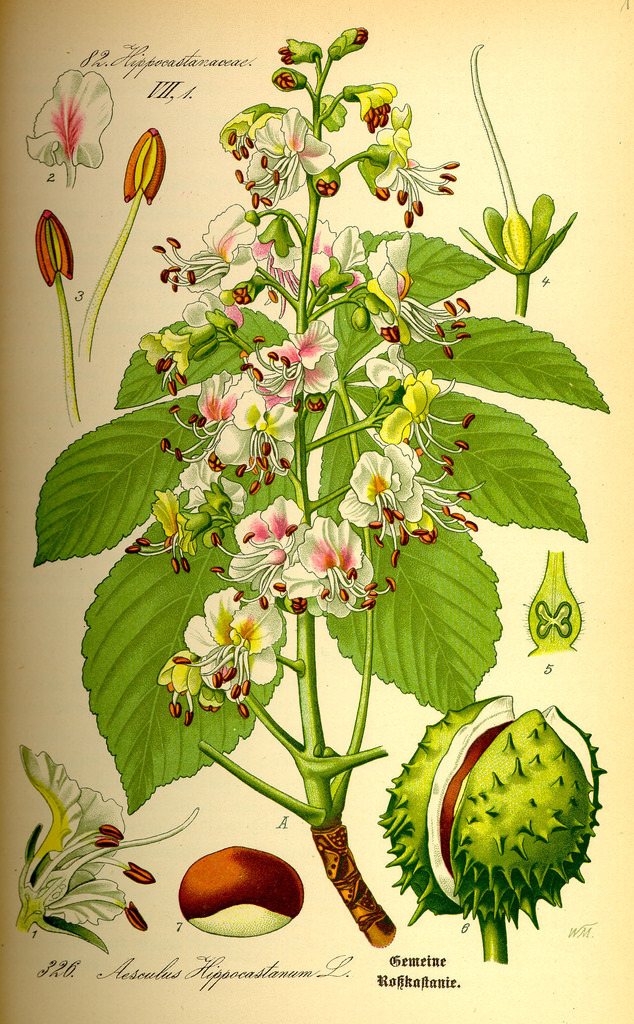
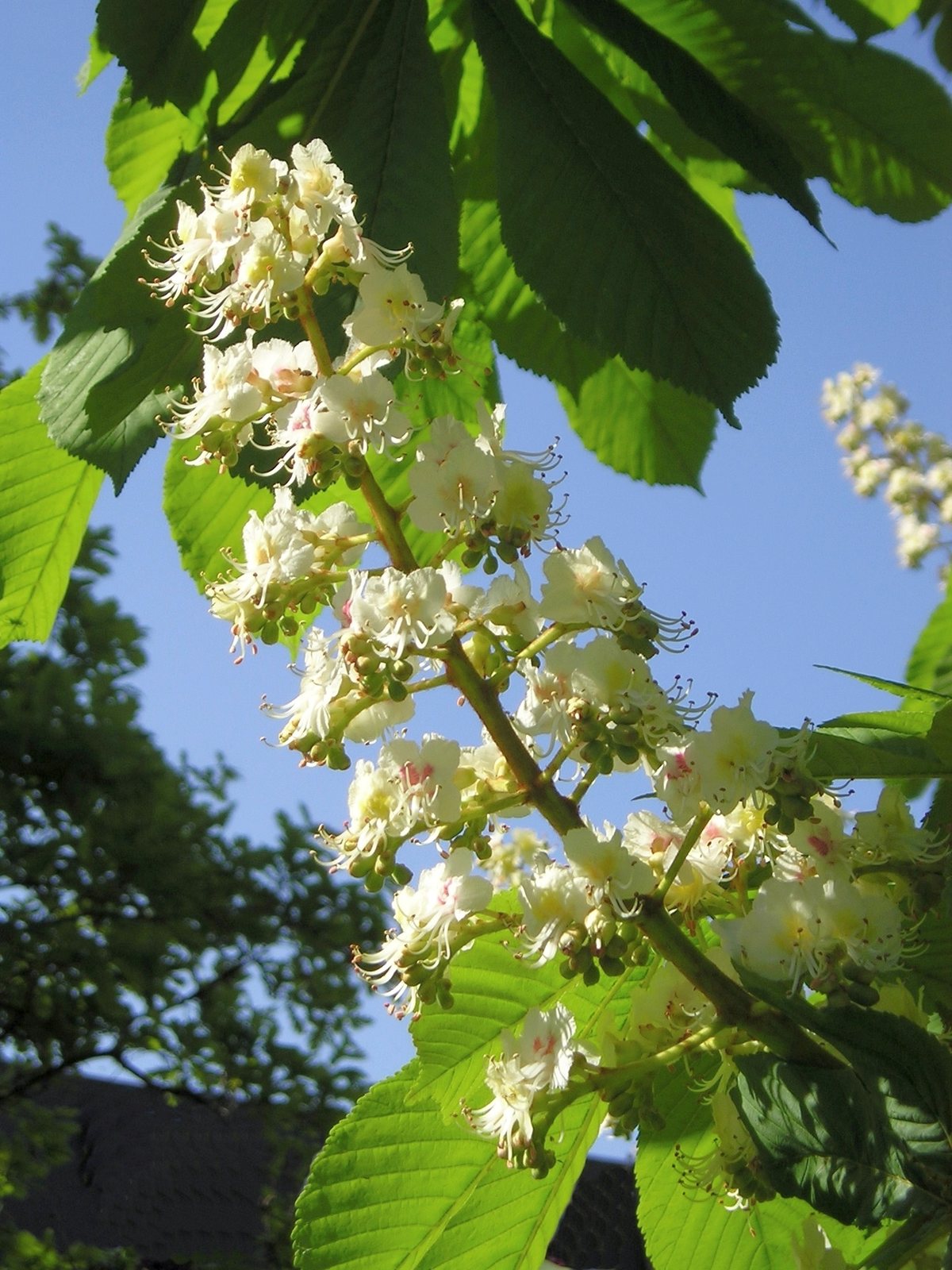
- Mid- to late spring; upright clusters of white flowers marked yellow, turning pink or red as they age.
- Foliage
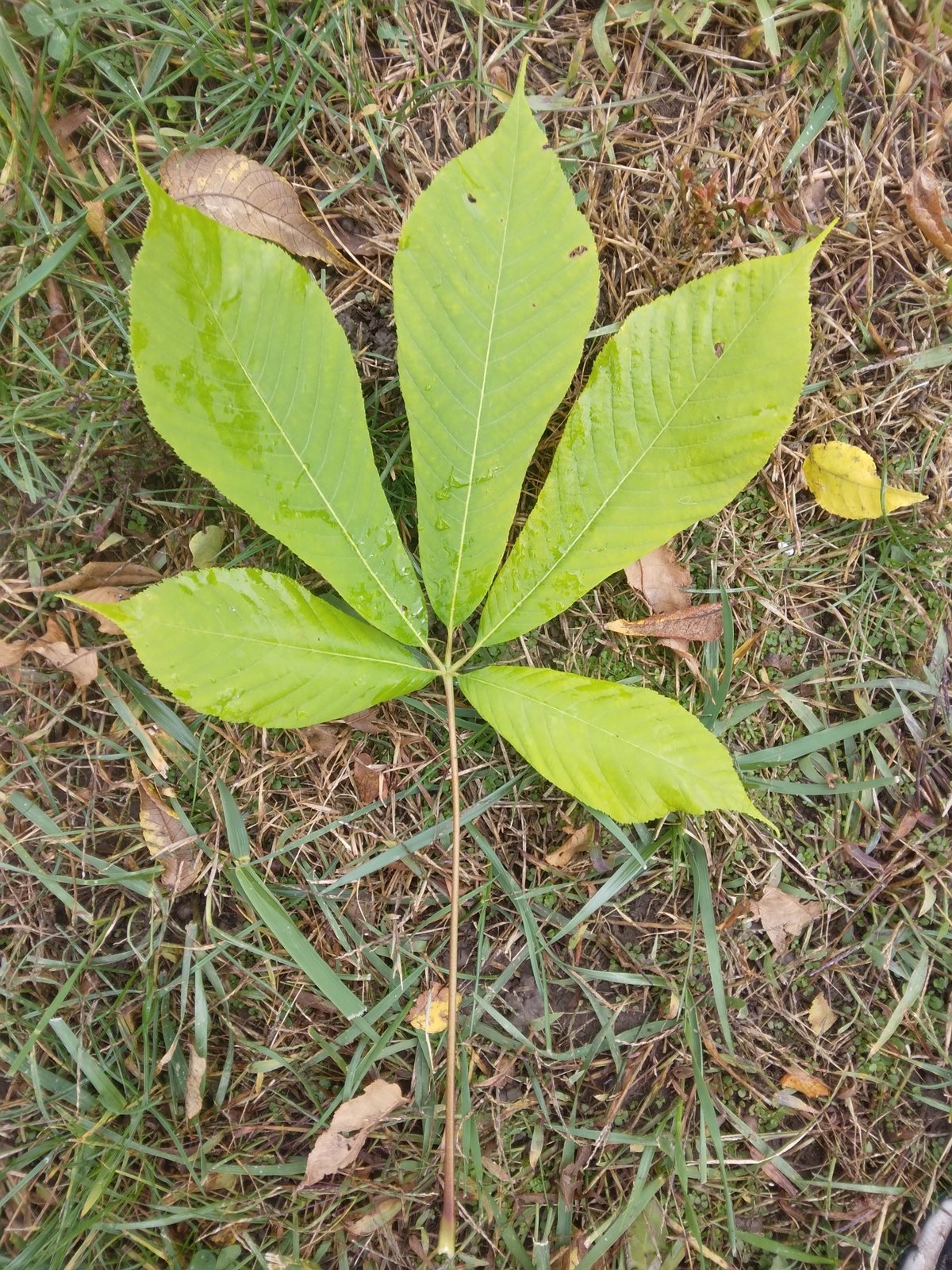
- Large, opposite leaves divided into five to seven toothed leaflets radiating from one point; dark green in summer, usually yellow to brown in autumn.
- Growth
- Moderate, faster when young in moist, fertile soil.
- Care needed
- Medium
The year at a glance
- Pollinators
- Cold hardy
- Wildlife
- Low allergen
| J | F | M | A | M | J | J | A | S | O | N | D | |
|---|---|---|---|---|---|---|---|---|---|---|---|---|
| Flowers | ||||||||||||
| Fruit | ||||||||||||
| Plant |
Northern hemisphere months. In Australia, shift them by six.
- Difficulty
- Moderate
- Toughness
- Fairly tough
Will it suit your garden?
Pick your zone, country, light and whether you have pets.
Full sun is 6 or more hours of direct sun a day, part shade 3 to 6 hours, shade under 3.
How it grows
Planting day
8 ft (2.3 m)
After 1 year
11 ft (3.4 m)
After 2 years
15 ft (4.5 m)
After 3 years
18 ft (5.6 m)
After 5 years
25 ft (7.7 m)
About 16 years to full size.
From a typical nursery size, at an average rate for this kind of plant. A rule of thumb, not a forecast.
Good to know
- Cats and dogs
- Toxic
- Growth rate
- Fast
Care
Jobs through the year
- WaterApr–May, Sep–Oct, every 14 days
- Deep-water established trees during dry spells; check young root balls more often.
- WaterJun–Aug, every 7 days
- Water deeply in prolonged dry weather to limit drought stress and leaf scorch.
- MulchMar–Apr
- Maintain 5–8 cm of organic mulch, leaving the trunk clear.
- PruneJan–Feb
- Lightly train young trees while dormant; avoid heavy cuts and topping.
- ProtectSep–Oct, every 7 days
- Collect fallen conkers where children, pets or livestock might eat them.
- ProtectOct–Nov
- Gather affected fallen leaves for appropriate disposal to reduce leaf miners and blotch.
- Plant where the mature canopy and roots have ample room, away from paving, drains and small garden beds.
- Water deeply through the first two growing seasons, checking the root ball during dry weather.
- Maintain a 2-3 in (5-8 cm) layer of organic mulch over the root area, keeping it clear of the trunk.
- Feed only if growth is weak and a soil test indicates a deficiency; established trees usually need no fertiliser.
- Stake only if the young tree is unstable, and remove ties and stakes once roots hold it securely.
- Collect fallen conkers where children, pets or livestock might eat them.
Pruning. Prune young trees lightly in midwinter to develop a sound framework, removing dead, damaged or crossing branches. Avoid heavy pruning and topping; use a qualified arborist for large limbs or work on mature trees.
Through the year
- Autumn
- Plant while the soil is workable and moist; water thoroughly and mulch.
- Winter
- Check young-tree ties and carry out light structural pruning during dormancy.
- Spring
- Renew mulch and inspect the trunk for bleeding patches or damaged bark.
- Summer
- Water young trees during dry spells and check leaves for scorch, blotch or leaf-miner damage.
- Early autumn
- Collect fallen conkers from paths, lawns and areas used by children or animals.
- Late autumn
- Gather affected fallen leaves to reduce overwintering leaf miners and leaf-blotch infection.
In the garden
- A single specimen in a large lawn, where its rounded crown and spring flowers can be seen from a distance.
- An avenue or estate entrance planting with enough room for broad crowns and substantial roots.
- A shade tree beside a large seating lawn, with seating kept clear of falling conkers.
- The upper canopy of a spacious woodland garden, underplanted with spring bulbs and shade-tolerant perennials.
Garden styles it suits: Grand estate, English manor, Traditional, Victorian, Woodland and English country.
Plant it with: Snowdrops, Daffodils, Hellebores, Hardy geraniums, Epimediums and Male fern.
Wildlife: Flowers provide pollen and nectar for bees and other insects. The mature canopy offers nesting and shelter, and some wildlife eats the seeds, but this does not make them safe for people or domestic animals.
Problems to watch for
- Horse chestnut leaf miner: larvae make pale or brown patches, especially in Europe and the UK. Collect fallen leaves and dispose of them through an appropriate local green-waste system; established trees usually tolerate the damage.
- Bleeding canker: dark, sticky fluid seeps from bark lesions and branches may die back. Avoid trunk injuries and seek an arborist's assessment, especially if the crown declines; there is no reliable home cure.
- Leaf blotch: irregular reddish-brown patches develop on leaves. Remove affected fallen foliage and maintain tree vigour; routine spraying is rarely worthwhile on a large tree.
- Leaf scorch: dry, brown leaf margins and early leaf fall follow drought, heat or restricted rooting. Water deeply during dry spells, mulch and avoid compacting soil beneath the canopy.
Safety
Toxic to people, cats, dogs and horses. All parts contain toxic compounds, particularly the seeds and their cases; leaves and bark are also unsafe to eat. Ingestion can cause vomiting, diarrhoea, weakness and neurological signs, and serious poisoning is possible. Conkers also present a choking or intestinal-blockage risk. Contact a poison service or veterinarian promptly after ingestion.
Easily confused with
Sweet chestnut (Castanea sativa)
Has single, long, sharply toothed leaves rather than leaves divided into leaflets. Its edible nuts are enclosed in densely prickly burrs; horse chestnut has much more sparsely spined cases and poisonous seeds.
Red horse chestnut (Aesculus × carnea)
Usually a smaller tree with pink to red flowers and commonly five darker, thicker leaflets, rather than the large white flower candles and often seven leaflets of horse chestnut.
Ohio buckeye (Aesculus glabra)
Usually has five leaflets, yellow-green flowers and an unpleasant smell when leaves or twigs are crushed; horse chestnut generally has larger leaves and showier white flower clusters.
The name
The epithet hippocastanum means 'horse chestnut', reflecting an old association with feeding the seeds to horses, although they are now known to be poisonous.
Propagation. Sow fresh, ripe conkers outdoors in autumn in deep pots or a nursery bed, protecting them from rodents. Do not let the seeds dry out; winter chilling normally allows germination in spring. Seedlings may differ from the parent.
Checked against open data
- Accepted botanical name
- Aesculus hippocastanum
- In the US and Canada
- Introduced in Canada and the lower 48 states.
- Native range
- Albania, Bulgaria, Greece, Turkey, Turkmenistan and Yugoslavia.
- Measured
- Soil pH 5.5 to 6.5. Average height 2500 cm.
Sources: GBIF (CC BY 4.0), USDA PLANTS and Trefle (CC BY 4.0). The care and design notes are LandscapeGPT's own.
See it in your own yard.
Upload a photo of your yard and see it redesigned with plants that suit your climate, each checked against your zone.