Inkberry
Ilex glabra. Family Aquifoliaceae. Shrub.
Also called Inkberry holly, Gallberry.
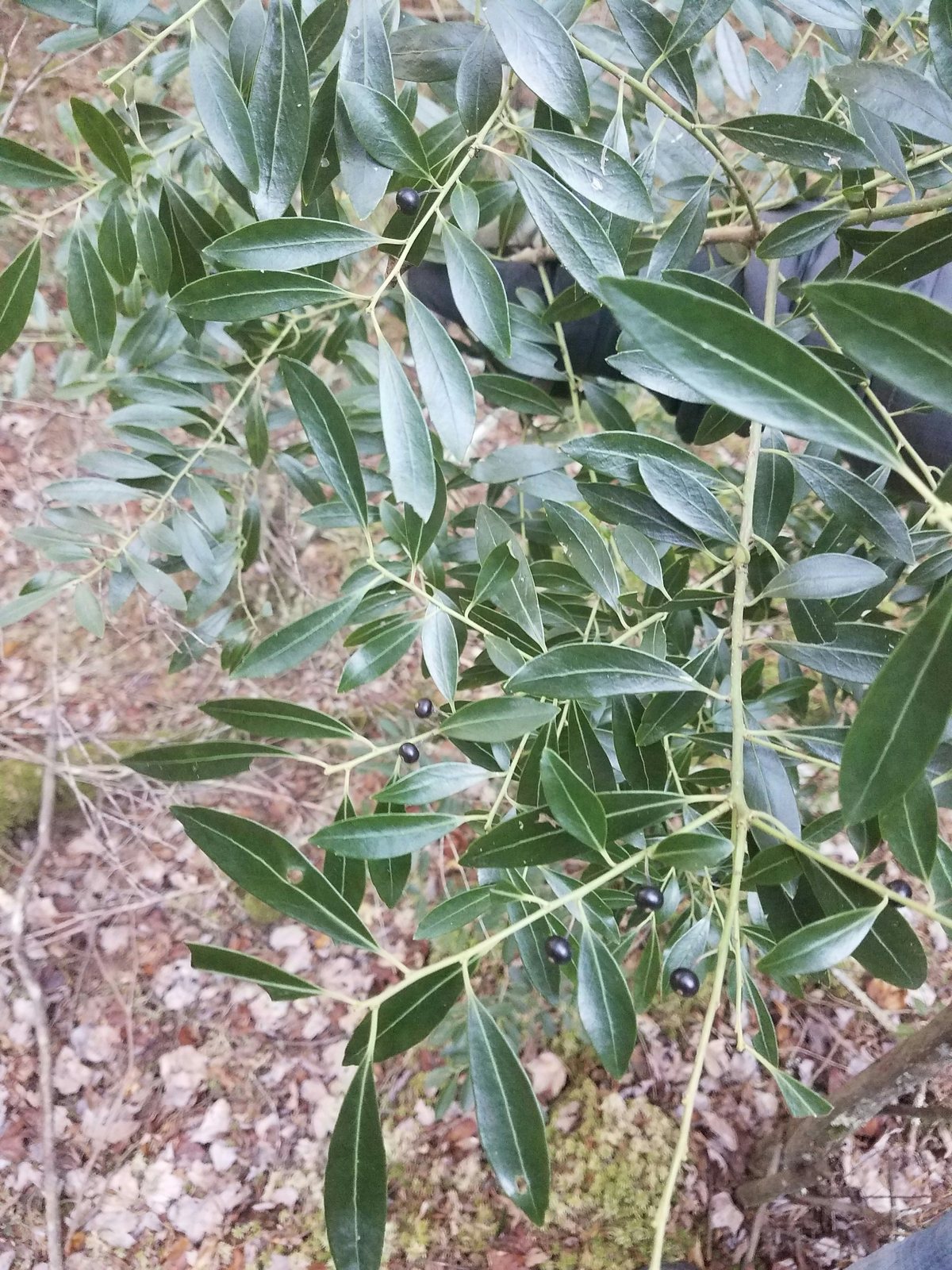
Inkberry is an evergreen holly native to eastern North America, grown for its small, spineless leaves and tolerance of moist, acidic soil. It makes an informal hedge or woodland-edge shrub, although older plants can become bare at the base. Female plants produce black berries when a male inkberry flowering at the same time grows nearby.
At a glance
- Sun
- Full sun to partial shade; growth is usually denser with more sun, provided the soil stays moist.
- Water
- Keep evenly moist, especially while establishing. Established plants tolerate short dry spells, but prolonged drought causes stress.
- Soil
- Acidic, humus-rich soil, ideally pH 4.5-6.0. Tolerates sandy soil and seasonal wetness; struggles in alkaline soil.
- Height
- 5-8 ft (1.5-2.4 m)
- Spread
- 5-8 ft (1.5-2.4 m), potentially wider through suckering
- Flowers
- Small, inconspicuous greenish-white flowers in late spring to early summer.
- Foliage
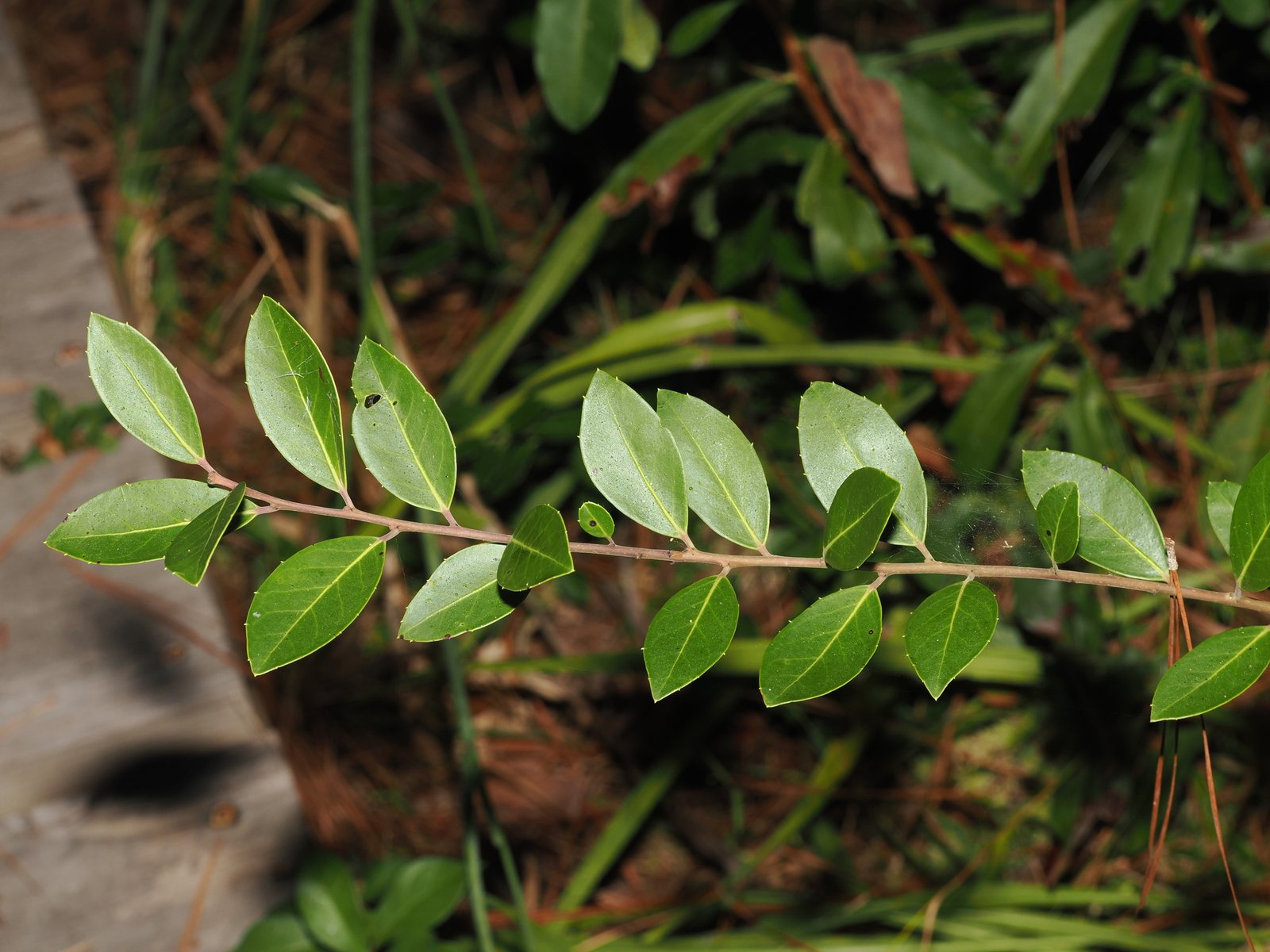
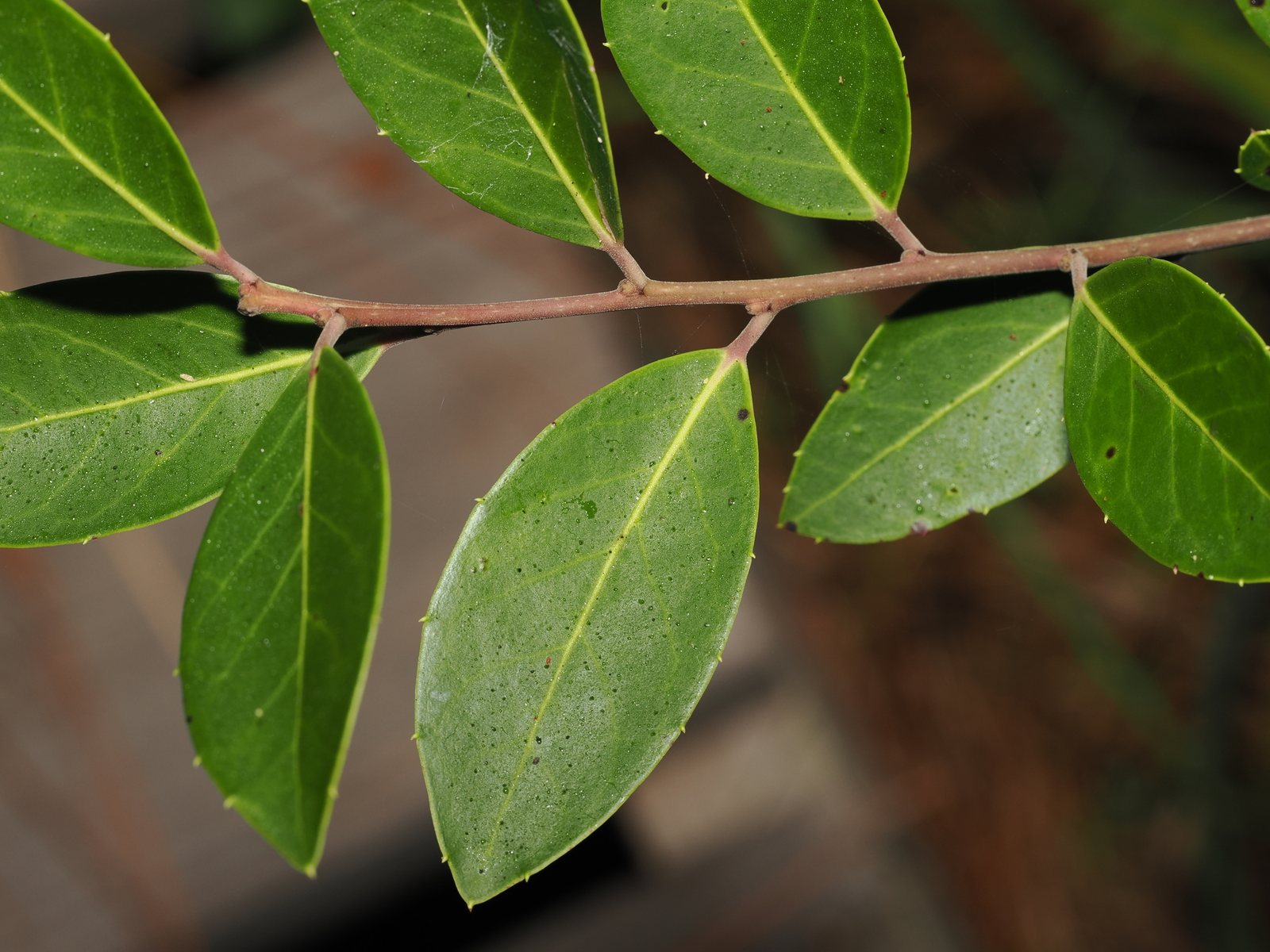
- Evergreen. Small, leathery, glossy dark-green leaves without spines; a few shallow teeth usually occur near the tip.
- Growth
- Slow to moderate
- Care needed
- Low
The year at a glance
- Pollinators
- Deer resistant
- Cold hardy
- Heat tolerant
- Wildlife
- Low allergen
| J | F | M | A | M | J | J | A | S | O | N | D | |
|---|---|---|---|---|---|---|---|---|---|---|---|---|
| Flowers | ||||||||||||
| Fruit | ||||||||||||
| Plant |
Northern hemisphere months. In Australia, shift them by six.
- Difficulty
- Moderate
- Toughness
- Fairly tough
Will it suit your garden?
Pick your zone, country, light and whether you have pets.
Full sun is 6 or more hours of direct sun a day, part shade 3 to 6 hours, shade under 3.
How it grows
Planting day
1.6 ft (0.5 m)
After 1 year
2.4 ft (0.72 m)
After 2 years
3 ft (0.95 m)
After 3 years
4 ft (1.2 m)
After 5 years
5 ft (1.6 m)
About 7 years to full size.
From a typical nursery size, at an average rate for this kind of plant. A rule of thumb, not a forecast.
Good to know
- Cats and dogs
- Toxic
- Native to
- the US and Canada
- In the garden
- Spreads vigorously: plan to contain it.
- Growth rate
- Slow
Care
Jobs through the year
- WaterMar–May, Sep–Nov, every 14 days
- Water established shrubs if soil is drying; keep new plants evenly moist for their first two years.
- WaterJun–Aug, every 7 days
- Water deeply when rain is insufficient, maintaining moist but aerated soil.
- PruneFeb–Mar
- Remove dead wood and a few old stems; selectively shorten long shoots rather than repeatedly shearing.
- PruneSep–Oct
- Remove unwanted suckers if the shrub needs to stay within its bed.
- MulchMar–Apr
- Maintain 5-8 cm of organic mulch over the roots, keeping stems clear.
- FeedApr
- Feed lightly only for weak growth or a confirmed deficiency; test pH before treating yellow leaves.
- ProtectMay–Jun
- For berries on female plants, ensure a nearby male inkberry flowers at the same time.
- Water deeply during dry spells for the first two growing seasons; do not let the root ball dry out.
- Apply 2-3 in (5-8 cm) of organic mulch, keeping it clear of the stems.
- Test soil pH before planting; choose another shrub if the soil is strongly alkaline.
- Feed lightly in spring only if growth is weak or a soil test indicates a deficiency.
- Remove unwanted suckers if you need to keep the shrub within a defined bed.
- For berries, plant a male inkberry with an overlapping flowering period near female plants.
Pruning. Prune in late winter or early spring, removing dead wood and selectively shortening long shoots. Thin out a few older stems at ground level to encourage renewal; repeated surface shearing can leave a dense shell over a bare interior.
Through the year
- Late winter
- Remove dead or damaged branches and thin older stems before new growth begins.
- Spring
- Plant while the ground is workable, water thoroughly and renew the mulch.
- Late spring
- Check that male and female plants flower together if berry production matters.
- Summer
- Water during prolonged dry weather and inspect pale foliage for soil-pH problems.
- Autumn
- Remove unwanted suckers and leave berries for birds.
- Late autumn
- Water before the ground freezes if autumn has been dry, especially for newly planted shrubs.
In the garden
- Plant as an informal evergreen hedge where acidic soil stays moist.
- Group along woodland edges with ferns and shade-tolerant perennials for year-round structure.
- Use compact cultivars in foundation beds, allowing space for their mature spread.
- Combine with winterberry and red-twig dogwood in moist native planting for contrasting winter stems and fruit.
Garden styles it suits: Woodland, Wildlife garden, Formal, Traditional, New England and Winter interest.
Plant it with: Virginia sweetspire, Summersweet, Winterberry, Red-twig dogwood, Cinnamon fern and Highbush blueberry.
Wildlife: Flowers provide nectar and pollen for bees and other insects. Birds eat the black berries, often later in the season, and dense growth offers shelter.
Problems to watch for
- Yellow leaves with greener veins often indicate iron deficiency caused by alkaline soil. Test the pH; correcting the growing conditions is more useful than repeatedly adding fertiliser.
- Sparse lower branches develop with age, heavy shade or repeated shearing. Improve light where possible and gradually renew the shrub by removing older stems.
- Root rot can cause wilting and dieback in persistently stagnant, poorly aerated soil. Improve drainage and avoid planting too deeply.
- Spider mites may cause fine stippling during hot, dry weather. Check leaf undersides, rinse with water and use insecticidal soap if an infestation persists.
Safety
Berries and leaves are toxic if eaten by people, cats, dogs or horses. Saponins can cause vomiting, diarrhoea and abdominal discomfort; serious poisoning is uncommon, but seek medical or veterinary advice after ingestion. The berries are not edible.
Easily confused with
Japanese holly (Ilex crenata)
Its leaves usually have small rounded teeth along much of the margin; inkberry leaves usually have only a few teeth near the tip.
Large gallberry (Ilex coriacea)
Usually has larger, broader, thicker leaves and larger black fruit; it can also grow into a substantially taller shrub.
Common box (Buxus sempervirens)
Box has opposite pairs of leaves and dry seed capsules; inkberry has alternate leaves and black, berry-like fruit.
The name
Inkberry refers to the ink-black fruit, while the botanical epithet glabra means smooth or hairless.
Propagation. Take semi-ripe cuttings in summer, or separate rooted suckers in spring. Seed germination is slow and irregular, and seedlings do not reliably retain cultivar traits or sex.
Checked against open data
- Accepted botanical name
- Ilex glabra
- In the US and Canada
- Native in Canada and the lower 48 states.
- Native range
- Alabama, Arkansas, Connecticut, Delaware, Florida, Georgia, Louisiana, Maine, Maryland, Masachusettes, Mississippi and New Hampshire.
- Measured
- Soil pH 4.5 to 7. Average height 220 cm.
Sources: GBIF (CC BY 4.0), USDA PLANTS and Trefle (CC BY 4.0). The care and design notes are LandscapeGPT's own.
See it in your own yard.
Upload a photo of your yard and see it redesigned with plants that suit your climate, each checked against your zone.