Ivy geranium
Pelargonium peltatum. Family Geraniaceae. Perennial.
Also called Ivy-leaved geranium, Trailing geranium, Ivy-leaved pelargonium.
Ivy geranium is a frost-tender, trailing perennial from southern Africa, grown for its glossy, ivy-shaped leaves and clusters of flowers. It spills over hanging baskets, window boxes and walls, flowering for months in warm weather. In colder climates it is grown as an annual or overwintered under cover.
At a glance
- Sun
- Full sun in mild climates; afternoon shade where summers are very hot.
- Water
- Moderate; let the surface of the compost dry between waterings. Established plants tolerate brief dry spells, but containers need regular checks.
- Soil
- Well-drained soil or free-draining container compost; avoid heavy, waterlogged ground.
- Height
- 0.5-1 ft (0.15-0.3 m)
- Spread
- 2-3 ft (0.6-0.9 m), with trailing stems sometimes longer
- Flowers
- Late spring to autumn; the species usually has pink to mauve flowers, sometimes white. Garden selections and hybrids also offer red, purple and bicoloured flowers.
- Foliage
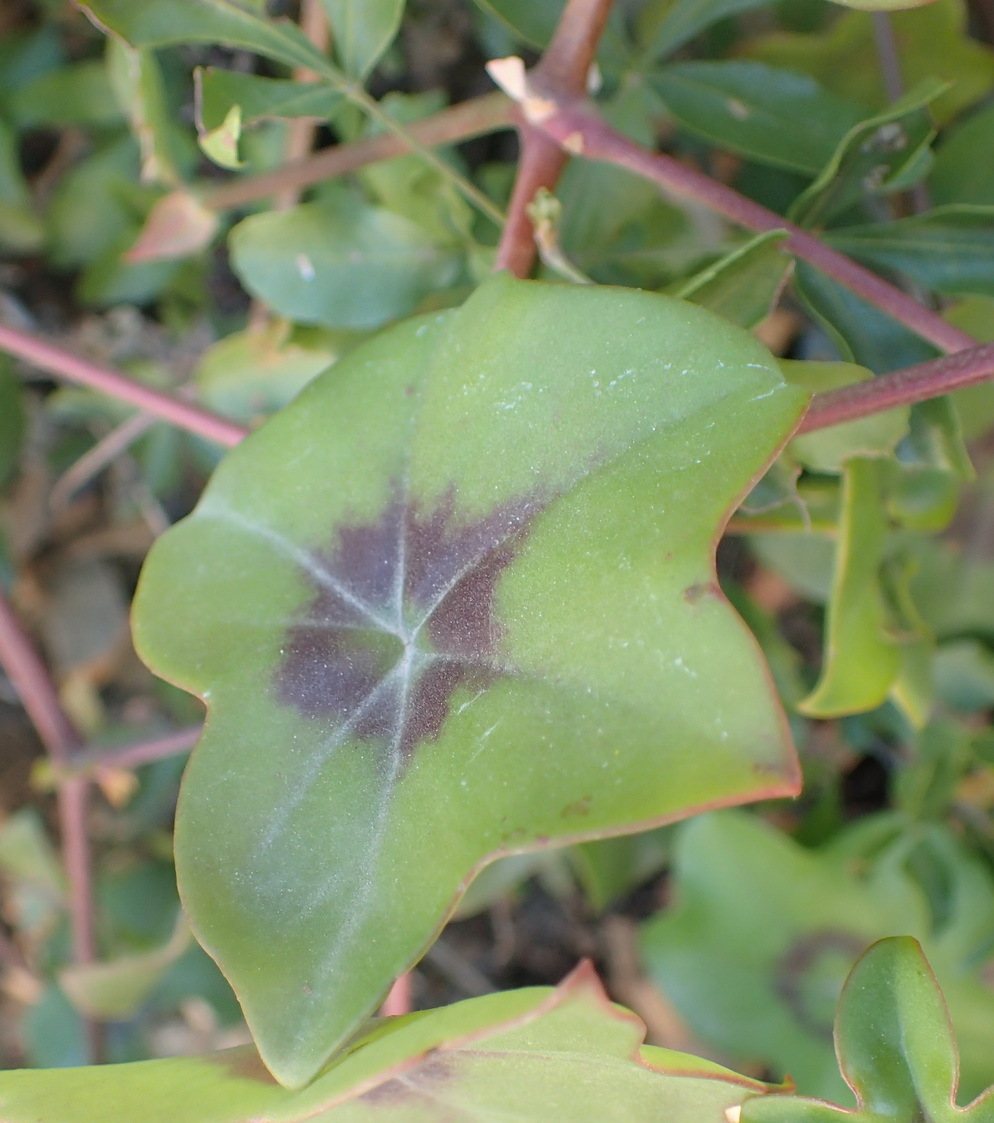
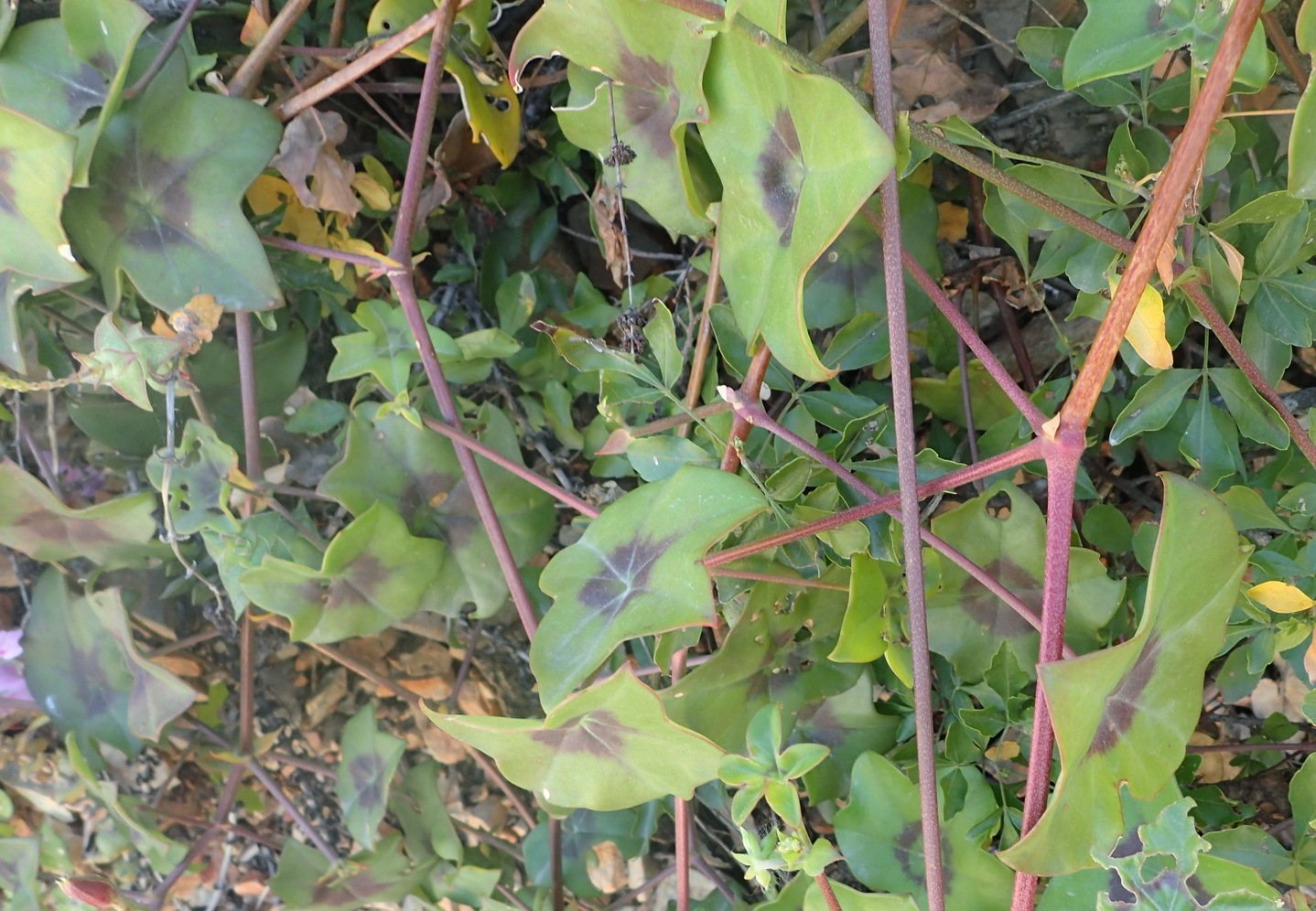
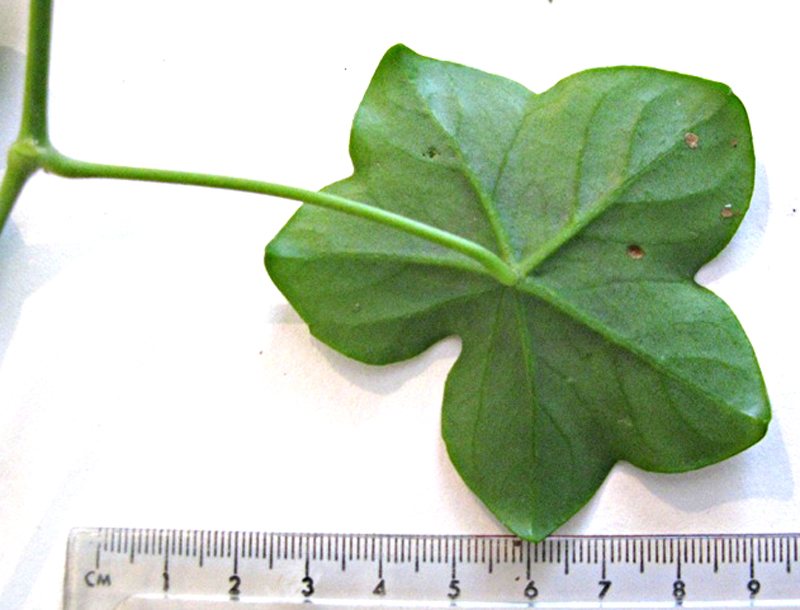
- Evergreen. Glossy, fleshy green leaves with five shallow, pointed lobes; some selections have darker markings or variegation.
- Growth
- Fast in warm weather
- Care needed
- Medium
The year at a glance
- Pollinators
- Deer resistant
- Drought tolerant
- Heat tolerant
- Low allergen
| J | F | M | A | M | J | J | A | S | O | N | D | |
|---|---|---|---|---|---|---|---|---|---|---|---|---|
| Flowers | ||||||||||||
| Plant |
Northern hemisphere months. In Australia, shift them by six.
- Difficulty
- Moderate
- Toughness
- Fairly tough
Will it suit your garden?
Pick your zone, country, light and whether you have pets.
Full sun is 6 or more hours of direct sun a day, part shade 3 to 6 hours, shade under 3.
How it grows
Planting day
0.7 ft (0.22 m)
full size
About 2 years to full size.
From a typical nursery size, at an average rate for this kind of plant. A rule of thumb, not a forecast.
Good to know
- Cats and dogs
- Toxic
- Growth rate
- Fast
Care
Jobs through the year
- WaterMay, Sep–Oct, every 14 days
- Water established plants in dry weather after the surface dries; water new plants more often.
- WaterJun–Aug, every 7 days
- Water established plants when soil dries; check containers more frequently and drain freely.
- FeedMay–Sep, every 14 days
- Feed container plants with flowering-plant fertilizer at the label rate.
- PruneMar–Apr
- Cut overwintered plants back by one-third, remove weak stems and pinch young tips.
- DeadheadMay–Oct, every 7 days
- Remove spent flower clusters and yellowing leaves.
- ProtectMay
- Harden plants off and plant outdoors only after the last frost.
- ProtectSep–Oct
- Move plants into bright, cool, frost-free shelter before cold nights damage foliage.
- WaterJan–Mar, Nov–Dec, every 30 days
- For sheltered overwintering plants only, water sparingly when compost is nearly dry.
- Plant outdoors after frost risk has passed, using containers with unobstructed drainage holes.
- Water the compost thoroughly, then let its surface dry before watering again; do not leave pots standing in water.
- Feed container plants every two weeks during active growth with a flowering-plant fertiliser at the label rate.
- Remove spent flower clusters and yellowing leaves to keep plants flowering and reduce grey mould.
- Before frost, move plants to a bright, frost-free place; water sparingly and stop feeding while growth is slow.
Pruning. Pinch young shoot tips in spring to encourage branching, and shorten straggly stems during the growing season. Cut overwintered plants back by about one-third in early spring, removing dead or weak growth.
Through the year
- Early spring
- Trim overwintered plants, refresh their compost and gradually increase watering as growth resumes.
- Late spring
- Harden off protected plants and plant outside after the last frost.
- Summer
- Check containers frequently for dryness, feed regularly and remove spent flower clusters.
- Late summer
- Take stem cuttings from healthy, non-flowering shoots to keep young plants for next year.
- Autumn
- In frost-prone areas, bring plants under cover before cold nights damage the leaves.
- Winter
- Keep protected plants bright, cool and frost-free, with sparse watering and good ventilation.
In the garden
- Trail it from window boxes and balcony planters for long-lasting colour without taking up floor space.
- Use it around the edge of large pots with upright pelargoniums or compact salvias.
- Let stems spill over a sunny retaining wall where drainage is sharp and winters are frost-free.
- Combine it with silver-leaved plants in courtyard containers for contrasting foliage and flower colour.
Garden styles it suits: Mediterranean, Modern courtyard, Cottage garden, Traditional, Coastal and Small-space.
Plant it with: Zonal geranium, Sweet alyssum, Blue fan flower, Silver falls dichondra and Dusty miller.
Wildlife: Open, single flowers can provide nectar for visiting insects; densely double garden forms are less accessible. It is not a native wildlife plant in the United States, United Kingdom, Canada or Australia.
Problems to watch for
- Grey mould: remove affected flowers and leaves, increase airflow and avoid wetting foliage late in the day.
- Root rot: improve drainage, empty saucers and allow the compost surface to dry between waterings; discard badly rotted plants.
- Aphids and whitefly: inspect shoot tips and leaf undersides, isolate affected pots and use insecticidal soap labelled for these pests if needed.
- Oedema, seen as corky bumps beneath leaves: reduce watering in cool weather and improve light and ventilation.
Safety
Toxic to cats, dogs and horses if eaten, particularly the leaves and stems. Exposure can cause vomiting, reduced appetite, lethargy or skin irritation. In people, sap may irritate sensitive skin and swallowing plant material may cause stomach upset; serious poisoning is uncommon. Keep it away from grazing animals and pets that chew plants.
Easily confused with
Zonal geranium (Pelargonium × hortorum)
Usually upright and bushy, with rounded, softly hairy leaves that often carry a dark horseshoe-shaped band; ivy geranium has smoother, glossier, pointed-lobed leaves and trailing stems.
English ivy (Hedera helix)
Climbs using aerial roots and has inconspicuous greenish flowers followed by dark berries; ivy geranium does not cling and bears conspicuous flower clusters.
The name
Pelargonium comes from the Greek for stork, referring to the beak-shaped fruit, while peltatum refers to the shield-like leaf attachment; the common name describes the ivy-shaped leaves.
Propagation. Take short, non-flowering stem cuttings in spring or late summer. Remove the lower leaves and root them in a free-draining propagation mix kept lightly moist, not wet. Seed-grown plants may differ from the parent; cuttings preserve named selections.
Checked against open data
- Accepted botanical name
- Pelargonium peltatum
- Native range
- Cape Provinces.
Sources: GBIF (CC BY 4.0) and Trefle (CC BY 4.0). The care and design notes are LandscapeGPT's own.
See it in your own yard.
Upload a photo of your yard and see it redesigned with plants that suit your climate, each checked against your zone.